



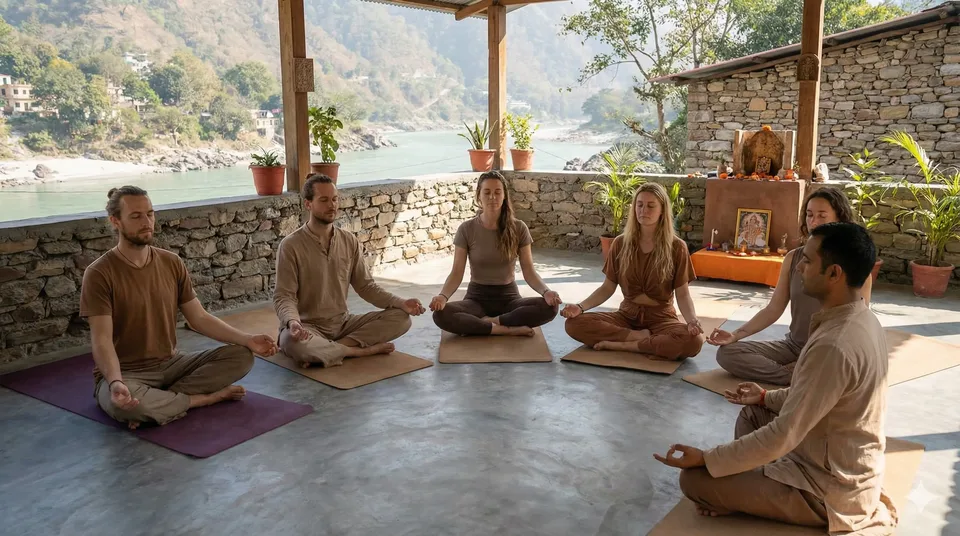
Pranayama is the ancient yogic art of breath control. Modern science confirms that these techniques directly regulate the nervous system, lower cortisol (stress), and improve focus via the Vagus Nerve. It is not just about oxygen; it is about mastering your energy.
Daily breathwork is built into our Goa retreat and YTT schedules.
Pranayama is the yogic practice of regulating breath. Most people breathe all day without noticing it; pranayama makes that process deliberate — slower inhales and exhales, specific patterns, and enough attention to feel how breath changes the mind and body.
If you have ever finished a yoga class feeling calmer or more focused, breath was usually part of that shift. This article explains what pranayama is, how breath relates to the nervous system in plain language, and three beginner techniques we use in Divinepath retreat and teacher-training schedules.
In Sanskrit, prana refers to life force or vital energy, and yama means restraint or extension. Together, pranayama means the regulation of breath and, in classical yoga, the energy that moves with it.
In practice, that looks like seated breathing drills: lengthening the exhale, alternating nostrils, or adding a soft hum. The goal is not to force more air in. It is to train awareness and a steadier rhythm so asana and meditation become easier to sustain.
Breath is one of the few autonomic functions you can change on purpose. The autonomic nervous system has two main branches: sympathetic (mobilisation / “fight-or-flight”) and parasympathetic (recovery / “rest-and-digest”). Many people spend long stretches in sympathetic overdrive — which shows up as tension, shallow chest breathing, and poor sleep.
Slow, nasal, diaphragmatic breathing tends to support parasympathetic activity. The vagus nerve is a major pathway in that system; when breathing slows and the belly moves, many people notice a lower sense of urgency, a steadier heart rate, and easier focus. Research on slow breathing and heart-rate variability is ongoing; results vary by technique and person, but the practical takeaway for yoga students is consistent: how you breathe changes how you feel within a few minutes.
We do not treat pranayama as medical treatment. If you have respiratory, cardiac, or anxiety conditions, learn techniques with a qualified teacher and follow your clinician’s advice.
With regular, gentle practice, students commonly report:
Practice on an empty or light stomach when possible. Sit tall on a cushion or chair. Stop if you feel dizzy, strained, or short of breath — return to normal breathing.
A foundational breath that teaches you to use the belly, ribs, and upper chest in sequence.
How to do it:
Why it helps: Builds full-breath awareness and is a safe starting point for stress relief.
A balancing practice used to settle the mind before meditation or teaching practice.
How to do it:
Why it helps: Many students find it reduces mental chatter and steadies concentration. Keep the breath quiet — never force. If one nostril is blocked, clear it first — Jala Neti is the Shatkarma practice we use before morning pranayama.
A humming exhale that creates a gentle vibration in the head and chest — useful when the mind is busy.
How to do it:
Why it helps: Calming before sleep or after a long day of practice. Stop if pressure in the head feels uncomfortable.
Five to ten minutes a day is enough to notice a difference. Useful moments:
At Divinepath, pranayama is part of daily Goa retreat and yoga teacher training schedules — not a side note. Students learn techniques they can teach and keep after they leave campus.
The main purpose of pranayama is to control the body's life force energy (prana). By regulating the breath, you can calm the nervous system, improve mental focus, and prepare the body for deeper states of meditation.
Yes, absolutely. Simple techniques like Deep Belly Breathing (Dirga) or Alternate Nostril Breathing are perfect for beginners. Start with just 5-10 minutes a day to see benefits without overwhelming your system.
Slow, deep breathing stimulates the Vagus Nerve, which activates the parasympathetic nervous system (rest-and-digest mode). This physically lowers your heart rate and cortisol levels, providing immediate relief from anxiety and stress.
The best time is usually early morning on an empty stomach, as it sets a calm tone for the day. However, calming techniques like Nadi Shodhana or Brahmari are also excellent before bed to improve sleep quality.
Not exactly. Pranayama is an active practice of controlling the breath, whereas meditation is the practice of observing the mind. In yoga, we use pranayama as a tool to calm the body so we can enter meditation more easily.



One of the Best Yoga Teacher Training Courses & Retreats in India & Indonesia.
 Yoga Alliance RYS 200
School ID 457520
Verify registration →
Yoga Alliance RYS 200
School ID 457520
Verify registration →
Divinepath Yoga School & Retreat © 2026. All Rights Reserved.