



Yoga Alliance Registered School (RYS)

Yoga Teacher Training in Bali
100, 200, 300 & 500 Hour YTT · Monthly Intakes

Your Bali gateway. Train in the Ubud area (Klungkung campus) with nature-led immersion, small cohorts (typically 10–15 students), and the same RYT pathway as our India schools. Compare campuses.

Quick answer: Divinepath Yoga School & Retreat runs Yoga Alliance Registered (RYS) yoga teacher training in Bali from $950 — available as 100, 200, 300, and 500-hour courses at our two campuses. Klungkung sits in quiet east Bali, surrounded by rice paddies 90 minutes from the airport. Ubud (Jl. Bisma) puts you in the cultural centre of the island, walkable to the Saraswati Temple and Sacred Monkey Forest. Both campuses run monthly intakes, cap groups at 10–15 students, and follow the same Yoga Alliance certification pathway.

If you're comparing campuses, programs, or prices before booking — this page has all of it. For the Ubud-specific hub, go to Yoga Teacher Training in Ubud →.

Yoga teacher training in Bali draws more international students each year than almost any other destination in the world. The reasons are practical as well as cultural — the island's climate suits daily outdoor practice, the food is naturally plant-based, and the cost of a full residential certification program stays genuinely competitive compared to Europe or North America. But none of that fully explains what happens to students once they arrive. Bali has a rhythm to it. The Balinese Hindu tradition runs ceremonies and temple offerings through daily life in a way that quietly deepens whatever practice you bring with you.

Divinepath has two campuses in Bali, and the difference between them matters. Our Klungkung campus is set in a working Balinese village — no tourist strip, no rooftop bars nearby, just rice fields, a local temple a short walk away, and a yoga shala built for the kind of focused practice that actually changes how you teach. Our Ubud campus on Jl. Bisma is different in character: central, walkable, culturally saturated. Students who want the buzzing creative energy of Ubud's market and gallery district alongside a serious yoga curriculum tend to choose Ubud — including the 300-Hour Yoga Teacher Training in Ubud, Bali for RYT-200 graduates. Students who want to switch off from that energy tend to choose Klungkung.

Both campuses offer all four course levels — 100, 200, 300, and 500 hours — with monthly intakes year-round. You can meet the Bali teaching faculty → before choosing your campus and start date. All courses are taught in English; our international cohorts include students from the USA, UK, Australia, Germany, France, and across Southeast Asia.

Campus Tour
Yoga Alliance RYS

Verify school profile

From $950

Affordable Bali YTT tiers

2 Bali Campuses

Klungkung & Ubud (Jl. Bisma)

10–15 Students

Small-group YTT batches

Two Bali campuses

Choose Your Bali Campus for Yoga Teacher Training

Divinepath runs the same certification pathway at two Bali locations. Choose Klungkung for quiet residential immersion, or Ubud (Jl. Bisma) for central Ubud culture and walkability.

Divinepath Yoga School & Retreat — Klungkung Campus
Klungkung campus

Yoga Teacher Training in Klungkung

Jalan Pura Dalem, Satra, Kec. Klungkung, Klungkung

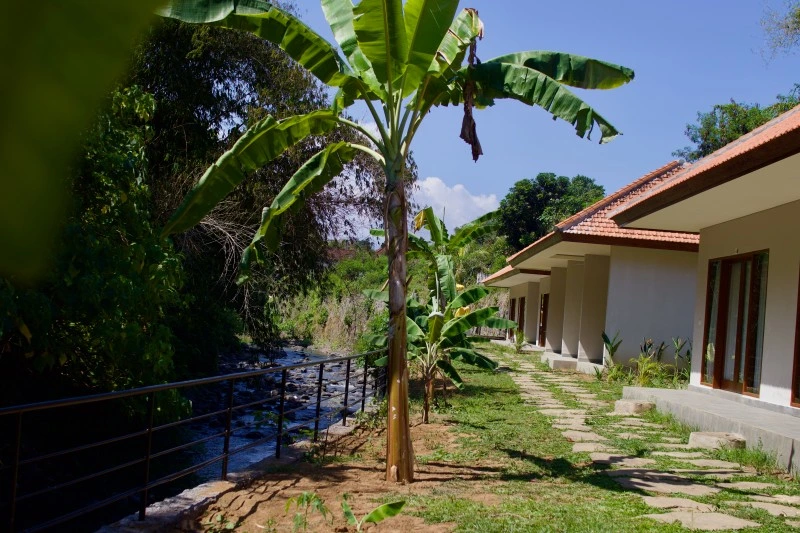
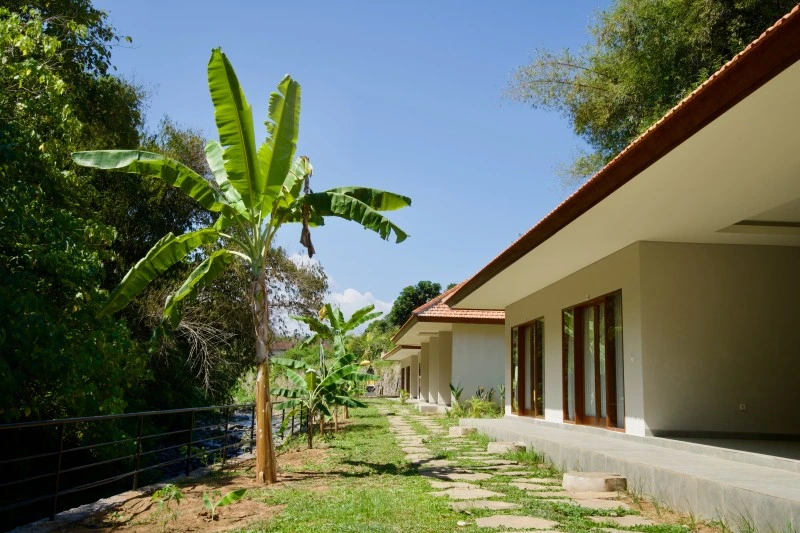
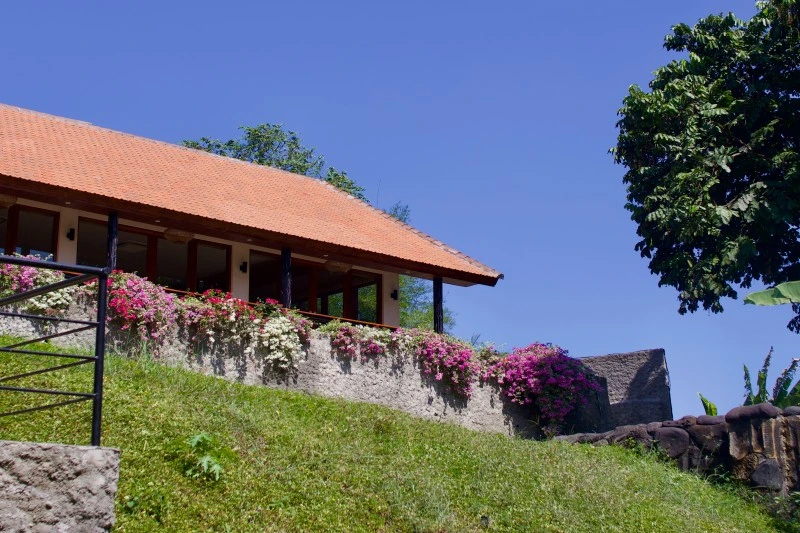
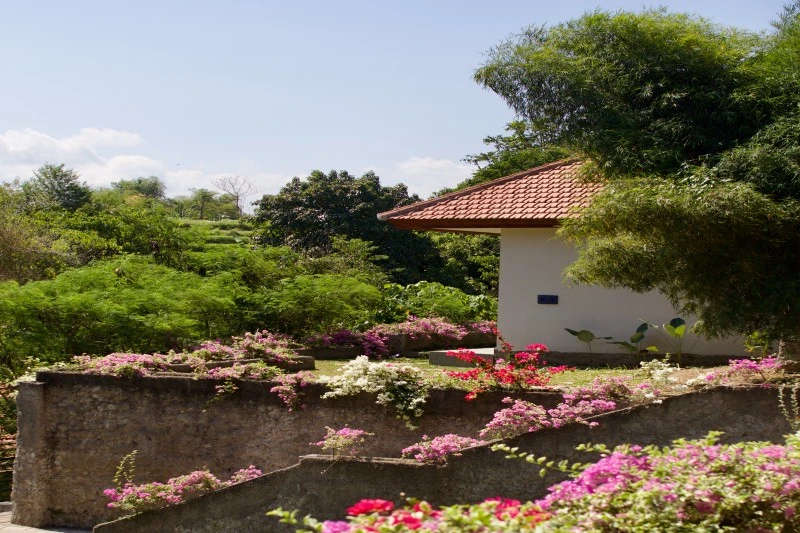
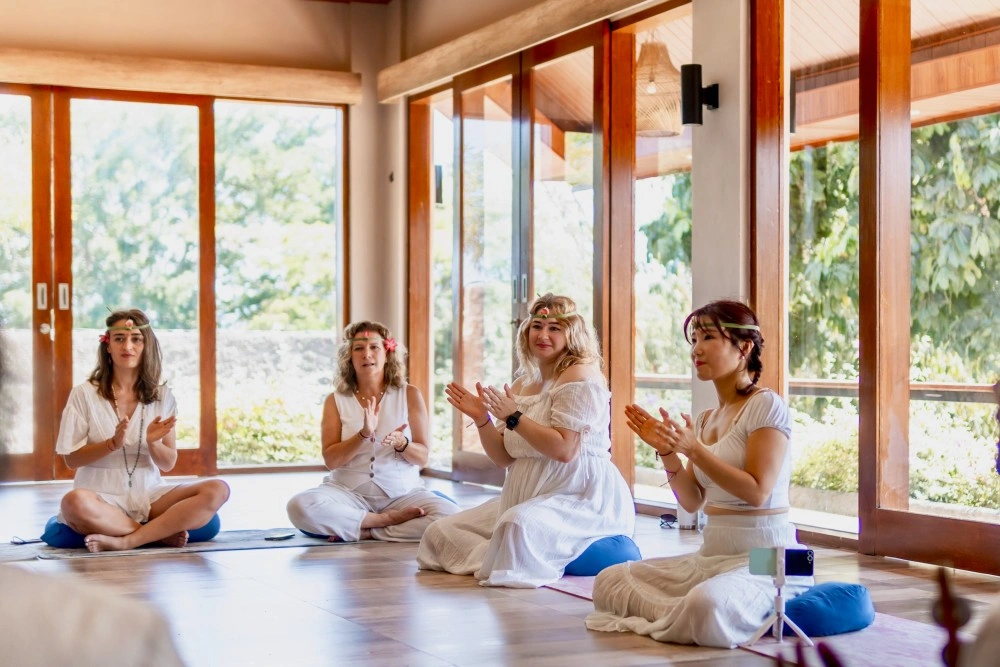
Klungkung sits in the quieter eastern part of Bali, about 90 minutes from Denpasar airport. The campus is genuinely residential — rooms, the yoga shala, the dining area, and the kitchen all share the same property. Village life moves at its own pace around you: the sound of a gamelan practice drifting over in the evening, a morning procession through the lane before your first session. Students here tend to describe a depth of focus during the course that they find harder to reach in more tourist-heavy settings.

Quiet east Bali 100h to 500h YTT Monthly intakes
Divinepath Yoga School & Retreat — Ubud Campus
Ubud campus

Yoga Teacher Training in Ubud

Jl. Bisma, Ubud

The Ubud campus is on Jl. Bisma, a ten-minute walk from the centre of Ubud town. Balinese dance, local art galleries, the Campuhan Ridge walk, and the Sacred Monkey Forest are all within easy reach on days off. The campus itself is quiet and properly structured for training, but you're never more than a short walk from one of Bali's most culturally alive towns. Students who want immersion in Ubud's particular energy — alongside a serious yoga curriculum — tend to find this campus lands well for them.

Central Ubud 100h to 500h YTT Monthly intakes
Campus comparison

Klungkung vs Ubud: Which Bali YTT Campus Should You Choose?

Both campuses follow the same Divinepath certification pathway and monthly intake rhythm. The difference is the setting: Klungkung is quieter and more residential, while Ubud is central, walkable, and culturally active.

Compare Klungkung Campus Ubud Campus
Location character Quiet east Bali residential setting with village life, rice fields, and fewer tourist distractions. Central Ubud setting on Jl. Bisma, close to Bali's cultural centre and yoga community.
Price range Klungkung residential YTT starts from $950 for 100h, $1,399 for 200h, $2,300 for 300h, and $3,950 for 500h. Ubud residential YTT uses separate campus pricing, starting from $1,099 for 100h, $1,299 for 200h, $2,099 for 300h, and $3,999 for 500h.
What's nearby Local village lanes, temple life, quiet study spaces, rice-field scenery, and a slower east Bali rhythm. Ubud cafes, galleries, Saraswati Temple, Campuhan Ridge, Monkey Forest, and central Ubud shops within easy reach.
Best for Students who want quiet residential immersion, fewer distractions, and a village setting for focused practice. Students who want central Ubud culture, cafes, galleries, temples, and walkable days off alongside training.
Address Jalan Pura Dalem, Satra, Kec. Klungkung, Bali 80761. Jl. Bisma, Ubud, Kecamatan Ubud, Kabupaten Gianyar, Bali 80571.
Airport distance About 90 minutes from Ngurah Rai International Airport (DPS), depending on traffic. About 60 minutes from Ngurah Rai International Airport (DPS), depending on traffic.
Training environment Residential campus with rooms, yoga shala, dining, and study areas on one property. Residential training on Jl. Bisma with Ubud town, cultural sites, and cafes nearby.
Course levels 100, 200, 300, and 500-hour yoga teacher training with monthly intakes. 100, 200, 300, and 500-hour yoga teacher training with monthly intakes.
Pricing fit Best if you want the hub's most affordable Bali residential pricing; 200-hour starts at $1,399 shared. Best if you want central Ubud convenience and are comparing Ubud-specific room tiers and fees.
Simple choice Choose Klungkung if you want silence, structure, and a deeper retreat-style container. Choose Ubud if you want cultural access, walkability, and the atmosphere of Bali's yoga capital.
Bali YTT pricing

Affordable Yoga Teacher Training in Bali: Fees by Campus

Pricing for yoga teacher training in Bali varies widely across schools — anywhere from $800 to $4,000+ for a 200-hour course, depending on location, accommodation quality, and what's actually included.

At Divinepath, the fee for our Klungkung 200-hour course starts at $1,399 on a shared-room basis, with the private room option above that. Ubud 200-hour starts separately at campus rates listed on the Ubud hub page →. Both include tuition, meals (Mon–Sat), accommodation, study materials, and airport pickup from Denpasar.

Below is the current fee comparison for both campuses. Use the currency switcher to see prices in IDR, EUR, or INR.

Klungkung Campus Course Fees

Quiet residential Bali YTT pricing used as the hub default.

Course Duration From (shared room) Certification Details
100 Hour Yoga Teacher Training in Bali 10 days $950 USD Certificate of completion View course
200 Hour Yoga Teacher Training in Bali 23 days $1,399 USD Yoga Alliance RYT-200 View course
300 Hour Yoga Teacher Training in Bali 28 days $2,300 USD Yoga Alliance RYT-300 View course
500 Hour Yoga Teacher Training in Bali 55 days $3,950 USD Yoga Alliance RYT-500 pathway View course

For comparison, the market average for a Bali 200-hour YTT with accommodation and meals is around $1,500–$1,800. Our Klungkung 200-hour starts at $1,399 shared. For a wider budget breakdown, read our yoga teacher training Bali cost guide →

Ubud Campus Course Fees

Central Jl. Bisma training for students who want Ubud within walking distance.

Course Duration From (shared room) Certification Details
100-Hour Yoga Teacher Training in Ubud, Bali 10 days $1,099 USD 100-hour block certificate (RYT-200 after both blocks) View course
200-Hour Yoga Teacher Training in Ubud, Bali 20 days $1,299 USD Yoga Alliance USA (RYT-200 pathway) View course
300-Hour Yoga Teacher Training in Ubud, Bali 26 days $2,099 USD Yoga Alliance USA (RYS-300 advanced training → RYT-500 with RYT-200) View course
500 Hour Yoga Teacher Training in Ubud, Bali 55 days $3,999 USD Yoga Alliance USA (RYT-500 pathway) View course

Fees include tuition, meals, and stay on residential tiers — confirm live prices on each course page.

Monthly intakes

Bali Yoga Teacher Training Dates by Campus

Both campuses run monthly intakes. Most courses start on the 1st of each month, with check-in before 12 PM and an Opening Ceremony at 4 PM. For the 200-hour: check-out is on the 23rd before 12 PM, after the Certificate Ceremony at 7 AM. For the 300-hour: check-out is on the 29th before 12 PM. Exact room availability by month is on the individual course pages — confirm before booking.

Klungkung campus

Klungkung Yoga Teacher Training Intakes

Jalan Pura Dalem, Satra, Kec. Klungkung, Klungkung

Course Dates Details
100 Hour YTT 1st–10th monthly View dates
200 Hour YTT 1st–23rd monthly View dates
300 Hour YTT 1st–28th monthly View dates
500 Hour YTT 1st monthly · 55 days View dates

Upcoming intakes

  • July 2026
  • August 2026
  • September 2026
  • October 2026
  • November 2026
  • December 2026
Ubud campus

Ubud Yoga Teacher Training Intakes

Jl. Bisma, Ubud

Course Dates Details
100 Hour YTT 1st–10th monthly View dates
200 Hour YTT 1st–20th monthly View dates
300 Hour YTT 1st–26th monthly View dates
500 Hour YTT 1st monthly · 55 days View dates

Upcoming intakes

  • July 2026
  • August 2026
  • September 2026
  • October 2026
  • November 2026
  • December 2026
At a Glance

Quick Facts About Bali YTT

A fast summary of the campuses, course levels, pricing, and monthly intake rhythm.

School

Divinepath Yoga School & Retreat — Yoga Alliance Registered School (RYS)

Programs

100, 200, 300 & 500 Hour YTT in Bali

Klungkung Pricing

100h from $950 · 200h from $1,399 · 300h from $2,300 · 500h from $3,950
Campuses

Klungkung, Bali & Ubud (Jl. Bisma)

Cohort Size

10–15 students per batch

Intakes

Monthly at Klungkung and Ubud

Klungkung campus

Klungkung Campus Yoga Teacher Training Courses

These booking cards are for the quiet Klungkung campus. If you prefer central Ubud, use the campus comparison or open the Ubud YTT hub.

100 Hour Yoga Teacher Training in Bali

  • 10 Days Residential
  • Multi-Style (Hatha/Vinyasa)
  • 3 Daily Satvik Meals
  • Private or Shared Room
Starting from $ 950 USD

200 Hour Yoga Teacher Training in Bali

  • 23 Days Residential
  • Yoga Alliance Certified
  • 3 Daily Satvik Meals
  • Private or Shared Room
Starting from $ 1,399 USD

300 Hour Yoga Teacher Training in Bali

  • 28 Days Residential
  • Yoga Alliance RYT-300
  • 3 Daily Satvik Meals
  • Private or Shared Room
Starting from $ 2,300 USD

500 Hour Yoga Teacher Training in Bali

  • 55 Days (200h + 300h)
  • Yoga Alliance RYT-500
  • 3 Daily Satvik Meals
  • Private or Shared Room
Starting from $ 3,950 USD
YTT curriculum

What You'll Learn in Our Bali Yoga Teacher Training

Every program at Divinepath — from the 100-hour foundation course to the full 500-hour RYT pathway — is built around the same eight subject areas. The weighting shifts as you advance, but the framework stays consistent.

Yoga Alliance requires all registered schools to cover these disciplines, and we go deeper than the minimum in several of them — particularly anatomy, practicum, and teaching methodology, because those are the areas where new teachers tend to struggle most once they're in front of a real class.

1

Asana

Hatha and Vinyasa are the primary styles, with Ashtanga fundamentals introduced in the 200-hour and expanded in the 300-hour. You'll study alignment principles for each posture family, learn how to offer modifications for different bodies, and practice giving hands-on adjustments safely. By the end of the course you'll have worked through roughly 80–100 asanas with detailed cues for each.

2

Pranayama

Kapalabhati, Nadi Shodhana, Bhramari, Ujjayi, and Kumbhaka — taught as both personal practice and as teachable techniques you can lead in class. We pay particular attention to contraindications, because pranayama is not appropriate for everyone in every situation.

3

Anatomy & Physiology

The focus here is applied anatomy — not a medical lecture, but a working understanding of what happens in the joints and muscles during each pose family, how the nervous system responds to breathwork, and how to spot movement patterns in students that indicate risk. The 300-hour goes deeper into fascial lines and the psychology of pain.

4

Yoga Philosophy

Patanjali's Yoga Sutras, the 8 Limbs, Samkhya cosmology, and selected passages from the Bhagavad Gita — studied as relevant texts, not historical artefacts. The goal is for you to be able to weave philosophical threads into class themes naturally, not just recite Sanskrit terms.

5

Meditation

Dhyana, trataka, yoga nidra, mantra repetition, and basic mindfulness techniques — taught with enough depth to lead a 20-minute guided session confidently. You'll also explore the theory of meditation: why it works, what the research says, and how to adapt it for students who find stillness difficult.

6

Teaching Methodology

This is one of the modules we spend the most time on, because it's the gap between a good practitioner and an effective teacher. Voice, pace, cueing language, sequencing logic, how to read a room, how to handle a student who is struggling, how to plan a class without sounding scripted. The 300-hour adds trauma-informed teaching and inclusive language work.

7

Sequencing

You'll build and teach multiple peak-pose sequences during the course, with structured faculty feedback after each one. We cover the principles behind warm-up progressions, counter poses, and how to design a class for a specific outcome — whether that's energy, hip opening, or nervous system regulation.

8

Practicum

The teaching lab is where most of the real learning happens. Every student leads portions of class from week two onward — no waiting until the last few days. Faculty and cohort give feedback using a structured format: what worked, what to adjust, what to experiment with next. You leave with supervised teaching hours, a set of lesson plans that work, and enough reps under your belt that the nerves have mostly settled.

Course Logistics

Bali YTT Package Inclusions & Exclusions

A quick view of what is included in residential packages, what is not included, and where to confirm final pricing before booking.

Included in residential fees

  • Tuition for your selected 100h, 200h, 300h, or 500h course
  • Accommodation in private or shared AC rooms
  • Three daily Satvik vegetarian meals, Monday to Saturday
  • Study materials and course manual
  • One complimentary Balinese massage during the course
  • Airport pickup from Denpasar (DPS), arranged on request

Not included

  • International or domestic flights
  • Visa fees and visa extensions
  • Travel insurance and personal medical expenses
  • Off-day excursions and personal transport unless stated
  • Extra nights before check-in or after check-out

Full inclusions, room options, and early-bird pricing are listed on each course page. If you are comparing campuses, check both the Klungkung course cards and the Ubud hub before booking.

Daily life

Life on the Course: Daily Schedule & What to Expect

The structure of the day is consistent from week one, which helps. Your body clock adjusts within a few days, and after that the rhythm starts to feel natural rather than demanding. Here is what a typical day looks like at the Klungkung campus.

A typical day of yoga teacher training in Bali at Divinepath Klungkung campus

Structured, but not rushed

The day moves through practice, theory, rest, teaching lab, and evening meditation. The rhythm is steady enough to build discipline, with enough space to absorb what you are learning.

6:00 AM — Shatkarma & Pranayama

Morning cleansing and breathwork

The day starts with cleansing practices and breath control. Kapalabhati and Nadi Shodhana feature throughout, with Trataka and Jala Neti introduced as the course develops.

7:00 AM — Asana Practice

Hatha or Vinyasa with faculty

A 90-minute practice led by faculty. You practice, observe cueing, and learn how teachers position themselves, pace a class, and respond to students.

8:30 AM — Breakfast

Vegetarian meal on campus

A fresh vegetarian breakfast is served on campus. This is usually the most social part of the morning before theory classes begin.

10:00 AM – 1:00 PM — Theory Workshop

Anatomy, philosophy, or methodology

Morning theory rotates through anatomy, philosophy, and teaching methodology, with discussion, exercises, notes, and regular breaks.

1:00 PM – 3:00 PM — Lunch & Rest

A real afternoon break

Lunch is followed by quiet time. Students study, sleep, journal, or walk nearby before the afternoon teaching session.

3:00 PM – 5:30 PM — Teaching Lab

Practice teaching with feedback

You build from small teaching tasks to longer sequences, with structured faculty feedback and peer observation each week.

6:00 PM – 7:30 PM — Evening Practice & Meditation

Yin, restorative, or guided meditation

Evenings alternate between Yin, restorative practice, and guided meditation. Dinner follows, then quiet time for reading, journaling, or resting in the garden.

Your next step

After Your Bali YTT — What Happens Next

Graduation happens on the final morning of the course. The certificate ceremony is at 7 AM — early, and consistently emotional. Most students describe the last two or three days of a YTT as unexpectedly hard to leave.

After a month of this kind of shared focus, the cohort becomes its own thing. What you take home is more concrete than it might sound from the outside. The Yoga Alliance certificate — RYT-200, RYT-300, or RYT-500 depending on your course level — is the industry credential required by most studios, gyms, and wellness platforms before you can teach on their timetable. It's not a guarantee of a teaching job, but it's the necessary first step for almost every professional route into yoga.

Three paths most graduates take

1

Teaching at studios and gyms

The RYT-200 is the standard entry credential for studio and gym teaching in most countries. We provide a full set of lesson plans, a sequencing guide, and a cueing reference you can use from your first paid class. Many graduates are teaching within a month of returning home — community classes, gym slots, or private clients — while they build their hours and confidence. The job market for yoga teachers varies a lot by city, so the pace depends on where you're based. But the credential, the teaching hours, and the lesson plans mean you have the practical tools to start, not just the certificate.

2

Teaching online

A growing number of graduates now teach entirely via Zoom or through platforms like YouTube. The teaching lab structure during the course — plan a class, deliver it, receive structured feedback, adjust — maps almost directly to running online classes. The main additional skill is being able to read the room through a screen, which takes practice but isn't as hard as it sounds. If you're considering this direction, mention it early in the course so faculty can give you feedback specifically on cueing for remote students.

3

Advancing to 300-Hour or 500-Hour

If you complete the 200-hour and decide you want to go further, the 300-hour advanced course is the next step. It's designed for RYT-200 holders: the anatomy goes deeper, the sequencing work becomes more complex, and the mentored teaching is more demanding. The 500-hour pathway (200h + 300h) can be completed in one continuous Bali stay — most students who do this spend about two months in Klungkung or split between both campuses. The RYT-500 is the highest Yoga Alliance registration level, and it opens access to more specialised teaching roles, corporate wellness contracts, and YTT facilitation.

Why train with us

Why Train at Divinepath for Your Bali YTT

There are dozens of yoga schools offering teacher training in Bali. Some are excellent. Some are not. The things that actually matter when choosing — beyond the marketing — tend to be the same across the board.

How small the groups are, whether the teachers have real depth or just presence, what happens when something goes wrong during the course, and whether the certificate you leave with is worth anything. Here is our honest answer to each of those.

Groups stay small.

We cap every batch at 10–15 students. This is not a marketing number — it's an operational constraint we have stuck to even when it would have been more profitable to add seats. At that size, the teaching labs have real feedback loops. Faculty can adjust the daily schedule if a concept hasn't landed. Students who are struggling get noticed and supported rather than carried along by the group.

The teaching faculty know their subjects.

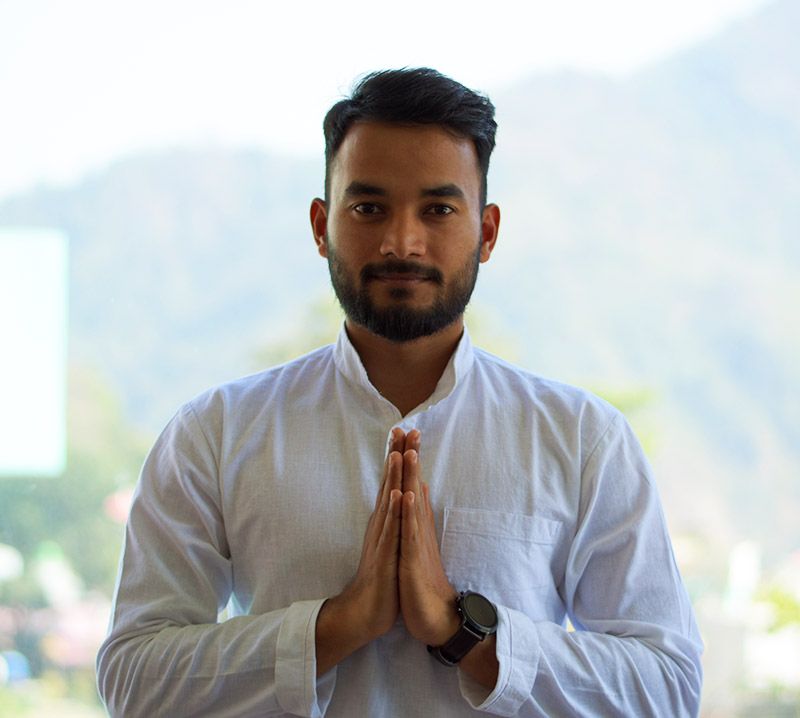
Yogi Ashish Ji leads training at the Klungkung campus. His teaching background covers Hatha, Vinyasa, pranayama, and Shatkarma — he trained in a traditional lineage before teaching YTT, which is not as common as it should be. Faculty profiles for both campuses are on the teachers page → if you want to read more before committing.

The certification is Yoga Alliance registered.

Our school is listed on the Yoga Alliance Registry as a Registered Yoga School (RYS). You can verify this directly → before enrolling. After completing a 200-hour course, you're eligible to register as an RYT-200 with Yoga Alliance — which is the standard credential most studios and employers ask for. The same applies to RYT-300 and RYT-500 for the advanced programs, so students looking for yoga certification Bali can compare the full pathway before choosing a campus.

Logistics are handled properly.

We know that for international students, everything that happens before the first session matters. We send a pre-arrival kit covering: visa guidance for your passport type, airport pickup, what to pack for Bali's climate, and exactly what happens on arrival day. We've done this long enough to know which questions come up every time, and we answer them before you have to ask. That might sound like a small thing. A lot of students have told us it wasn't.

Is this for you?

Is This Yoga Teacher Training in Bali Right for You?

The most common thing we hear from students before they enroll is: I'm not sure I'm ready. The second most common is: I'm not flexible enough. Both are understandable. Neither is a reason not to come.

The 200-hour course is designed for people who practice regularly but have never taught. You don't need a background in yoga theory. You don't need to hold a handstand. Flexibility is something you gain during the course, not something you need to arrive with. The students who do well tend to be curious, willing to be uncomfortable, and genuinely interested in learning — not necessarily the most advanced practitioners in the room.

Here is a realistic picture of who joins our courses:

Students who are changing careers and want teaching as a viable income stream. People who have practiced yoga for years and want to understand it at a deeper level, with no intention of teaching professionally. Fitness professionals — physiotherapists, personal trainers, pilates instructors — who want to add a yoga qualification to an existing practice. Travellers who want a structured, purposeful month in Bali rather than another trip spent moving between beaches. People who are in some kind of transition and know they need something more substantial than a holiday to work through it.

Common concerns, honestly answered

"I've never taught a class in my life."

Every student in your batch is in the same position on day one. The teaching lab is structured to build you up from leading a single pose through to a 20-minute flow — with faculty feedback at each step so you can actually improve rather than just repeat the same patterns.

"I don't know which level to choose."

If you're new to teacher training, start with the 200-hour. If you already hold a 200-hour certificate from a Yoga Alliance school, the 300-hour is the logical next step. If you want to do both in one trip, the 500-hour pathway can be completed in a single stay.

"Is this only useful if I want to teach yoga professionally?"

No. Around a third of our students have no intention of teaching after they graduate. They come because the depth of study — anatomy, philosophy, daily practice — transforms how they understand their own body and practice. The certificate is there if you want it. The transformation happens either way.

Why Bali

Why Practice Yoga in Bali?

The obvious answer — the scenery, the temples, the rice terraces — is true but incomplete. Bali's pull for yoga practitioners runs deeper than landscape.

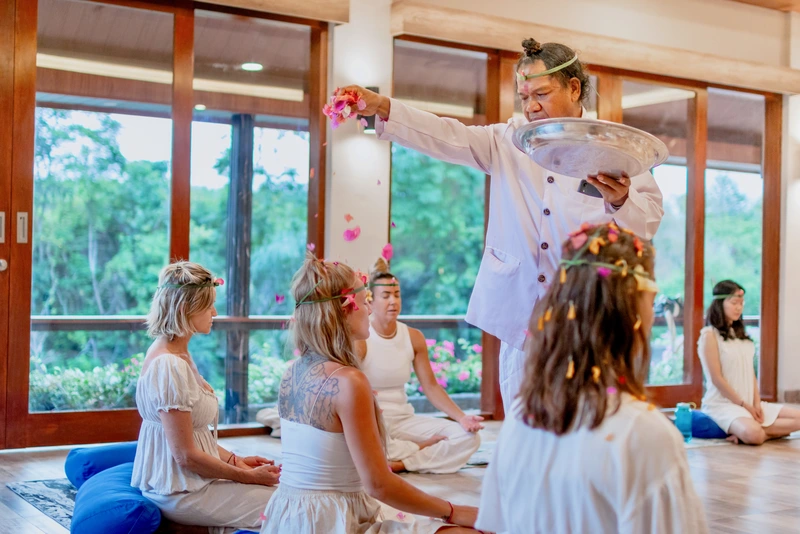
The Balinese Hindu tradition treats daily life as a form of spiritual practice. Offerings appear on doorsteps every morning. Ceremonies happen throughout the week in the village temple down the lane. The sound of gamelan floats over the wall during evening meditation. None of this is staged for visitors. It's simply how life runs here. And for students in the middle of a yoga teacher training, that ambient spiritual current tends to amplify whatever is already happening in their practice. Students who've done retreats in Europe or urban studios in the US often describe their first week in Bali as the deepest meditation experience they've had, without quite understanding why. The environment is doing work they can't fully account for.

There are practical reasons too. The climate means you can practice outdoors year-round — our open-air shala works in all weather. The food is naturally plant-forward: fresh vegetables, coconut, tempeh, abundant tropical fruit. Satvik eating (the traditional yogic diet: vegetarian, fresh, light) requires no effort in Bali the way it might in other places. The cost of living is lower than almost every comparable destination for serious yoga study, which is what makes residential certification genuinely affordable.

Our Klungkung campus sits in a residential village — not a tourist zone. Our Ubud campus on Jl. Bisma puts you in the cultural centre of the island. Both choices are intentional: we believe the environment is part of the training, not just a backdrop to it.

Where you'll stay

Bali YTT Accommodation & Amenities

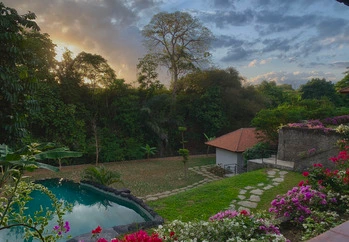
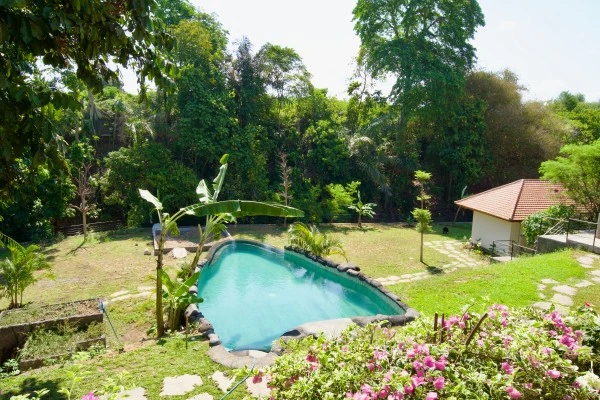
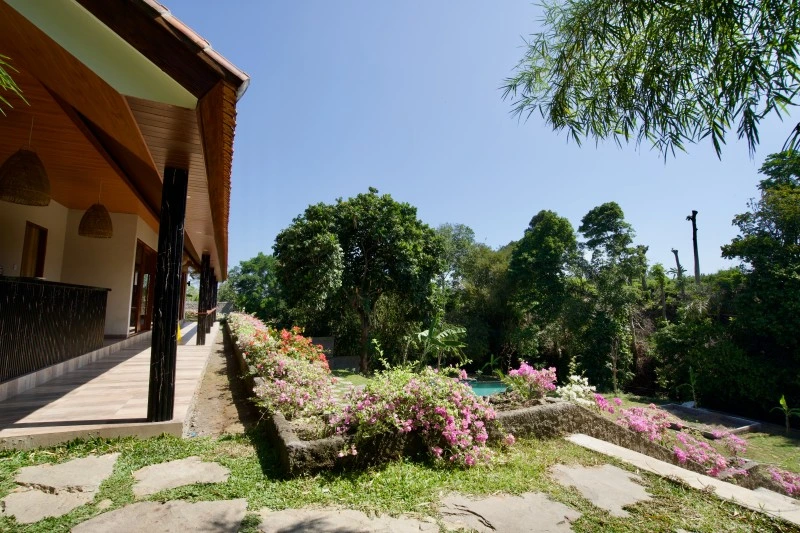
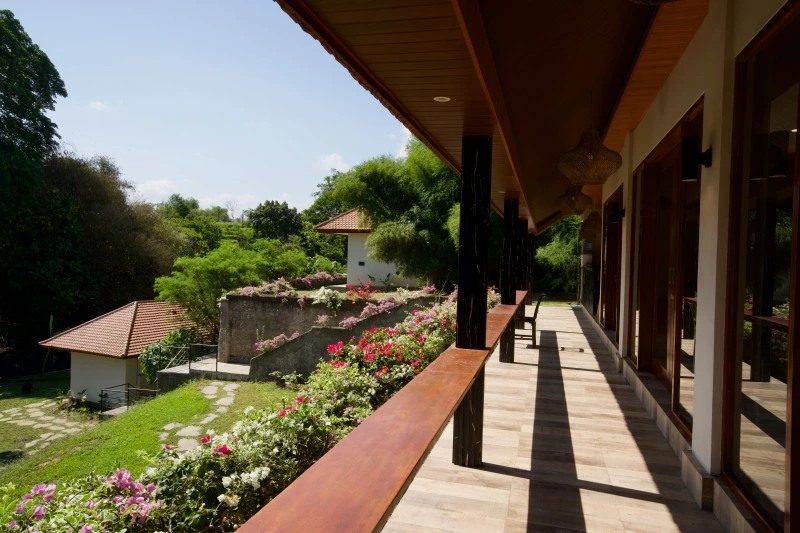
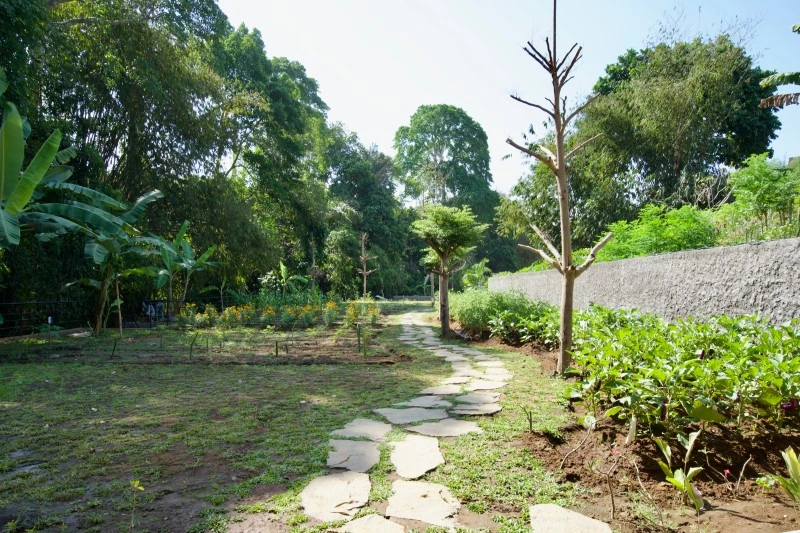
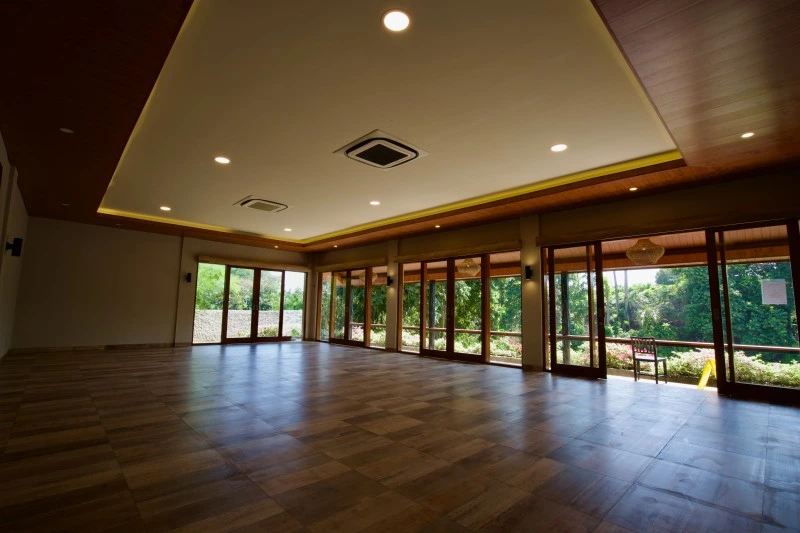
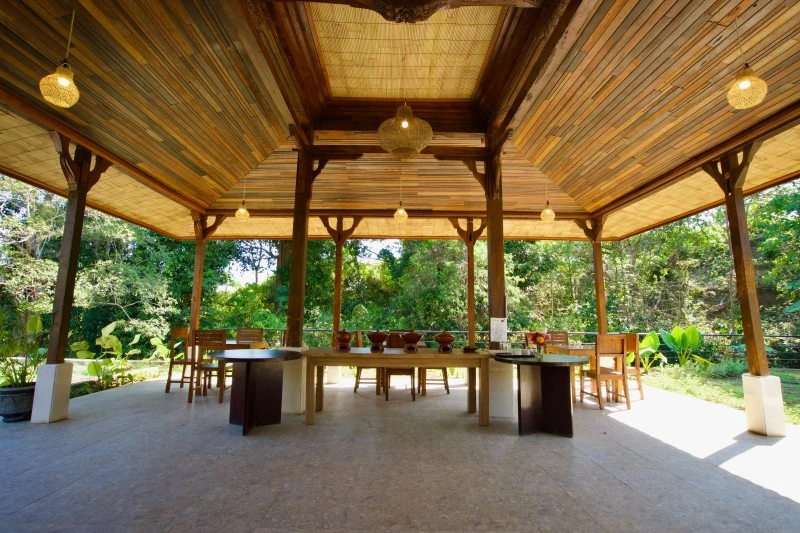
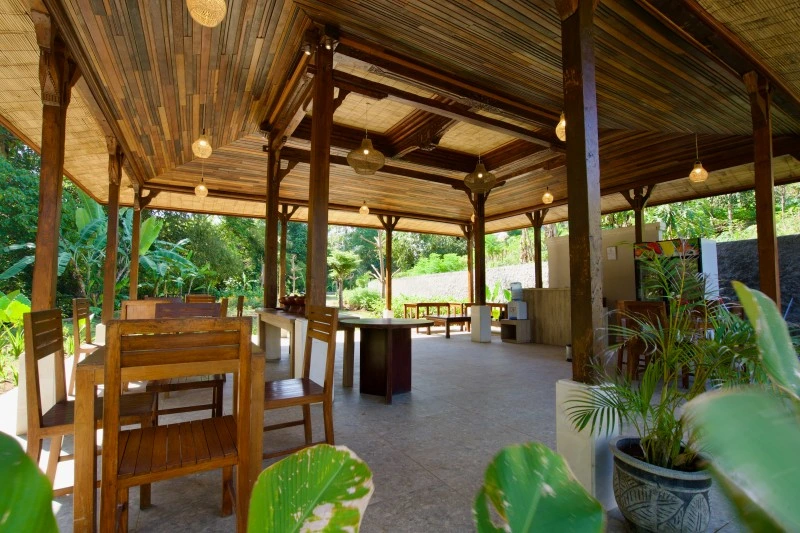
See the residential setup at Klungkung plus supporting visuals from both Bali campuses — rooms, shala spaces, dining areas, gardens, and study-friendly common areas.

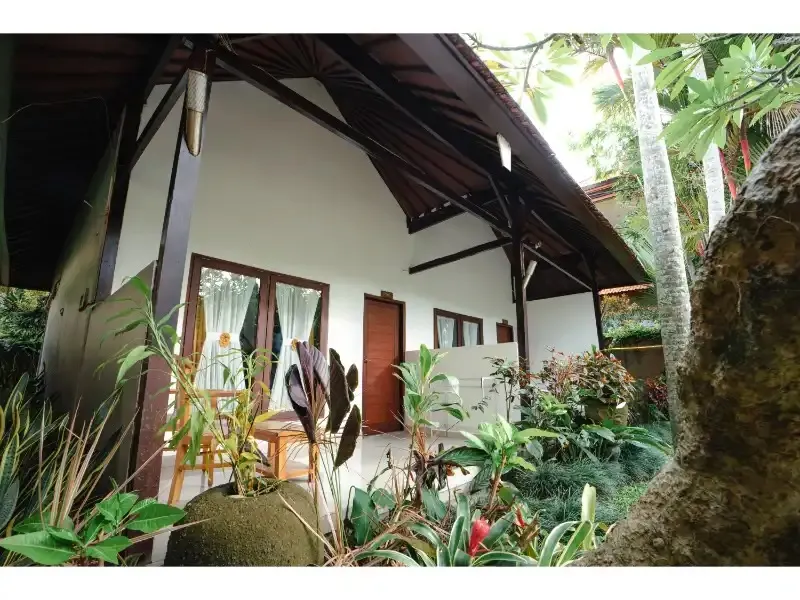
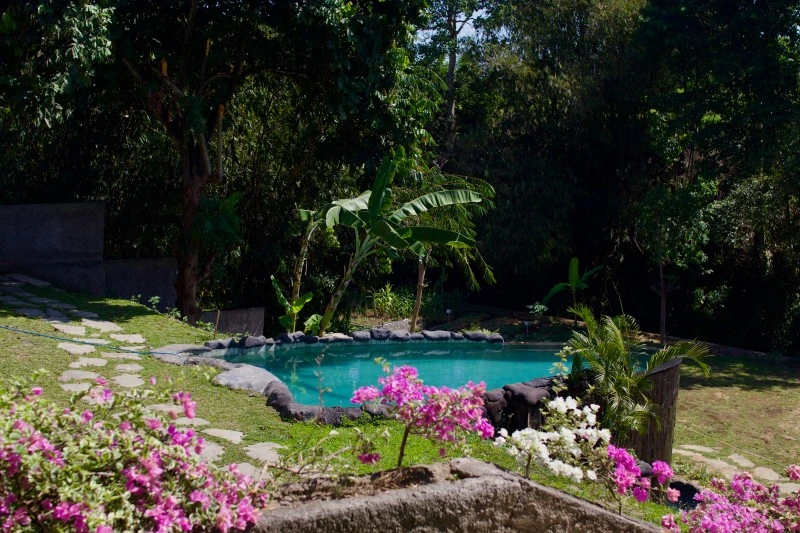
The Klungkung campus is a single residential property — accommodation, yoga shala, dining, and study areas all share the same grounds. There are no shared kitchen facilities (meals are provided), and the campus has a quiet residential character that students either take to immediately or appreciate by the end of the first week. Ubud accommodation is managed on the central Jl. Bisma campus, with separate room and pricing details on the Ubud course pages.

Rooms

Both private and shared rooms are available. All rooms include a private bathroom, air-conditioning, and natural light. Private rooms are the same specification as shared — you're paying for the privacy, not an upgrade in quality. The rooms are clean, functional, and comfortable. They're not hotel rooms. Students who arrive expecting resort-style accommodation are occasionally surprised; students who arrive expecting a focused training environment usually feel right at home.

Meals

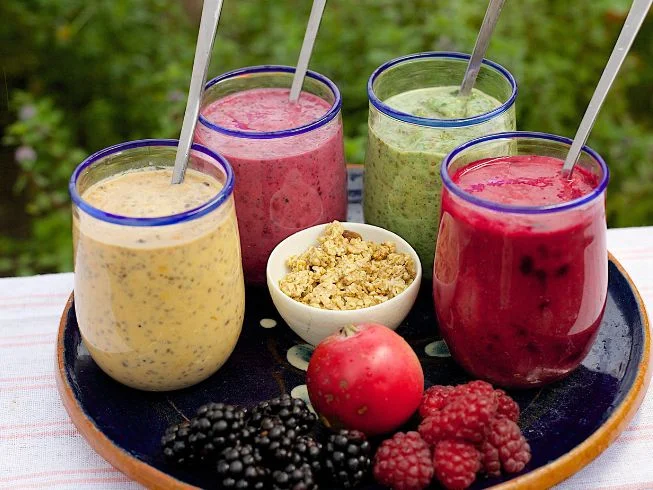
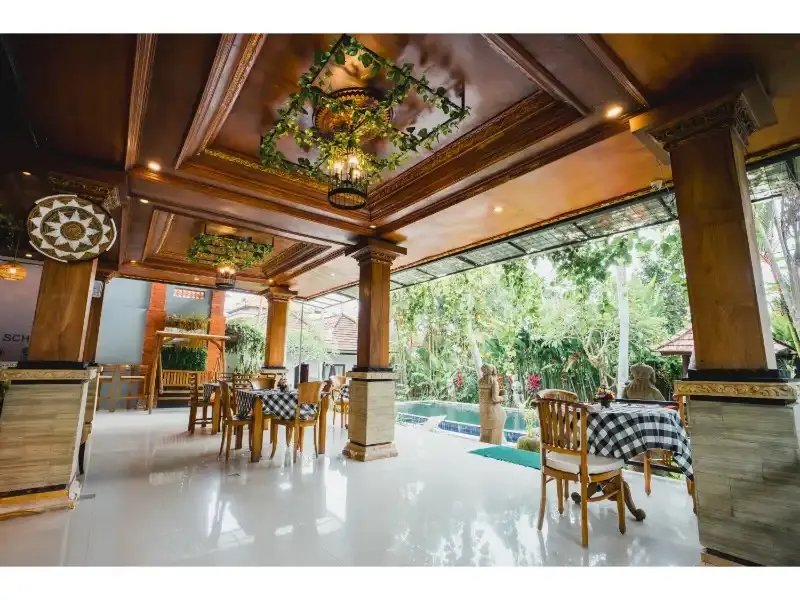
Three Satvik vegetarian meals daily, Monday through Saturday, prepared fresh on campus. Breakfast is typically porridge, fruit, and something warm. Lunch and dinner are rice-based with cooked vegetables, dal, and fresh local produce. Vegan meals and gluten-free options can be arranged — specify this when you enroll so the kitchen can plan. Sunday meals are lighter, and there are several good local warungs within walking distance for students who want variety.

The yoga shala

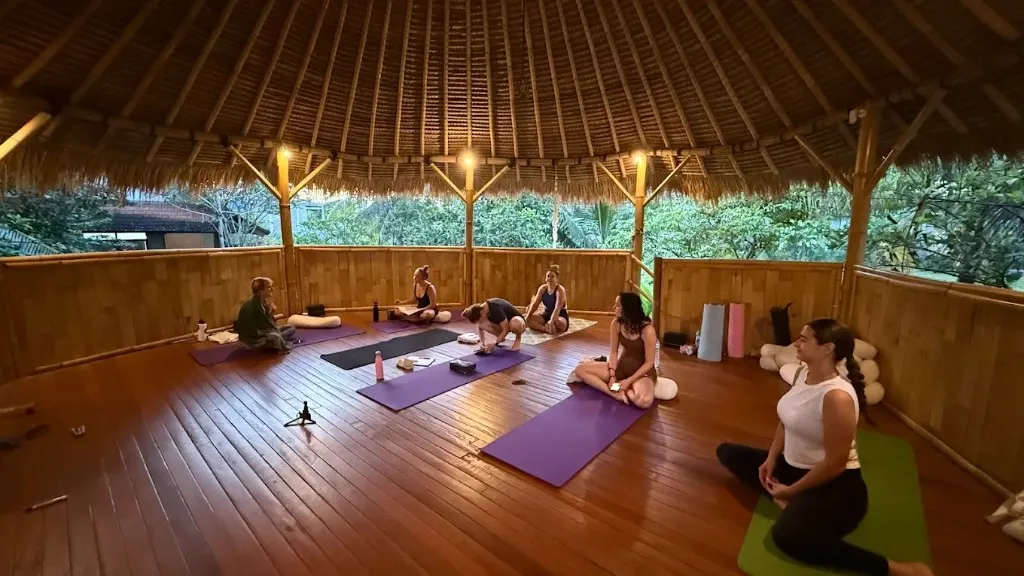
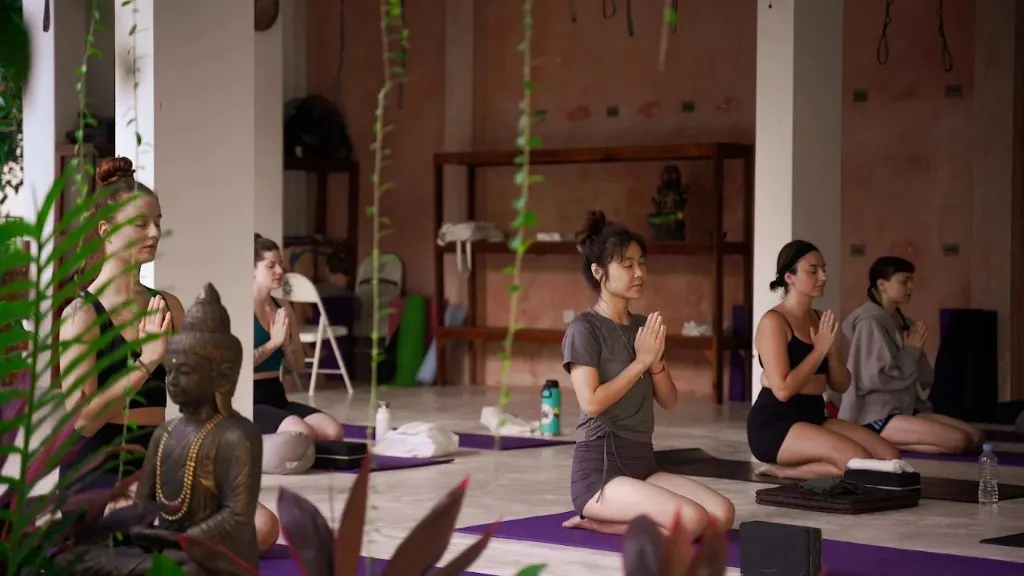
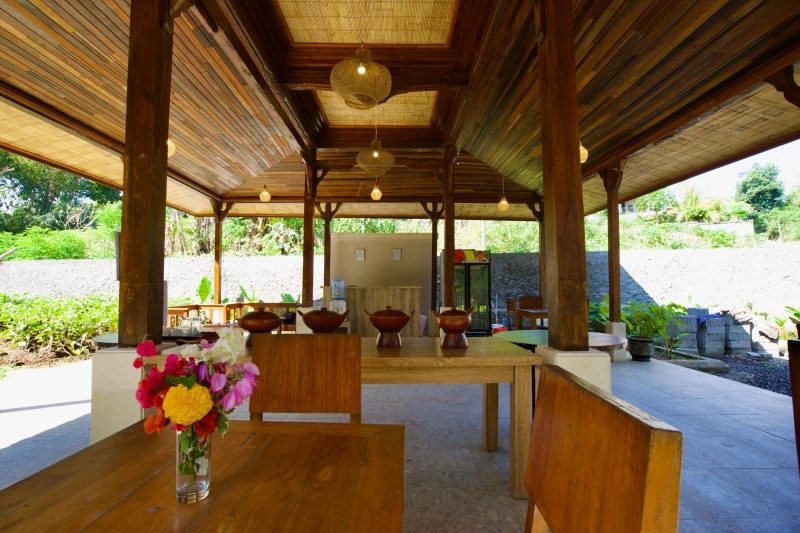
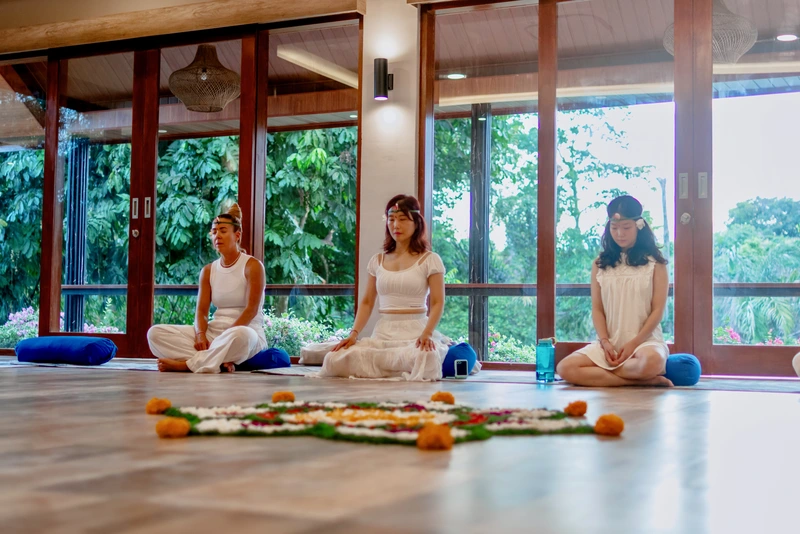
The main practice space is open-air with a roof — ventilated but covered, which makes it practical in Bali's climate. Mats, blocks, straps, bolsters, and blankets are all provided. There's a smaller secondary practice room for self-practice outside class hours. Students who want to continue practicing early in the morning before the scheduled session usually do so there.

Study and common areas

A quiet study area with tables and adequate lighting is used for theory review, lesson plan preparation, and post-session reflection. Garden seating is available for reading or informal discussion. Wi-Fi is available across the campus.

Additional inclusions

One complimentary Balinese massage is included in every residential package and is scheduled during the course, not left to students to arrange. Airport pickup from Denpasar (DPS) can be arranged for a fee. Laundry services are available nearby.

Teaching team

Meet the Bali YTT Teaching Faculty

Divinepath runs yoga teacher training at two Bali campuses — Klungkung and Ubud — each with its own resident teaching team. Profiles for every teacher are on the Bali teachers page →

Klungkung Campus Faculty

yoga teacher sachin ji

Yogi Sachin ji

Ashtanga, Vinyasa & Hatha Teacher

yoga teacher ashish ji

Yogi Ashish Ji

Lead Instructor — Hatha, Shatkarma & Pranayama

yoga teacher sunil ji

Yogi Sunil Ji

Vinyasa Flow, Pranayama

Saurav Rathore, yoga and Tantra teacher at Divinepath Bali

Saurav Rathore

Certified Yoga Instructor & Tantra Teacher

Wayan Muliarta, Ayurveda and philosophy teacher at Divinepath Bali

Wayan Muliarta

Ayurveda & Yogic Philosophy

Ubud Campus Faculty

Our campus on Jl. Bisma, central Ubud has its own teaching team of four. Yogi Ankit and Yogi Babloo Prasad guide asana, adjustment, philosophy, and pranayama; Hannah Ji teaches anatomy and Ayurveda; and Dominika Kerekesova Ji leads Yin.

Yogi Ankit

Lead Teacher · Ashtanga & Hatha

Yogi Babloo Prasad

Ashtanga Vinyasa, Philosophy & Pranayama

Hannah Ji

Anatomy & Ayurveda Teacher

Dominika Kerekesova Ji

Yin Yoga Teacher

Campus & facilities

Explore Our Bali Yoga School

You have met the teaching faculty — now see where training happens. Divinepath runs residential yoga teacher training at two Bali campuses with shared study standards, different settings, and campus-specific accommodation.

Getting started

How to Book Your Yoga Teacher Training in Bali

The booking process is simple, but seats are limited because each batch is capped at 10–15 students. Most months fill 6–8 weeks in advance, so check availability before your preferred intake.

Send your preferred course, campus, room type, and start month. We reply within 24 hours with availability, deposit instructions, and the written booking terms — including our refund rules.
1

Choose your course level and campus.

Decide between Klungkung and Ubud, and between 100h, 200h, 300h, and 500h. If you're comparing yttc Bali options, start with the campus style and course length that fit your schedule. If you're unsure about campus, the campus comparison section above covers the key differences. If you're unsure about course level, the FAQ section below goes into more detail — or you can message us directly and we'll help you decide.

2

Check availability and send your enquiry.

Monthly intakes run from the 1st of each month. Use the enquiry form to send your course level, campus, preferred month, and room choice. We confirm current room and seat availability within 24 hours.

3

Pay 25% deposit to confirm your seat.

Once availability is confirmed, pay a 25% booking deposit to reserve your place for that intake. We do not hold seats without a deposit because small batches fill quickly.

4

Receive confirmation and pre-arrival details.

After the deposit is received, we send your written confirmation, balance payment timeline, cancellation terms, airport pickup options, visa notes, packing list, and arrival-day schedule.

Book with confidence.

Refund rules: 30+ days before = full refund · 20–29 days = half back · under 20 days = no refund · new date up to 7 days before. Full rules

Before you arrive.

Check-in on course day one is before 12 PM. The Opening Ceremony starts at 4 PM. If your preferred intake is within the next 6–8 weeks, enquire before booking flights so we can confirm room availability first.

Enquire Now — We Reply Within 24 Hours
What Our Students Say
testimonial_left_shape
Bali campuses

Our Bali Location

Divinepath runs yoga teacher training from two Bali campuses: quiet residential Klungkung and central Ubud on Jl. Bisma.

Klungkung Campus

Jalan Pura Dalem, Satra, Kec. Klungkung, Bali 80761, Indonesia

Residential east Bali campus for quieter immersion, close study, meals, accommodation, and practice on one property.

Get Klungkung Directions

Ubud Campus

Jl. Bisma, Ubud, Kecamatan Ubud, Kabupaten Gianyar, Bali 80571, Indonesia

Central Ubud campus for students who want cultural walkability alongside structured residential yoga training.

Get Ubud Directions
FAQ’s

Bali Yoga Teacher Training — Frequently Asked Questions

faq

Yes. Divinepath is listed as a Registered Yoga School (RYS) with Yoga Alliance. You can verify the school listing directly → before enrolling — we encourage you to. After completing a 200-hour course, you're eligible to register as an RYT-200 with Yoga Alliance. The 300-hour and 500-hour programs support RYT-300 and RYT-500 registration respectively.

faq

We have two campuses. The Klungkung campus is in east Bali — about 90 minutes from Ngurah Rai International Airport (DPS) by car. It's a residential campus in a Balinese village, away from the main tourist areas. The Ubud campus is on Jl. Bisma in central Ubud, roughly 60 minutes from the airport. Airport pickup can be arranged for both locations.

faq

Both campuses run monthly intakes — most courses start on the 1st of each month. The daily schedule runs roughly from 6 AM to 7:30 PM, with a proper rest break in the afternoon. Check-in is before 12 PM on day one; check-out times vary by course. Full daily schedules and exact calendar dates are on the individual course pages:

faq

Tuition, study materials, three vegetarian meals daily (Mon–Sat), accommodation (private or shared with AC and private bathroom), one complimentary Balinese massage, and airport pickup from DPS are included in the residential package. International flights, visa fees, and travel insurance are not included. Vegan and dietary-specific meals can be arranged in advance. Full inclusions and current pricing are listed on each course page.

faq

The 200-hour course is open to regular practitioners — people who practice yoga consistently but haven't trained to teach. You don't need to be advanced. You don't need any specific physical ability. The 300-hour requires an existing 200-hour Yoga Alliance certificate from a recognised RYS school. There's no audition or fitness test. If you're unsure whether you're ready, message us and we'll give you a straight answer.

faq
  • 100-Hour: 10 days
  • 200-Hour: 23 days (check-in the 1st before 12 PM; check-out the 23rd before 12 PM, after the 7 AM Certificate Ceremony)
  • 300-Hour: 28 days (check-in the 1st before 12 PM; check-out the 29th before 12 PM)
  • 500-Hour: ~55 days — the 200-hour and 300-hour completed consecutively

The Opening Ceremony for all courses is at 4 PM on day one.

faq

Rooms have private bathrooms and air-conditioning. Both private and shared options are available — the room specifications are the same, so you're choosing whether you want your own space or a lower rate. Meals are Satvik vegetarian, prepared fresh on campus three times daily. The standard menu is rice-based with cooked vegetables, dal, fresh fruit, and local produce. Vegan and gluten-free meals can be requested when you enroll.

faq

The core styles are Hatha and Vinyasa, with Ashtanga fundamentals introduced in the 200-hour and expanded in the 300-hour. Beyond asana, the syllabus covers pranayama, meditation, anatomy and physiology, yoga philosophy (Yoga Sutras, 8 Limbs, Bhagavad Gita), teaching methodology, sequencing, and supervised teaching practicum. The full syllabus for each course level is on the individual course pages.

faq

Assessment is ongoing rather than a single exam. Faculty evaluate attendance, participation in teaching labs, lesson plan quality, and a final practical teaching session. Most students find the assessment process clear and supportive rather than high-pressure. On completion you receive a certificate that qualifies you to register with Yoga Alliance at the appropriate level (RYT-200, RYT-300, or RYT-500).

faq

We provide a visa guidance document covering the most common passport types (tourist visa, visa on arrival, B211A social-cultural visa) — students apply independently based on their situation. Airport pickup can be arranged from Denpasar (DPS). We also send a pre-arrival guide covering SIM card options, currency exchange, and getting to campus. If something changes with your travel plans, contact us directly and we'll help you work through it.

faq

Groups are capped at 10–15 students per batch. In the teaching labs — which run every afternoon — you'll receive individual feedback from faculty on every session you lead. At that group size, it's genuinely possible for teachers to know where each student is in their development and to adjust accordingly. We've had offers to increase batch sizes and have consistently declined because it changes the quality of what we can provide.

faq

Light breathable clothing for practice (Bali is warm and humid year-round). A refillable water bottle. A notebook — theory sessions involve a lot of writing. Any prescription medication. A travel adapter (Indonesia uses Type C/F plugs, 220V). Mats, blocks, straps, and blankets are all provided on campus, but bring your own mat if you prefer.

faq

Submit an enquiry → with your preferred course, campus, and start month. We'll confirm availability within 24 hours. A deposit secures your place; the balance is due before the course starts. The full payment schedule, cancellation policy, and booking terms are sent in writing before you're asked to pay anything.

faq

If you need to cancel or change your course date, here is how it works:

  • 30 days or more before start — Full refund (real emergency only, like illness or a family problem).
  • 20 to 29 days before start — Half your money back.
  • Less than 20 days before start — No refund. Your room, food, and teachers are already booked.
  • Need a new date instead? — Tell us up to 7 days before start. We can move you once to a later course if you have a real reason.

Read the full refund rules

faq

There is no upper age limit. Students in their 50s, 60s, and beyond join regularly — the training is physically demanding but adaptable, and teachers are experienced in working with students at different stages of physical capacity. The minimum age is 18. If you're 16–17, parental or guardian consent may be required — contact us to discuss your situation.

Reviewed & Fact-Checked By

Yogi Ashish Ji

Certified Yoga Teacher & Hatha-Vinyasa Expert, Divinepath Yoga School & Retreat

Accreditation verified: Yoga Alliance public profile


View Profile
View 2026 Dates Enquire Now