Ashtanga means “eight limbs” in Sanskrit. The name comes from Patanjali’s Yoga Sutras, which describe eight interconnected practices that together form the complete yoga path. When most people say “Ashtanga yoga,” they mean the physical practice (asana) systematised by Sri K. Pattabhi Jois in Mysore, India. But the full system goes far beyond poses.
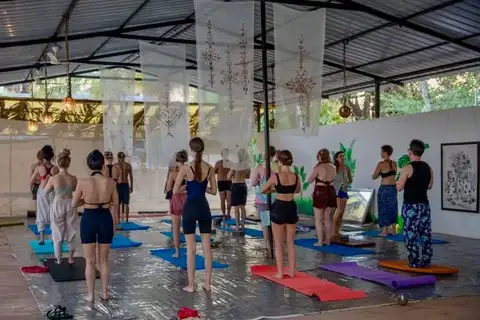
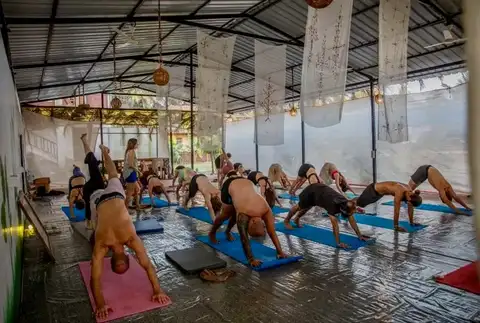
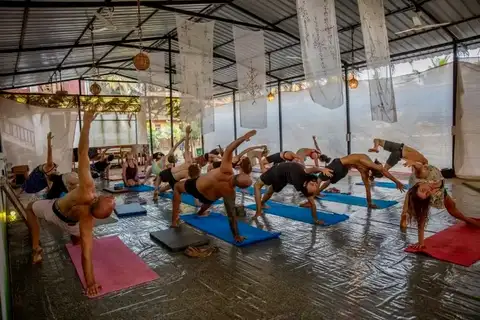
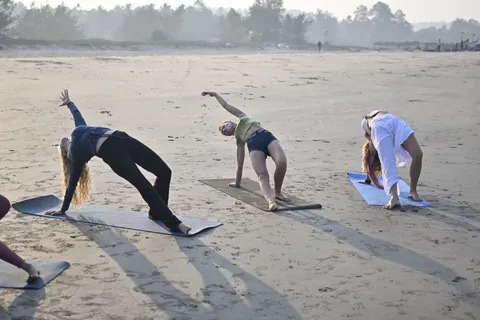
Ashtanga Vinyasa Yoga is a dynamic, physically demanding style where you perform a set sequence of poses in a specific order, synchronized with your breath. Every movement has a breath count. Every pose has a gazing point. Nothing is random. The sequence is the same every time you practise, which means your body and mind progressively deepen into the same territory rather than jumping between different routines.
This is what separates Ashtanga from Vinyasa flow, where the teacher creates a different sequence each class. In Ashtanga, the sequence is fixed. Your growth happens through repetition, not variety. For pose names, see our Ashtanga yoga asanas names guide. For a broader educational overview (different intent from this product page), read What Is Ashtanga Vinyasa Yoga Teacher Training?