I've already outlined the month-by-month structure above. Here's the detail on each subject area across the full 53 days.
Asana: Hatha and Ashtanga Vinyasa
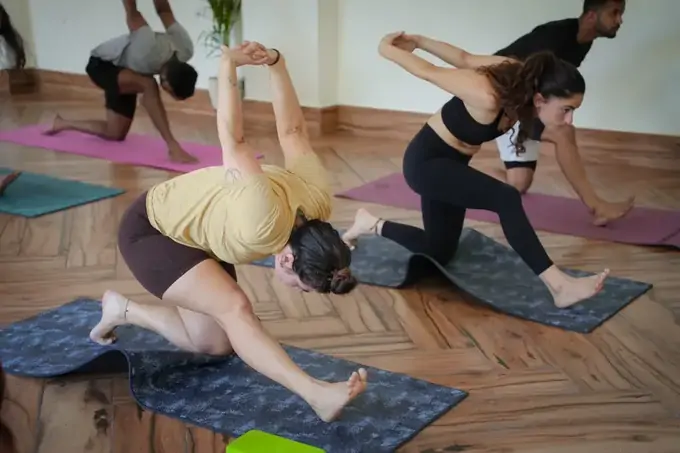
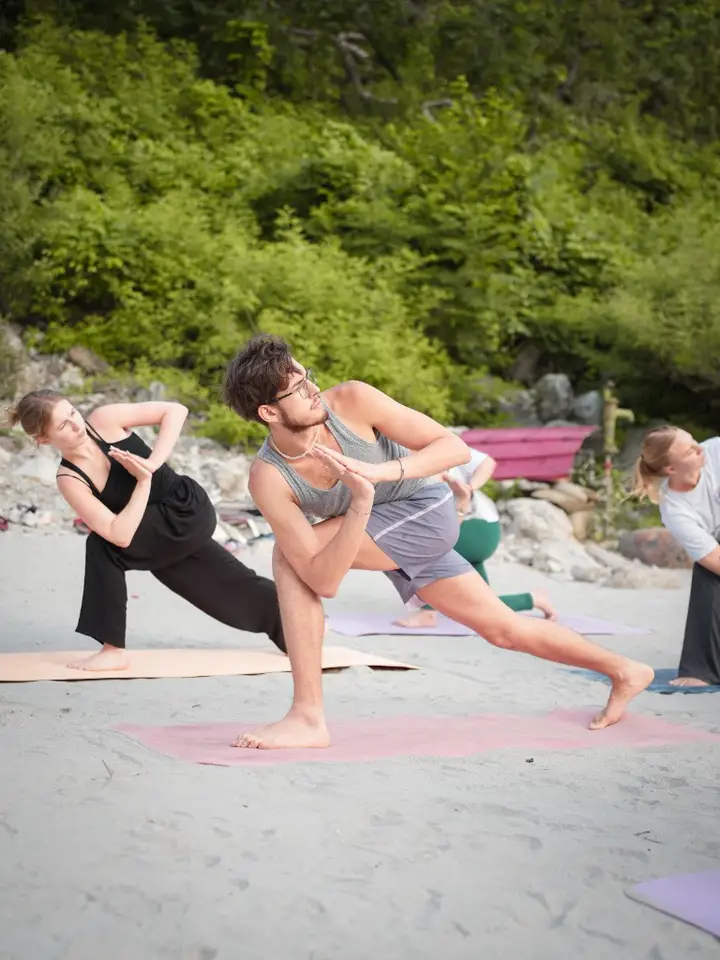
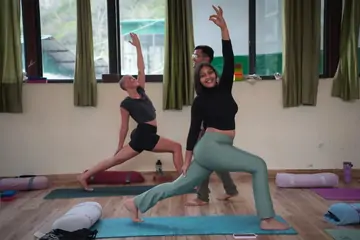
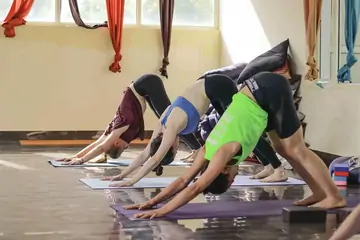
You'll practise and learn to teach 80+ postures across standing, seated, supine, prone, and inverted categories. Month one focuses on correct form and alignment in each pose. Month two moves into Ashtanga Primary Series, advanced backbends, hip openers, and arm balances. By week six, you're designing full sequences — not following ours.
We also spend time on what makes Vinyasa Flow different from classical Vinyasa. How to structure a flow class. Why flow is harder to teach than a fixed sequence, and how to get comfortable with it.
Alignment and Adjustments
Alignment isn't just about making poses look pretty. We teach you to spot flat feet versus high arches, knock knees versus bow legs, and forward-head posture — and how yoga can address each of these. You'll learn prop use (blocks, straps, bolsters, chairs) and when props genuinely help versus when they become a crutch.
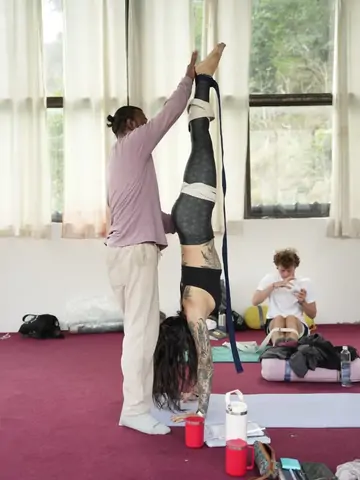
The hands-on adjustment clinic runs in month two. When to adjust, when not to, how to read a student's body before you touch them. We practise on each other, with awareness of consent and contraindications.
Pranayama and Shatkarma
Every morning starts with pranayama and cleansing practices. You'll learn Ujjayi, Kapalabhati, Nadi Shodhana, Bhastrika, and Surya Bhedana. Shatkarma (the six yogic cleansing techniques) includes Jal Neti (nasal wash with salt water), Sutra Neti (nasal thread), Trataka (eye cleansing through candle gazing), Kapalabhati (skull cleansing), and Kunjal (abdominal wash). Teachers demonstrate each technique and explain the purpose and benefits before you practise.
Meditation and Mantra
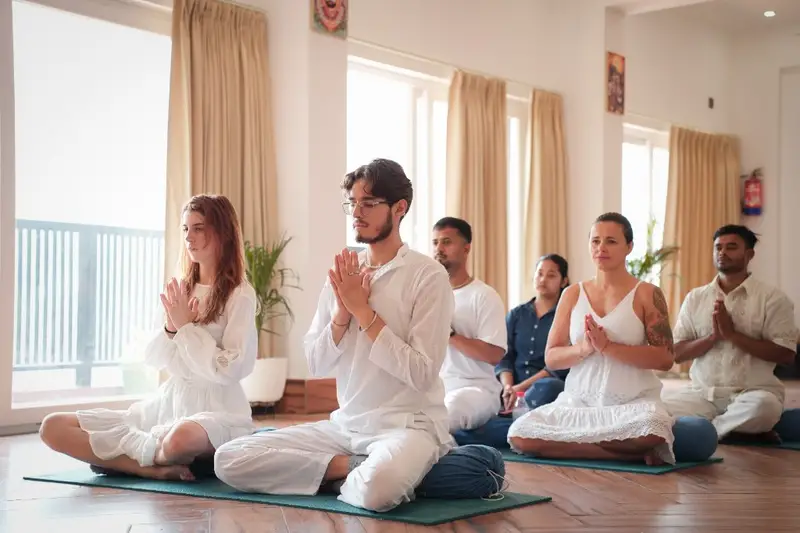
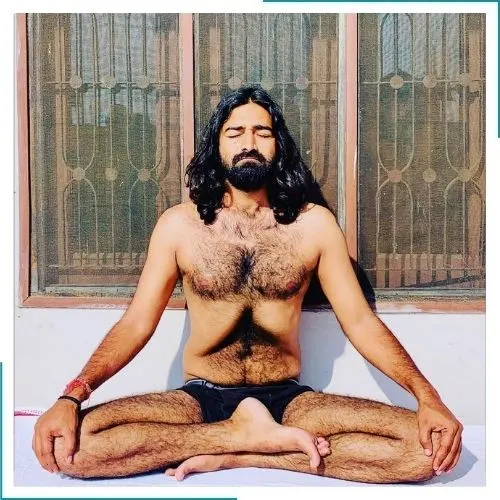
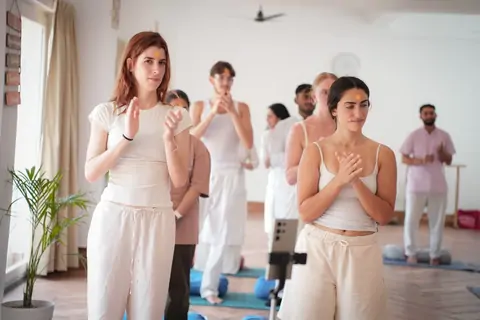
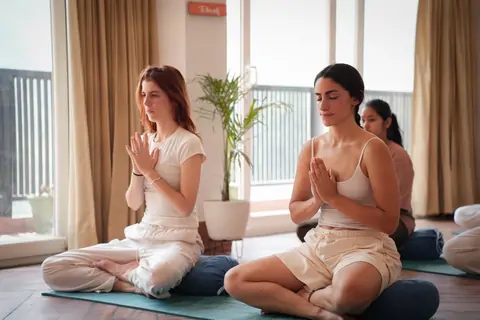
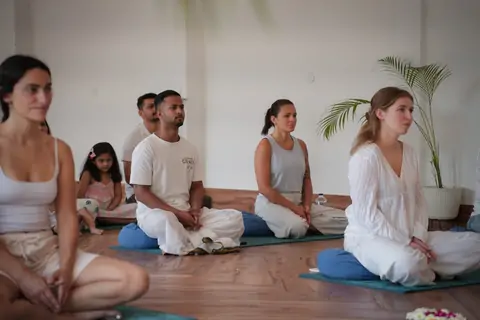
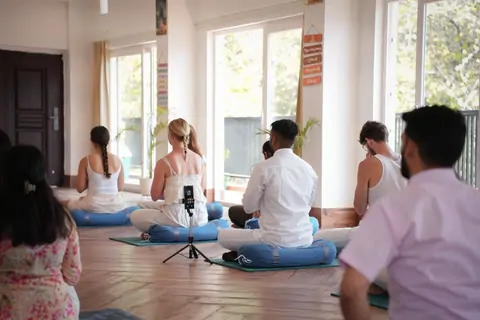
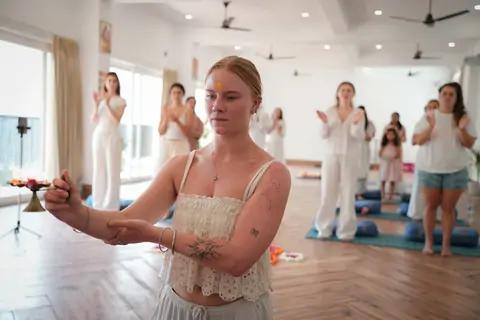
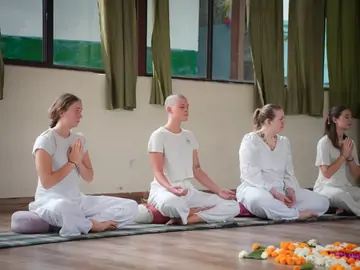
Month one covers basic seated meditation and breath awareness. Month two introduces mantra chanting, trataka, yoga nidra, and five-element meditation. Evening sessions include mantra chanting — it's optional but most students end up attending. Several graduates have told me those sessions were their most memorable part of the training.
Anatomy and Physiology
Month one is functional anatomy — how muscles and joints actually move in poses, not textbook memorisation. Month two goes deeper: skeletal variation (why one student's Padmasana looks different from another's based on hip socket structure), kinesiology, tension versus compression, and how to adapt poses for different body types.
Philosophy
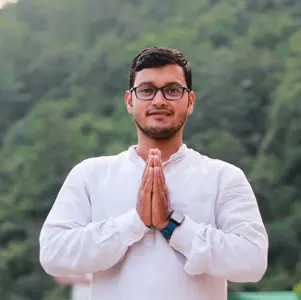
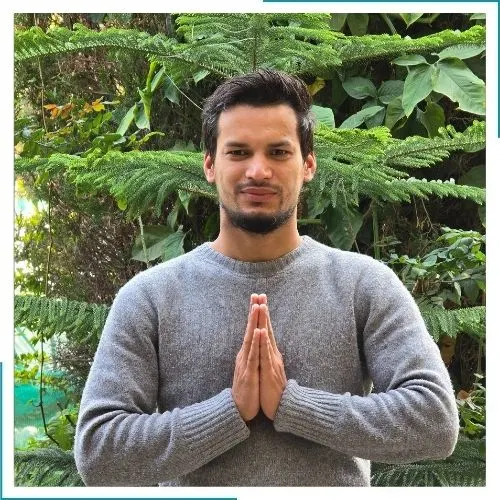
Jagjeet Singh Ji teaches the Yoga Sutras of Patanjali in month one, then introduces the Bhagavad Gita in month two. These aren't academic lectures — he grew up in a family of practitioners and connects the texts to real teaching scenarios. You'll also get an introduction to Ayurvedic principles and how they relate to yogic diet and lifestyle.
Teaching Methodology
Teaching practice starts in week two. Short segments at first — cueing a single pose, then a short sequence. By month two, you're designing and leading full 75-minute classes with modifications for different levels. Our teachers give written and verbal feedback after every practicum. It's where most of the real learning happens.
I added a business-of-yoga section because I got tired of watching graduates struggle to find students. It covers pricing, building a local following, social media basics, workshop planning, and the practicalities of opening a studio or retreat.