Six days · Tapovan, Rishikesh
Prenatal and Postnatal Yoga Teacher Training in Rishikesh, India
This prenatal yoga teacher training is a six-day residential course in Tapovan, Rishikesh. You learn pregnancy anatomy, trimester-by-trimester sequencing, contraindications, postnatal recovery, and teaching methodology. You study the material, and you teach supervised classes before you leave.
Fees start at $249 for a shared room or $349 for a private room. International students pay in USD. The fee includes accommodation, three vegetarian meals a day, and study materials. No 200-hour yoga certificate is required to join.
The course is for a yoga teacher adding prenatal work, a doula or midwife who wants movement-based tools, or someone drawn to pregnancy yoga for personal reasons. It is built for practical teaching, not a stack of theory. For the wider certification path — 200-hour rules, Yoga Alliance RPYT versus this school certificate, and typical market costs — read how to become a prenatal yoga instructor. It runs alongside our other yoga teacher training courses in Rishikesh.
Across the six days
Prenatal yoga training: what you study
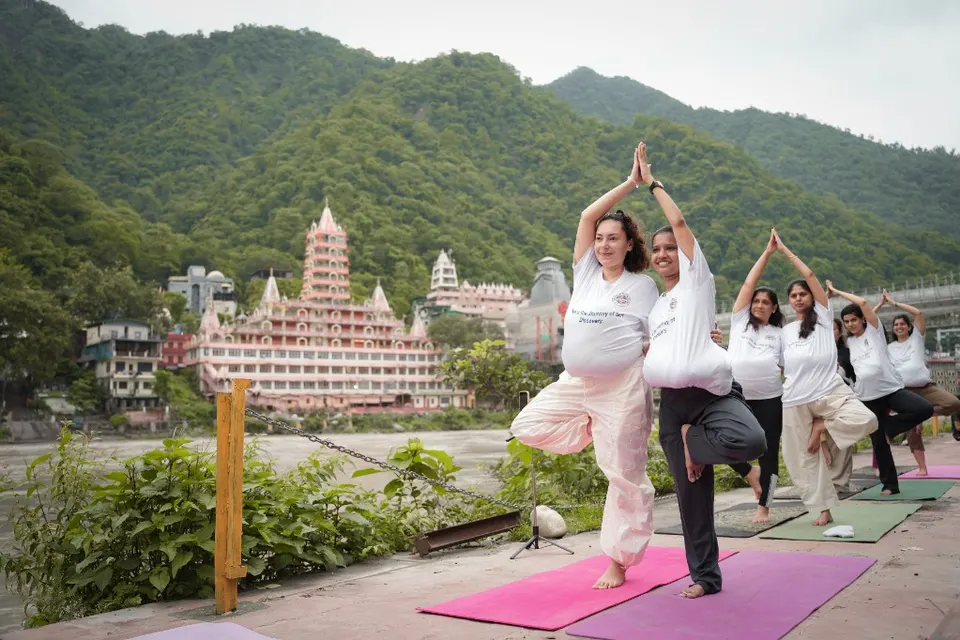
Prenatal yoga training here is the practical work: which poses change, and how you teach them. The topics cover pregnancy and the weeks after birth. Anatomy, breath, and teaching practice run through both.
| Module | What you learn |
|---|---|
| Prenatal asana and sequencing | Safe poses by trimester, modifications, prop use, and movements to avoid |
| Pregnancy anatomy and physiology | Joint laxity, pelvic floor changes, circulation, and how the muscles and joints adapt |
| Postnatal yoga and recovery | Diastasis recti, pelvic floor restoration, and positions that work while breastfeeding |
| Pranayama and breathwork | Pregnancy-safe breathing, and breathwork used in labour preparation |
| Garbh Sanskar | Traditional prenatal bonding: visualisation, mantra, and conscious connection |
| Nutrition, diet, and lifestyle | Pregnancy nutrition basics, vegetarian food, and daily routine |
| Teaching methodology and practicum | Class planning, cueing, hands-on assists, and supervised teaching |
| Meditation and mantra | Calming practice and chanting for expectant mothers |
Trimester by trimester
Prenatal asana: the core of this training
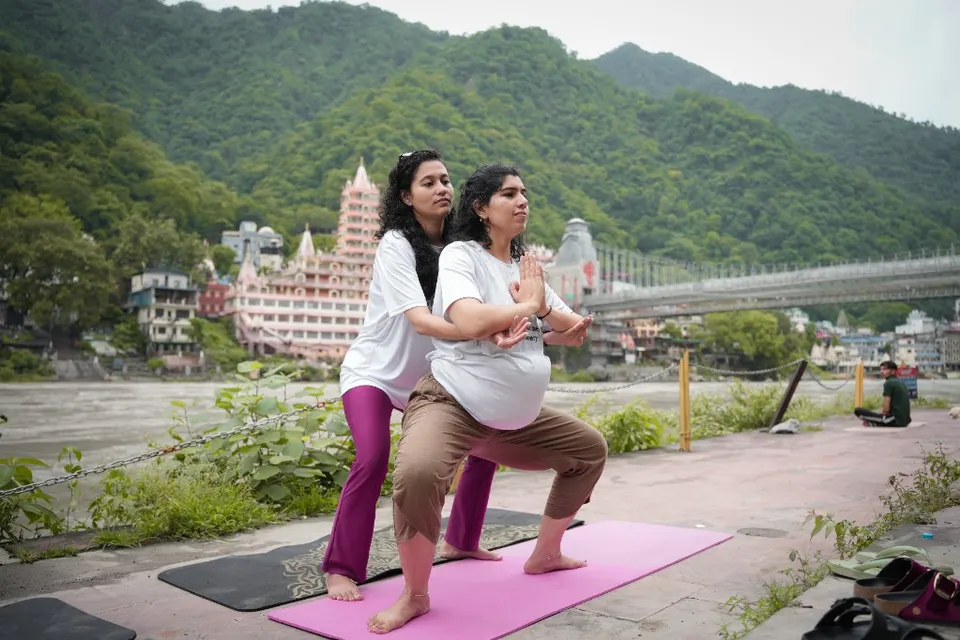
Asana and sequencing are a core part of this prenatal yoga teacher training. You learn how to modify standing poses, forward folds, twists, and hip openers for each trimester, and why those changes matter.
First-trimester work focuses on fatigue and positions that are kinder when someone feels sick. The body may not look different yet. Second trimester is often the widest range: energy returns and more poses are available. Third trimester narrows again. Weight shifts, the belly needs space, balance changes, and some poses are unsafe.
You practise sequencing for all three. A modification that keeps a pose useful is not the same as a weaker copy of the original pose.
What changes in the body
Pregnancy anatomy: what actually changes
This is pregnancy anatomy, not a general anatomy class with a pregnancy chapter added at the end. The class covers joint laxity, the sacroiliac joints, the pelvic floor, and circulation, and what those changes mean for a class plan. Inversions are not taught on this course.
For the health guidance behind exercise in pregnancy, read the ACOG committee opinion on physical activity and exercise during pregnancy and the postpartum period. It describes activity as safe for people without complications, and it lists what to avoid, including a high risk of falling and long periods of lying still on the back after the first trimester. The WHO guidelines on physical activity and sedentary behaviour include recommendations for pregnant and postpartum women.
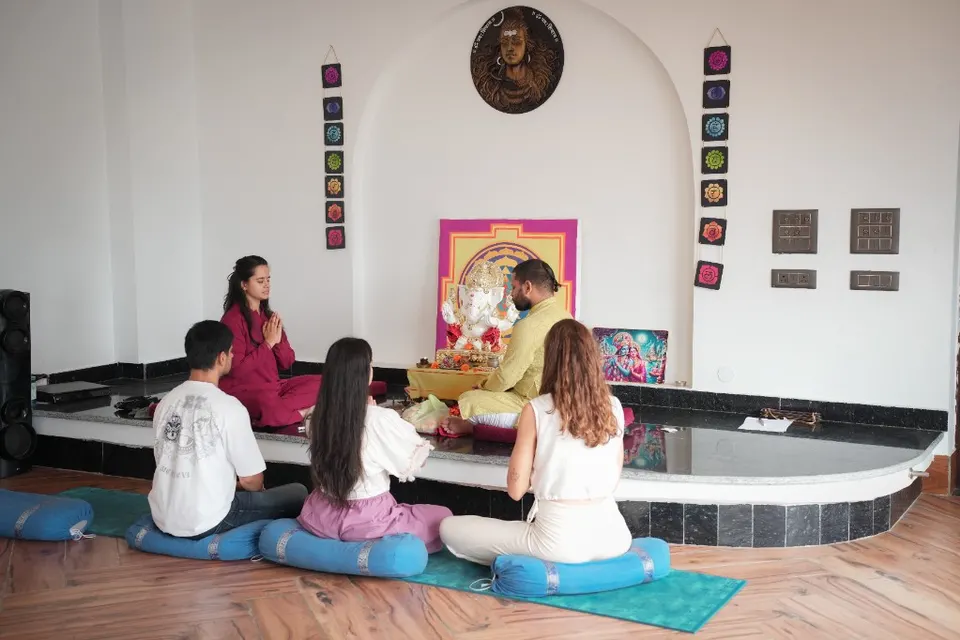
Taught in Rishikesh
Garbh Sanskar: a traditional element
Garbh Sanskar is a traditional practice of prenatal bonding taught in this region. The class uses breath, visualisation, and mantra. It is cultural material in the course, not a medical treatment, and it is separate from the exercise guidance published by ACOG and WHO.
You do not have to teach Garbh Sanskar after you leave. It is here because the campus is in Rishikesh, where the practice is part of how pregnancy is talked about.
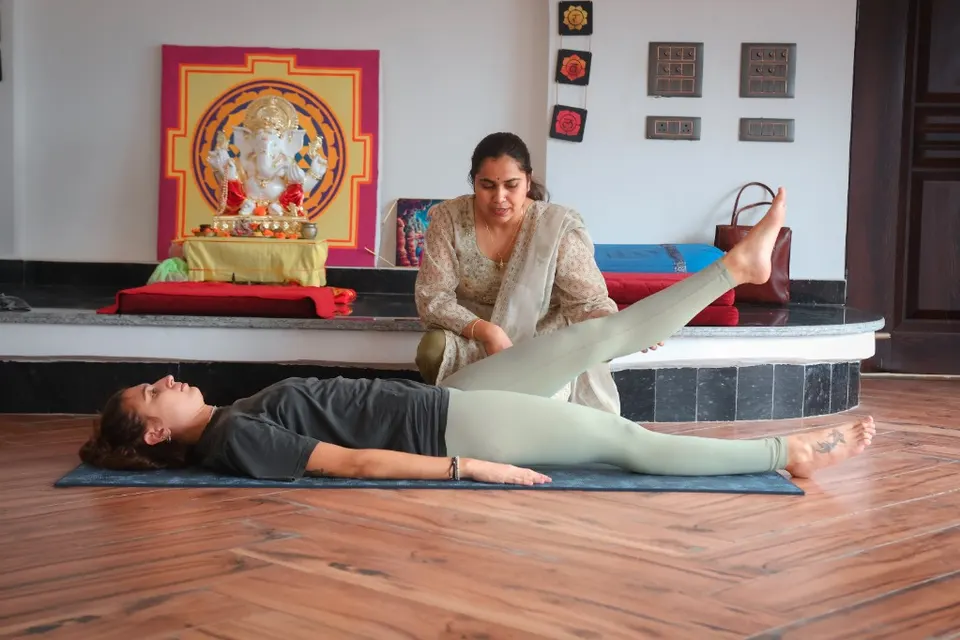
After the birth
Prenatal and postnatal yoga teacher training: the postnatal module
Postnatal work starts after the birth. It is not a plan to “get back to a normal class.” The body has been through a structural change, and recovery depends on the kind of delivery.
The module covers diastasis recti, the abdominal separation common after pregnancy, pelvic floor restoration, positions that are comfortable while breastfeeding, and how to move from gentle work back toward a regular practice. Vaginal birth and caesarean birth follow different timelines. You also learn when to send a student to a physiotherapist or a doctor instead of working through a symptom in class.
A postnatal class has to work for new parents: broken sleep, uneven schedules, and a baby who may need feeding during the hour. Sequences are shorter, timing can flex, and it is normal to pause when someone steps out.
The paper you receive
Prenatal yoga instructor certification: what you receive
When you finish the six days, Divinepath Yoga School & Retreat issues a Prenatal and Postnatal Yoga Teacher Training certificate.
Divinepath is a Yoga Alliance registered school for RYS 200, RYS 300 and RYS 500 (School ID 457520). That registration is for those courses. The certificate for this course is issued by the school. It is not a Yoga Alliance prenatal credential. The school’s registration is on its Yoga Alliance public profile.
If you still need a general teaching certificate, the 200 hour yoga teacher training in Rishikesh is the RYT 200 pathway. This prenatal course does not replace it. Full guide: how to become a prenatal yoga instructor.
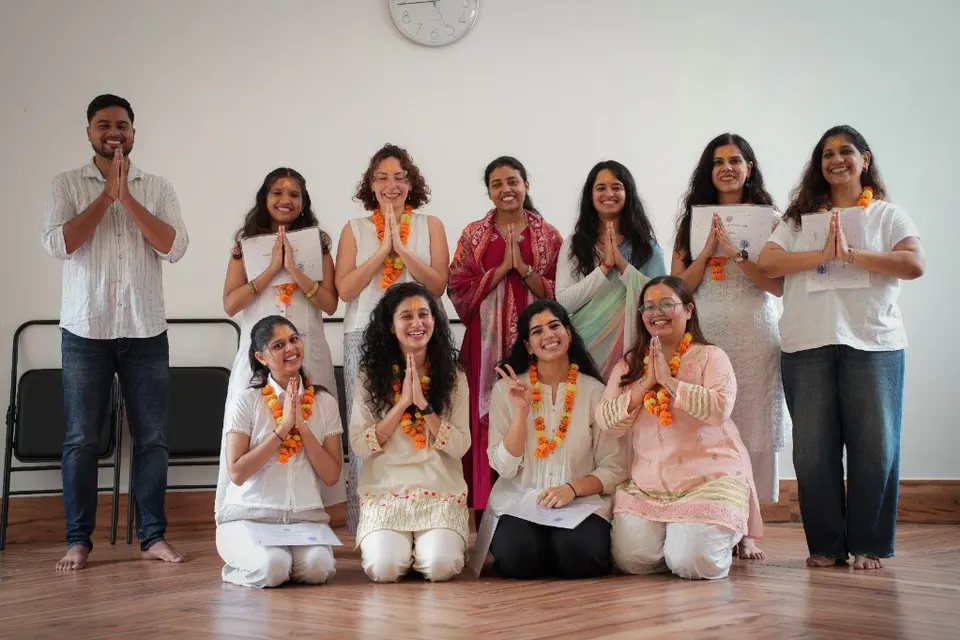
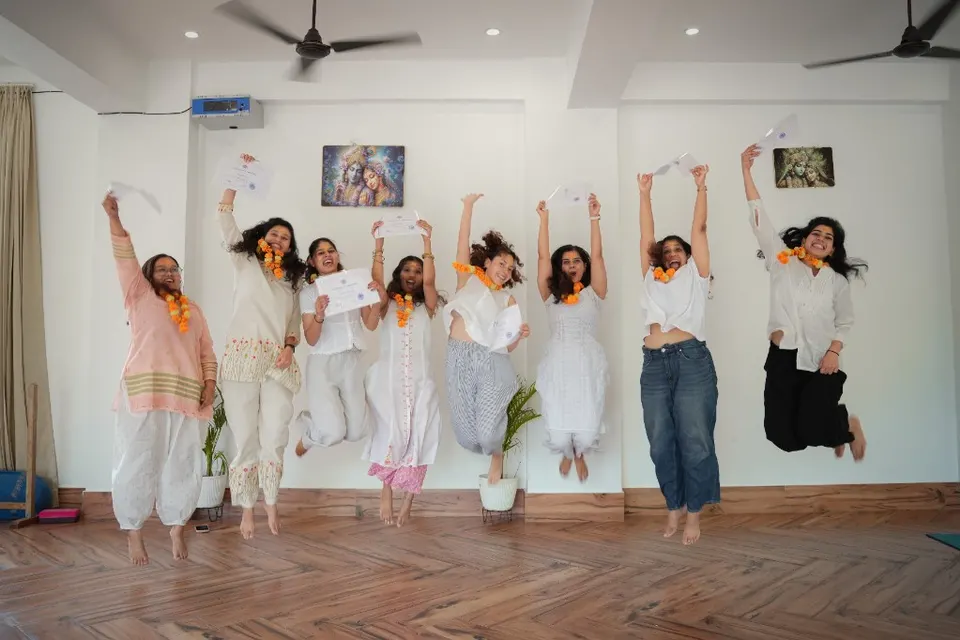
One training day
Daily schedule
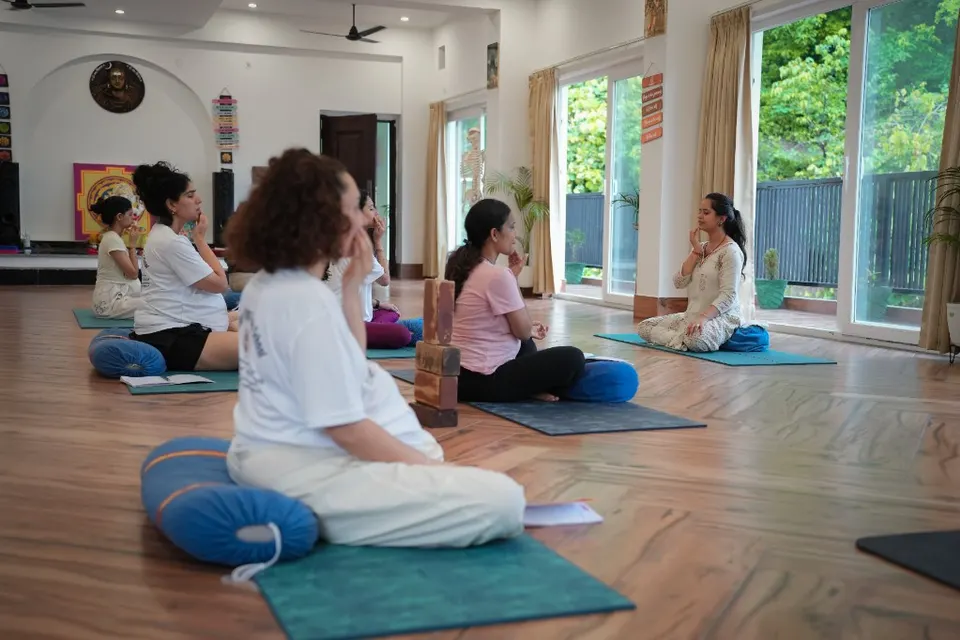
Each training day follows the same order. Morning is asana and pranayama. Late morning is theory. The afternoon Garbh Sanskar workshop is the longest block. The day closes with meditation.
| Time | Session |
|---|---|
| 06:30 – 08:00 | Prenatal or postnatal asana |
| 08:00 – 09:00 | Shatkarma and pranayama |
| 09:00 – 10:00 | Breakfast |
| 10:30 – 11:30 | Mantra chanting |
| 11:45 – 12:45 | Nutrition, diet, and anatomy |
| 13:00 – 14:00 | Lunch |
| 14:00 – 16:00 | Self-study or rest |
| 16:00 – 18:00 | Garbh Sanskar workshop |
| 18:00 – 19:00 | Meditation |
| 19:00 – 20:00 | Dinner |
The break after lunch is yours: self-study, rest, or a walk to the Ganga. The day is full. That gap is part of the plan.
Published prices
Prenatal yoga teacher training in India: fees and dates
Course fees
The fee covers the six-day residential course: the room, three meals a day, study materials, and the training. Check-in is on the 25th between 8:00 am and 12:00 pm. Check-out is at 12:00 pm on the 30th, so the stay is five nights.
| Room | International students | Indian students |
|---|---|---|
| Shared room | $249 USD | Rs 19,999 |
| Private room | $349 USD | Rs 24,999 |
Study materials, the welcome ceremony, and Wi-Fi are in the fee. Flights and the visa are not. The booking amount is 25% of the fee. You pay it in the table below, and it holds the seat. The other 75% is due on arrival.
What is included
- Accommodation: shared or private room with an attached bathroom, hot water, and Wi-Fi. The centre is in Tapovan, a quieter part of Rishikesh near the Ganga.
- Meals: three vegetarian meals a day, vegetarian cooking with seasonal fruit and vegetables, herbal tea, and filtered drinking water.
- Study materials: a course manual and reference notes.
- Welcome ceremony on the first day.
Dates and booking
25th–30th each month · Shared $249 · Private $349 · 25% booking amount holds the seat. February runs 25 Feb–2 Mar.
Upcoming batches
| Dates | Shared room | Private room | Status |
|---|---|---|---|
| 25–30 Nov 2026 |
$249
$62 deposit
|
$349
$87 deposit
|
Closed |
| 25–30 Dec 2026 |
$249
$62 deposit
|
$349
$87 deposit
|
Open |
| 25–30 Jan 2027 |
$249
$62 deposit
|
$349
$87 deposit
|
Open |
| 25 Feb – 2 Mar 2027 |
$249
$62 deposit
|
$349
$87 deposit
|
Open |
| 25–30 Mar 2027 |
$249
$62 deposit
|
$349
$87 deposit
|
Open |
| 25–30 Apr 2027 |
$249
$62 deposit
|
$349
$87 deposit
|
Open |
| 25–30 May 2027 |
$249
$62 deposit
|
$349
$87 deposit
|
Open |
| 25–30 Jun 2027 |
$249
$62 deposit
|
$349
$87 deposit
|
Open |
| 25–30 Jul 2027 |
$249
$62 deposit
|
$349
$87 deposit
|
Open |
| 25–30 Aug 2027 |
$249
$62 deposit
|
$349
$87 deposit
|
Open |
| 25–30 Sep 2027 |
$249
$62 deposit
|
$349
$87 deposit
|
Open |
| 25–30 Oct 2027 |
$249
$62 deposit
|
$349
$87 deposit
|
Open |
| 25–30 Nov 2027 |
$249
$62 deposit
|
$349
$87 deposit
|
Open |
Same Tapovan campus
Accommodation and meals
This course uses the same Tapovan campus as the 200-hour teacher training. You stay in a shared or private room in that building: ensuite bathroom, hot water, Wi-Fi, and the yoga hall and dining room on site. The campus has a garden. It does not have a swimming pool. Room photos are on the Rishikesh accommodation page. Airports, trains, and the campus address are on how to reach Rishikesh.


Campus tour
This is the same film used on the 200-hour page. It walks through the rooms, bathrooms, balconies, dining space, and yoga hall at Divinepath Tapovan. It is this building, not stock footage.
Meals
Three meals a day are included. The kitchen cooks vegetarian food with fruit, grains, vegetables, and some dairy such as paneer. Breakfast follows the morning class. Lunch and dinner are on campus. Tell us about allergies when you book. These photos are from the Rishikesh dining hall.



Who should come
Who this course is for
It suits:
- Yoga teachers who want to add prenatal and postnatal classes. If students already ask about pregnancy modifications, this replaces guesswork with a taught method.
- Physiotherapists, midwives, doulas, and birth companions who want movement tools alongside the knowledge they already have.
- Anyone drawn to pregnancy yoga. A 200-hour certificate is not required. A personal practice and a real interest in the work are enough to start.
Who should look elsewhere
Who this course is not for
- If you want a general yoga teacher training, start with the 200-hour programme in Rishikesh. This prenatal course is a specialisation, not a replacement.
- If you need online-only study, this is not that course. It is six days in Rishikesh, in person. The teaching practice is hands-on.
- If you have a high-risk pregnancy and want to join as a student, talk to your doctor first. Pregnant students are welcome only with medical clearance.
Fifteen students
Your teachers
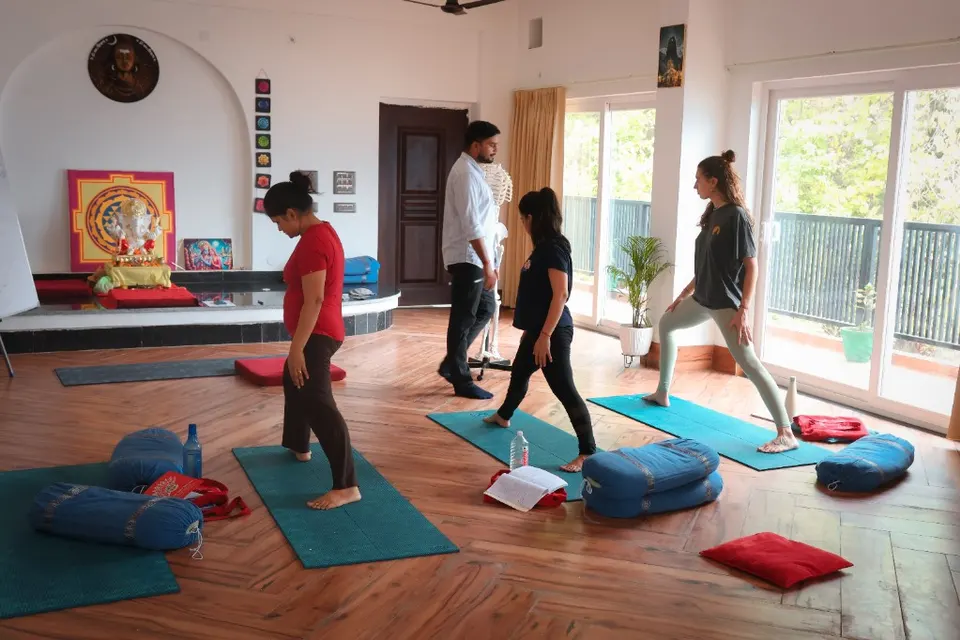
Classes run at the Tapovan campus with the school’s teachers. The group is capped at 15. Teaching practice does not work in a room of 30. At 15, each student teaches, gets feedback, and teaches again.
Before you book
Frequently asked questions
What is prenatal yoga teacher training?
It teaches you how to teach yoga for pregnant women and new mothers. You learn pregnancy anatomy, safe sequencing by trimester, contraindications, postnatal recovery, and how to run a class. This one is residential, six days on campus, and it is held in Rishikesh.
How long is the course on campus?
Check-in is on the 25th and check-out is at noon on the 30th. That is six days and five nights. The days include asana, anatomy, pranayama, Garbh Sanskar, meditation, and teaching practice, for both pregnancy and the weeks after birth.
Do I need a 200 hour yoga certificate to join?
No. A prior 200-hour certificate is not required. The course is open to yoga teachers, healthcare professionals, and anyone with a personal practice and a real interest in pregnancy yoga. A 200-hour background helps, and it is recommended, but it is not required. For a general teaching certificate, start with the 200-hour course in Rishikesh.
What prenatal yoga instructor certification do I receive?
You receive a Prenatal and Postnatal Yoga Teacher Training certificate from Divinepath Yoga School & Retreat. This is the school’s certificate for this course. It is not a Yoga Alliance prenatal registration. Divinepath’s Yoga Alliance registration (RYS 200, RYS 300 and RYS 500, School ID 457520) applies to those hour-length teacher trainings, not to this prenatal course.
How much does the course cost?
Shared room is $249 USD. Private room is $349 USD. Indian students pay Rs 19,999 shared or Rs 24,999 private. The fee includes the stay from check-in on the 25th through check-out at noon on the 30th, three vegetarian meals a day, study materials, and a welcome ceremony. The booking amount is 25% of that fee. Flights and the visa are separate.
Can pregnant women join this teacher training?
Yes, if your doctor agrees. Share that clearance with us before the course. Some physical parts of the training may need to be modified. Safety during pregnancy comes first.
Or email admissions@divinepathretreat.com. We reply within 24 hours.
Where the course runs
Prenatal yoga teacher training course in Rishikesh
About a 10–15 minute walk from Laxman Jhula, and about 20 km (35–45 minutes) from Dehradun Jolly Grant Airport (DED).
Tapovan, Rishikesh
Upper Canal Road, Laxman Jhula, Rishikesh, Sakalana, Uttarakhand 249192, India
Get Directions