Prenatal Yoga Instructor Certification (2026 Guide)
 Yogacharya Yashpal Ji
Prenatal yoga instructor certification is a specialised course covering pregnancy anatomy, trimester-specific sequencing, contraindications, and teaching methods. A 200-hour yoga teacher training is not always required to teach, but it is a stronger base. Yoga Alliance RPYT is optional. Check Yoga Alliance’s current RPYT requirements: the May 2025 RYT standards still list a 200-hour RYS 200, an 85-hour RPYS course (either order; register only after the RYT is complete), and 30 prenatal teaching hours after the RPYS. A residential prenatal yoga teacher training in Rishikesh at DivinePath is six days, from $249 shared. The school issues its own certificate. It is not RPYT.
Prenatal yoga instructor certification is a separate path from RYT 200. This guide covers hours, prerequisites, Yoga Alliance RPYT rules, and what a usable course actually includes. Fees and certificate type are checked against the live Rishikesh prenatal course page, October 2026.
A 200-hour YTT is a general teaching credential. Prenatal work is a separate skill: trimester changes, contraindications, and when to stop class and refer to a doctor. Read the school’s own page before you pay. Brochure slogans are not the syllabus.
What Does a Prenatal Yoga Instructor Actually Do?
The short answer is that you instruct yoga classes designed for pregnant women. The real answer is more involved.
You need to know what happens to the body during each trimester. How the hormone relaxin loosens ligaments and affects joint stability. Which poses are fine at 16 weeks but risky at 36. What to do when a student becomes dizzy during standing poses — because it will happen. How to modify a balance pose for someone whose centre of gravity shifted last week.
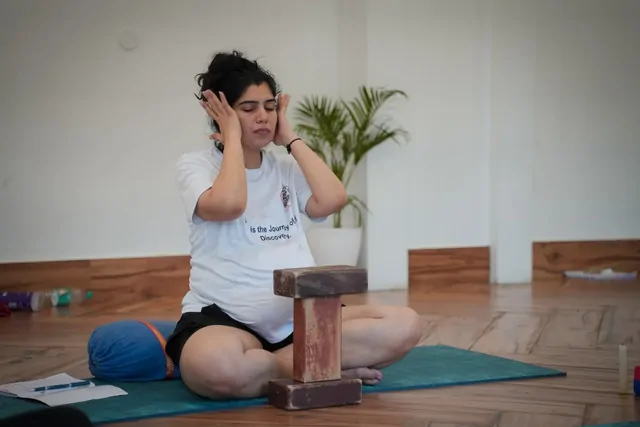
You are also working with people who are anxious. First-time mothers who have read every worst-case scenario online. Women who have had difficult pregnancies before. People whose doctors told them to “stay active” without explaining what that means. Your role is a safe, supportive class — and knowing when a situation needs a medical referral, not a yoga cue.
Many prenatal instructors also teach postnatal yoga: rebuilding core strength, addressing diastasis recti, and pelvic floor recovery. Most thorough programmes bundle pregnancy and the weeks after birth into one certificate.
Prenatal Yoga Instructor Certification: Step by Step
This is the usual path. The details change by school. Check the course page, not a brochure slogan.
Step 1 — Build a yoga foundation
Most prenatal courses recommend or require a 200-hour yoga teacher training. It gives you anatomy, sequencing, and teaching methodology — the base that prenatal training builds on. Some courses, including DivinePath’s in Rishikesh, do not require 200 hours as a prerequisite. Having it still makes you a noticeably better teacher.
Step 2 — Complete a specialised prenatal course
This is the core qualification. Look for pregnancy anatomy, trimester-specific sequencing, contraindications, breathwork for labour, postnatal recovery, and supervised teaching practice. Do not pick a course that is theory-only if you intend to teach a room of pregnant students.
Step 3 — Teach real classes
Start small. Offer community sessions at a local studio, gym, or pregnancy centre. Every pregnant student is different — her body, her fears, her energy. Experience is what makes you confident, not the paper on the wall.
Step 4 — Register with Yoga Alliance (optional)
Yoga Alliance offers the RPYT (Registered Prenatal Yoga Teacher) listing. Their public teacher pages describe it as a specialty credential and do not print hour totals. Check Yoga Alliance’s current RPYT requirements before you apply. The Standards for RYT Credentials (May 2025) still list: at least a 200-hour training at an RYS 200; an 85-hour training at a Registered Prenatal Yoga School (RPYS); those programmes may be completed in either order, but you cannot register as RPYT until the RYT is complete; and 30 hours of prenatal teaching after the RPYS. RPYT is not a legal licence. Studios and students treat it as a trust signal.
DivinePath’s Rishikesh prenatal course is not that pathway. The school issues its own Prenatal and Postnatal Yoga Teacher Training certificate. Do not treat this course as an 85-hour RPYS module, and do not quote a contact-hour total for it. RYS 200, RYS 300 and RYS 500 (School ID 457520) apply to those hour-length YTTs, not to this short course. If RPYT is your goal, confirm RPYS on the school’s Yoga Alliance listing before you pay.
Step 5 — Get liability insurance
Teaching pregnant women carries more responsibility than a general drop-in class. Get professional liability insurance from a local broker before you teach. Yoga Alliance membership includes member discounts on insurance; we do not quote a yearly premium here because it varies by country and policy. Do not skip it.
Step 6 — Start teaching
Studios, hospitals, birth centres, physiotherapy clinics, community centres, and online classes all hire prenatal teachers. Demand is real. Qualified teachers are fewer than the listings suggest.
Prerequisites: Do You Need a 200-Hour First?
It depends on the course. Some prenatal yoga instructor certification programmes require a 200-hour certificate. Others do not.
The argument for requiring it: 200 hours give you anatomy fundamentals, teaching methodology, and class management. Without that base, you are learning modifications before you fully understand the original poses.
The argument against it: not everyone who wants to teach prenatal yoga comes from a yoga background. Midwives, doulas, physiotherapists, and birth educators bring their own training. A 200-hour wall does not always make sense for them.
At DivinePath Yoga School & Retreat, a 200-hour certificate is not required for the prenatal yoga teacher training in Rishikesh. Yoga teachers, healthcare professionals, and people with a personal practice can join. Students who already hold 200 hours usually move through the material faster.

What a Prenatal Course Should Cover
Not every course is built the same. A usable one includes the blocks below.
| Component | Why it matters |
|---|---|
| Pregnancy anatomy and physiology | Relaxin, pelvic floor changes, blood-pressure shifts, and how the musculoskeletal system adapts trimester by trimester. |
| Trimester-specific sequencing | Different trimesters need different poses. What is safe at 16 weeks can be risky at 36. |
| Contraindications and red flags | When to modify a pose, when to skip it, and when to stop class and refer to a doctor. |
| Pranayama for pregnancy | Breathing for pregnancy and labour. Some pranayama is used; some is not. |
| Postnatal recovery | Diastasis recti, pelvic floor restoration, and a safe return to practice after birth. |
| Teaching methodology and practicum | Supervised teaching with feedback. Reading about prenatal yoga is not the same as cueing a modified Warrior II in the third trimester. |
| Nutrition and lifestyle (basic) | Enough to answer common student questions. Not medical advice. |
If a course has no supervised teaching practice, think carefully. Theory alone will not prepare you for a room of pregnant women, each in a different trimester.
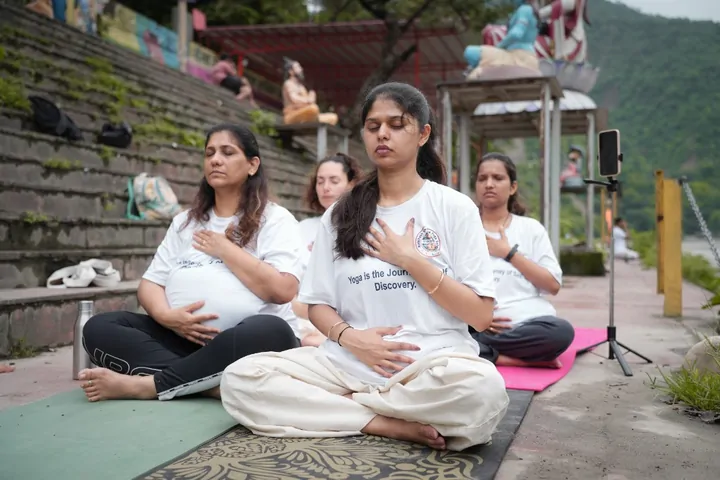
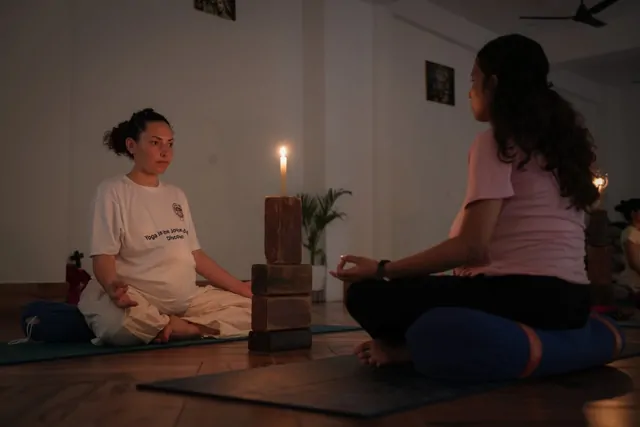
DivinePath’s six-day Rishikesh course covers asana and sequencing by trimester, pregnancy anatomy, pranayama, Garbh Sanskar (cultural prenatal bonding — not a medical treatment), meditation, postnatal recovery, and teaching practice. Check-in is the 25th; check-out is noon on the 30th. Do not treat it as an hour-counted YA prenatal module. The live syllabus is on the course page.
Online vs In-Person: An Honest Comparison
| Factor | Online | In-person (residential) |
|---|---|---|
| Typical listed cost | About $185–$1,200 in 3 online/hybrid listings we opened in Oct 2026 | DivinePath $249 shared / $349 private (stay and meals included) |
| Duration | About 6–9 weeks in the live/hybrid listings we opened; some courses are self-paced | Six days at DivinePath; other residentials vary |
| Hands-on practice | Minimal — screen-based | Direct, with physical feedback |
| Supervised teaching | Often peer-only | Under a teacher, with students |
| Yoga Alliance RPYT | Only if the school is RPYS — check first | Only if the school is RPYS — check first |
| Convenience | Study from anywhere | Travel required |
| Networking | Online community | The cohort in the room |
Online training works for theory: anatomy, contraindications, physiology. Teaching pregnant women is a hands-on skill. You need to watch adjustments. You need someone to observe you and say what you missed. A student on a screen cannot give you that feedback.
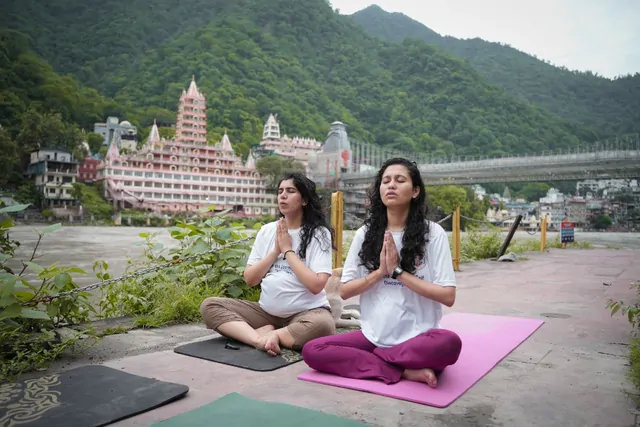
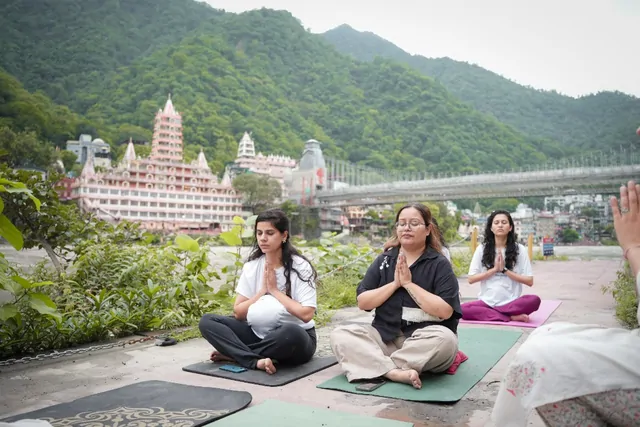
If cost or location makes in-person impossible, online training is better than no training. If you can take a residential course, the learning runs deeper. DivinePath’s programme is six days in Tapovan, Rishikesh, which keeps the time and fee smaller than a two-week residential elsewhere.
How Much Does Prenatal Yoga Instructor Certification Cost?
Listed prices vary by format and country. The figures below are approximate, based on a review of 4 public course listings on 20 Oct 2026. They are not a quote. Confirm the live fee on the school’s own page.
- Tratak Yoga — online 85-hour prenatal/postnatal training, listed at $185 / ₹15,500.
- Island Prenatal Yoga — online 85-hour RPYT course, listed from $799.
- Online Yoga School — hybrid 85-hour prenatal training, listed at $1,200 (pay in full).
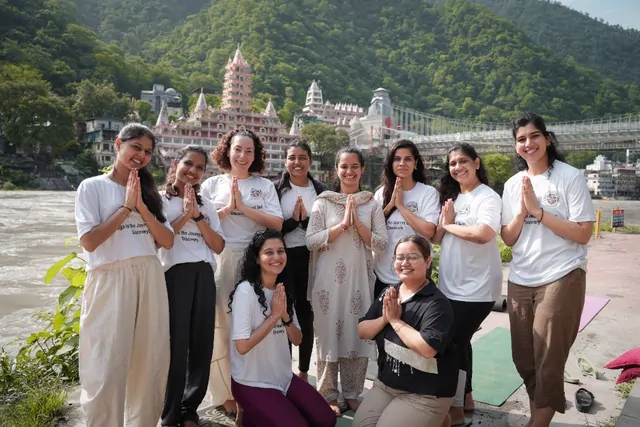
- DivinePath Yoga School & Retreat — six-day residential in Tapovan, Rishikesh, $249 shared or $349 private with stay and meals. This is the live fee on our course page, not a third-party listing.
We opened those four pages on 20 Oct 2026. We do not endorse the other schools. Older copy used wide “market” bands (weekend workshops, US/Europe/Bali residentials) that we could not verify against live pages, so those bands are omitted.
At DivinePath, Indian residents pay Rs 19,999 shared or Rs 24,999 private. The fee includes the stay from check-in on the 25th through check-out at noon on the 30th, three vegetarian meals a day, study materials, and a welcome ceremony. A 25% booking amount holds the seat. Flights and the visa are extra.
When you compare, check what is included. An online course with no meals or room is not automatically cheaper than a residential fee that covers both.
How to Choose a Prenatal Yoga Training Course
Before you book, check these:
- Teacher credentials. Has the lead teacher taught prenatal yoga for several years? Ask. A school that will not name the teacher for your month is a problem.
- Medical input. Prenatal yoga sits next to healthcare. Ask whether an obstetrician, midwife, or physiotherapist reviewed the syllabus. Do not assume every school has that review.
- Practicum. Do you teach under supervision? If not, look elsewhere.
- Group size. Under 15 students means more feedback. DivinePath caps the Rishikesh prenatal group at 15.
- Yoga Alliance status. RPYT later requires training at an RPYS. Check Yoga Alliance’s current RPYT requirements. DivinePath’s prenatal certificate is the school’s own, not RPYT. Search the directory if that listing is what you need.
- Graduate feedback. Ask whether past students felt ready to teach. A decent website is not a programme.
A Note on Safety: What Every Prenatal Instructor Must Know
The American College of Obstetricians and Gynecologists (ACOG) supports physical activity during pregnancy, including yoga, for women with uncomplicated pregnancies. WHO physical activity guidance likewise treats moderate exercise in pregnancy as beneficial when a clinician has not advised otherwise.
“Generally safe” is not “always safe.” As a prenatal yoga instructor you should:
- Ask every new student for medical clearance before the first class.
- Screen for high-risk conditions: pre-eclampsia, placenta previa, cervical insufficiency — and send those students back to their doctor, not into your sequence.
- Know the stop signs: dizziness, chest pain, vaginal bleeding, contractions, fluid leakage.
- Refer, do not diagnose. If something looks concerning, tell the student to contact her doctor.
Your job is safe movement. It is not medical decisions. The best prenatal instructors know where that line sits.
Frequently Asked Questions
What qualifications do I need to teach prenatal yoga?
A specialised prenatal yoga teacher training that covers pregnancy anatomy, safe sequencing, and teaching methodology. A 200-hour yoga teacher training is recommended as a foundation but is not always required to teach. Yoga Alliance’s RPYT listing is optional. Check Yoga Alliance’s current RPYT requirements: their May 2025 Standards for RYT Credentials still list a 200-hour training at an RYS 200, an 85-hour prenatal training at an RPYS (those programmes may be completed in either order, but you cannot register as RPYT until the RYT is complete), and 30 hours of prenatal teaching after the RPYS.
How long does it take to become a prenatal yoga instructor?
A residential course can take six days to two weeks. Live or hybrid online listings we opened in October 2026 ran about six to nine weeks; some online courses are self-paced with no fixed calendar. If you do not already have a 200-hour, add 1–3 months for that. With no prior teaching background, first prenatal class is often 6–12 months away. Faster if you already teach yoga.
Is prenatal yoga instructor certification recognised internationally?
Yoga Alliance’s RPYT listing is recognised in many countries as a private-industry credential. Yoga teaching is not a licensed profession in most places. Anyone can call themselves a yoga teacher. A certificate shows you completed structured training; studios still decide whom they hire.
Can I teach prenatal yoga online?
Yes. Many instructors do. You cannot make hands-on adjustments, and you cannot see the full body clearly through a screen. Online classes work better for students who already have yoga experience. For beginners and first-time pregnant students, in-person classes are safer and more effective.
Do prenatal yoga instructors need medical training?
You do not need a medical degree. You do need solid knowledge of pregnancy anatomy, contraindications, and when to refer to a doctor. A decent prenatal yoga instructor certification covers those topics. You are not a healthcare provider — you are a movement specialist who works alongside them.
Ready to Get Certified?
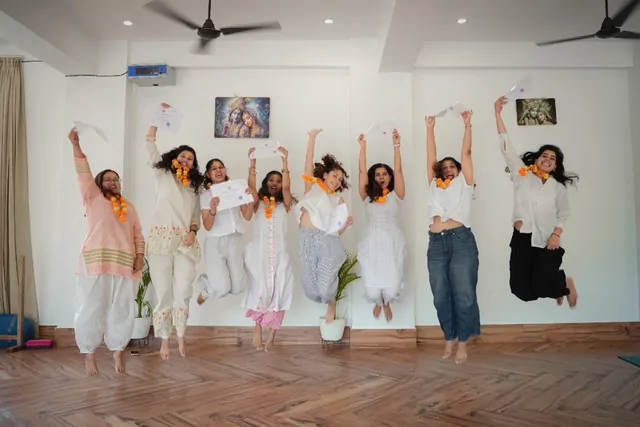
DivinePath Yoga School & Retreat runs a six-day prenatal yoga teacher training in Rishikesh (check-in the 25th, check-out noon on the 30th). Fees start at $249 shared or $349 private, with accommodation and meals included. No 200-hour prerequisite. The certificate is the school’s own, not RPYT.