



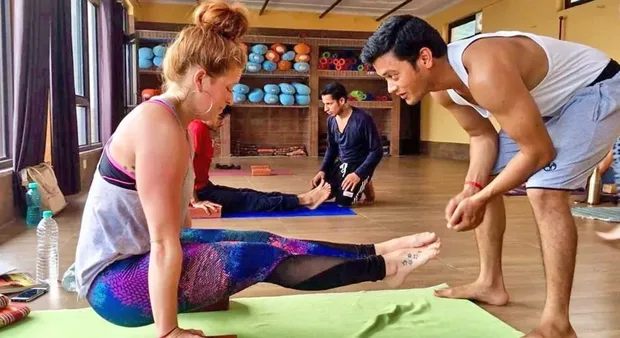
Fact-checked by Yogi Naveen Ji (Rishikesh — Ashtanga & Alignment)
Why this guide is current: Verified against live 2026 pricing for 200-hour Rishikesh YTT ($950 shared / $1,300 private), 25-day batch schedule, Indian e-Tourist Visa rules, and campus details on Lakshman Jhula Road — reviewed by the teacher who leads Ashtanga sessions on campus.
If you're planning a 200-hour Yoga Teacher Training in Rishikesh, the most important decision you'll make is not which school to choose — it's whether you've understood what you're actually arriving into. Rishikesh is the Yoga Capital of the World for real reasons that have nothing to do with marketing. But what makes it extraordinary for some students makes it overwhelming for others.
This guide gives international students the complete picture: DivinePath's $950 USD all-inclusive 25-day programme, the best months to arrive, how the Indian visa process works, what the daily schedule looks like, and an honest comparison with competing schools. By the end, you'll know whether Rishikesh is the right choice — and exactly how to plan it if it is.
DivinePath's 200-hour Yoga Teacher Training in Rishikesh runs for 25 days, starts the 1st of every month, and costs $950 USD shared or $1,300 USD private — fully all-inclusive (accommodation, 3 daily sattvic meals, course materials, and Yoga Alliance RYT 200 certification). The campus is on Lakshman Jhula Road near the Ganga River, 10–15 students per batch. Best months: October to March. Nearest airport: Dehradun (DED), 35 km away.
Rishikesh sits at the foothills of the Himalayas, where the Ganga River descends from the mountains into the plains. This is not incidental to the yoga experience — it is the experience. For more than two thousand years, yogis and sadhus have come to this specific stretch of river to practice. The city still runs on that energy.
Every evening, the Ganga Aarti ceremony at Parmarth Niketan or Triveni Ghat fills the riverbank with firelight and Sanskrit chanting. Temples line every street. Ashrams offer free morning talks. The entire cultural context is yoga. You're not practicing yoga in Rishikesh — you're living inside the tradition it comes from.
For students from the UK, Australia, Europe, or the Americas, this creates an immersive contrast with home that dramatically accelerates learning. When philosophy class discusses prana flowing through nadis, and you just spent the evening watching priests sing to the Ganga by firelight, the abstract becomes tangible.
Rishikesh is not a beach vacation. The city is landlocked in the mountains. It's not Goa's warm coastal energy or Bali's lush tropical aesthetics. The food is almost entirely sattvic vegetarian — no meat, no eggs, no alcohol, no caffeine at most ashrams. This disciplinary quality is precisely what many students need, and precisely what others find difficult.
Honest assessment: students who come wanting spiritual intensity in a traditional Indian setting thrive in Rishikesh. Students who want to relax by the beach between sessions should choose Goa or Bali.
| Detail | Information |
|---|---|
| Duration | 25 days (1st–25th of every month) |
| Level | Beginner to Intermediate |
| Certification | Yoga Alliance RYT 200 |
| Price (shared) | $950 USD |
| Price (private) | $1,300 USD |
| Group size | Maximum 15 students |
| Location | Lakshman Jhula Road, Rishikesh, Uttarakhand |
| What's included | Accommodation, 3 meals/day, course materials, weekend excursions |
| Nearest airport | Dehradun (DED), 35 km / ~45 min |
For live dates and exact batch availability, see the 200-hour Rishikesh course page.
Included in the $950/$1,300 fee:
Not included:
The DivinePath Rishikesh curriculum covers all elements required for Yoga Alliance RYT 200 certification. Here's what the syllabus covers:
Hatha Yoga forms the foundation: slower, alignment-focused practice that builds precise body awareness. Yogi Rajesh Ji leads the Hatha sessions with particular focus on building correct habits from the ground up — useful whether you're a beginner or an experienced practitioner with ingrained patterns to examine.
Ashtanga Vinyasa — taught by Yogi Naveen Ji — introduces the Primary Series progressively. Week one covers standing postures. Week two and three build toward seated postures and backbends. By the end of 25 days, students have a functional working relationship with the full Primary Series at a pace appropriate to their level.
Daily sessions cover: Nadi Shodhana (alternate nostril breathing), Bhastrika, Kapalabhati, Ujjayi, Bhramari, Sitali. Meditation includes Himalayan Himalayan traditional seated meditation, yoga nidra, and walking meditation. Sessions run 7:00–8:00 AM daily.
A distinctive feature of traditional Rishikesh training: Jal Neti, Sutra Neti, Trataka, Kapalbhati, and Kunjal (Vaman). These practices are deeply rooted in Hatha Yoga tradition and rarely taught in Western yoga studios. Yogi Ashish Ji guides these sessions safely with clear instruction.
Major bones and muscles relevant to yoga practice. Joint mechanics: flexion, extension, rotation, abduction, adduction. Common injuries and how to teach safely around them. Anatomy classes are taught with practical application — not memorization, but understanding.
Patanjali's Yoga Sutras, Bhagavad Gita excerpts, Hatha Yoga Pradipika introduction. The eight limbs of yoga. Understanding how philosophy connects to daily practice. Yogi Jaggi Ji makes ancient texts practical for modern life — a skill that separates teachers who can only instruct poses from teachers who can genuinely guide practice.
How to plan a class sequence. Effective verbal cueing. Hands-on adjustments and their ethics. Observation and correction. Teaching students at different levels simultaneously. Progressive teaching practicum begins in week two.
This 200-hour does not certify you in aerial, prenatal, or Yin as standalone formats. Those are separate short courses on the same campus: Aerial Yoga TTC (7 days, from $399), Prenatal & Postnatal TTC (85 hours, from $899), and Yin Yoga TTC (7 days, from $400).
Opening and closing mantras, Sanskrit pronunciation, the function of mudras in practice. Context: not performance, but understanding what these practices mean and why they're used.
| Time | Activity |
|---|---|
| 6:00 AM | Wake-up |
| 7:00–8:00 AM | Pranayama and meditation |
| 8:30–10:00 AM | Hatha or Ashtanga asana |
| 10:00–11:00 AM | Breakfast |
| 11:00–12:15 PM | Alignment and adjustment workshop |
| 12:00–1:00 PM | Teaching methodology |
| 1:00–2:00 PM | Lunch |
| 2:00–3:30 PM | Rest / self-study |
| 3:30–5:00 PM | Asana (second session) |
| 5:00–6:00 PM | Anatomy class |
| 6:00–7:00 PM | Yoga philosophy |
| 7:30 PM | Dinner |
Weekends include cultural excursions: Ganga Aarti ceremony, sunrise temple trek, cave meditation, waterfall hike. These are not optional extras — they're built into the curriculum as living practice.
One rest day per week. Students are free to explore Rishikesh, walk along the Ganga, visit ashrams, or rest. Laxman Jhula suspension bridge, local cafes serving chai and Ayurvedic food, and evening readings at riverside ghats are all within walking distance of campus.
This guide covers the full planning picture. The course page has current start dates, room availability, and booking steps for DivinePath Rishikesh.
Our campus is on Lakshman Jhula Road — a few minutes' walk from the famous suspension bridge, near the river. It is not a resort. It's a working yoga school built by teachers who have lived here for over a decade.
| Room Type | Price | Features |
|---|---|---|
| Shared cottage | $950 total | Shared room, private bathroom, double or twin beds, hot water, Wi-Fi |
| Private cottage | $1,300 total | Private room, private bathroom, same amenities |
Rooms are clean and functional. Air conditioning is not provided — Rishikesh temperatures and mountain air make it unnecessary most of the year. Heating is provided for cold-season batches (December–February).
Three sattvic vegetarian meals daily. Sattvic cooking follows Ayurvedic principles: no onion, no garlic, no processed food. Meals are prepared by local kitchen staff and vary daily. Most students find the food simple but satisfying — dals, sabzis, rice, roti, fresh fruit. This is not restaurant food, and that's the point. The discipline of eating simply is part of the training.
This table gives a quick snapshot for planning. For verified 2026 pricing, honest pros and cons, and full reviews of six schools — including Rishikesh Yogpeeth, Sattva Yoga Academy, and Himalayan Yoga Ashram — read our dedicated best yoga teacher training schools in Rishikesh 2026 comparison.
| School | Price (200h shared) | Group Size | Location | Teaching Style | Notes |
|---|---|---|---|---|---|
| DivinePath | $950 USD | Max 15 | Laxman Jhula | Multi-style (Hatha, Ashtanga) | Monthly batches; small groups; cultural excursions included |
| Rishikesh Yog Peeth (RYP) | $1,800–2,000 USD | 20–30+ | Swarg Ashram | Hatha & Sivananda | Well-known brand; larger commercial operation |
| Himalayan Yoga Association | $900–1,400 USD | Varies | Tapovan | Multi-style | Price varies by season |
| Sattva Yoga Academy | $1,500–2,000 USD | 15–20 | Outside Rishikesh | Sattva method | Strong philosophy focus |
| Omkarananda Ashram | $800–1,200 USD | Varies | Muni Ki Reti | Traditional ashram style | More austere, limited amenities |
Key difference at DivinePath: The 15-student cap is non-negotiable. Most Rishikesh schools list "small groups" but run 25–40 students in practice. The difference matters enormously for adjustment quality and individual attention during teaching practicum.
Rishikesh YTT runs year-round at DivinePath, but the experience changes significantly by season.
| Season | Months | Temperature | Conditions | Best For |
|---|---|---|---|---|
| Post-monsoon / Autumn | Oct–Nov | 15–25°C | Clear, bright, perfect | First-time visitors wanting best weather |
| Winter | Dec–Feb | 5–15°C (nights) | Cold, very quiet, spiritually deep | Students wanting intense focus with fewer tourists |
| Spring | Mar–May | 20–35°C | Warm, busy, vibrant | Students who want warmth and energy |
| Monsoon | Jul–Sep | 25–30°C + heavy rain | Green, dramatic, humid | Students wanting lowest crowds; some outdoor activities affected |
Recommendation for most international students: Book October or November batch for the clearest conditions and most comfortable daily practice. February and March are also excellent. Avoid June if you're sensitive to pre-monsoon heat.
Almost all international students use the Indian e-Tourist Visa.
Important: Your yoga teacher training at DivinePath is classified as tourism/cultural — you do not need a student visa or any special yoga visa.
Citizens of Pakistan, Bangladesh, Sri Lanka, Nigeria, and a few others have additional processing or may not qualify for e-visa. Always verify your specific nationality's requirements at the official IVAC website before booking.
Closest airport: Jolly Grant Airport (Dehradun / DED) — 35 km from Rishikesh, ~45 minutes by taxi. DivinePath arranges airport transfers from here on request.
Delhi (DEL): International flights arrive at Indira Gandhi International Airport. From Delhi, options to Rishikesh include:
Most students fly into Delhi and take the overnight Volvo bus to Rishikesh — it's the cheapest option and surprisingly comfortable.
| Factor | Rishikesh (DivinePath) | Goa (DivinePath) | Bali (DivinePath) |
|---|---|---|---|
| Cost (200h shared) | $950 USD | $899 USD | $1,450 USD |
| Duration | 25 days | 20–23 days | 23 days |
| Setting | Mountain / river / ashram | Arambol beach | Klungkung rice paddies or Ubud |
| Climate | Cold–mild (seasonal) | Warm, tropical | Warm, tropical |
| Spiritual depth | Very high — living yoga tradition | Moderate | High — Hindu Balinese culture |
| Beach access | No | Yes | Yes (separate from campus) |
| Best for | Students drawn to traditional yoga roots | Students wanting beach energy + low cost | Students drawn to Southeast Asia |
For a full three-way comparison, read our Rishikesh vs Goa vs Bali YTT guide.
Completing DivinePath's 200-hour Rishikesh training qualifies you to register with Yoga Alliance as an RYT 200 — the most widely recognised yoga teaching credential globally. What this means practically:
Immediate: Teach group classes, private sessions, corporate yoga.
Medium term: Lead workshops, qualify for retreat teaching positions, work as a studio substitute teacher.
Long term: Apply for the 300-hour advanced training (RYT 500). DivinePath's 300-hour course is available for RYT 200 holders.
Graduates from our Rishikesh programme have gone on to teach in London, Berlin, Dubai, Sydney, Toronto, and across Southeast Asia. Several have opened studios. Others teach part-time alongside existing careers.
The 200-hour YTT in Rishikesh is one of the highest-value paths to yoga certification in the world: $950 USD all-inclusive, trained by teachers who have lived and practiced in Rishikesh for decades, in the city where the tradition itself was codified.
It is not for everyone. If you need a beach, Goa and Bali are better fits. If you're drawn to the source — if you want to practice in the place where Patanjali's Yoga Sutras were taught, where the Ganga runs cold from the Himalayas, where the evening aarti is not a tourist performance but a daily community prayer — then Rishikesh is where you belong.
View Dates and Fees for the Rishikesh 200-Hour YTT →
Batches run monthly (1st–25th of every month). Book at least 2–3 months ahead for October to March batches. Email divinepathretreat@gmail.com or WhatsApp +91 8868 043 473.
See current start dates, room options, inclusions, and availability for our 25-day Yoga Alliance-certified training on Lakshman Jhula Road.
DivinePath's 200-hour Rishikesh course costs $950 USD (shared room) or $1,300 USD (private room), fully all-inclusive — 25 days accommodation, 3 meals daily, all teaching sessions, course materials, weekend excursions, and Yoga Alliance certification. Indian students pay ₹30,000 / ₹40,000.
October to March. October–November is ideal: clear skies, 15–25°C, perfect conditions for practice. December–February is colder but deeply spiritual and very quiet. March warms up nicely. Avoid pre-monsoon June for intense heat; July–September is full monsoon (training runs, but conditions affect outdoor activities).
The Indian e-Tourist Visa, applied for online at indianvisaonline.gov.in. Cost: ~$25 (30-day single entry) or ~$80 (1-year multiple entry). Apply at least one week before departure. Your training is classified as tourism — no special yoga or student visa is needed.
Both locations offer the same Yoga Alliance certification. Rishikesh ($950) is slightly more expensive than Goa ($899) but offers a deeper traditional Indian yoga environment, Himalayan setting, and proximity to one of the world's most spiritually significant rivers. Goa offers coastal beach energy and warmer climate. DivinePath runs both — choose based on the environment that will support your practice.
No. The Rishikesh programme is open to beginners (3–6 months consistent practice) through intermediate students. All poses are taught with modifications. You do not need to master advanced asanas before arriving.
Jolly Grant Airport, Dehradun (DED), approximately 35 km from campus. Alternatively, fly into Delhi (DEL) and take a 5–6 hour Volvo bus or train to Rishikesh. DivinePath can arrange a transfer from Dehradun on request.
Courses, costs, visa, comparisons, and campus guides — everything before you book.
Live dates, fees from $950, syllabus, booking.
Advanced training for RYT 200 holders.
All courses and campuses at a glance.
Beach alternative from $899.
Full budget beyond the course fee.
What the month actually feels like — week-two wall included.
Culture, best time, where to practice.
Companion planning guide if weighing India locations.
Readiness guide for first-time YTT students.
Full three-location comparison.
India's two main YTT hubs side by side.
Mountain tradition vs island setting.
Southeast Asia option from $1,450.
Lead Ashtanga teacher, guide author.
Hatha foundation sessions.
Philosophy and classical texts.
Next step after RYT 200.

One of the Best Yoga Teacher Training Courses & Retreats in India & Indonesia.
 Yoga Alliance RYS 200
School ID 457520
Verify registration →
Yoga Alliance RYS 200
School ID 457520
Verify registration →
Divinepath Yoga School & Retreat © 2026. All Rights Reserved.