



Goa has more yoga than almost anywhere else in India, and almost none of it is organised in a way that makes sense to someone arriving for the first time. There are beach shalas that run one class a day in season and disappear in June. There are ashram-style places inland that barely advertise. There are teacher training schools running month-long intensives. There are people teaching under trees.
This guide is our attempt to lay it out honestly. We run a yoga school in Arambol, so we have an obvious interest here — we've tried to write the page we'd want someone to read before they contact us, including the parts where we're not the right answer.
| If you want to… | You want | Typical cost | Commitment |
|---|---|---|---|
| Practise for an hour while you're on holiday | Drop-in class | ~$10 per session | None |
| Sit, breathe, and quiet down | Meditation — classes, or a residential retreat | Free to ~$400 | An hour, or 3–7 days |
| Switch off completely for a week | Yoga retreat | ~$300–780 all-in | 3–7 days |
| Learn to teach, or go deep | Yoga teacher training (YTT) | ~$500–1,050 | 3–8 weeks |
The rest of this page explains each properly.
This is what most people actually want and the hardest thing to find information about, because drop-in classes are seasonal and rarely have websites.
What it costs: around $10 per session is the going rate in Arambol, ours included. Some beach shalas ask a little less, some studio-style spaces a little more. Nobody in Arambol is charging Western studio prices. In rupees that usually lands somewhere near ₹400–₹1,200 depending on the month and the room.
How it works: you turn up. Most places don't take bookings for single classes and most don't mind if you've never done yoga before. Bring your own mat if you're fussy — mats are usually provided but they've usually had a long season.
When classes run: the season is roughly mid-October to late March. Outside that, most drop-in yoga in North Goa stops. See the month-by-month section below.
Our own drop-in classes run in Arambol at $10 per session. Days, times and styles change with the season — confirm on arrival or via WhatsApp before you plan a whole week around a board that may have moved. Our wider drop-in schedule (including Rishikesh while Goa times are confirmed seasonally) is on the drop-in yoga page.
Other places to practise in Arambol. We are one residential campus — not the whole village. In season you will also find beach and village shalas with chalkboards outside, guest-house rooftop classes open to non-guests, and informal sits advertised in cafés. We are not listing names here we cannot vouch for as currently operating; walk the main Arambol stretch and Mandrem boards when you arrive, ask what style is on, and try two or three rooms before you settle. That local check is more accurate than any static list.
Where else in Goa: Arambol and Mandrem in the north are the densest for yoga. Anjuna and Vagator have classes but a louder scene around them. Palolem and Agonda in the south are quieter and have fewer but calmer options. Ashwem and Morjim sit in between.
Goa's meditation scene is older and quieter than its yoga scene, and it takes three fairly different forms.
Most drop-in yoga in Goa ends with 10–20 minutes of pranayama and seated meditation or yoga nidra. If you want a light introduction and nothing more, this is usually enough and costs nothing extra.
Arambol in particular has a long-running informal scene — sound healing, group sits, breathwork circles, ecstatic dance. Much of it is donation-based or a few hundred rupees, advertised on noticeboards and in cafés rather than online, and it changes season to season. Ask locally when you arrive rather than trusting a year-old Instagram post.
If you want structure — several days, a schedule, guidance, somewhere to stay — you're looking at a residential retreat. In Goa these mostly run as yoga and meditation retreats rather than meditation-only; genuinely silent, meditation-only retreats in the Vipassana sense are rarer here and more commonly found elsewhere in India.
Being straight with you: if what you want is a serious, silent, meditation-only retreat, Goa is probably not where you'll find your best option, and we'd rather tell you that than sell you a yoga retreat. Goa's strength is a gentler blend — asana, breathwork, meditation, sea, and space to think. Ours is a 5-day and 7-day version of exactly that, and it is not a Vipassana course.
Is there a meditation centre in Goa? Not in the sense of one large institution the way Rishikesh or Dharamshala have. Goa's meditation happens across many small places — retreat centres, yoga schools, individual teachers. That's a feature, not a gap, but it does mean you have to look around rather than book "the" centre.
A retreat is a short structured stay — you arrive, someone else handles the schedule and the food, you practise twice a day, and you leave lighter. No certification, no exams.
Typical shape: 3, 5 or 7 days. Morning asana, evening restorative or meditation, two or three meals, a room, usually an excursion or a treatment.
Typical cost in Goa: roughly $300 to $780 all-in depending on length and room type. That normally includes accommodation, meals and all classes. Flights and airport transfer usually aren't included; check before you book, as this varies more than anything else.
What separates a good one from a bad one: how many people are in the room. A retreat with 40 guests and one teacher is a holiday with yoga attached. Ask the group size before you book — anywhere reluctant to answer is telling you something.
Ours: we run 3, 5 and 7-day retreats in Arambol, from $300 for the 5-day in a dorm. Small groups — use the retreats card above when you are ready to compare dates.
When a retreat is the wrong choice: if you already practise regularly and want to go deeper rather than switch off, a retreat will feel thin. You want a 100-hour course or a YTT. And if you want to be left alone entirely, a retreat's fixed schedule may frustrate you more than it helps — Goa has plenty of quiet accommodation and $10 drop-ins, which lets you build your own rhythm for less money.
The serious end. A YTT is three to eight weeks of full-time study — anatomy, philosophy, alignment, sequencing, teaching practice — leading to Yoga Alliance registration.
| Level | Length | What it's for |
|---|---|---|
| 100-hour | ~2 weeks | A deep dive, or a first step. Not a teaching qualification on its own. |
| 200-hour | ~3–4 weeks | The standard qualification. Lets you register as RYT 200 and teach. |
| 300-hour | ~4 weeks | Advanced, after a 200. |
| 500-hour | ~8 weeks | 200 + 300 combined. |
Typical cost in Goa: a 200-hour runs roughly $500 (course and meals only, you arrange your own room) to about $1,050 for a wooden cottage, depending on room type and season. Published Divinepath tiers on the live programme page currently include $500 course-only, $699 dorm, $850 shared room, $999 private room, and cottages from $1,050 — always confirm before you pay. Goa is generally cheaper than Bali and comparable to Rishikesh.
If a shorter immersion is enough, our 100 hour yoga TTC in Goa runs about two weeks in Arambol. It is a deep dive, not a standalone teaching qualification — useful if you are testing whether a full month is for you.
Check three things before you book anywhere:
The standard qualification most people want is the 200 hour yoga teacher training in Goa — roughly three to four weeks, RYT 200 eligible, residential tiers from $699 dorm upward on our live page.
Already RYT 200? The 300 hour advanced yoga teacher training in Goa deepens teaching practice and philosophy. The full 500 hour yoga teacher training in Goa combines both levels for students who want one continuous pathway on the beach.
All programmes run in Arambol on our campus — dates, syllabi, and room tiers are on the Goa teacher training hub.
When Goa is the wrong place to train. If you want a traditional, ashram-style, disciplined immersion with the Himalayas outside the window, Rishikesh will suit you better and we'd say so — we run courses there too, and here's the honest Goa vs Rishikesh comparison. If you want somewhere with a bigger international wellness industry and better cafés, that's Bali — our Goa vs Bali YTT guide lays out the trade-offs. Goa sits between the two: beach, warmth, a lighter atmosphere than Rishikesh, cheaper than Bali.
Rough package costs you can verify on our live pages: a 5-day retreat from $300, a 200-hour YTT from $500 (course and meals without accommodation) up to about $1,050 for a cottage depending on room type. Drop-in yoga around $10 / class in Arambol.
For a self-organised North Goa stay in season (excluding flights), food is the easiest number to ground: a simple thali can sit near ₹150, while café meals commonly land around ₹300–₹600 — the healthy food in Goa guide goes deeper. Guest-house rates and scooter hire swing hard by month and proximity to the beach; ask for a written night rate and a day's hire price when you arrive rather than trusting a blog from last year.
Add airport transfer (GOX or GOI), a SIM, and buffer for December–January peaks.
We're based in Arambol, so treat this as a biased but informed account.
Arambol is the northernmost of Goa's well-known beaches and has been the centre of its alternative scene for decades. It is scruffier than Palolem, quieter than Anjuna, and much less developed than Calangute. The daily sunset gathering on the beach — drums, music, people — is the thing Arambol is known for, and it is either the reason you'll love it or the reason you won't.
In high season the main road packs with scooters, guest-house boards, and café spillover; mornings are calmer if you practise early. A short walk inland toward the sweet-water lake gives you quieter paths and a cooler pocket of green when the beach stretch feels loud. People often arrive expecting a polished resort village — what you get is walkable, international, and uneven: good thalis next to tourist menus, solid shalas next to one-season pop-ups, reliable hot water in some rooms and not others.
Good for: long stays, yoga and music, meeting people easily, low costs, walkable everything.
Not for you if: you want polish, resort facilities, reliable hot water everywhere, or quiet after 9pm near the main stretch.
Getting here: Manohar International (GOX) in North Goa is closest — commonly around 40–90 minutes by taxi depending on traffic and where exactly you are headed. Dabolim (GOI) is longer, often around two to two-and-a-half hours. Full travel directions →
We are one residential school in Arambol. Around us you will also find beach and village shalas with walk-up classes, hotel or guest-house sessions open to non-guests, private teachers arranged through lodging, and other residential programmes — some Yoga Alliance registered, some independent.
We do not invent competitor prices or name studios we cannot currently vouch for. When you compare schools, ask for a clear daily schedule, teacher names, batch size, and written refund terms. Photos alone are not enough — how to choose a yoga teacher training covers how we suggest people vet options.
This matters more in Goa than almost anywhere, because most of the yoga infrastructure physically shuts for four months of the year.
The monsoon retreats through early October and Goa starts changing gear, but 1 October is not a switch. Businesses reopen at different speeds through the month, humidity stays high for the first couple of weeks, and the sea can still be rough early on. Late October is much closer to season than early October. Come in the second half of the month for low prices, green landscape and thin crowds; come on the 2nd and some of what you came for won't be open yet.
Dry, warm, everything open, the sea calm. December and early January are the busiest and most expensive weeks of the year. November and late January into February are the sweet spot: full infrastructure, fewer people, better prices.
Warm, thinning out, prices dropping. Excellent value. Heat builds through the month.
33°C+ and humid. Most seasonal yoga has wound down. Fine if you tolerate heat well and want quiet; hard work otherwise.
Heavy rain, rough sea, most beach shacks and seasonal yoga closed. Beautiful, intensely green, very cheap, and not the trip most people are picturing.
Short answer: come between mid-October and mid-March. For the best mix of weather, availability and price, aim for November or late January to February. YTT planners: see the month-by-month best time for yoga teacher training across Goa, Rishikesh and Bali (Goa-only notes also in our Goa season post).
Balanced beach-campus training — beginner-friendly batches, transparent pricing from $500 course+meals, supervised teaching practice. View all Goa (Arambol) YTT programs · Compare campuses · Teaching career guide.

Yes. Most drop-in classes in Arambol take walk-ins for around $10, no booking. In season, that's the simplest way to practise here.
No, for drop-in classes and retreats. For a 200-hour YTT, most schools including ours ask for some regular practice first — not because of flexibility, but because four weeks of full-time study is a lot if you're also learning the basics.
Broadly yes, and Arambol has a long-established community that many solo travellers find easy to be part of. Normal precautions apply, particularly at night and around the beach after dark. See the solo female travel safety guide for Goa.
The first half is still humid with an unsettled sea and businesses reopening at different rates. The second half is genuinely good — green, quiet, cheap, and mostly open. If October is your only option, come late in the month.
Yes — almost all nationalities need a visa for India. An e-Tourist visa commonly covers a yoga holiday or training course, but rules change: check the current Indian government e-visa guidance for your nationality before you book flights.
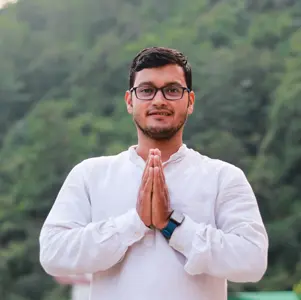
Divinepath Yoga School & Retreat — last updated 31 August 2026
Accreditation verified: Yoga Alliance School ID 457520

One of the Best Yoga Teacher Training Courses & Retreats in India & Indonesia.
 Yoga Alliance RYS 200
School ID 457520
Verify registration →
Yoga Alliance RYS 200
School ID 457520
Verify registration →
Divinepath Yoga School & Retreat © 2026. All Rights Reserved.