



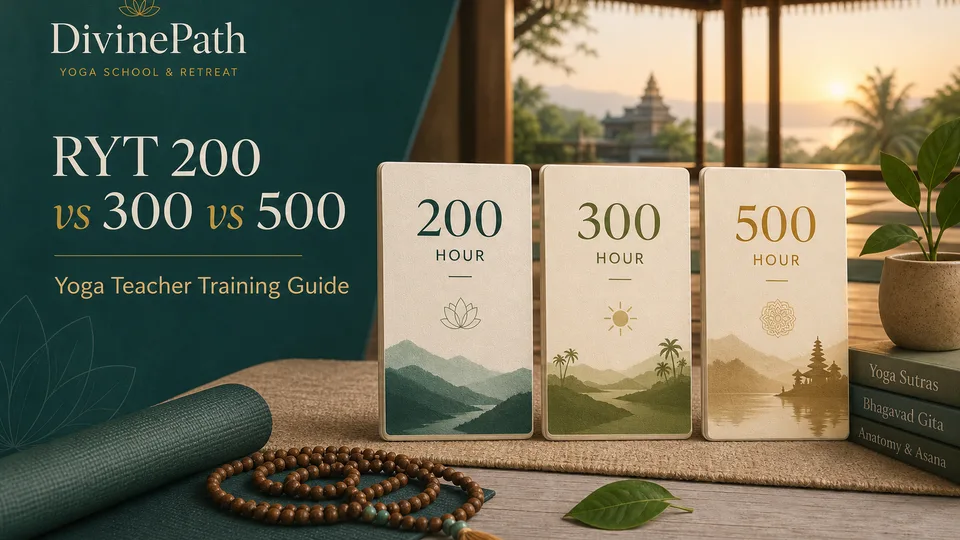
Written by Amit Rana, Founder & Director of Divinepath Yoga School & Retreat
Quick Answer: RYT 200 stands for Registered Yoga Teacher with 200 hours of training — a foundational certification from Yoga Alliance. YTT (Yoga Teacher Training) is the course; RYT is the credential you earn. RYT 300 is advanced training (300 hours) that leads to RYT 500 when combined with 200 hours. RYT 500 combines 200 + 300 hours for advanced mastery. E-RYT requires 500+ hours plus 2+ years of teaching experience. At Divinepath, RYT 200 ranges $1,250–$1,700 USD (4-week intensive), RYT 300 from $1,450–$1,950, RYT 500 from $2,600–$4,500 depending on location (Goa, Rishikesh, Bali) and room type.
RYT stands for Registered Yoga Teacher — a professional credential issued by Yoga Alliance, the global standard-setting organization for yoga education. An RYT is a yoga teacher who has completed formal training and registered with Yoga Alliance, meeting specific hour requirements and educational standards.
YTT (Yoga Teacher Training) is the course or program you attend. RYT is the resulting certification. Think of it like this: YTT is the education; RYT is the credential that proves you received that education.
Yoga Alliance recognizes three RYT credential levels, each requiring different training hours and experience. Your certification level impacts your teaching opportunities, earning potential, and career advancement. Understanding which level matches your goals is crucial before enrolling in any program.
RYT 200 means Registered Yoga Teacher with 200 hours of yoga teacher training. It's the foundational certification and entry point for professional yoga teaching. To earn RYT 200, you must complete a 200-hour yoga teacher training program at a Yoga Alliance registered school.
What RYT 200 qualifies you to do:
RYT 200 is recognized globally and is the standard minimum qualification that employers expect. Most yoga studios hire at this level, making it the ideal starting point for a teaching career. The training typically takes 4 weeks intensive or 3–6 months part-time.
Price Range: $1,250–$1,700 USD (depending on location and room type)
RYT 300 is not a standalone certification — it represents 300 hours of advanced yoga teacher training. To understand it properly: RYT 300 is earned by completing the 300-hour program AFTER you already have your RYT 200. When you combine your RYT 200 with RYT 300, you become eligible for RYT 500 certification. If you hold an RYT 200 and are weighing the decision, read our honest take on whether a 300-hour yoga teacher training is worth it.
Key points about RYT 300:
300 Hour Program Covers:
300 hour yoga teacher training at Divinepath is designed for teachers ready to deepen their practice and expertise (compare Goa, Rishikesh, and Bali on that hub). Most students find that the combination of teaching experience (1–2 years with RYT 200) plus advanced YTT creates the ideal progression toward becoming a truly advanced yoga educator.
Price Range: $1,450–$1,950 USD (depending on location and room type)
RYT 500 means Registered Yoga Teacher with 500 hours of training, achieved by completing both 200-hour and 300-hour programs or a combined 500-hour intensive course. RYT 500 is an advanced credential signifying mastery-level expertise and teaching proficiency.
Career advantages of RYT 500:
Many teachers find that RYT 500 opens significantly more career doors. You can earn more per class, attract high-paying private clients, and lead retreats and workshops that generate substantial income. Compare 500 hour yoga teacher training across Goa, Rishikesh, and Bali (live fees on each campus page). The combined pathway typically takes 8–10 weeks intensive or 12–18 months if split between two sessions.
Price Range: $2,600–$4,500 USD (depending on location, room type, and program structure)
E-RYT stands for Experienced Registered Yoga Teacher — the highest credential Yoga Alliance offers. E-RYT requires not just training hours, but proven teaching experience.
E-RYT Requirements:
E-RYT is ideal if you've been teaching full-time for 2+ years and want to amplify your credibility, especially if you plan to teach yoga teacher training, conduct specialized yoga therapy work, or position yourself as a senior yoga educator. You don't need E-RYT to have a successful teaching career, but it's valuable for those seeking the highest credential and maximum professional authority.
This is perhaps the most commonly confused distinction. Here's the clarity:
YTT (Yoga Teacher Training) = The course, program, or educational experience you attend. It's a noun describing what you study (200 hours, 300 hours, 500 hours). YTT is the process of learning yoga teaching.
RYT (Registered Yoga Teacher) = The credential or certification you earn after completing YTT and registering with Yoga Alliance. It's the professional title and qualification that proves you've completed the training. RYT is what you become.
Simple example: You enroll in a "200-hour YTT program" (the course). After completing it, you register with Yoga Alliance and earn your "RYT 200 certification" (the credential). You can now call yourself an RYT 200 — a Registered Yoga Teacher with 200 hours of training.
Both terms are important and often used together, but they describe different things: YTT is the training journey; RYT is the professional identity you earn.
The three main certification levels serve different purposes in a yoga teaching career. Here's how they compare across key dimensions:
| Feature | 200 Hour (RYT 200) | 300 Hour (Advanced) | 500 Hour (RYT 500) |
|---|---|---|---|
| Target Student | Complete beginners, anyone new to yoga teaching | RYT 200 holders seeking advanced knowledge | Beginners wanting comprehensive training or advanced teachers |
| Duration (Intensive) | 4 weeks / 23–25 days | 4 weeks / 26–30 days | 8–10 weeks / 55–56 days |
| Curriculum Focus | Asanas, philosophy, anatomy, teaching basics | Advanced asanas, adjustments, therapy, sequencing | Complete spectrum from beginner to advanced mastery |
| Teaching Opportunities | Group classes, beginner levels, basic studios | Advanced classes, workshops, retreats | All levels, workshops, retreats, teacher training |
| Earning Potential | $25–50/class | $40–80/class | $60–150+/class + retreats |
| Career Path | Entry-level teaching, build experience | Specialized teaching, niche expertise | Senior roles, teacher training, business ownership |
The best choice depends on three factors: your timeline, budget, and career goals.
Choose 200 Hours if:
Choose 300 Hours if:
Choose 500 Hours if:
Most teachers choose the phased approach: Complete 200 hours, teach for 1–2 years, then return for 300 hours. This approach lets you absorb knowledge, gain practical teaching experience, and make an informed decision about advancing to 500 hours.
Yoga teacher training pricing varies widely depending on location, curriculum quality, housing, and meals. Here's how Divinepath compares to other major yoga schools offering RYT certification:
| School / Location | 200 Hour | 300 Hour | 500 Hour |
|---|---|---|---|
| Divinepath - Goa | $1,250–1,700 | $1,450–1,950 | $2,600–3,500 |
| Divinepath - Rishikesh | $1,050–1,500 | $1,250–1,750 | $2,300–3,200 |
| Divinepath - Bali | $1,600–2,200 | $1,850–2,450 | $3,200–4,500 |
| Yoga Alliance Registered (USA Average) | $2,500–4,000 | $2,800–4,500 | $5,000–8,000 |
| International Online Schools | $800–1,500 | $900–1,800 | $1,500–3,000 |
| Budget Asia Schools (Non-Aligned) | $600–1,000 | $700–1,200 | $1,200–2,000 |
What's Included in Divinepath Pricing: All-inclusive residential training (accommodation, meals, yoga materials, Yoga Alliance registration, 24/7 teacher support). No hidden fees or additional costs.
Why Divinepath Offers Better Value: Lower cost than US schools, comprehensive curriculum matching 500-hour standards in other countries, small class sizes, experienced faculty, and three beautiful locations (Goa beaches, Rishikesh spiritual center, Bali jungles).
Divinepath Yoga School & Retreat offers RYT-certified programs at three international campuses, each providing a unique training environment:
Goa Campus (Arambol Beach) — Coastal lifestyle with beach yoga practice, ayurvedic wellness focus, and relaxed learning environment. Best for students seeking beach culture and Ayurveda integration. Explore Goa yoga teacher training.
Rishikesh Campus (Spiritual Capital) — Birthplace of yoga, nestled in the Himalayas on the Ganges River. Best for students seeking deep spiritual immersion and classical yoga philosophy. Explore Rishikesh yoga teacher training.
Bali Campus (Ubud Jungle) — Tropical rainforest setting, integration with Balinese culture, and holistic wellness focus. Best for students seeking nature immersion and community-oriented learning. Explore Bali yoga teacher training.
All three campuses teach identical Yoga Alliance-certified curricula with the same experienced faculty rotating between locations. Your choice depends on which environment resonates most with your learning style and travel preferences.
After earning your RYT 200 certification, most teachers follow one of three paths:
Path 1: Start Teaching Immediately — Begin teaching yoga classes at studios, gyms, online platforms, or private sessions. Build your client base and teaching experience. This is the most common path.
Path 2: Pursue Specialization — Complete specialized certifications (yoga therapy, prenatal yoga, kids yoga, yin yoga) while teaching RYT 200. Many teachers specialize within the first year of teaching.
Path 3: Advance to RYT 500 — After 1–2 years of teaching, return for advanced 300-hour options to achieve RYT 500 status. This unlocks teacher training and senior teaching opportunities.
Most successful teachers combine these paths: teach with RYT 200, specialize in areas they enjoy, build teaching experience, then advance to RYT 500 after proving their commitment and generating income to invest in further training.
Yes, RYT 200 is the global standard and minimum qualification for professional yoga teaching. Most employers (studios, gyms, corporate wellness) require or prefer at least RYT 200. It's more than enough to start a successful teaching career.
A 200-hour program takes 4 weeks for an intensive residential program (23–25 days), or 3–6 months for part-time study. Most people choose the 4-week intensive because it allows full immersion and faster entry into teaching.
200 hours is foundational (teaches basics); 300 hours is advanced (teaches advanced techniques, therapy, and teacher training skills). RYT 200 qualifies you to teach; RYT 300 (combined with 200 hours) qualifies you to teach teacher training and advanced specialized classes.
RYT 200 is foundational; RYT 500 is comprehensive mastery. RYT 200 typically costs $1,250–$1,700 and takes 4 weeks. RYT 500 costs $2,600–$4,500 and takes 8–10 weeks intensive (or 12–18 months split). RYT 500 opens more career opportunities and earning potential.
You can absolutely teach with RYT 200. Most yoga classes and studios accept RYT 200 teachers. RYT 500 is valuable if you want to teach advanced classes, lead retreats, or eventually teach teacher training programs — but it's not required for a successful teaching career.
Yes. RYT 200 is the foundational credential for yoga teaching worldwide. It opens professional opportunities, enables you to teach legally in most countries, provides insurance eligibility, and is the gateway to higher certifications like RYT 500 and E-RYT. The ROI comes quickly through teaching income.
RYT 200 teachers typically earn $25–50 per class (studio rates), $40–100 for private sessions, and $200–500+ for workshops. Full-time yoga teachers with multiple classes often earn $2,000–4,000/month. Income depends on location, experience, and how actively you market yourself.
After registration, you can officially call yourself an RYT 200 and list yourself on Yoga Alliance's online directory. You're eligible for yoga liability insurance, can teach at studios and private clients, and qualify to pursue specialized certifications or advance to RYT 500 after teaching experience.
Start your yoga teaching journey with 4-week intensive RYT 200 training at Divinepath. Choose from Goa beaches, Rishikesh spirituality, or Bali jungles. Limited spots available each month.
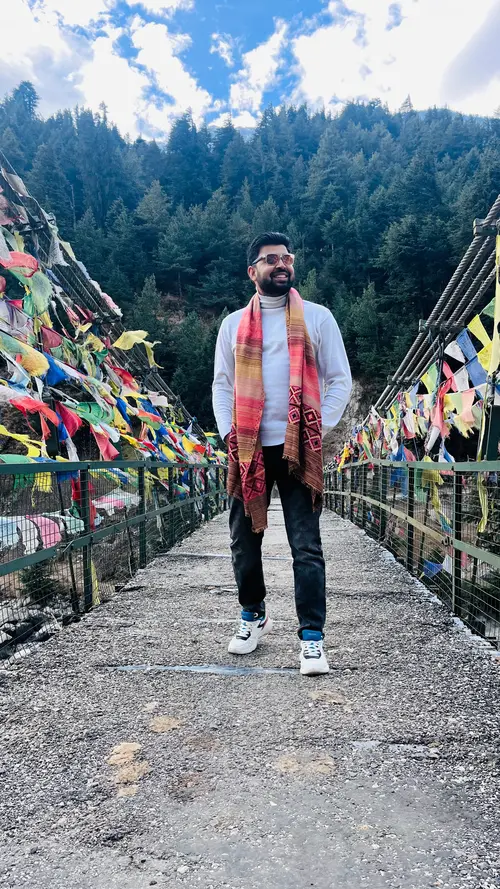
Founder & Director, Divinepath Yoga School & Retreat
Amit founded Divinepath to make authentic yoga education accessible globally. He oversees school operations, admissions, student support, and course information, working with certified lead teachers to keep training details accurate and transparent.

One of the Best Yoga Teacher Training Courses & Retreats in India & Indonesia.
 Yoga Alliance RYS 200
School ID 457520
Verify registration →
Yoga Alliance RYS 200
School ID 457520
Verify registration →
Divinepath Yoga School & Retreat © 2026. All Rights Reserved.