


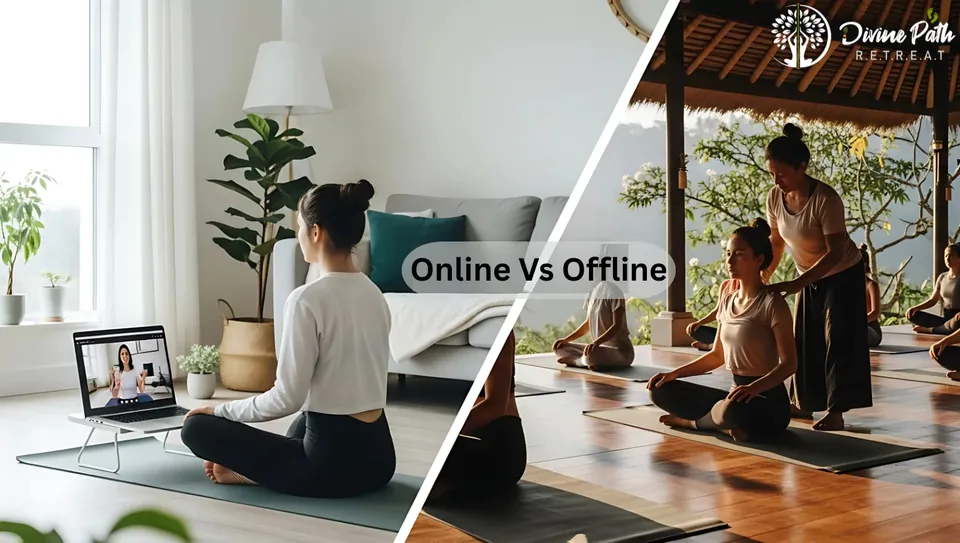
Quick answer: Online yoga teacher training costs less — usually $200-$600 for a 200H certification. In-person programs like Divinepath's Goa 200H start from $699 and include accommodation, meals, and 21 days of supervised teaching practice. The honest answer: online TTC gets you a certificate. In-person TTC gets you the teaching hours, the corrections, and the confidence that makes studios want to hire you. If you plan to teach professionally, in-person is worth the extra investment.
In-person 200-hour options: All YTT programmes · Goa · Rishikesh · Bali
Over the last two decades, yoga has evolved from being a relatively obscure wellness practice to being considered an integral part of a lifestyle. Thus, millions of people now incorporate yoga into their daily routines for physical fitness, mental clarity, and spiritual development. With such a rise in popularity, the demand for qualified yoga teachers has also skyrocketed.leading to a rise in Yoga Teacher Training in Goa and Yoga Teacher Training in Bali, where students from across the world come to learn.Aspiring teachers are now facing an important choice: online vs. offline yoga teacher training. While technology has put online learning at the forefront, traditional learning through an in-person training course still holds some magic. Choosing between these two modes could define not only your teaching career but also your transformational journey.
Yoga teacher training means more than just a course; it means a journey of transformation for yourself. These well-structured programs, ranging from 200 Hour Yoga Teacher Training in Goa to 500 hours, provide in-depth training in yoga and equip students with the skills necessary to instruct fellow students. Usually, a conventional YTT considers
Asanas (Postures): Learn correct alignments, benefits, and modifications.
Pranayama (Breathing exercises): Techniques to balance energy and calm thoughts.
Meditation and Philosophy: Concepts of Yogic texts like the Yoga Sutras and Bhagavad Gita.
Anatomy & Physiology: Understand the human body to teach in a safe and effective manner.
Teaching Methodology: Building confidence in planning classes, giving cues, and establishing rapport with students.
Whether online or offline, YTT goes beyond physical asana to stepping into a lifestyle of awareness, balance, and compassion.
Flexibility of Learning – Without a doubt, the biggest advantage of studying Online Yoga Teacher Training is being able to tailor your own pace. It means being able to fit the things that matter to you around your busy schedule as a professional, parent, or student.
Affordable – The absence of airfare, lodging, and meals makes many online programs less expensive; hence, more people can now consider yoga education.
Global Access to Teachers – Websites offer international opportunities for students to learn from instructors. Without leaving the comfort of your own home, you gain exposure to various teaching styles.
Replay-Preview Options – With many online programs, recorded sessions are often granted for lifetime access, allowing students to revisit lessons or clarify doubts later.
Lack of physical guidance – There is a limit to postural and alignment corrections from a distance; mistakes can and will slip through the cracks without touch or direct observation.
Diminished sense of community – Group chats and video calling help to an extent, but they can never replace the human warmth generated by interacting with fellow students and mentors face to face.
Requires High Discipline – In the absence of a given time schedule, the student is more likely to procrastinate. In such cases, strong motivation must be instilled to encourage them to complete the assignments and practice regularly.
Screen Fatigue & Tech Issues - Sitting in front of a screen for hours can be straining, and an unstable internet connection may hinder progress.
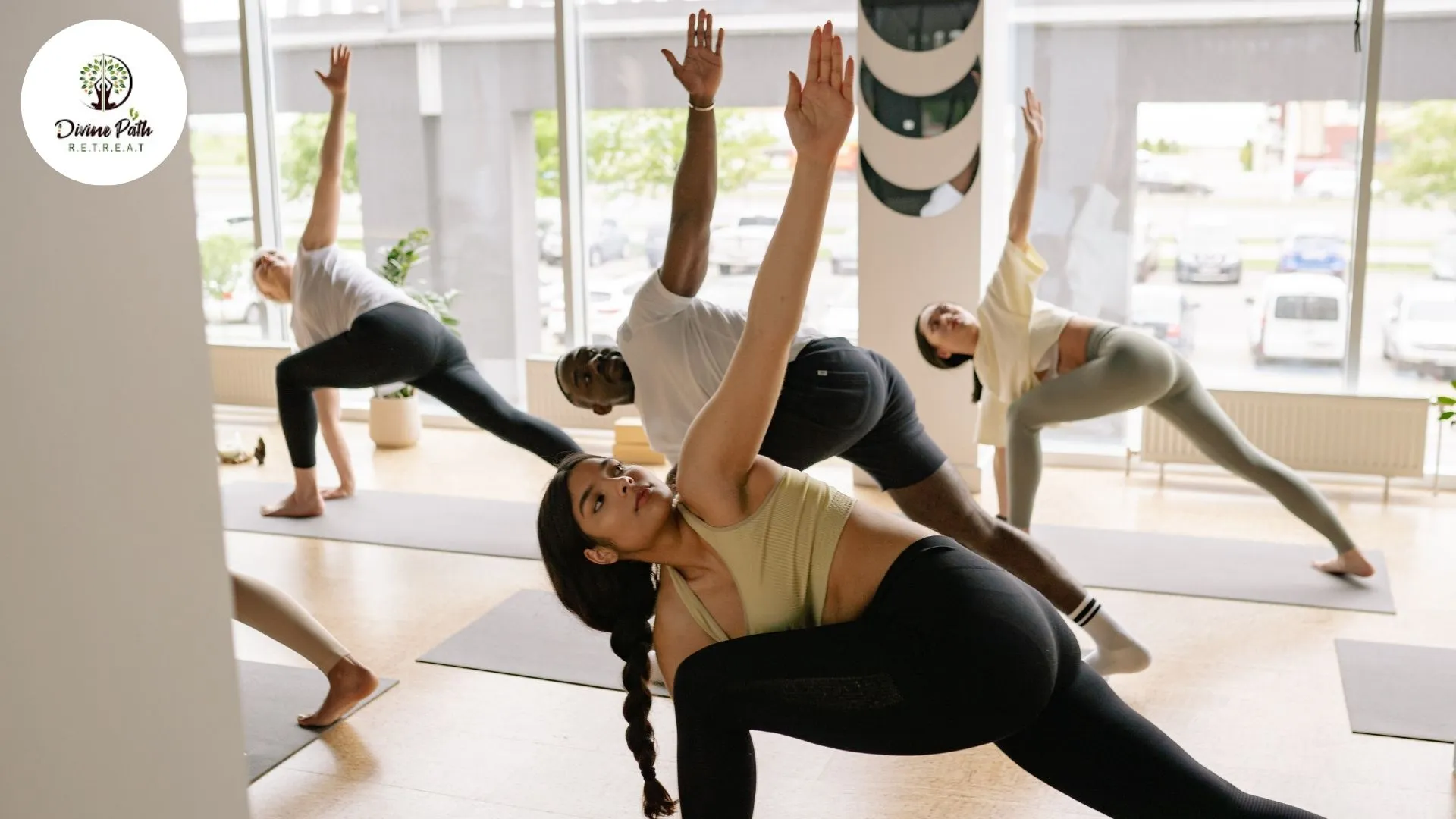
Hands-On Adjustments & Feedback: Instructors can physically guide you into correct postures and ensure your alignment is accurate, helping to avoid injuries. This personal touch is rare.
Setting Immersed in Learning Training yoga school creates an atmosphere of focus and discipline. You can step out of your usual distractions and into a wholly immersed state of being in yoga.
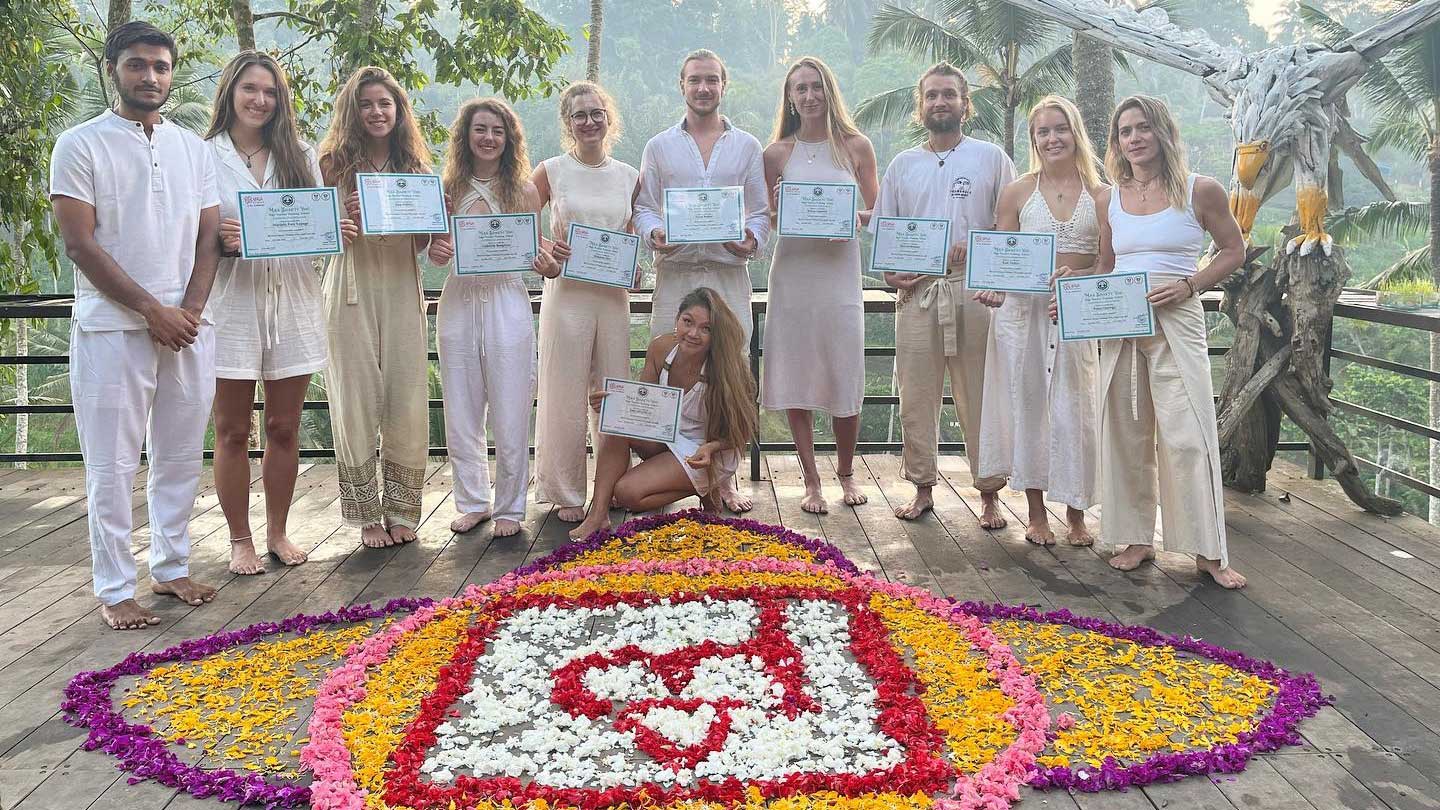
Stronger Community Ties - There is surely much bonding achieved over meals, practices, and shared experiences among fellow yogis, leading to lifelong friendships and, hence, a supportive global network.
Spiritual & Cultural Depth -Most in-person trainings take place in spiritually rich locations, such as Yoga Teacher Training in Rishikesh, Yoga Teacher Training in Bali, or Thailand, thereby imparting a cultural and spiritual element to your journey.
Higher Investment - Travel, food, and stay make in-person training more costly.
Time Commitment - Most trainings require a full-time commitment for a period of 3 to 6 weeks, which is difficult for all.
Geographical Barriers - Not everyone can travel to yoga hubs due to visa restrictions, financial constraints, or personal reasons.
| Feature | Online YTT | In-Person YTT |
|---|---|---|
| Flexibility | High — learn at your own pace, replay sessions. | Low — set schedule, immersive full-time commitment. |
| Cost | Generally lower (no travel, lodging). | Higher (travel, accommodation, meals). |
| Hands-on Guidance | Limited — remote corrections only. | Excellent — physical adjustments and real-time feedback. |
| Community & Networking | Weaker — virtual interactions, chats. | Stronger — shared experiences, lifelong bonds. |
| Spiritual/Cultural Depth | Limited — depends on teacher content. | High — often located in culturally rich settings. |
| Discipline & Routine | Requires self-discipline. | Built-in structure and routine. |
| Accessibility | High — available anywhere with internet. | Limited — travel and visa constraints possible. |
| Best for | Those needing flexibility and affordability. | Those seeking deep transformation and hands-on learning. |
Most career teachers choose an immersive 200-hour — compare Goa, Rishikesh, and Bali dates.
It comes down to the choice between Online vs. In-Person Yoga Teacher Training, depending on one's priorities. For those who want flexibility, affordability, and the ability to learn at their own pace, an online YTT is indeed the way. However, if deep transformation, hands-on training, and a sense of belonging are your goals, then in-person training will always be the best option.
Online programs open a door—the door for accessibility and convenience. In-Person courses, on the other hand, present a journey that is deep and enriching. Both carry certifications, but with varying degrees of personal growth.
Want a clear, step-by-step plan to move from student to teacher — regardless of online or offline format? Read How to Train as a Yoga Teacher for practical steps and expectations.
Online training has, indeed, spread opportunities worldwide, but in-person training still remains the benchmark. Here is an explanation as to why:
Direct Mentorship: Nothing compares to studying and practicing in the physical presence of an experienced teacher.
Energetic Experience: Yoga is not just an intellectual venture. It thrives on energy, vibrations, and presence. These can only be perceived in the physical realm.
Discipline and Routine: Being in a retreat or an ashram inculcates discipline and structure that aid the student in embracing yoga as a lifestyle, rather than just a certification.
Transformational Journey: In-Person programs foster profound self-reflection, spiritual inquiry, and emotional healing.
In-Person training provides the most comprehensive foundation for anyone wishing to be a confident, real, and compassionate yoga teacher.
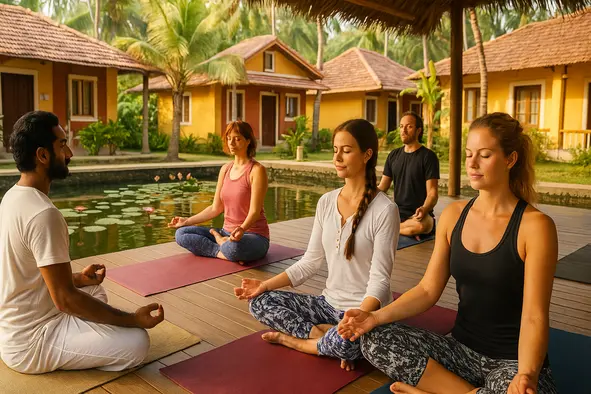
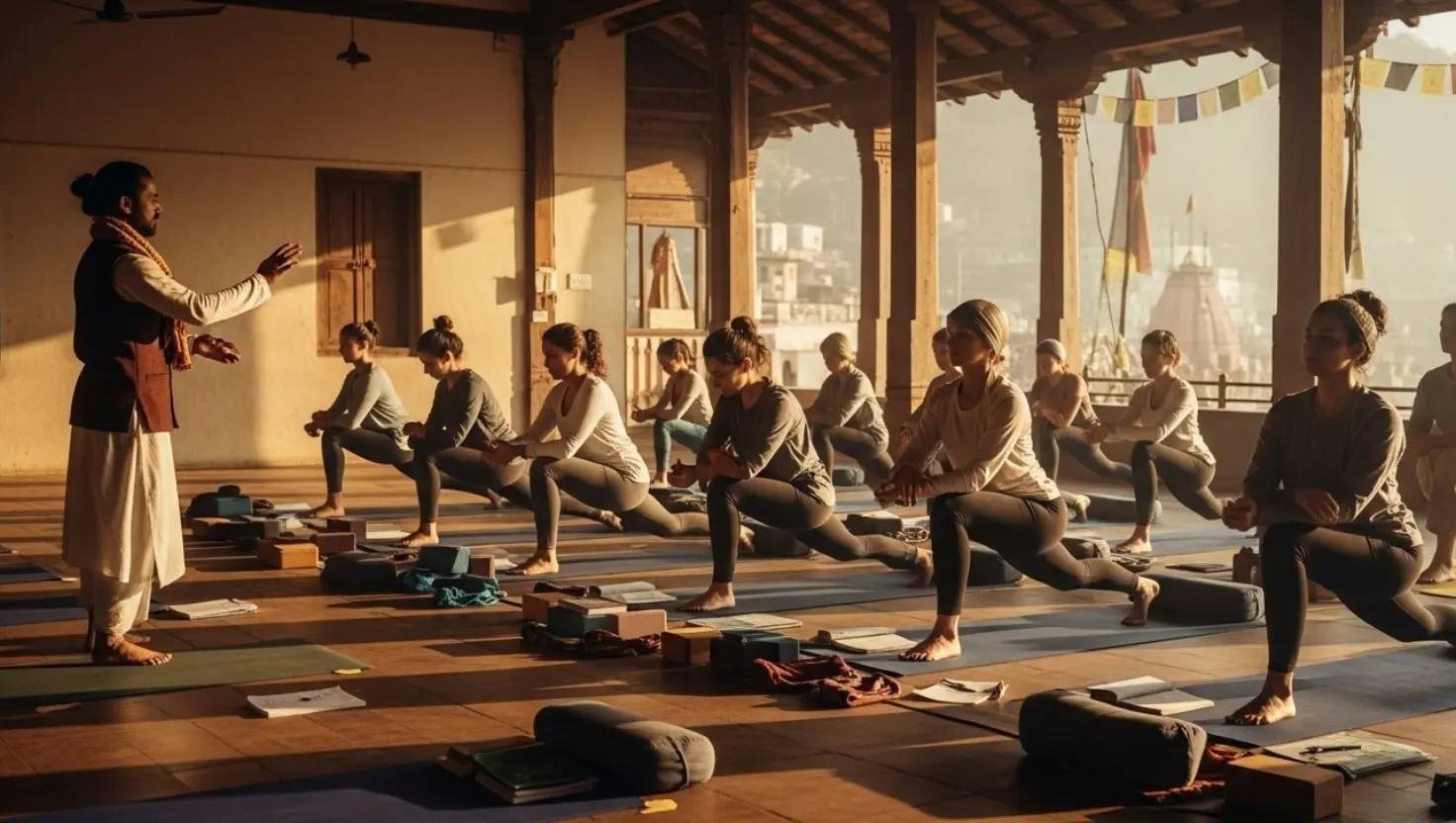
If you wish to experience genuine in-person training, then Divinepath Retreat is the perfect venue. At Divinepath Yoga School & Retreat, students receive not just technical training, but a journey of self-discovery. Located in serene surroundings with experienced teachers, the school offers:
Comprehensive programs: 200-hour and 300 Hour Yoga Teacher Training in Bali
Personalized guidance and posture corrections.
A supportive student community of like-minded learners.
A holistic view combining physical practice, philosophy, and meditation.
In contrast to online model courses that tend to be overly transactional, Divinepath aims for students to realize yoga in the truest sense—through practice, connection, and mindful living.
The debate about online and in-person Yoga Teacher Training continues, with the online sphere being praised for its flexibility and accessibility, and the in-person style being regarded as offering more depth and connection. In-Person training, albeit demanding, provides an immersive, transformative human experience, creating not just better teachers but also human beings with mindfulness.
For authenticity, growth, and real connection, the offline yoga teacher training is the way to go. The Divinepath Yoga School & Retreat at Divinepath Retreat offers the best combination of tradition, mentorship, and community to help actualize your dream of becoming a yoga teacher.





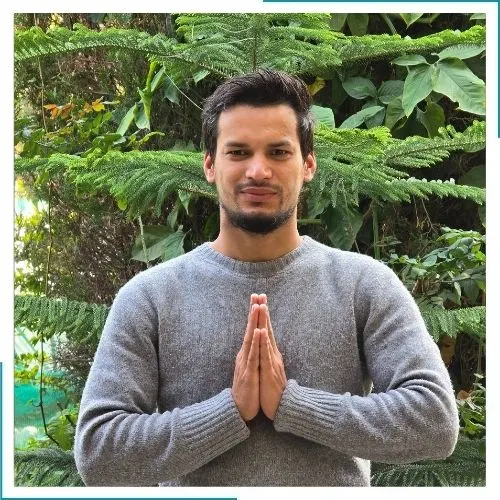

One of the Best Yoga Teacher Training Courses & Retreats in India & Indonesia.
 Yoga Alliance RYS 200
School ID 457520
Verify registration →
Yoga Alliance RYS 200
School ID 457520
Verify registration →
Divinepath Yoga School & Retreat © 2026. All Rights Reserved.