


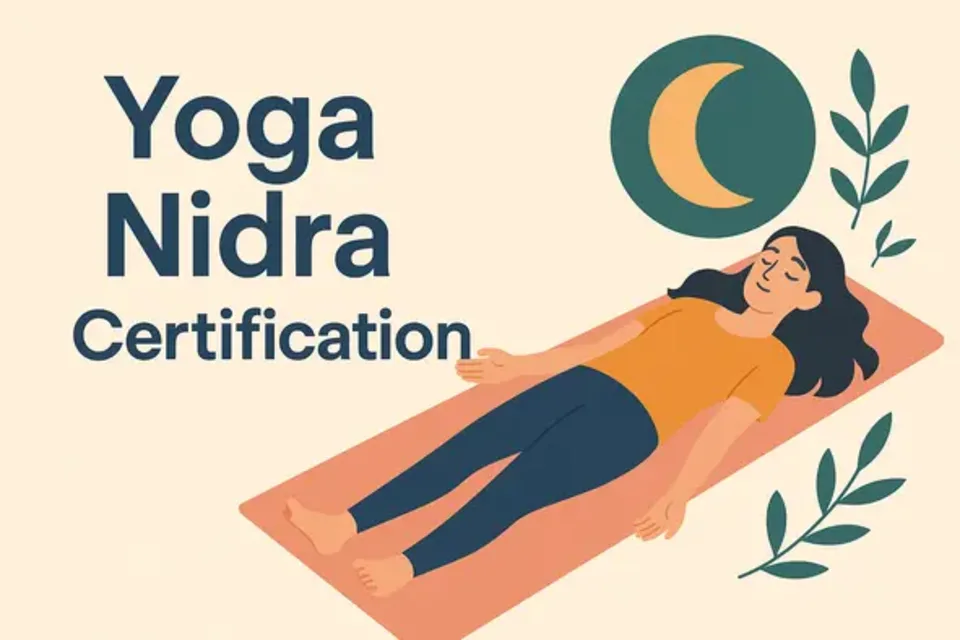
Yoga Nidra (yogic sleep) is a guided relaxation practice done lying down. You stay aware while the body rests deeply — useful for stress, sleep quality, and recovery between intense asana days. A Yoga Nidra certification course teaches you how to lead that practice safely for others, not only how to experience it yourself.
This guide explains what Yoga Nidra is, how it differs from seated meditation, what a useful syllabus includes, and how Divinepath students meet the practice inside residential 200-hour, 300-hour, and retreat schedules across Goa, Rishikesh, and Bali.
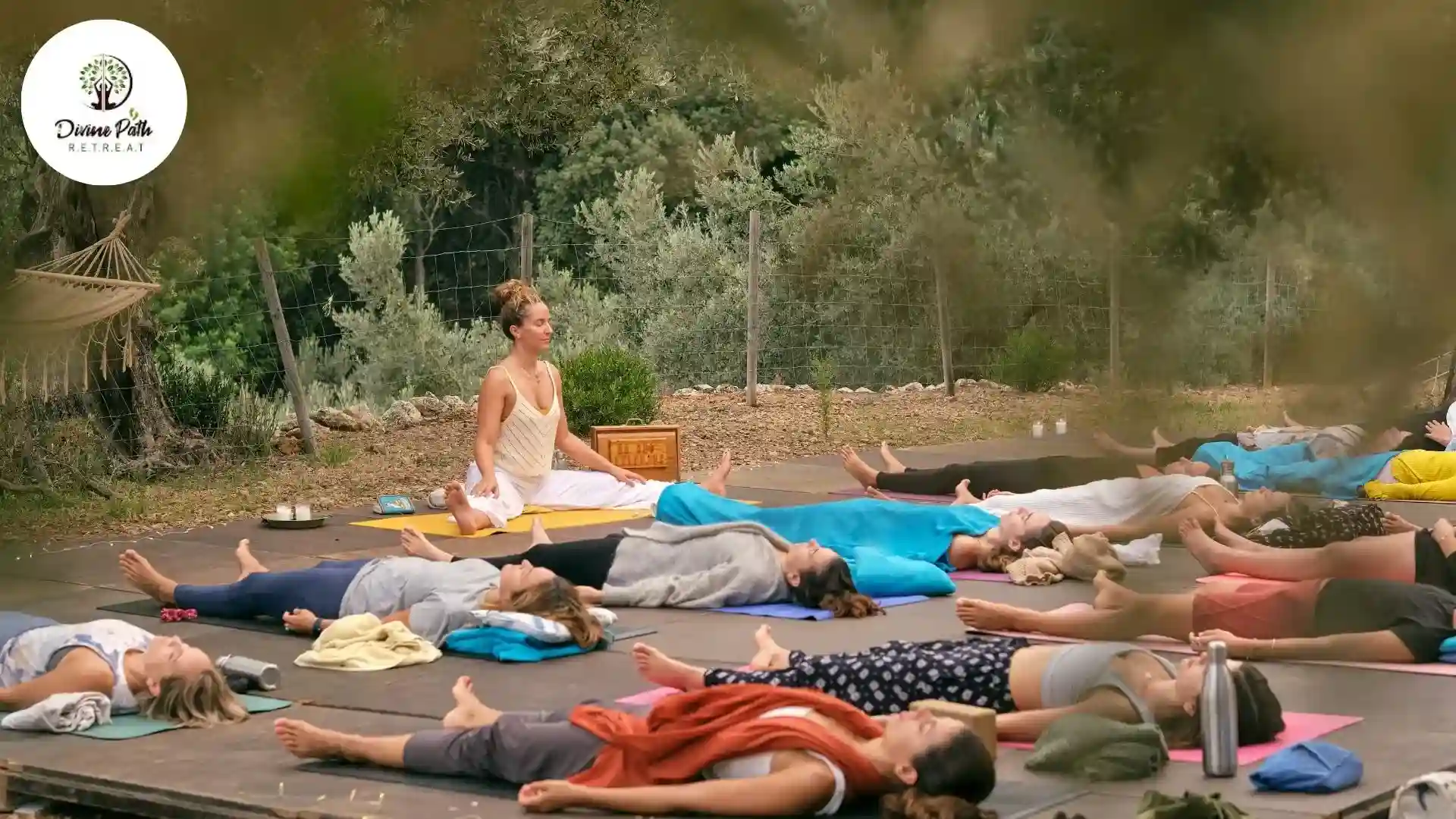
In Sanskrit, nidra means sleep. In Yoga Nidra you usually lie in Savasana while a teacher guides attention through the body, breath, and imagery. You are not “knocked out,” and you are not in ordinary sleep — you remain responsive to the voice while muscular tension drops.
Typical stages include settling, body rotation (scanning), breath awareness, and a short period of quiet. Sessions often run 20–45 minutes. Beginners can start with shorter guided tracks; teachers learn pacing, language, and when to keep instructions simple.
Hour counts vary by school (short intensives vs longer specialisations). Ask for contact hours, assessment method, and whether the certificate is a school certificate or part of a broader YTT pathway — do not assume every “certification” equals Yoga Alliance RYT registration.
Yoga Nidra is complementary wellness practice, not a replacement for medical or mental-health care.
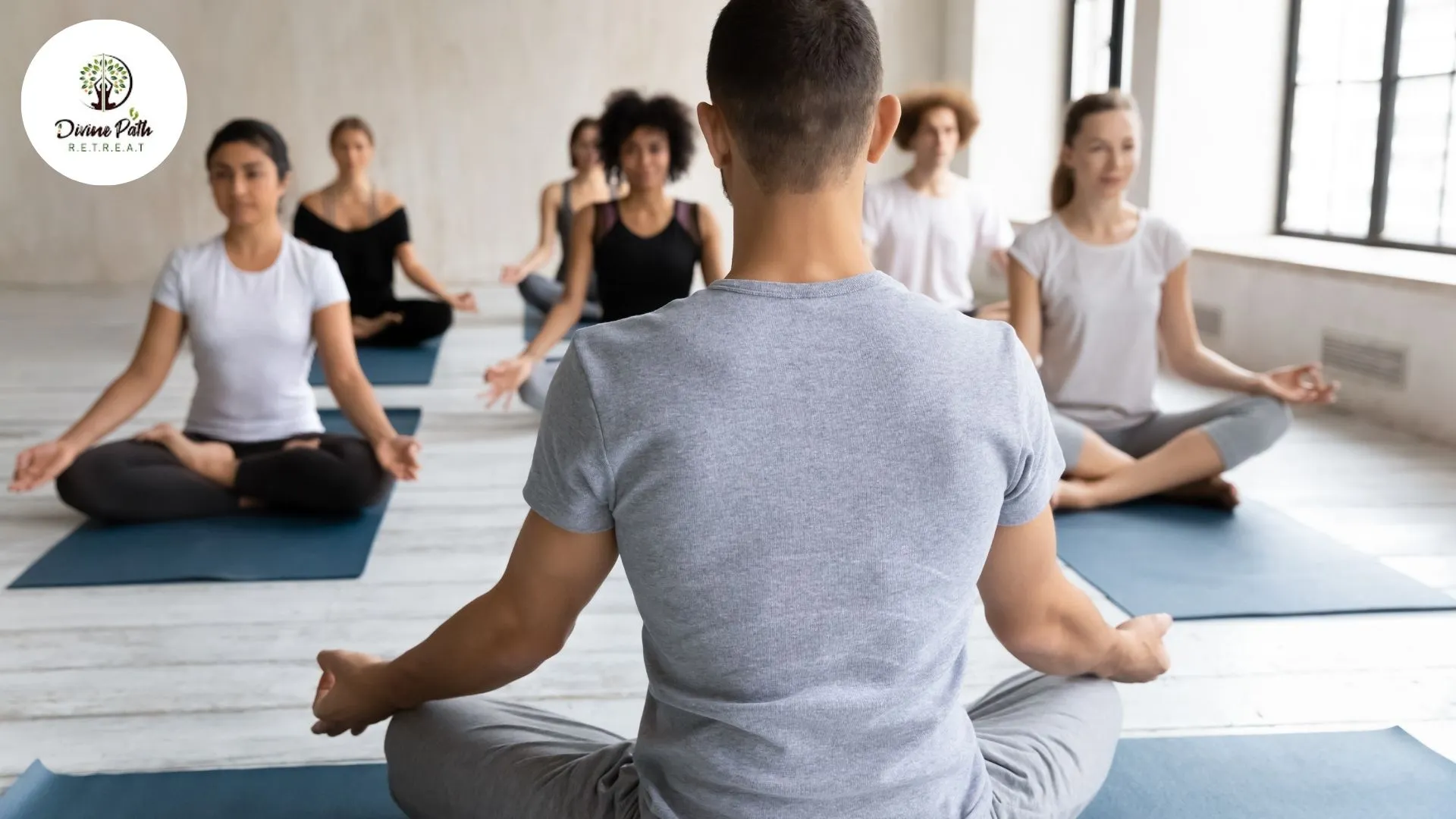
Seated meditation usually keeps an upright posture and trains attention while you stay awake and upright. Yoga Nidra is typically supine and heavily guided; the nervous system is encouraged to rest while awareness tracks the instructions. Both can build focus; they are different tools. Many YTT programs teach both.
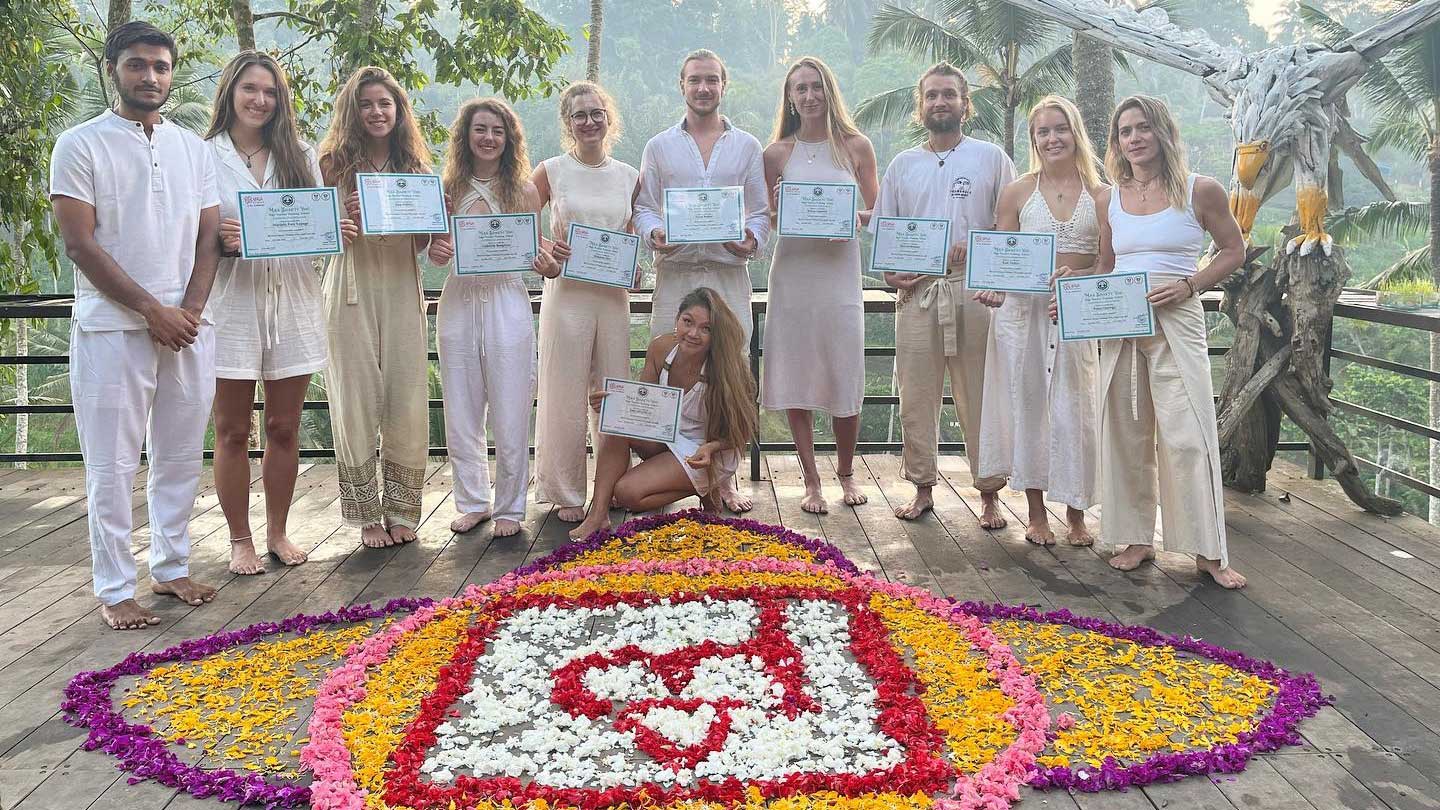
At Divinepath Yoga School & Retreat, Yoga Nidra appears inside residential teacher trainings and retreats — especially evening recovery sessions and advanced modules on meditation teaching. Campuses in Goa, Rishikesh, and Bali run English-language programs with accommodation and satvik meals for residential students. Airport pickup is available on selected courses; check the specific course page for inclusions.
If your goal is full Yoga Alliance RYT-200 eligibility, start with a registered 200-hour YTT. Use Yoga Nidra training to deepen teaching skills on top of that foundation.
For course dates and campus options, browse our yoga teacher training and retreat pages, or enquire with questions about Nidra modules in your preferred location.
If you want to bag a yoga Nidra certification via an online course, then you will have to complete the yoga Nidra course, usually of 200 or more hours. It mostly covers the basics of Yoga Nidra along with the techniques.
Usually, a yoga nidra training course will comprise practical and theoretical knowledge. Also, it engages in some guided practice sessions. You will learn here to control your thoughts.
Usually, a yoga nidra course can start from 50 hours, but if you want to enroll in the best, then go to Divinepath Yoga School & Retreat and start your journey.
Anyone with a basic yoga understanding and eagerness to learn can enroll in the yoga nidra certification course and receive a certificate. Even with no previous certificate courses, you can be eligible.
Yes, yoga nidra course taken online as well as offline, both are great options. Their certifications are recognized and acceptable across the world, as they both include great teaching methods.
To choose the best yoga nidra teacher training course, you must look up for an institute with the best reviews and great faculty. Also, keep in mind the fee structure. However, you can simply enroll at Divinepath Yoga School & Retreat and get the best teachings and facilities.
In a yoga nidra online class, you can expect a guided relaxation experience. The process will require you to lie down and follow the teacher’s instructions. Here you will have to focus on your breath, body, and imagination.
Nidra and meditation are core modules on our Goa 200-hour training.
Yoga Alliance Registered Yoga School — RYS 200, 300 & 500 · School ID 457520
 Yoga Alliance RYS 200, 300 & 500
School ID 457520
Verify registration →
Yoga Alliance RYS 200, 300 & 500
School ID 457520
Verify registration →
Divinepath Yoga School & Retreat © 2026. All Rights Reserved.