Best 200 Hour Yoga Teacher Training in Rishikesh — A Working Teacher's Honest Guide
 Yogi Naveen Ji
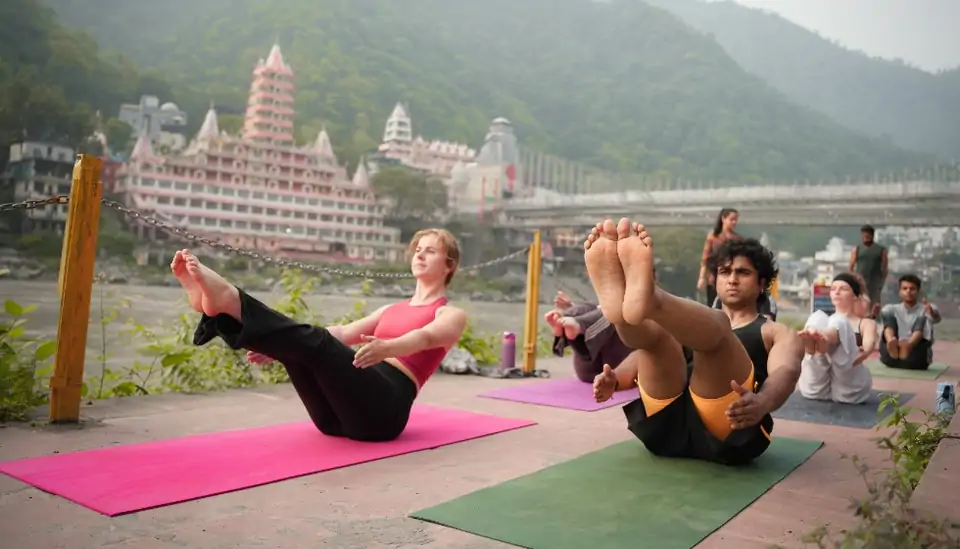
Best 200 hour yoga teacher training in Rishikesh — that's what you typed, and I'll give you a straight answer. I'm Yogi Naveen Ji, and I teach Ashtanga and alignment at DivinePath Yoga School & Retreat here in Rishikesh. We've trained 400+ students from 45+ countries over the past several years, so I know this market from the inside. I'm not a neutral reviewer — I teach at a school in this race — and I'll be upfront about that throughout this page.
What I can give you is real information: actual prices, actual class sizes, and the questions most people forget to ask before they put down a deposit. I've watched students arrive at other schools and leave disappointed because they picked based on Instagram photos. This guide is built to stop that from happening to you.
200-Hour YTT Programmes in Rishikesh — Price & Size Comparison
Before we get into details, here's a side-by-side snapshot of the main schools running 200-hour YTTs in Rishikesh right now. All prices are in USD and were verified in October 2026.
| School | Shared Room | Private Room | Duration | Max Students |
|---|---|---|---|---|
| DivinePath Yoga School | $950 | $1,300 | 25 days | 15 |
| Rishikul Yogshala | $1,200 | $1,350 | 23 days | 20-25 |
| Rishikesh Yogpeeth | ~$2,100 | ~$2,750 | 21 days | 25-30 |
| Arogya Yoga School | From $599 | N/A | ~25 days | 25-30 |
| Ekam Yogashala | From $799 | On request | 24 days | ~14 |
| Vinyasa Yogashala | From $649 | On request | 25 days | 20-25 |
| Mantra Yoga & Meditation | $1,200 | On request | 25 days | Small batch |
| Yoga Vidya School | $1,350 | $1,600 | 28 days | 20-25 |
| Sattva Yoga Academy | ~$2,100 | ~$2,550 | 23 days | 30+ |
What Separates a Good 200-Hour Programme From an Average One
There are over 80 schools in Rishikesh offering 200-hour yoga teacher training. Many of them are Yoga Alliance-registered, which surprises people — they assume the certification guarantees quality. It doesn't. Yoga Alliance checks paperwork and syllabi. It doesn't inspect classrooms, observe teaching, or interview graduates. The registration means the school submitted a curriculum that matches the required hour breakdown. That's all.
So what actually separates a programme worth your money from one that wastes it? Five things, in my experience.
1. Class Size That Allows Real Teaching Practice
In a group of 30 students, you'll get maybe two chances to practice-teach during the entire course. That's not enough. You need a programme that caps enrollment small enough for the lead teacher to correct your alignment, watch your teaching demos, and give you personal feedback. Under 20 is good. Under 15 is where it starts to feel like mentorship rather than a lecture hall.
We cap our groups at 15 students per batch. Some months we run with 8 or 9, which means each student teaches at least five practice sessions with direct feedback. That's a big part of why our graduates report feeling ready to teach — not just certified.
2. What's Included Beyond the Yoga Classes
A $600 programme and a $1,300 programme might look identical on a brochure. The difference usually sits in what's bundled: accommodation quality, food, materials, excursions, and post-graduation support. The cheapest options often mean shared dorms with 4-6 beds, basic vegetarian meals, and photocopied manuals. That's fine if you're on a tight budget and you know that going in. It's frustrating if you expected something else.
At our school, the price covers a private or shared room (your choice), three sattvic meals daily, all study materials, weekend excursions to local temples and ashrams, and lifetime access to curriculum updates. We don't charge extra for yoga props, Wi-Fi, or certification fees — some schools add those as hidden costs at checkout.
3. Teaching Style and Lineage
Some schools teach pure Hatha. Others mix Ashtanga with Vinyasa flow. A few focus on Iyengar-style alignment. None of these are wrong, but they're very different experiences. You need to match the school's teaching tradition with the kind of yoga you want to teach afterward.
Ask the school directly: what lineage do your lead teachers come from? If they can't answer clearly, that's a red flag. A strong programme has teachers who studied under a recognized tradition and can trace that training. Our curriculum blends traditional Hatha with Ashtanga Vinyasa. I trained in Rishikesh and teach from that Ashtanga and alignment background.
4. Teacher Qualifications — Beyond the Bio Page
Every school website lists impressive-sounding teacher bios. What matters more: how long has the lead teacher been teaching this specific programme? A teacher with 15 years of personal practice but only 6 months of YTT instruction isn't the same as someone who's led 40 teacher trainings. Ask for the lead teacher's name and look them up on the Yoga Alliance directory — their profile shows how many trainings they've completed.
5. What Past Graduates Actually Say
Google reviews and TripAdvisor ratings are useful, but read them carefully. A 5-star review that says "amazing experience, loved the food" tells you nothing about teaching quality. Look for reviews that mention specific things: anatomy instruction depth, hands-on adjustments training, the quality of the teaching practicum. One-star reviews that complain about strict schedules or early wake-up times are often a good sign — serious programmes aren't holiday retreats.
200-Hour YTT Pricing in Rishikesh — What You're Actually Paying For
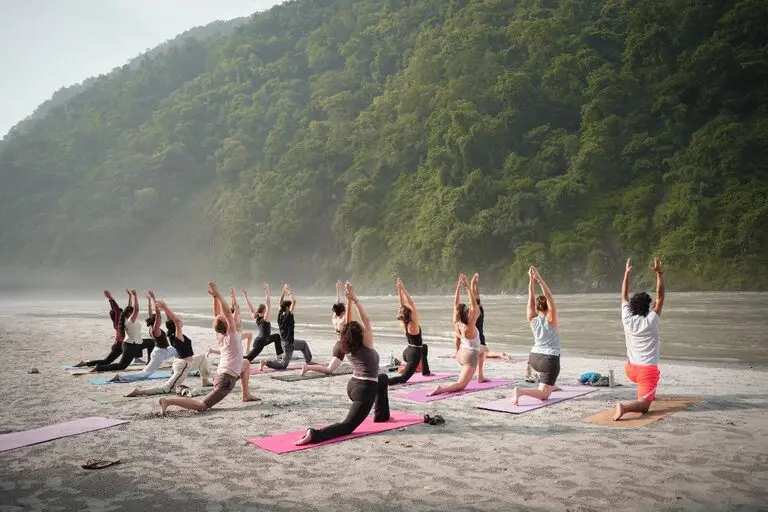
Prices across Rishikesh run from roughly $549 at the budget end to $2,750 at the premium end. That's a massive range for what's technically the same certification. Here's how that breaks down.
Budget Tier: Under $700
Schools at this price point usually operate from rented spaces, hire rotating guest teachers, and keep costs low by packing more students into each batch. Accommodation is basic — shared rooms with bunk beds, communal bathrooms, simple meals. The yoga instruction can still be solid, especially if the lead teacher is experienced and passionate. Arogya Yoga School and Vinyasa Yogashala sit in this bracket. If money is your primary constraint, these are legitimate options — but verify the lead teacher's credentials before booking.
Mid-Range: $800 to $1,400
This is where most serious schools cluster. You're paying for better accommodation, experienced full-time teachers (not rotating guests), structured mentorship, and usually a more polished campus. Our school sits here at $950 shared / $1,300 private for 25 days. Rishikul Yogshala is at $1,200 shared. Mantra Yoga charges $1,200 with smaller batches. At this level, you should expect your own desk space for studying, decent Wi-Fi, and food that's actually good — not just edible.
Premium Tier: $2,000+
Sattva Yoga Academy and Rishikesh Yogpeeth charge in this range. You're paying for established brand reputation, larger facilities, and sometimes celebrity guest teachers. The instruction quality can be excellent — but larger class sizes (25-30+ students) mean less individual attention. If brand recognition on your certificate matters for the market you plan to teach in, this tier makes sense. If you want hands-on mentorship, the mid-range usually delivers more of it.
For a full breakdown of all costs — including visa, flights, and living expenses — read our complete guide to YTT costs in Rishikesh.
What Our 200-Hour Programme Covers
I'm going to walk you through what we teach across 25 days because it'll give you a template for evaluating any school. When you compare other programmes, check whether they cover these same areas — and how many hours they put into each.
Asana Practice (60+ hours): Daily morning practice starting at 6:30 AM. We cover 84 classical asanas across Hatha and Ashtanga Vinyasa traditions. You'll learn each pose's Sanskrit name, alignment cues, common mistakes, modifications for injuries, and how to sequence it into a class. Afternoons include teaching methodology — you practice-teach to small groups with immediate feedback.
Anatomy & Physiology (30+ hours): We cover musculoskeletal anatomy relevant to asana, contraindications for common conditions (herniated discs, knee injuries, pregnancy), and how to assess a student's body before suggesting modifications. This is the section that separates teachers who can work safely with real students from those who can only lead healthy 25-year-olds.
Yoga Philosophy (25+ hours): Patanjali's Yoga Sutras, Bhagavad Gita, Hatha Yoga Pradipika. We don't just lecture — students discuss these texts in small groups and journal about how the concepts apply to their own practice. The philosophy sessions run in the evening when energy is calmer and more reflective.
Pranayama & Meditation (20+ hours): Nadi Shodhana, Kapalabhati, Bhastrika, Ujjayi — you'll practice each technique daily and learn how to teach them safely. Meditation sessions cover Trataka, Yoga Nidra, and silent sitting. We also cover the science behind breathwork — what's actually happening physiologically when you do three rounds of Kapalabhati.
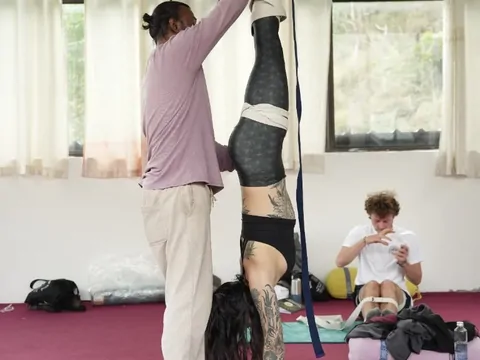
Teaching Practicum (25+ hours): This is the part that matters most. You'll design and deliver at least five full-length classes to your peers, with written feedback from both the lead teacher and your fellow trainees. By week three, you're teaching practice classes at our shala with an instructor in the room — not just running sequences your batchmates already know.
See the full daily schedule and curriculum details on our 200-hour YTT programme page.
Other 200-Hour Schools Worth Considering
I've watched these schools operate over multiple seasons. Here's what I'd tell a friend who was considering each one.
Rishikul Yogshala
One of the longer-running schools in Rishikesh with multiple locations. They've trained thousands of students, which means they've refined their systems — registration is smooth, schedules are organized, and the campus is well-maintained. The trade-off is batch sizes of 20-25 students, which limits personal feedback. At $1,200 for shared accommodation, you're paying a premium for reliability and reputation.
Ekam Yogashala
Small groups (~14 students) at a reasonable price point (from $799 triple-share). This is the school I'd recommend if you want a small-batch experience on a limited budget. Their teachers are solid — particularly strong in Hatha alignment. The campus isn't fancy, but the instruction-to-price ratio is probably the best in Rishikesh.
Rishikesh Yogpeeth
Premium pricing ($2,100-$2,750) with a campus that looks incredible on social media. The facilities justify some of that cost — proper studios, comfortable rooms, a swimming pool. Teaching quality is genuinely high, particularly in philosophy. The downside is class sizes of 25-30, and some graduates report that the pace felt rushed given the 21-day schedule. If your budget allows it and you're okay with a faster pace, it's a strong option.
Arogya Yoga School
The most affordable option on this list at around $599. That price buys basic accommodation and solid foundational instruction. Don't expect luxury — expect early mornings, simple food, and a no-frills campus. Their teachers are experienced, and the curriculum covers all Yoga Alliance requirements. If your goal is certification at the lowest cost, Arogya delivers that honestly. Just confirm the exact inclusions before you book, since some add-ons are charged separately.
Sattva Yoga Academy
Built around Anand Mehrotra's teachings with a strong spiritual focus. At $2,100-$2,550, it's one of the most expensive options. The programme goes deeper into meditation, mantra, and Vedic philosophy than most 200-hour courses. This is the right choice if you want your training to be as much about personal practice as about learning to teach. Batch sizes can run above 30, which is large.
What a Typical Day Looks Like in a 200-Hour YTT
Schedules vary by school. This is the shape most residential 200-hour programmes in Rishikesh follow. Our own timetable is on the 200-hour course page.
| Time | Activity | Notes |
|---|---|---|
| 5:30 AM | Wake up, cleansing practices | Neti, tongue scraping — optional first week |
| 6:30 AM | Pranayama & meditation | 45 min — outdoors weather permitting |
| 7:30 AM | Asana practice | 90 min led class — Hatha or Ashtanga rotation |
| 9:00 AM | Breakfast | Sattvic vegetarian — no caffeine at most schools |
| 10:00 AM | Anatomy or philosophy lecture | 90 min classroom session |
| 12:00 PM | Lunch + rest | Free time until 2:00 PM |
| 2:30 PM | Teaching methodology | Practice-teaching, sequencing, cuing |
| 4:30 PM | Asana or workshop | Inversions, adjustments, or special topics |
| 6:00 PM | Meditation or self-study | Journaling, reading, reflection |
| 7:00 PM | Dinner | Light meal — most schools discourage eating heavy at night |
| 9:00 PM | Lights out | Seriously — you'll need the sleep |
This schedule looks intense because it is. A good 200-hour programme isn't a holiday with yoga on the side. You'll be physically tired, mentally stretched, and probably emotionally tested by week two. That's normal. The students who finish strong are the ones who accepted this going in rather than expecting a resort experience.
Should You Do Your 200-Hour YTT in Rishikesh, Goa, or Bali?
We run programmes at all three locations, so I can give you an honest comparison without favouring one over another.
| Factor | Rishikesh | Goa | Bali |
|---|---|---|---|
| Vibe | Spiritual, disciplined, ashram culture | Relaxed, beach community, casual | Tropical, resort-like, creative |
| Best for | Serious traditional training | Mix of training and lifestyle | Training + travel experience |
| 200h Price (DivinePath) | $950 shared / $1,300 private | From $699 dorm / $850 shared | $1,450 shared / $1,950 private |
| Duration | 25 days | 22 days | 23 days |
| Climate | Cool Oct-Mar, hot Apr-Jun | Warm year-round, monsoon Jun-Sep | Tropical year-round |
| Yoga tradition | Deep roots — birthplace of yoga | Growing scene, newer schools | International fusion style |
| Distractions | Minimal — town is yoga-focused | Beach parties nearby | Tourism everywhere |
Rishikesh is where I'd send you if your goal is becoming a serious teacher. The town itself supports it — there are no beach parties pulling you away at night, the local culture is steeped in yoga tradition, and the Ganges running through town adds something you won't find anywhere else. But I won't pretend it's comfortable — the accommodation is simpler than Bali, the food is strictly vegetarian, and the weather can be harsh depending on when you come.
Compare our programmes across all locations: Rishikesh, Goa (Arambol), and Bali (Klungkung).
When a 200-Hour YTT Isn't the Right Move
I turn away applicants sometimes. Not because they're bad candidates, but because the timing or motivation isn't right.
If you're recovering from a recent injury: 200-hour training is physically demanding. Two asana sessions per day for 25 straight days will aggravate anything that hasn't fully healed. I'd say complete your physio, return to regular personal practice for at least three months, then apply.
If your only goal is a certificate for your Instagram bio: You'll be miserable. The schedule is strict, the study load is real, and you can't skip the anatomy exams. Come when you actually want to learn, not when you want a title.
If you can't handle 25 days without alcohol and late nights: Every programme in Rishikesh runs dry — no alcohol, no smoking on campus, no going out after 9 PM. This isn't optional. If that sounds unbearable rather than refreshing, you aren't ready yet.
None of that is meant to scare you off. It's meant to help you show up in the right headspace. The students who arrive knowing what they signed up for get ten times more out of the programme.
How to Pick the Right School — Your Checklist
Before you send a deposit to any school, get answers to these questions. Email them directly — if they don't respond clearly, that tells you something about how they'll handle communication during your training.
Ask for the lead teacher's full name and Yoga Alliance ID. Ask what the maximum batch size is — not the average, the maximum. Ask what happens if you get sick mid-course and miss three days. Ask whether certification fees are included or extra. Ask if you can speak with a recent graduate — any school that's confident in its programme will say yes immediately.
Check the school's Yoga Alliance listing at yogaalliance.org — verify the school ID matches what's on their website, and confirm the specific programme (RYS 200) is currently registered, not expired. Divinepath is School ID 457520, registered as RYS 200, RYS 300 and RYS 500.
Also look at the refund and cancellation policy before booking. Serious schools publish this on their website. If you can only find it buried in a PDF after you've paid, that's a warning sign.
Frequently Asked Questions
How much does a 200-hour YTT in Rishikesh cost?
Prices range from around $549 at budget schools to $2,750 at premium academies. The mid-range — $800 to $1,400 — is where you'll find the best balance of instruction quality and accommodation. DivinePath Yoga School & Retreat charges $950 for shared accommodation and $1,300 for a private room, covering 25 days of training, all meals, materials, and certification fees with no hidden costs.
Is a 200-hour YTT from Rishikesh recognized internationally?
Yes, as long as the school is registered with Yoga Alliance USA (RYS 200). That certification lets you register as an RYT-200 anywhere in the world. Confirm the school's current registration status before enrolling — some schools let their registration lapse and still advertise the logo.
How long does a 200-hour yoga teacher training take?
Most programmes run 21 to 28 days in a residential format. Our programme is 25 days. Shorter programmes (21 days) pack the same hours into fewer days, meaning longer daily sessions and less recovery time. Longer ones (28 days) spread the load but cost more for accommodation.
What's the best time of year to do a YTT in Rishikesh?
October through March is ideal. The weather is cool and pleasant — mornings around 10-15°C, afternoons 20-25°C. Avoid July and August when monsoon rains flood parts of the town and outdoor practice becomes impossible. April and May are hot (35°C+) but manageable if you don't mind the heat.
Can complete beginners join a 200-hour YTT?
You can, and many do. Most programmes — ours included — don't require years of experience. But you should have a consistent personal practice of at least 3-6 months. You don't need to do a headstand, but you should be comfortable in Sun Salutations and basic standing poses. Students who arrive with zero practice struggle physically and fall behind.
Do I need a visa for yoga teacher training in India?
Most nationalities can enter India on an e-Tourist Visa, which you apply for online. It takes 3-5 business days to process. A student visa isn't required for short-term YTT programmes. Make sure your passport is valid for at least 6 months beyond your arrival date.
What if I don't want to teach — is YTT still worth it?
About 40% of our graduates don't teach professionally. They came for the deepening of their personal practice, the anatomy and philosophy knowledge, or the structured experience of living in an ashram-style setting. A 200-hour YTT is worth it even if you never lead a single class — but it's a significant commitment of time and money, so be honest with yourself about your motivation.
What's the difference between 200-hour and 300-hour YTT?
A 200-hour YTT is the foundational certification — it qualifies you to register as RYT-200 and teach group classes worldwide. A 300-hour is an advanced programme you can only take after completing 200 hours. It deepens your skills in areas like advanced sequencing, therapeutic yoga, and specialized populations. You can't skip to 300 hours. Start with 200, teach for a while, then consider 300 when you've identified the gaps in your knowledge.
Ready to Start Your Yoga Teaching Career?
If you've read this far, you're doing more homework than 90% of students who book a YTT. That already puts you ahead.
I'd rather you pick the school that's right for you — even if it isn't ours — than rush into a deposit because a website looked pretty. If DivinePath sounds like a fit, you can check our full programme details here. If you've got questions I didn't cover, email me directly at divinepathretreat@gmail.com.
Train hard. Stay honest with yourself about why you're doing this. And don't skip the anatomy classes.