



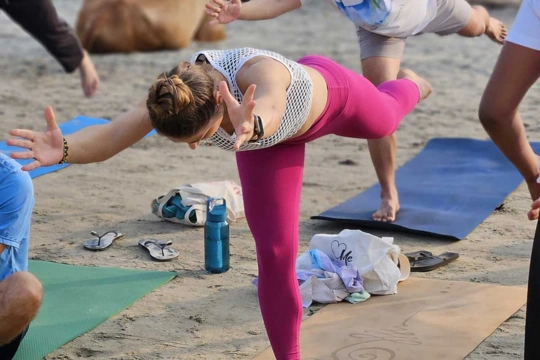
India · Beach
Goa (Arambol)
Hot tropical mornings, open-air shala, village energy ten minutes from the beach.
Goa 200-hour course →
A yoga teacher training day starts at 5:30 or 6:00 AM, runs 8–10 structured hours, and ends with lights out around 9:00–9:30 PM. That much is the same everywhere. Everything else — the sounds outside the shala, the heat during morning Ashtanga, the food on your plate, the difficulty curve across weeks, and even how many days the course lasts — depends entirely on where you train.
DivinePath runs yoga teacher training at three campuses in three countries. The curriculum and Yoga Alliance certification pathway are the same. The daily experience is not. This page puts all three side by side so you know what you are signing up for before you book a flight.
The short version
Hot tropical mornings, open-air shala, village energy ten minutes from the beach.
Goa 200-hour course →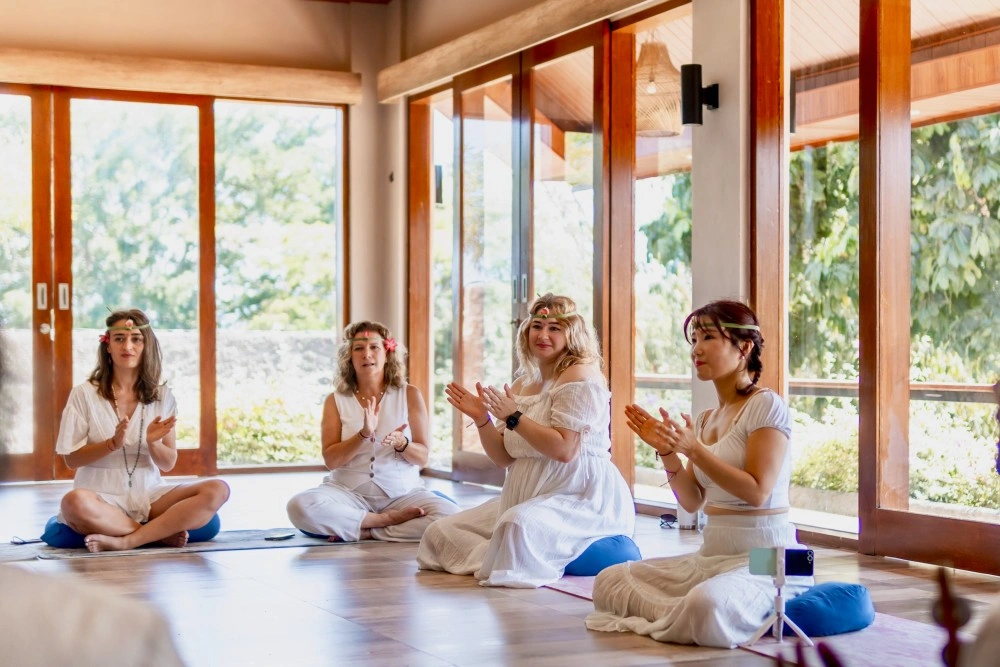
Rice-paddy quiet, humid afternoons, Yin and sound healing woven into the day.
Bali 200-hour course →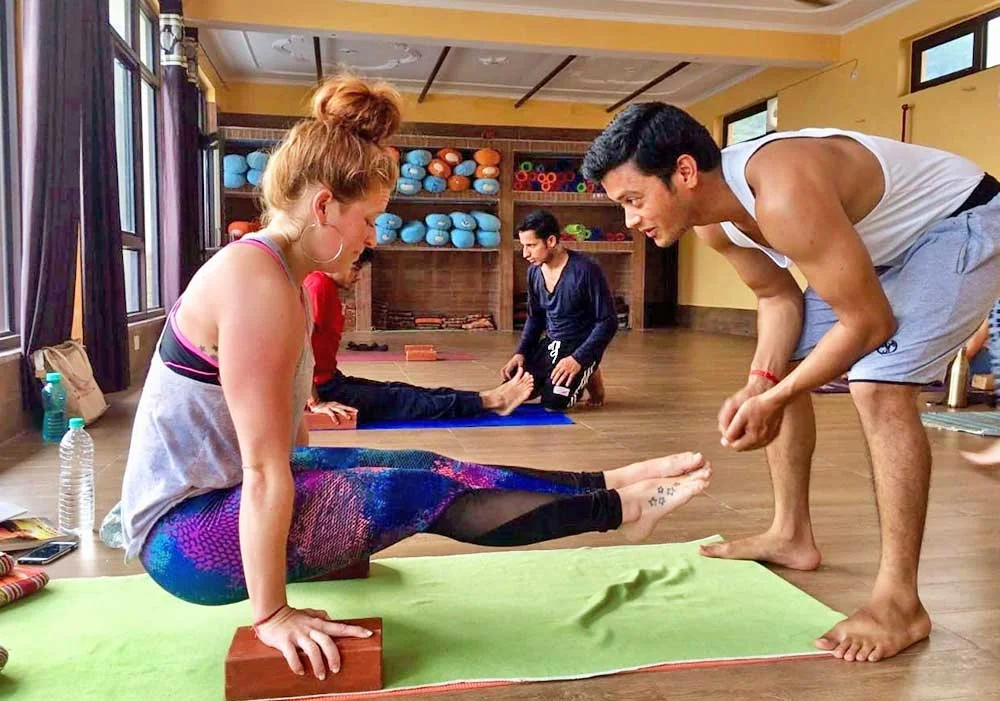
Cool mountain air, temple bells at dawn, evening Ganga Aarti as the day’s close.
Rishikesh 200-hour course →| Goa (Arambol) | Bali (Klungkung) | Rishikesh | |
|---|---|---|---|
| Course length | 22 days | 23 days | 25 days |
| Shared room from | $850 | $1,450 | $950 |
| Wake-up | ~6:00 AM | ~6:00 AM | ~5:30 AM |
| Hardest stretch | Week 2 (Days 8–14) | Week 2 (Days 9–15) | Weeks 2–3 (Days 10–18) |
| Climate in practice | Hot tropical (28–33°C) | Humid tropical (27–31°C) | Cool mountain (15–28°C) |
| Sound at dawn | Birdsong, distant waves | Roosters, rice-paddy frogs | Temple bells, flowing Ganges |
Shared-room figures are residential tiers on each 200-hour course page. Goa also offers course-only and dorm tiers; Bali offers course-only. Goa prices rise in December and January.
Same certification. Different day counts. Yoga Alliance requires 200 contact hours. Every campus delivers those hours. The difference is how many hours sit in each training day and how rest days are spaced.
Goa runs 22 days with the most concentrated daily schedule — six training days per week, 8–10 hours per day, and the shortest calendar commitment.
Klungkung runs 23 days at a slightly gentler calendar pace. The Bali campus also emphasises Yin yoga and sound healing more than the India campuses.
Rishikesh runs 25 days with the most traditional pacing: earlier start, more room for Yoga Sutras, Bhagavad Gita, and Sanskrit chanting. None of these formats is better — they suit different personalities.
Exact slot times shift slightly by batch; the shape of the day does not. Mornings are nearly identical. Afternoons are where the campuses diverge.
| Time | Goa | Bali (Klungkung) | Rishikesh |
|---|---|---|---|
| 5:30–6:00 | — | — | Wake up, shatkarma |
| 6:00–8:00 | Wake · pranayama · meditation | Wake · pranayama · meditation | Pranayama · meditation |
| 8:00–9:30 | Morning asana (Hatha / Ashtanga) | Morning asana (Hatha / Vinyasa) | Morning asana (Hatha / Ashtanga) |
| 9:30–1:00 | Breakfast · theory · methodology | Breakfast · theory · methodology | Breakfast · theory · methodology |
| 1:00–4:00 | Lunch · Vinyasa / alignment | Lunch · Yin / alignment | Lunch · Vinyasa / alignment |
| 4:00–7:00 | Self-study · kirtan · dinner | Sound healing · sunset · dinner | Mantra · Ganga Aarti · dinner |
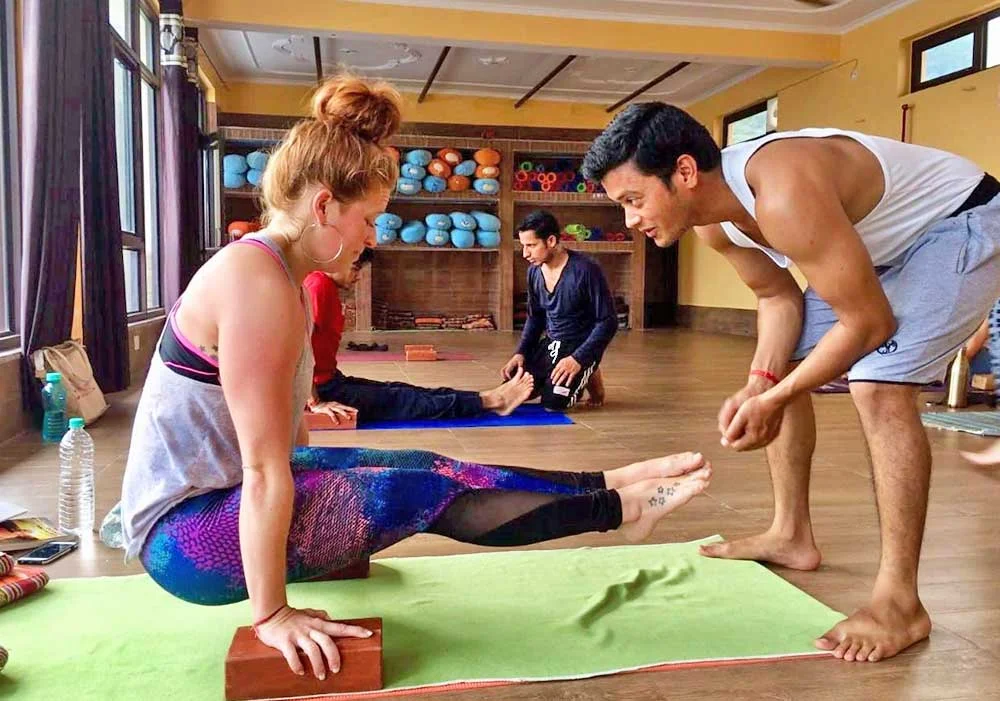
Vinyasa and alignment in an open-air shala where tropical heat builds through the day. By late afternoon the light softens and practice teaching happens in the cooler hours. Evenings close with kirtan on campus or nearby community chanting in Arambol.
Yin and sound healing sit in the humid afternoon — deliberately placed for recovery. Inland Klungkung is quieter than Bali’s tourist strips; rice paddies and village offerings shape the walk to the shala.
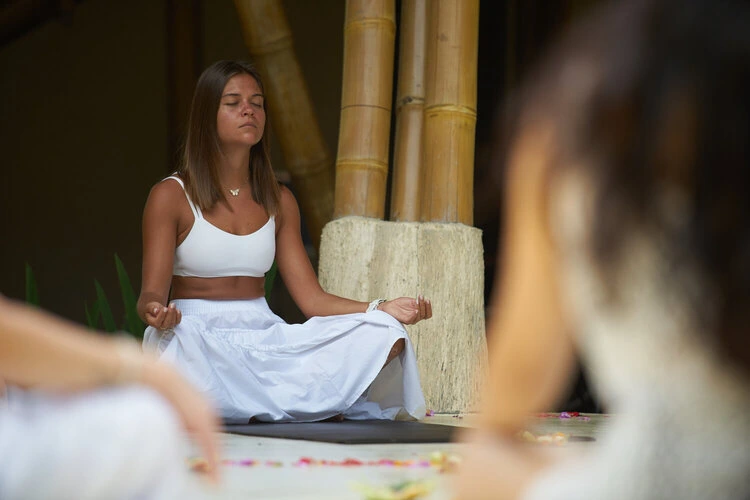
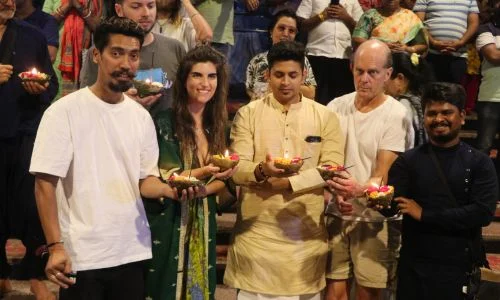
Cooler mountain air makes afternoon asana less draining than the tropics. The close of day is often the Ganga Aarti — a riverfront fire-and-chanting ritual students consistently rank as a defining moment of the course.
The alarm goes off at roughly the same hour. The experience could not be more different.
Fan running all night. Crows, distant motorbikes, and if the wind is right, waves from Arambol beach. Salt and frangipani in the air. Flip-flops to an open-air shala as the village wakes.
A rooster before dawn — by Day 3 most sleep through it. Wet earth and incense from morning offerings. Walk past a rice paddy; frogs go quiet as the sky turns grey-pink.
Shawl over yoga clothes. Wood smoke and the clean scent of the Ganges. Temple bells across the river. First light on the Himalayan ridgeline as pranayama begins.
These three mornings are why location matters. The 200-hour curriculum is a document. The daily experience is a feeling. Pick the feeling that matches what you need.
Week 1 is novelty. Week 2 is when Arambol heat and two asana sessions a day catch up. Around Day 9–10 many students hit a wall. It usually passes by Day 12. The 22-day format means recovery has to be fast. Full arc: Goa week-by-week.
The wall hits slightly later. Humidity after lunch is the usual culprit. Yin helps; the extra calendar days give a little more space before Week 3. Full arc: Bali week-by-week.
Less tropical exhaustion, more philosophical and emotional depth. Sutras and Gita land harder in ashram culture. The stretch can last longer — and so can the integration. Full arc: Rishikesh week-by-week.
Choose Goa for 22 days, beach-village energy, heat tolerance, and the lowest shared-room entry among the three ($850 shared; course-only and dorm sit lower).
Choose Klungkung for Bali without the densest tourist strip, Yin and sound healing emphasised, and $1,450 shared over 23 days.
Choose Rishikesh for spiritual immersion, the longest format, and 25 days from $950 shared.
Unsure? WhatsApp +91-8868043473 with dates, budget, and what matters most. Comparing levels rather than campuses? See the 200-hour hub or the 500-hour pathway.
This page is the comparison. These posts are the full stories:

21–22 day emotional arc, beach rest days, and when the wall usually hits.
Read the Goa account →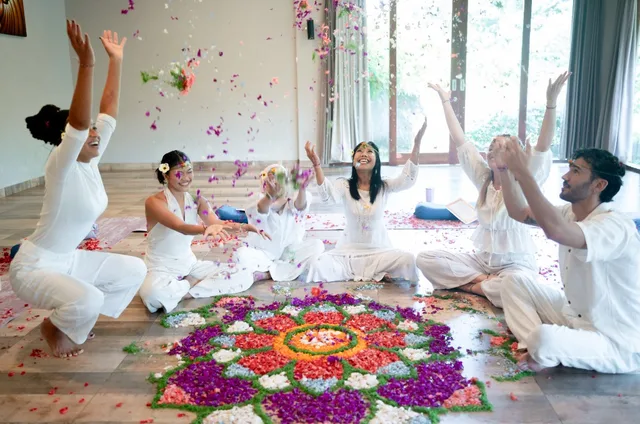
23-day Klungkung narrative, humidity dip, and what graduation morning feels like.
Read the Bali account →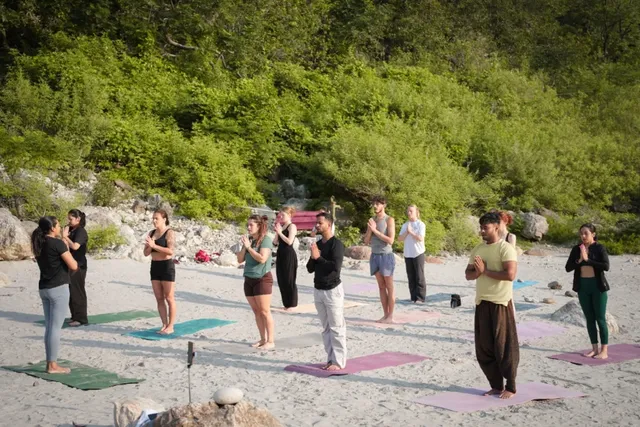
25 days by the Ganges — shatkarma mornings, Week 2 depth, final-week calm.
Read the Rishikesh account →For location trade-offs beyond the daily timetable, read Rishikesh vs Goa vs Bali. For every fee tier, see what yoga teacher training actually costs.
Written by Amit Rana, founder, Divinepath Yoga School & Retreat. Day counts and shared-room prices checked against the live Goa, Klungkung, and Rishikesh 200-hour course pages. If a course page and this guide disagree, the course page wins.

One of the Best Yoga Teacher Training Courses & Retreats in India & Indonesia.
 Yoga Alliance RYS 200
School ID 457520
Verify registration →
Yoga Alliance RYS 200
School ID 457520
Verify registration →
Divinepath Yoga School & Retreat © 2026. All Rights Reserved.