


What to Pack for Yoga Teacher Training in Rishikesh: The Complete 2026 List
Yogi Rajesh Ji, Lead Hatha & Vinyasa Teacher, DivinePath Rishikesh July 28, 2026 14 min read
Reviewed by Yogi Naveen Ji, Lead Ashtanga & Alignment Teacher, DivinePath Rishikesh
Quick Answer: For DivinePath's 25-day, $950 USD (shared cottage) / $1,300 USD (private) 200-hour YTT at our Tapovan campus near Lakshman Jhula, pack layered clothing for cold mornings (a fleece, warm socks, and a scarf matter more here than in most tropical YTT destinations), breathable practice wear for the warmer daytime hours, a printed e-visa, and cash rupees in small denominations. Accommodation, three sattvic meals daily, and course materials are all included, so your bag only needs to cover you and the Himalayan-foothills climate — not your logistics.
Rishikesh packs differently from Goa or Bali. This is the list our own Rishikesh teachers wish every student read before they zipped their suitcase — including the cold-morning mistake almost everyone makes once, and never again. Still choosing a school? Start with our 200-hour Rishikesh 2026 planning guide, then pack.
Key Takeaways
Pack 6–7 practice outfits plus warm layers — Rishikesh mornings can swing 15°C within the same day; fleece, warm socks, and a scarf matter more here than in Goa or Bali.
Mats, props, and Neti pots are provided at DivinePath's Tapovan campus; a thin travel mat is optional, not required.
Winter batches (Nov–Feb): thermal base layer, beanie, and proper socks — almost every student underpacks for the 6 AM Ganga-side wake-up.
Must-bring from home: printed e-Tourist Visa, cash rupees in small denominations, prescriptions in original packaging, universal adapter (Type C/D/M, 230V).
Leave at home: full-size mat, meat/alcohol snacks, heavy cotton-only clothing, and a stack of books you'll never open in weeks 1–3.
What Clothes Do You Actually Need for a Rishikesh YTT?
You'll practice twice daily for 25 days, in a climate that swings from a genuinely cold 6 AM wake-up to a warm midday sun — sometimes a 15°C (27°F) spread within the same day. This is the single biggest difference from packing for Bali or Goa, where the whole day sits in one warm band.
The formula that works: 6–7 complete practice outfits, plus 2–3 warm layers you rotate on top. Laundry is available on campus (roughly weekly turnaround is what most students use), so you don't need 25 days of clean clothes — you need enough to bridge a laundry cycle comfortably.
Pack:
6–7 breathable tops and leggings/joggers for asana practice (moisture-wicking fabric handles the temperature swing better than heavy cotton)
2–3 long-sleeve base layers for the 6 AM wake-up and Shatkarma before the day warms up
1 proper fleece or warm hoodie — not optional, especially November through February
A scarf, shawl, or light pashmina for the evening philosophy sessions (6:00–7:00 PM), when the temperature has already started dropping
2–3 pairs of warm socks and one pair of comfortable closed shoes for early mornings and rest-day walks (flip-flops alone aren't enough here, unlike beach destinations)
1 modest "town" outfit — shoulders and knees covered — for visits to ashrams, temples, and the Ganga Aarti ceremony
A light rain jacket or packable poncho if your batch falls in the monsoon window (roughly July–September)
Don't pack: a full beach wardrobe (there's no beach), thin sandals as your only footwear, or exclusively sleeveless tops — evenings and early mornings will make you regret it within the first three days.
Layers, not swimwear — Rishikesh mornings are the coldest part of any DivinePath location's daily schedule.Breathable practice wear for daytime — but you'll want a fleece waiting for you when the sun drops.
Do You Need to Bring Your Own Yoga Mat and Props?
Short answer: no — DivinePath's Tapovan campus provides quality mats and all props — blocks, straps, bolsters — for every asana session, morning and evening. You don't need to carry the weight.
Longer answer: roughly a third of our students still bring a thin travel mat (1–1.5mm, foldable) if they already have one whose feel they trust, and layer it over the shala mat. If you don't already own one, don't buy one specifically for this trip — the provided mats are good, and a travel mat is more useful for future practice at home than for these 25 days specifically.
What is worth packing: a small quick-dry towel for sweaty sessions, and a reusable 1L+ water bottle. The campus has refill points, and you'll use them multiple times a day between the two daily asana sessions and Shatkarma.
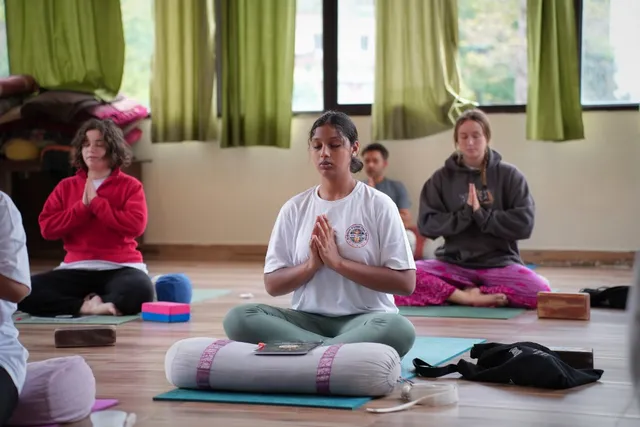
Provided mats and props in the Tapovan shala — one less kilogram in your suitcase.Blocks, straps, and bolsters are set out before every session — no need to pack your own.
What Does Rishikesh's Weather Mean for Your Packing List?
Rishikesh's climate is genuinely seasonal in a way Goa and Bali's tropical climates aren't, and it should shape a meaningful part of what you pack. For timing your batch, see our 2026 Rishikesh planning guide.
Rishikesh packing by season
Season
Months (approx.)
Daytime
Mornings
What to prioritise
Winter (coldest)
November–February
15–22°C (59–72°F), sunny
Can approach 5–8°C (41–46°F) at 6 AM by the river
Fleece, thermal base layer, warm socks, beanie — this is the season most students underpack for
Spring/Autumn (mildest)
March–April, September–October
22–28°C (72–82°F)
Cool but comfortable
A light layer for mornings is still worth it
Summer (hottest, pre-monsoon)
May–June
Can exceed 35°C (95°F)
Warm even early
Breathable fabrics, extra sun protection, electrolyte tablets
Monsoon
July–September
Warm, humid, heavy afternoon rain
Warm
Light rain jacket, dry bag for electronics, quick-dry everything
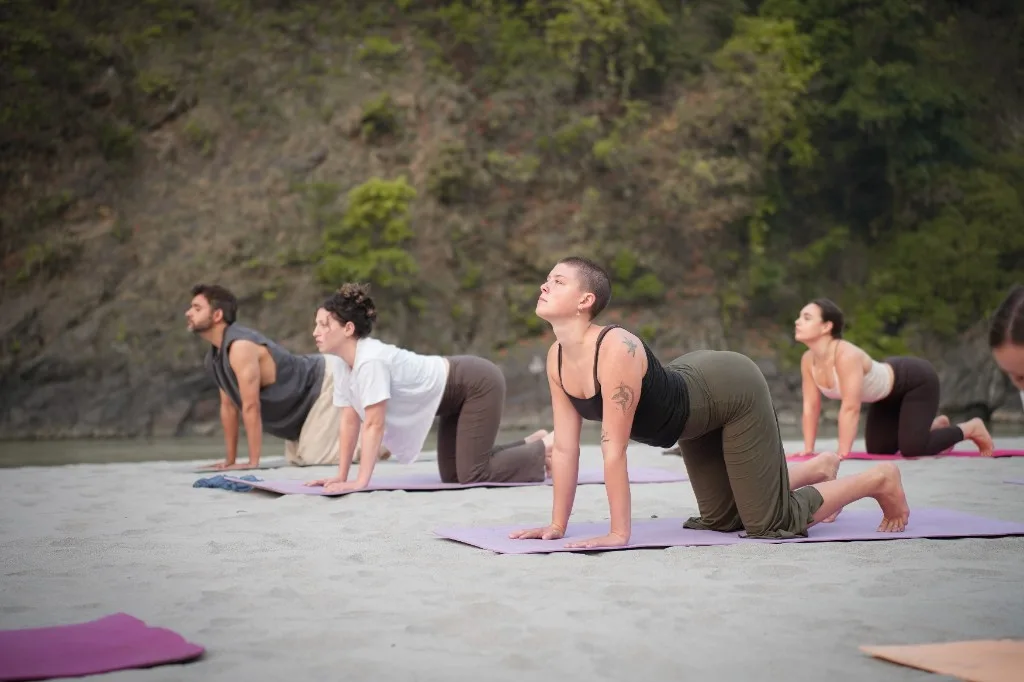
One honest note from experience: almost every student who books a November–February batch underestimates the morning cold, because the daytime photos of Rishikesh they've seen online show bright sun. The sun is real — it's also two hours away when you're doing Jala Neti at 6 AM in a fleece.
Outdoor practice by the Ganga — mornings here are colder than the midday photos suggest.
What Do You Need for Shatkarma and Cold Morning Practice?
Shatkarma — the classical cleansing practices, starting with Jala Neti and building to Kapalabhati — is introduced in week one of DivinePath's 25-day curriculum, before coffee, breakfast, or full consciousness. It's one of the things our week-by-week account describes as the "single strangest five minutes" of most students' first week.
The practical packing implications:
A hand towel you don't mind getting slightly damp — kept separate from your shower towel.
A warm layer you can put on immediately after Shatkarma and before breakfast — this transition, more than the practice itself, is when the cold actually gets to people.
Earplugs, if you're a light sleeper — the campus is close enough to hear the Ganga at night, which most students love, but a few prefer to soften it.
A small notebook for the evening philosophy sessions with Yogi Jaggi Ji — students who journal the day's Sanskrit terms in their own words retain them far better than those relying on printed notes alone.
Neti pots and saline solution for Jala Neti are provided by the school as part of the course materials — you do not need to source your own before arrival.
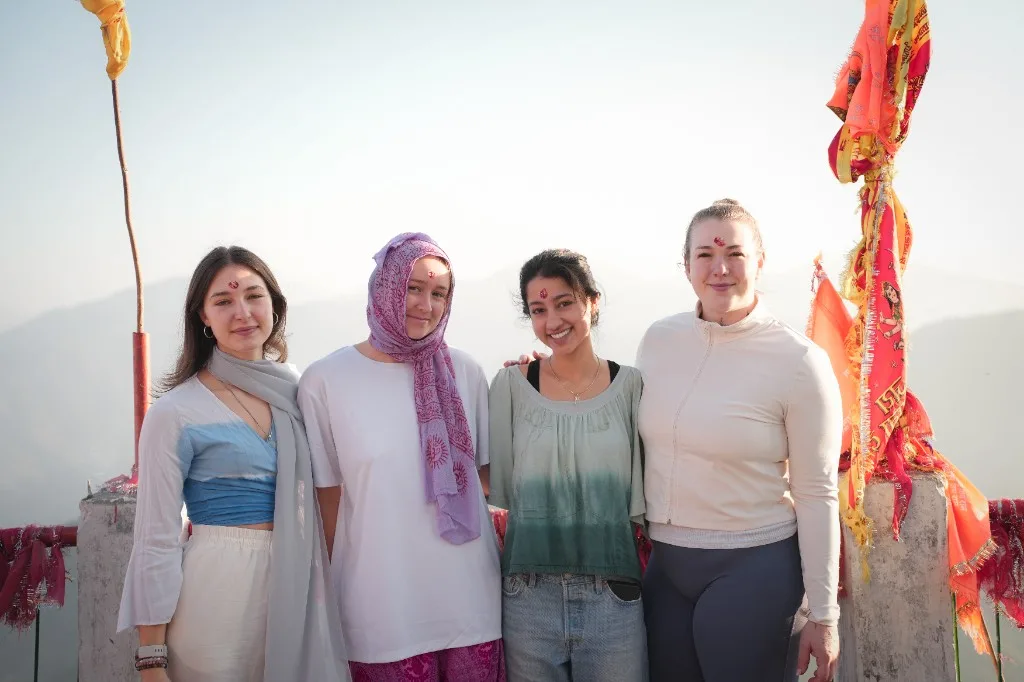
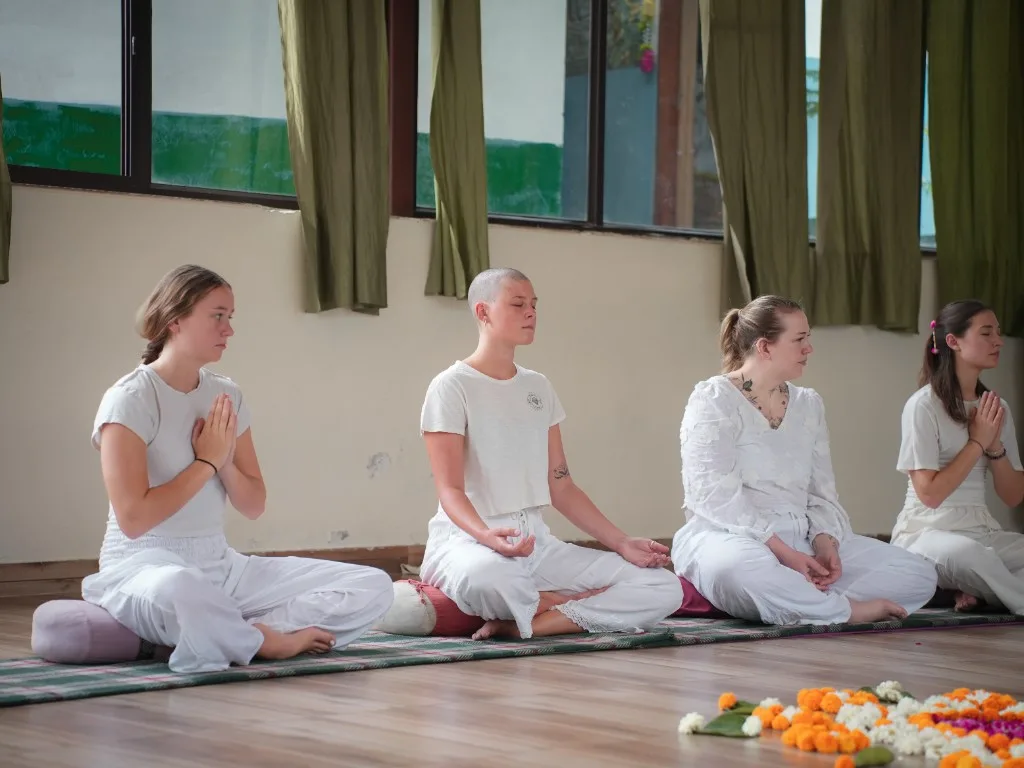
Early-morning rooftop meditation — the layer you put on after Shatkarma is the one you'll reach for every day.
What Health and Toiletry Items Should You Pack for Rishikesh?
A basic first-aid kit: any personal medications in original packaging, rehydration salts (ORS), diarrhoea medication, and any joint or muscle balm you already know works for you.
Mosquito repellent, though less critical than in Goa or Bali — Rishikesh's cooler, higher-altitude climate means fewer mosquitoes than the coastal locations, but evenings by the river still warrant it.
Reusable water bottle and a few water purification tablets as backup — campus drinking water is filtered, but tablets are worth having for day trips.
Toiletries in travel sizes for the flight, with full sizes in checked luggage — nothing Rishikesh-specific is hard to find locally in the Lakshman Jhula market if you run out.
Hand sanitiser and a small pack of tissues — genuinely useful before meals and during travel days.
Any sattvic-diet-relevant supplements you personally rely on (B12, iron, protein powder) — the on-campus kitchen is entirely vegetarian, no eggs, no caffeine at sessions, and while it's nutritionally complete, students on specific supplement routines should bring their own rather than expect to source them locally.
What Documents and Money Do You Need?
Visa: Almost all international students use the Indian e-Tourist Visa, applied for online at indianvisaonline.gov.in. A 30-day single-entry e-visa costs approximately $25 USD and comfortably covers the 25-day course plus arrival and departure buffer days. Apply at least a week before departure — the training is classified as tourism/cultural, so no student or yoga-specific visa is required. Print one copy and save a digital copy on your phone.
Cash: Bring more cash than you think you'll need, in small denominations. Card acceptance away from the main Lakshman Jhula road is patchy, and small-denomination rupees are what you'll actually use — for the market, for chai between sessions, and for the odd rickshaw ride. Exchange or withdraw a working float in Delhi or Dehradun before heading up to Rishikesh, since options thin out closer to the campus.
Copies: A photocopy (physical and digital) of your passport photo page, visa, and travel insurance policy, kept separately from the originals.
Travel insurance: Not required for the visa, but strongly recommended for any international training — confirm it covers activities at altitude and any pre-existing conditions relevant to an intensive physical course.
For arrival logistics, see our how to reach Rishikesh guide — including flights into Dehradun's Jolly Grant Airport (DED) and the overnight Volvo option from Delhi.
What Tech and Study Materials Should You Bring?
Phone charger and a universal adapter — India uses Type C, D, and M sockets at 230V; most modern phone chargers handle the voltage automatically, but bring an adapter regardless.
A power bank — useful on the overnight Volvo bus from Delhi if you choose that route over flying into Dehradun's Jolly Grant Airport (DED).
A notebook and pens for philosophy, anatomy, and teaching-methodology sessions — course manuals are provided, but most students say handwritten notes stick better during the intensive daily schedule.
Headphones for the rare downtime, though wifi is reliable enough for messaging and occasional calls home rather than for work during the day.
Keep tech minimal. The single biggest thing past students say they wish they'd packed less of is chargers, cables, and devices they never opened once the daily 6 AM–9 PM rhythm took hold.
What Should You Leave at Home?
A full-size yoga mat — provided on campus.
Meat, alcohol, or non-vegetarian snacks — the kitchen is entirely sattvic (vegetarian, no eggs, minimal caffeine at sessions), and bringing outside food that conflicts with this isn't in the spirit of the course.
A stack of paperback books — between the 6 AM start and the 9 PM end, most students find they have far less free-reading time than they expected, especially in weeks one through three.
Heavy, cotton-only clothing that takes days to dry — Rishikesh evenings are cooler and slightly damper than Goa or Bali, and slow-drying fabric becomes a real inconvenience by week two.
Excessive valuables — leave expensive jewellery and anything irreplaceable at home. The campus is safe, but a 25-day intensive residential course isn't the place for it.
High heels, formal wear, or anything requiring an iron — nobody has used these on a DivinePath Rishikesh batch yet.
DivinePath's Rishikesh campus sits on Upper Canal Road in Tapovan, a few minutes' walk from the Lakshman Jhula suspension bridge and close enough to the Ganga to hear it from your room. A few campus-specific notes worth packing around:
The walk to the market and ghats is genuinely walkable — comfortable closed shoes matter more than sandals for this reason alone.
Rooms are simple and residential, not resort-style — pack for function over luxury, and bring a couple of personal comfort items (a favourite pillowcase, a small speaker) if that helps you settle into a shared or private cottage for 25 days. See Rishikesh accommodation for room photos and layout.
The campus is a short journey from Dehradun's Jolly Grant Airport (DED) or reachable via the overnight Volvo bus from Delhi — DivinePath's driver meets students either way, so you don't need to pre-arrange local transport, only your own arrival time.
For the full curriculum, campus specifics, and school comparison before you book, see our 2026 Rishikesh planning guide. If you're still deciding whether you're ready, our beginner's guide to Rishikesh YTT — written by Yogi Rajesh Ji — covers readiness in depth.
Sound healing on campus — one of the weekend experiences included in the course fee.
What should I pack for cold mornings during yoga teacher training in Rishikesh?
A fleece or warm hoodie, a proper pair of socks, a light beanie, and a scarf or shawl for evening philosophy sessions. Rishikesh mornings by the Ganga are genuinely cold even when the daytime sun is strong, especially November through February, and the 6 AM wake-up means you're outside before the day has warmed up.
Do I need to bring my own yoga mat to Rishikesh?
No. DivinePath's Tapovan campus provides mats and all props (blocks, straps, bolsters) for every session. A thin travel mat is welcome if you already own one and prefer its feel, but it isn't necessary.
What visa do I need, and should I pack the documents?
Almost all international students use the Indian e-Tourist Visa, applied for online at indianvisaonline.gov.in before departure. A 30-day single-entry e-visa costs approximately $25 USD and comfortably covers the 25-day course. Print a copy and keep a digital copy on your phone as backup.
Should I bring cash or rely on cards in Rishikesh?
Bring cash. Card acceptance away from the main road is patchy, and small-denomination rupees are what you'll actually use for the Lakshman Jhula market, chai between sessions, and rickshaw rides. Withdraw or exchange a working float in Delhi or Dehradun before heading up to Rishikesh.
What should I NOT pack for yoga teacher training in Rishikesh?
Skip a full-size yoga mat (provided), any meat, alcohol, or non-vegetarian snacks (the campus kitchen is entirely sattvic and outside food isn't in the spirit of the course), a large stack of paperback books (you'll have little free-reading time in weeks 1–3), and heavy cotton-only clothing that takes days to dry in Rishikesh's cooler, damper evenings.
How much does DivinePath's Rishikesh YTT cost and what's included?
DivinePath's 200-hour YTT in Rishikesh is $950 USD for a shared cottage or $1,300 USD for a private room, both all-inclusive of 25 nights' accommodation, three sattvic meals daily, course materials, weekend excursions, and the Yoga Alliance RYT 200 pathway. International flights, the e-visa (~$25), and personal spending are not included. See our Rishikesh YTT cost guide for the full budget picture.

Written By
Written by DivinePath Rishikesh · Reviewed by Yogi Naveen Ji
Yogi Rajesh Ji — Lead Hatha & Vinyasa Teacher, DivinePath Rishikesh
Yogi Rajesh Ji has guided hundreds of international students through their first cold Himalayan morning and knows exactly what surprises first-timers. He wrote this packing guide from what students actually forget — and what they ship home unworn.
Reviewed by:Yogi Naveen Ji, Lead Ashtanga & Alignment Teacher, DivinePath Rishikesh. Yogi Naveen Ji verified campus facilities, Shatkarma provisions, seasonal weather guidance, and Tapovan campus notes against live July 2026 course pages.