



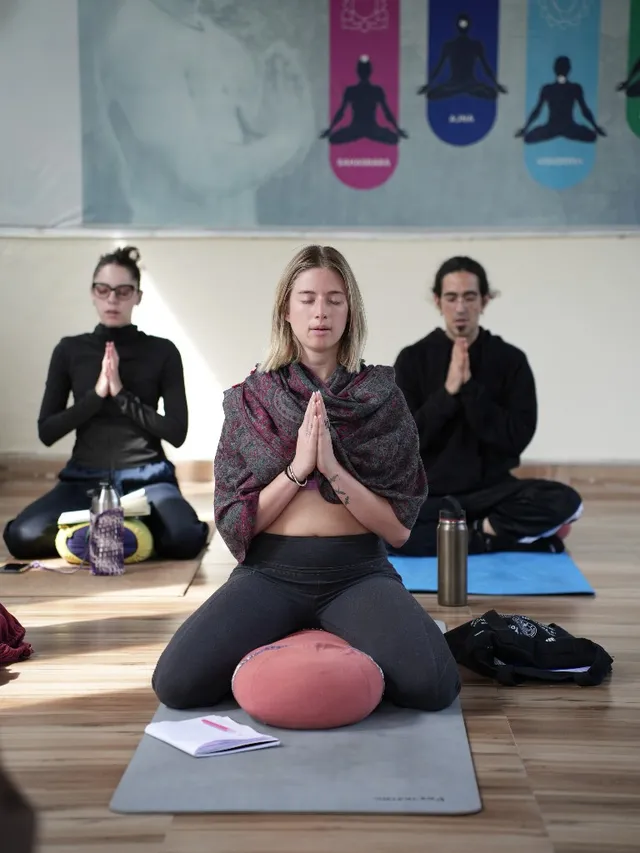
Chakras are energy centres in your body that influence how you feel physically, emotionally, and mentally. When a chakra is blocked, the area of life it governs tends to feel stuck. A blocked root chakra might show up as constant anxiety about money or safety. A blocked throat chakra might feel like an inability to say what you actually mean. Unblocking chakras is not magic. It is a set of practices — yoga, meditation, breathwork, awareness — that help restore the natural flow of energy through your system.
At DivinePath Yoga School & Retreat, we teach chakra theory as part of the philosophy module in our 200-hour teacher training. We do not treat it as woo-woo. Thousands of years of yogic tradition describe the chakra system, and millions of practitioners report feeling the effects of chakra work in their body and mind. Whether you think of chakras as literal energy centres or as a useful metaphor for different aspects of human experience, the practices work.
This guide covers what it actually means to unblock a chakra, how to tell which one might be blocked, and specific practices for each of the seven chakras — including things you can do at home starting today.
Think of your chakras as valves along a garden hose. When they are all open, water (prana, or life energy) flows freely from the base of your spine to the crown of your head. When one valve gets stuck, the flow decreases downstream and pressure builds upstream.
A “blocked” chakra is not broken. It is constricted. Stress, trauma, suppressed emotions, poor habits, or simply lack of awareness can cause a chakra to tighten. The symptoms depend on which chakra is affected — the root chakra creates physical survival anxiety, while a blocked heart chakra shows up as emotional withdrawal.
Unblocking does not mean forcing the chakra open. It means creating conditions where the constriction releases naturally. Yoga poses target specific chakras through physical pressure and stretch. Meditation brings awareness to the blocked area. Breathwork moves prana through the nadis (energy channels) that feed each chakra. Affirmations work on the mental patterns that caused the blockage in the first place.
Nobody walks around with all seven chakras perfectly balanced all the time. That is not the goal. The goal is awareness — noticing which areas feel stuck, doing a practice that addresses them, and gradually restoring flow. It is maintenance, not a one-time fix.
| Chakra | Sanskrit | Location | Colour | Element | Governs |
|---|---|---|---|---|---|
| Root | Muladhara | Base of spine | Red | Earth | Safety, survival, grounding |
| Sacral | Svadhisthana | Below navel | Orange | Water | Creativity, emotions, pleasure |
| Solar Plexus | Manipura | Upper abdomen | Yellow | Fire | Confidence, willpower, identity |
| Heart | Anahata | Centre of chest | Green | Air | Love, compassion, connection |
| Throat | Vishuddha | Throat | Blue | Ether/Space | Communication, truth, expression |
| Third Eye | Ajna | Between eyebrows | Indigo | Light | Intuition, insight, awareness |
| Crown | Sahasrara | Top of head | Violet/White | Consciousness | Spiritual connection, unity |
Located at the base of your spine. Governs your sense of safety, stability, and physical survival. When it is balanced, you feel grounded and secure. When it is blocked, life feels unstable — you worry about money, housing, food, or physical safety even when the actual threat is low. The root chakra is your foundation. Everything else builds on it.
Your creative and emotional centre, sitting just below the navel. The sacral chakra is where you feel things — joy, grief, desire, anger. When this chakra flows freely, emotions move through you without getting stuck. You create. You connect. You enjoy life without guilt. When it tightens up, either everything goes numb, or emotions flood in and you cannot turn them off.
Ever had a gut feeling that turned out to be right? That was your solar plexus talking. Manipura sits in the upper abdomen and runs your confidence, willpower, and sense of identity. People with a strong solar plexus make decisions quickly and stand by them. People with a blocked one live in a loop of second-guessing, people-pleasing, and feeling like a passenger in their own life.
The one everybody talks about, and for good reason. Anahata sits at the centre of the chest and bridges the three body-oriented chakras below with the three consciousness-oriented chakras above. It governs how you give and receive love. How you forgive. How close you let people get. Grief, betrayal, and old heartbreak lock it down. Once it closes, you either push everyone away or cling so tightly you disappear.
Do you swallow your words instead of speaking them? Say yes when you mean no? Overexplain because you are scared of being misunderstood? Vishuddha, the throat chakra, governs communication and truth. When it flows, you speak your mind clearly and listen without planning your reply. When it locks, every conversation becomes a negotiation with yourself about what is safe to say.
When was the last time you trusted your own judgment without checking with three other people first? Ajna sits between the eyebrows and governs intuition, clarity, and inner knowing. A clear third eye makes you decisive and perceptive. A blocked one fills your head with fog and sends you looking outward for answers that already exist inside you.
The hardest one to describe and the hardest one to work on. Sahasrara sits at the crown of the head and connects you to whatever you call the bigger picture. When it opens, you feel moments of peace that have no external cause. When it closes, life feels like a series of tasks with no meaning behind them. You can function perfectly well with a blocked crown chakra. You just feel empty doing it.
Your body and emotions are giving you signals all the time. The trick is knowing which signal maps to which chakra. Pay attention to what matches your own experience:
Constant worry about finances or basic needs. Feeling unsafe even in safe environments. Lower back pain, leg issues, or immune system weakness. Hoarding behaviour or excessive attachment to material possessions. A general sense that the ground beneath you might give way at any moment.
Emotional numbness or, the opposite, emotional overwhelm you cannot control. Creative blocks — the ideas will not come or the motivation disappears. Low libido or discomfort with physical intimacy. Guilt around pleasure. Lower abdominal tension, hip tightness, or reproductive issues. Feeling like life has lost its colour.
Chronic indecision. People-pleasing at the expense of your own needs. Digestive issues — stomach cramps, acid reflux, or irritable bowel symptoms. Low self-esteem that does not match your actual abilities. Either passivity (unable to take action) or excessive control (trying to dominate every situation). The stomach is where confidence lives or dies.
Difficulty trusting people. Walls up emotionally. Fear of vulnerability. Or the reverse: codependency, losing yourself in relationships, giving until you are empty. Grief you have not processed. Chest tightness, shallow breathing, or upper back pain between the shoulder blades.
Difficulty saying no. Swallowing words instead of speaking them. Fear of public speaking or confrontation. Chronic throat issues — tightness, frequent clearing, sore throat without illness. Feeling misunderstood no matter how much you explain. Lying or withholding truth to avoid conflict.
Mental fog. Inability to concentrate. Losing trust in your own judgment. Headaches or tension around the forehead. Feeling spiritually disconnected. Excessive daydreaming without action, or the opposite — hyper-rational thinking that dismisses intuition entirely.
A sense of purposelessness. Spiritual cynicism or apathy. Feeling disconnected from life despite having no obvious problems. Difficulty with meditation or stillness. Rigid belief systems that leave no room for mystery. The crown chakra blockage is hard to identify because it often disguises itself as “just how life is.”
Seven practical approaches. You do not need to do all of them. Pick what feels natural and build from there.
Sit quietly. Close your eyes. Bring your attention to the location of the chakra you want to work on. Visualise a spinning wheel of the corresponding colour at that point. Breathe into it. Imagine the wheel spinning freely, glowing brighter with each exhale. Five to ten minutes per chakra is enough. Start with the root and work upward. At DivinePath, we guide students through this visualisation during evening meditation sessions.
Nadi Shodhana (alternate nostril breathing) balances the left and right energy channels that feed all seven chakras. Kapalabhati (rapid abdominal breathing) energises the lower three chakras. Bhramari (humming bee breath) vibrates through the throat and third eye. Breathwork is the fastest way to move stagnant energy. Five minutes of Nadi Shodhana can shift how you feel in a single sitting.
Specific yoga poses target specific chakras. Standing poses and squats ground the root chakra. Hip openers work the sacral. Core work fires up the solar plexus. Backbends open the heart. Shoulder stands and fish pose target the throat. Forward folds with forehead grounded activate the third eye. Inversions like headstand stimulate the crown. A well-designed yoga class moves energy through all seven.
Affirmations address the mental patterns behind chakra blockages. Root: “I am safe. I have enough.” Sacral: “I allow myself to feel. I deserve pleasure.” Solar plexus: “I trust myself. My decisions matter.” Heart: “I give and receive love freely.” Throat: “My voice matters. I speak my truth.” Third eye: “I trust my intuition.” Crown: “I am connected to something greater than myself.” Say them out loud. Whispered affirmations have less impact than spoken ones.
The root chakra responds to direct contact with the earth. Walk barefoot on grass. Sit against a tree. Garden with your hands in the soil. The sacral chakra connects to water — swim, take long baths, sit by a river. The solar plexus responds to sunlight. The heart opens in green spaces. Nature is not a substitute for yoga and meditation, but it accelerates the work.
Chakra blockages thrive on autopilot. When you go through your day without noticing how you feel in your body, tension accumulates without release. Mindfulness is simply the habit of checking in: Where am I holding tension right now? What am I feeling emotionally? Am I breathing fully or shallowly? These micro-observations interrupt the patterns that keep chakras stuck.
Sleep, nutrition, movement, and hydration affect your energy system at the most basic level. A dehydrated, sleep-deprived, junk-food-fuelled body does not have the prana reserves to unblock anything. Before doing advanced chakra work, make sure the basics are covered. Eat food that makes you feel good (not just taste good). Sleep 7 to 8 hours. Move your body daily. Drink water. This is not glamorous, but it is the foundation.
The root chakra is where most beginners should start. If the foundation is unstable, nothing above it works properly.
Mountain Pose (Tadasana) — stand barefoot and feel your feet on the ground. Warrior I and Warrior II build strength and stability. Malasana (deep squat) drops your energy downward. Bridge Pose grounds through the feet while opening the front body. Tree Pose challenges your balance, which forces the root chakra to activate. Hold each for 30 to 60 seconds with deliberate, grounding breath.
Sit on the floor (not a chair — direct contact with the ground matters). Close your eyes. Visualise a red light at the base of your spine, spinning clockwise. With each inhale, the light grows brighter. With each exhale, it sends roots downward into the earth, like a tree anchoring itself. Five minutes. If your mind wanders to worries about money, safety, or survival — that is the root chakra talking. Acknowledge it. Breathe into it. Let it pass.
“I am safe.” “I am grounded.” “The earth supports me.” “I have everything I need right now.” “My body is my home and I am safe in it.” Say these during your morning routine, during meditation, or silently while walking barefoot. They work best when you actually feel your feet on the ground as you say them.
The sacral chakra is about feeling. If you have been running on logic and duty without making room for pleasure, creativity, or emotional expression, this one needs attention.
Any hip opener targets the sacral chakra. Butterfly Pose, Pigeon, Frog, Lizard Pose, and Goddess Pose all work. The hips are the physical home of the sacral chakra, and tightness in the hips often mirrors emotional tightness. Do not be surprised if emotions surface during deep hip stretches — this is the sacral chakra releasing.
Place your hands on your lower abdomen, just below the navel. Close your eyes. Visualise an orange, warm glow behind your hands. Imagine water flowing through that area — fluid, smooth, without resistance. Breathe deeply into your belly so your hands rise and fall with each breath. Five to ten minutes. The sacral chakra responds to warmth and flow, not force.
“I deserve to feel good.” “My emotions are valid.” “Creativity flows through me.” “I allow pleasure into my life without guilt.” “I am comfortable in my body.” These affirmations may feel confronting if you have spent years suppressing your emotional or creative side. That discomfort is the blockage itself. Say them anyway.
The sacral chakra governs creativity, and creative expression is one of the most direct ways to unblock it. Paint, draw, dance, write, cook something new, rearrange a room, play music. The output does not need to be good. The act of creating without judgment moves sacral energy. At DivinePath Yoga School & Retreat, we incorporate kirtan (group chanting) and free movement into our training precisely because these creative practices work on the sacral chakra in ways that structured asana does not.
You do not need a yoga studio, a guru, or crystals. You need a quiet space and 20 to 30 minutes.
Sit comfortably. Close your eyes. Starting at the root chakra (base of spine), visualise each chakra as a coloured light: red, orange, yellow, green, blue, indigo, violet. Spend 1 to 2 minutes on each, imagining the light growing brighter and the energy flowing freely. Move upward through all seven. Total time: 10 to 15 minutes. This is the simplest and most effective at-home chakra cleansing practice.
Five minutes of Nadi Shodhana (alternate nostril breathing) balances the energy channels that feed all seven chakras. Inhale through the left nostril for 4 counts, hold for 4, exhale through the right for 4. Switch. Repeat 10 rounds. Do this before meditation for a stronger effect.
A simple sequence covering all seven chakras: Mountain Pose (root), hip circles (sacral), core engagement in Boat Pose (solar plexus), Cobra or Camel (heart), Shoulder Stand or Fish Pose (throat), Child’s Pose with forehead on ground (third eye), seated meditation (crown). Hold each for 30 to 60 seconds. Total time: 10 to 15 minutes.
Each chakra has a seed mantra (bija mantra). Root: LAM. Sacral: VAM. Solar plexus: RAM. Heart: YAM. Throat: HAM. Third eye: OM. Crown: silence or AUM. Chanting each mantra 3 to 5 times while focusing on the corresponding body location is a quick way to vibrate energy through each centre. You can do this in your bedroom. It takes 5 minutes.
Write about where you feel stuck. Do you feel unsafe (root)? Uncreative (sacral)? Powerless (solar plexus)? Disconnected from people (heart)? Unable to speak your truth (throat)? Mentally foggy (third eye)? Without purpose (crown)? Naming the stuck area helps you identify which chakra to work on. Journaling is underrated as a chakra practice because it forces honesty.
Your space affects your energy. Declutter the areas where you practise. Burn incense or diffuse essential oils (sandalwood for root, ylang ylang for sacral, peppermint for solar plexus, rose for heart, eucalyptus for throat, lavender for third eye, frankincense for crown). Play soft instrumental music or nature sounds. These are not the main practice — they support the main practice by reducing sensory noise.
Always begin with the root chakra. If the base is unstable, working on higher chakras is like building a house on sand. Spend the first week or two specifically on grounding practices: walking barefoot, standing poses, root meditation, eating warm and earthy foods. When you feel genuinely stable and safe in your body, move upward.
Do not try to open all seven at once on Day 1. Start with the root. Spend a few days there. Move to the sacral when the root feels stable. Then the solar plexus. And so on. This bottom-up approach follows the traditional yogic method and prevents the disorientation that can happen when upper chakras activate before the lower ones are grounded.
Any one of these alone helps. All three together accelerate the process significantly. A daily practice might look like: 5 minutes of breathwork, 15 minutes of chakra-focused yoga, 10 minutes of chakra meditation. That is 30 minutes. At DivinePath, this combined approach is how we structure our morning sessions during teacher training.
Ten minutes daily beats two hours once a week. Chakra work is cumulative. The energy patterns you are trying to shift have been building for years (sometimes decades). They will not dissolve in a single session. But consistent daily practice creates a momentum that occasional practice cannot. Show up every day, even if some days are only 5 minutes.
If you are starting from zero, follow this 25-minute morning routine. Do it every day for 30 days before evaluating whether it works.
Stand barefoot. Feel your feet on the floor. Wiggle your toes. Press each foot down deliberately. Breathe slowly. This activates the root chakra and tells your nervous system that you are physically safe right now. Two minutes. Nothing fancy.
Sit down. Close your eyes. Breathe in through your nose for 4 counts, hold for 4, exhale for 6. Repeat 10 times. Then do 5 rounds of Nadi Shodhana (alternate nostril breathing). This balances the energy channels and moves prana through all seven chakras.
Visualise each chakra as a coloured light, starting at the root and moving upward. Spend about 1 minute on each. Imagine each one glowing brighter and spinning freely. Do not force anything. Just observe. If one chakra feels dim or heavy, spend an extra breath or two there.
Mountain Pose (root, 30 seconds). Goddess Pose (sacral, 30 seconds). Boat Pose (solar plexus, 30 seconds). Cobra (heart, 30 seconds). Fish Pose (throat, 30 seconds). Child’s Pose with forehead grounded (third eye, 30 seconds). Seated meditation posture (crown, 30 seconds). Savasana (integration, 2 minutes).
One affirmation per chakra, spoken out loud. “I am safe. I feel freely. I trust myself. I love openly. I speak my truth. I see clearly. I am connected.” That is seven sentences. Say each one slowly. Mean them, or at least be willing to mean them eventually. Two minutes, and you are done.
Chakra work responds to patience, not intensity. Meditating for 3 hours on Day 1 will not clear a decade of blockage. It will give you a headache and make you quit. Start small. Build gradually. The energy system opens at its own pace.
Some people feel shifts in their first session. Most do not notice changes until they have been practising consistently for 2 to 4 weeks. If you quit after three days because nothing happened, you did not give the practice enough time. Commit to 30 days before deciding whether it works for you.
Chakra work can surface emotions you were not expecting. A hip opener might bring tears. A heart-opening backbend might trigger old grief. Nothing went wrong. The blockage is releasing. Do not push through it and do not suppress it. Sit with it. Breathe. Let it move through you. This is the work.
Occasional chakra meditation is like occasional exercise — it feels nice but does not create lasting change. The patterns behind blockages are deeply ingrained habits of body and mind. Rewiring them takes daily repetition. Ten minutes every day will do more than an hour once a week.
Honestly? It depends on the person, the blockage, and the consistency of practice.
Minor blockages — surface-level tension or temporary stress — can shift within a few days of focused practice. A single restorative yoga session can unblock a mildly constricted heart or throat chakra.
Deeper blockages — patterns rooted in childhood, past trauma, or years of suppression — take weeks, months, or longer. The root and sacral chakras tend to hold the deepest patterns because they form earliest in life.
At DivinePath Yoga School & Retreat, we introduce chakra work during our 21-day teacher training and students consistently report feeling shifts by Week 2. But those 21 days are intensive (8 to 10 hours of daily yoga, meditation, and breathwork). A home practice of 20 to 30 minutes daily will take longer to produce similar results. That is fine. The timeline matters less than the consistency.
You do not need to understand the full chakra system before you begin. You do not need special equipment, a teacher, or a subscription. You need a quiet space, a willingness to sit still, and 20 minutes a day.
Start with the root. Feel your feet on the ground. Breathe. When that feels stable, move to the sacral. Then upward. Let the process be gradual, honest, and patient. If you want structured guidance from teachers who work with the chakra system daily, our 200-hour teacher training covers this in depth across our campuses in Goa ($899), Rishikesh ($999), and Bali ($1,550).
Your energy is already flowing. Unblocking chakras is not about adding something new. It is about removing what is in the way.
DivinePath teaches chakra theory in the philosophy module of the 200-hour teacher training — alongside yoga, meditation, and breathwork you can practise and teach.
Minor blockages can shift within days of consistent practice. Deeper blockages rooted in trauma or long-term patterns may take weeks or months. Daily practice of 20 to 30 minutes accelerates the process. At DivinePath, students in our 21-day intensive teacher training typically notice shifts by Week 2.
Your symptoms point to the chakra. Anxiety about safety and money suggests the root chakra. Emotional numbness or creative blocks suggest the sacral. Low confidence points to the solar plexus. Difficulty with relationships suggests the heart. Trouble speaking up indicates the throat. Mental fog suggests the third eye. Feeling purposeless points to the crown.
Combine three practices: chakra-focused yoga (specific poses for each centre), meditation with visualisation (imagining coloured light at each chakra location), and breathwork (Nadi Shodhana or alternate nostril breathing). Start with the root chakra and work upward. Twenty to thirty minutes daily produces results within 2 to 4 weeks.
Yoga, meditation, breathwork, spending time in nature, affirmations, mindful eating, and self-reflection. No equipment or special tools needed. Walk barefoot for the root chakra. Swim or bathe for the sacral. Sit in sunlight for the solar plexus. Spend time with loved ones for the heart. Practise honest communication for the throat. Journal for the third eye. Meditate in silence for the crown.
Start with the daily routine in this guide: 2 minutes grounding, 5 minutes breathwork, 8 minutes chakra meditation, 8 minutes gentle yoga, 2 minutes affirmations. Total: 25 minutes. Do this every morning for 30 days. Start with the root chakra and work upward over the first two weeks.
Sit quietly and visualise each chakra as a coloured light (red, orange, yellow, green, blue, indigo, violet) from base to crown, spending 1 to 2 minutes on each. Follow with 5 minutes of alternate nostril breathing. End with a short yoga sequence covering all seven centres. Total time: 20 to 30 minutes. No equipment needed beyond a quiet space.
The heart chakra tends to respond fastest to practice because humans are wired for connection. A few minutes of heartfelt compassion meditation, deep breathing, or a genuine conversation with someone you love can shift heart energy quickly. The root and sacral chakras, which hold older and deeper patterns, typically take longer.
Yes. Specific yoga poses target specific chakras through physical pressure, stretch, and energy direction. Standing poses ground the root. Hip openers target the sacral. Core work fires the solar plexus. Backbends open the heart. Shoulder stands and fish pose target the throat. Forward folds activate the third eye. Headstands stimulate the crown. A complete yoga practice moves energy through all seven.
Meditation is the primary tool for chakra awareness and unblocking. Visualisation meditation (imagining coloured light at each chakra) is the most common technique. Breath-focused meditation clears the energy channels that feed the chakras. Body-scan meditation reveals where tension and blockage are held. Five to fifteen minutes daily produces measurable shifts within weeks.
For beginners, yes. Start with the root chakra and spend several days there before moving to the sacral. Working bottom-up follows the traditional yogic approach and ensures your foundation is stable before you open the higher centres. Advanced practitioners can work on multiple chakras simultaneously, but beginners benefit from focused, sequential work.

One of the Best Yoga Teacher Training Courses & Retreats in India & Indonesia.
 Yoga Alliance RYS 200
School ID 457520
Verify registration →
Yoga Alliance RYS 200
School ID 457520
Verify registration →
Divinepath Yoga School & Retreat © 2026. All Rights Reserved.

Student & Visitor Comments
I really enjoyed reading this article. The explanation of blocked chakras was simple and easy to understand, especially the connection between different chakras and our emotions. The practical tips also make the topic feel much easier to explore in daily life.
Leave a comment