The curriculum covers these areas. Every module is taught by a specialist — we don't have one teacher covering everything. That's a deliberate choice. Anatomy should be taught by someone who understands anatomy, not by a philosophy teacher reading from a textbook.
On this 100 hour YTT in Rishikesh, you attend class with the 200-hour students. This course is the first half of that training. If you decide to finish later, you can come back and complete the second half.
Hatha Yoga — alignment and foundation
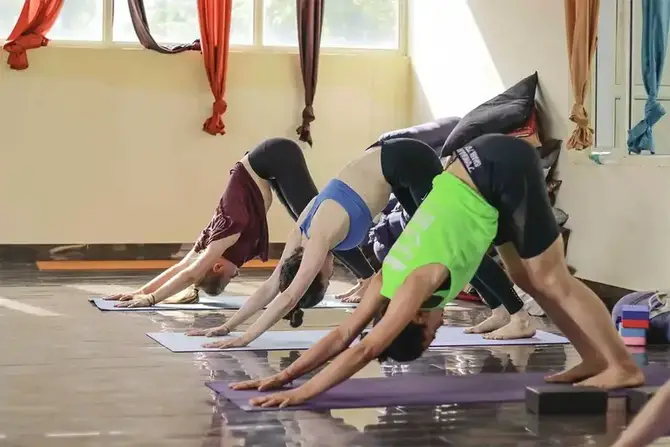
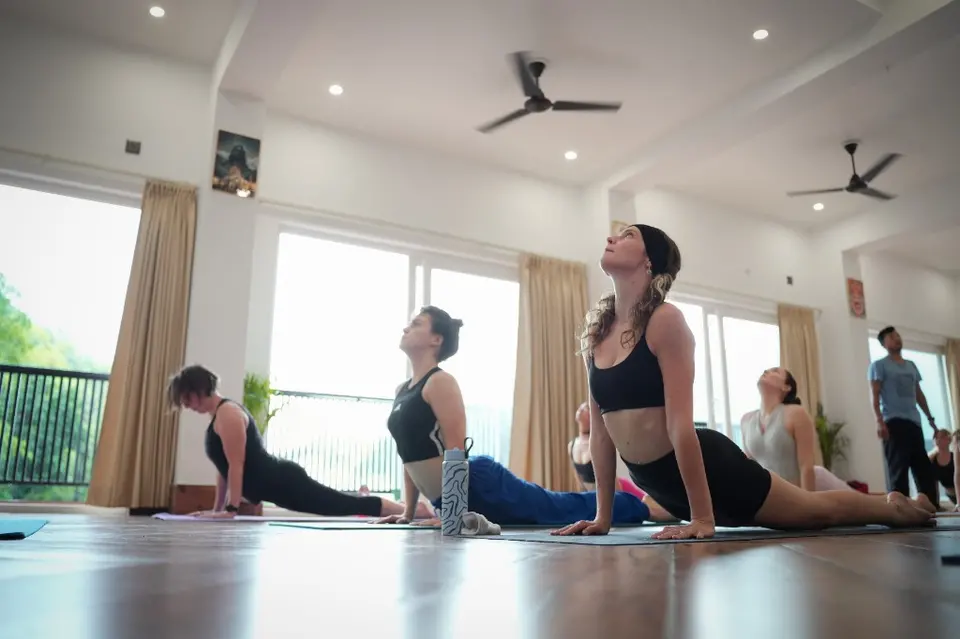
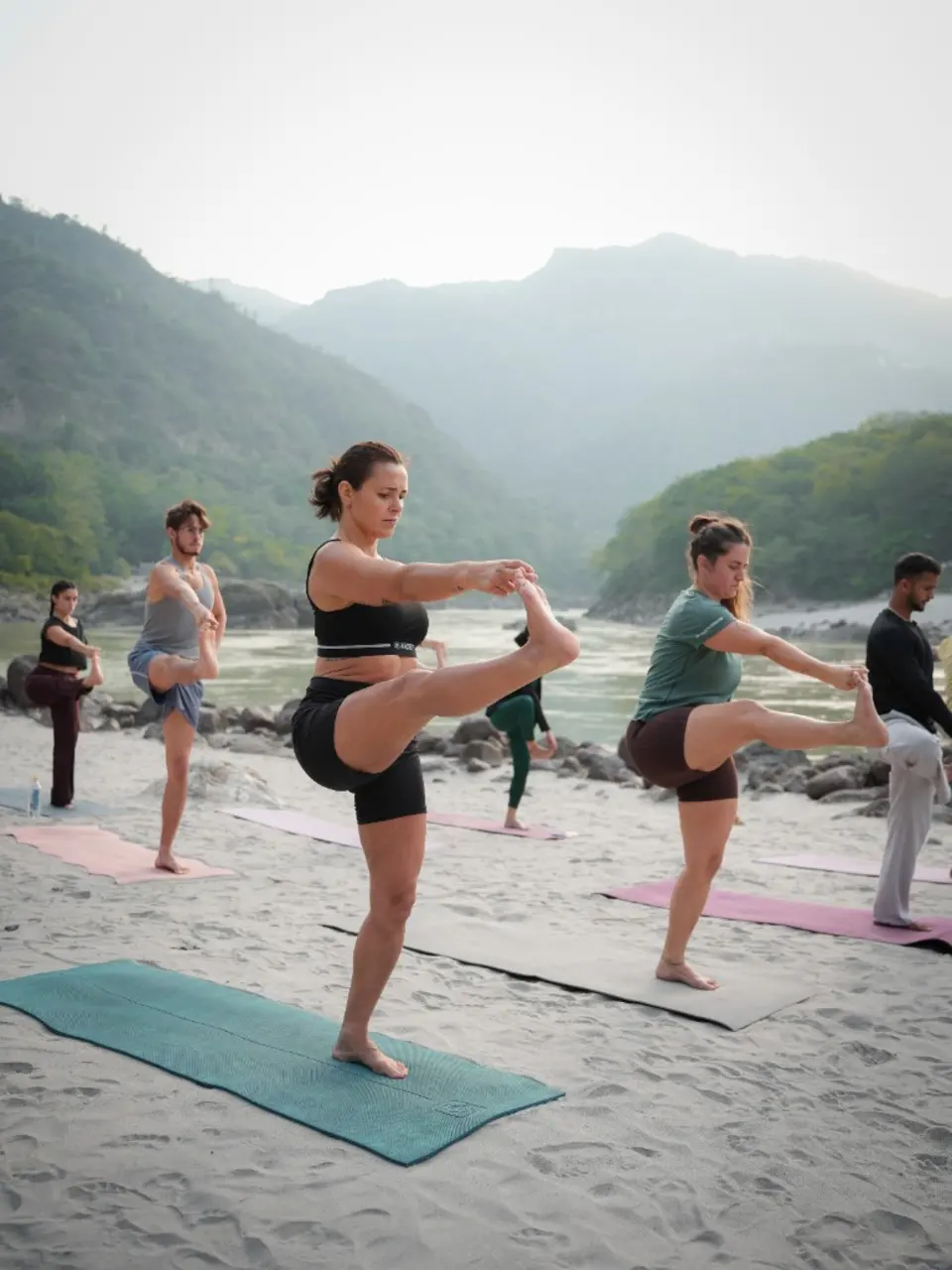
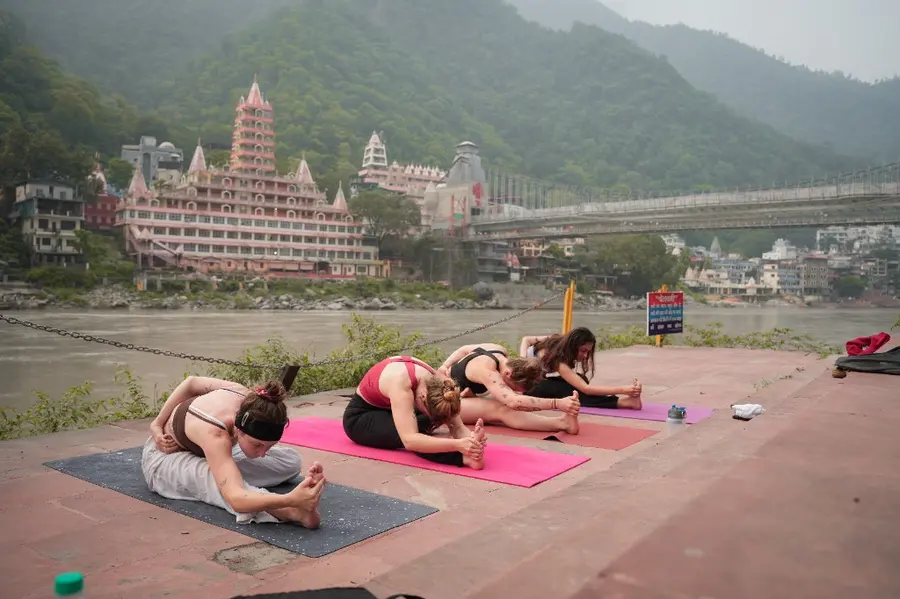
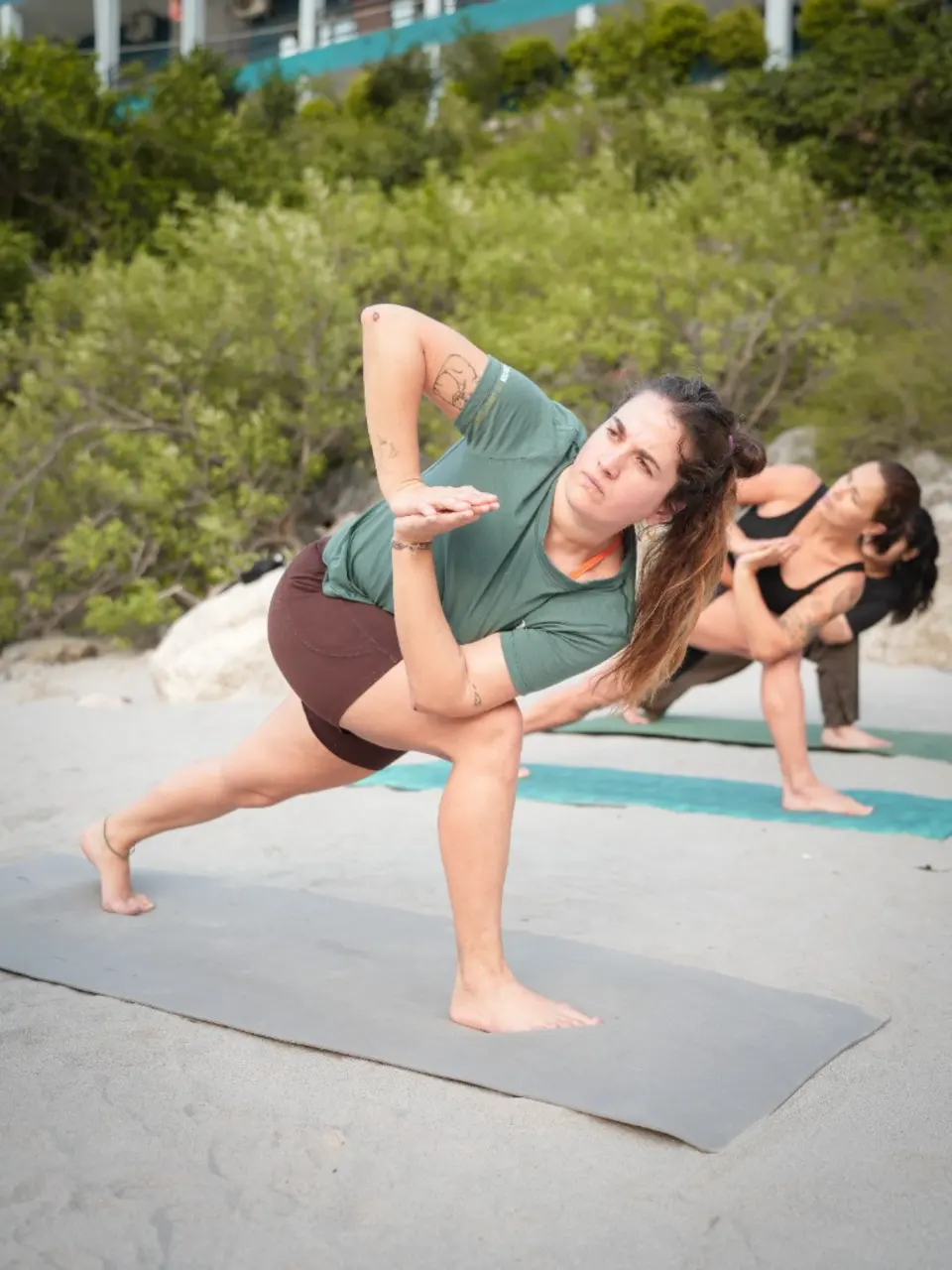
You'll work through over 30 foundational postures with detailed alignment cues. Surya Namaskar A and B. Modifications for common limitations — tight hamstrings, shoulder restrictions, lower back sensitivity. We also cover the therapeutic benefits of different pose categories: standing, seated, supine, prone, and inversions.
This is the backbone of the programme. If you can teach Hatha with good alignment cues and appropriate modifications, you can teach most public classes.
Ashtanga Vinyasa — breath and movement
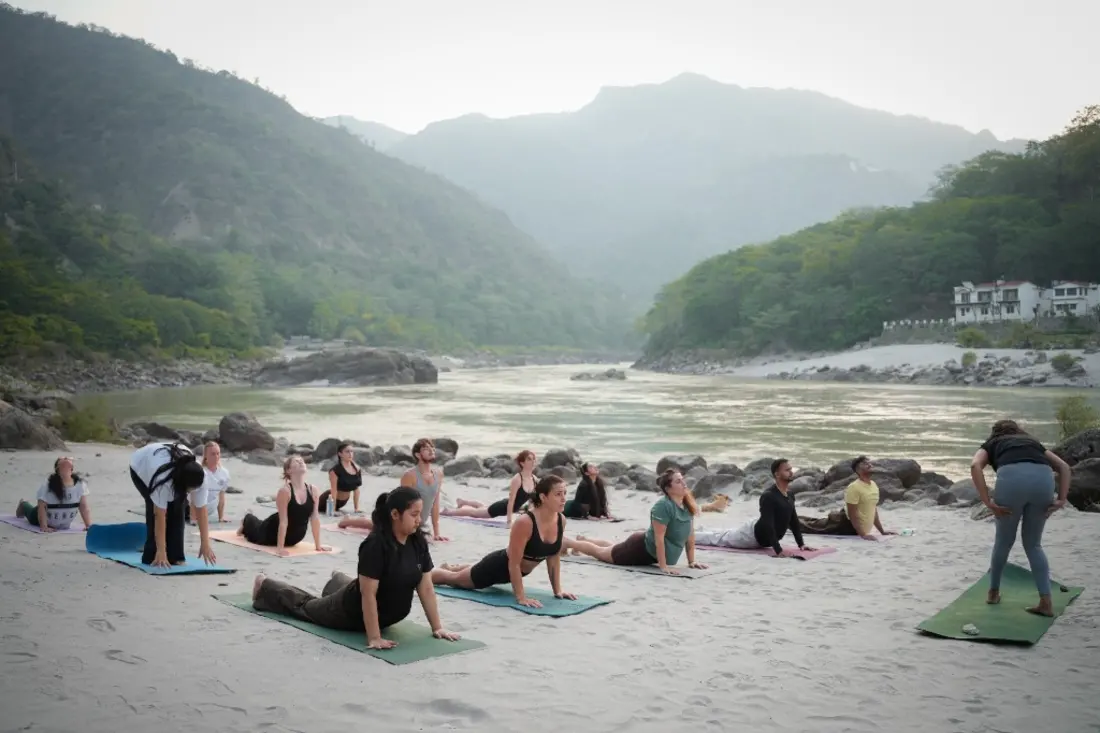
An introduction to the Primary Series opening sequence. Vinyasa counting. Drishti — the gaze points that go with each posture. How the breath drives the movement rather than the other way around.
We don't rush through the Primary Series. In 12 days, you'll cover the standing sequence and the first portion of the seated sequence. Enough to understand the system and practise it on your own. The full series takes years — pretending otherwise would be dishonest.
Pranayama — breathing techniques
Ujjayi, Kapalabhati, and Nadi Shodhana. These three form the foundation. You'll learn the technique, the common mistakes, when to use each one, and when not to. Kapalabhati, for example, isn't suitable for people with uncontrolled high blood pressure or during pregnancy. Those details matter when you're teaching.
Meditation and mantra
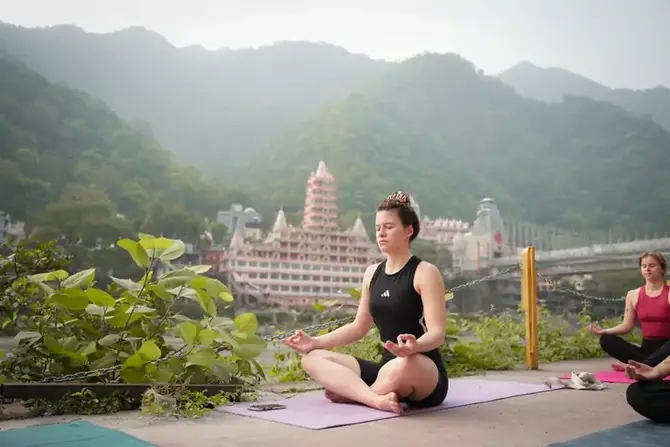
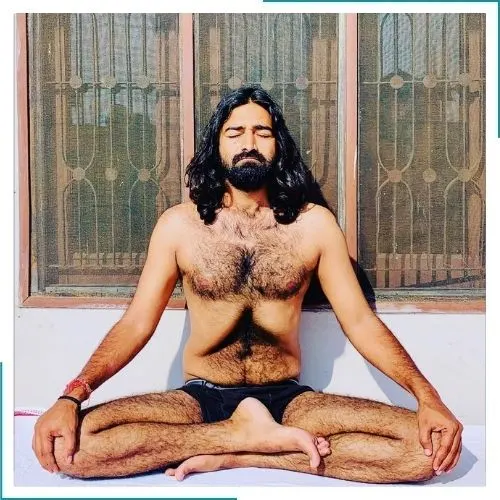
We teach four styles of meditation: traditional Himalayan, healing meditation, crystal meditation, and sound meditation. You'll practise all four during the course and learn how to guide a group through each one.
Mantra chanting is part of the morning sessions. It's not religious instruction — it's a traditional practice that's been part of yoga training in Rishikesh for generations. If you're uncomfortable with chanting, that's fine. We don't force participation, but we do ask that you sit quietly during the session.
Anatomy and physiology
Functional anatomy related to yoga. How the shoulder joint works in Chaturanga. Why the sacroiliac joint gets stressed in twists. What happens to the cervical spine in Shoulderstand. It's not a medical course — it's enough anatomy to teach safely and understand why certain modifications exist.
We also cover the shatkarma — six traditional purification techniques — and the bandhas, including Mula Bandha. These are practical sessions, not just lectures.
Philosophy — Sutras and Gita
An introduction to the Yoga Sutras of Patanjali and the Bhagavad Gita. We don't try to cover everything — that would take a semester, not twelve days. Instead, we focus on the concepts that directly apply to teaching and personal practice. The eight limbs. The three gunas. The concept of abhyasa and vairagya.
I find that most students who come for teacher training are curious about the philosophy but haven't read the source texts. This module gives you enough grounding to continue reading on your own.
Teaching methodology
How to sequence a class. How to give clear verbal cues. How to do safe hands-on adjustments. Lesson planning. Student-teacher relationships and professional boundaries.
There's a teaching practicum toward the end of the course. You'll teach a short segment to your peers, and you'll get feedback from your mentor — not just "good job," but specific notes on your cueing, timing, and presence. That feedback session is usually the most useful day of the entire programme.