




Duration matters. 3 Days is for a quick reset (rest). 5 Days allows for balance and regulation (integration). 7 Days provides space for deep healing and shifting habits (transformation). Choose based on your current need for rest vs. depth, not just schedule availability.
One of the most common questions we receive from students is: "How long should I book my yoga retreat in Bali for?"
It's a fair question. Most retreat centers in Bali offer programs ranging from 3 to 7 days, and from the outside, they can all look similar. You might wonder if a few extra days really make that much difference.
The honest answer is yes, duration matters. But not in the way you might think.
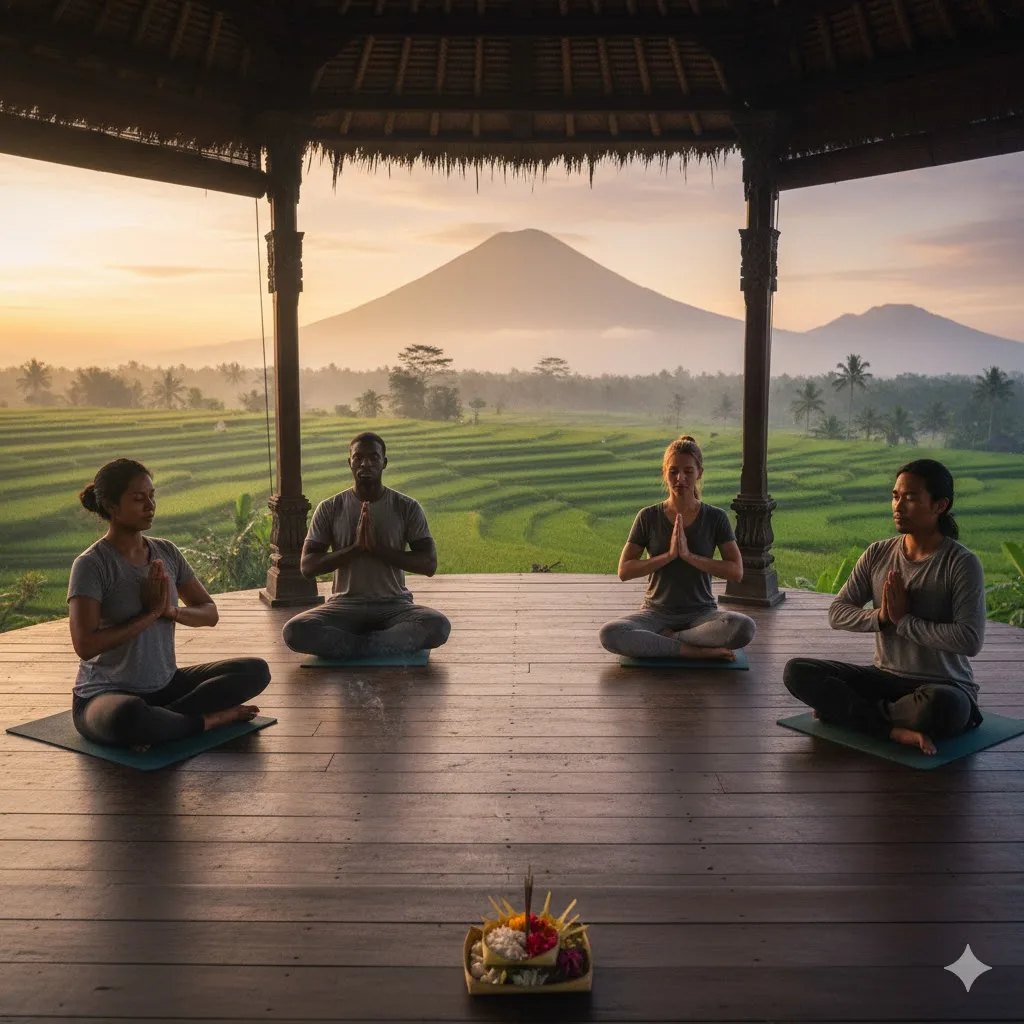
Bali attracts people at different stages of their journey. Some need a quick reset from work stress. Others are ready for something deeper. The island naturally accommodates both, which is why you'll find yoga retreats in Bali designed for different time frames and intentions.
There is no wrong choice here. What matters is matching your retreat duration to where you are right now, not where you think you should be.
This guide will help you understand what actually happens during 3, 5, and 7 days at a retreat, and which timeline might serve you best.
When you arrive at a yoga retreat in Bali, your body and mind don't immediately shift into "retreat mode." This is something we notice with nearly every guest.
The first day is often spent adjusting. You're orienting to a new space, new faces, new routines. Your nervous system is still carrying whatever you brought with you from home.
By day two, something starts to soften. Sleep patterns begin to regulate. The mind stops planning and starts noticing. This is when yoga practice begins to feel different than it does in your regular life.
By day three or four, most people report a noticeable internal shift. They're not trying as hard. The practice starts to feel like something their body wants, not something they're forcing themselves to do.
This process takes time. You cannot rush it, and you cannot skip stages. This is why duration matters.
A 3-day retreat gives you a taste. A 5-day retreat gives you time to settle and integrate. A 7-day retreat allows for deeper patterns to surface and shift.
None of these is better than the other. They simply serve different needs at different times in your life.
A 3 day yoga retreat in Bali is often misunderstood. Some people dismiss it as "too short to make a difference." Others expect too much from it and leave disappointed.
Let me be clear about what 3 days can and cannot do.
Three days will not transform your life. It will not erase chronic stress patterns or resolve deep emotional wounds. That's not a realistic expectation for any short retreat.
What 3 days can do is create a pause.
In our experience hosting short yoga retreats in Bali, we've seen how valuable a pause can be. Many guests arrive exhausted, overstimulated, mentally scattered. Three days of intentional rest, simple food, daily yoga, and quiet mornings can reset your baseline.
This duration works well for:
The limitation of 3 days is that you're just beginning to settle when it's time to leave. You get the relief, but not always the integration.
If you're very burned out or dealing with significant stress, a longer retreat might serve you better. But if you're simply tired and need a break, 3 days can be enough.
Five days is the most popular retreat length we offer, and for good reason.
A 5 day yoga retreat in Bali gives you enough time to move through the adjustment phase and into actual integration. By day three, most guests have settled. By day four, they're noticing things about themselves they hadn't seen before.
This is where the real value of retreat time becomes clear.
When you stay for 5 days, your nervous system has time to regulate. Sleep deepens. Digestion improves. The constant mental chatter quiets down. You start to notice patterns in how you hold tension, how you react to discomfort, how you relate to stillness.
These insights don't come from one good yoga class. They emerge when you create consistent conditions over several days.
Our retreat guests often tell us that day four or five is when something "clicks." They can't always name what it is, but they feel it. A sense of coming back to themselves.
Five days works well for:
The advantage of 5 days over 3 is integration. You don't just experience relief, you begin to understand what created the tension in the first place. That awareness is what allows change to continue after you leave.
A 7 day yoga retreat in Bali is a different kind of commitment. It requires more time, more openness, and more willingness to let go of control.
Seven days is when transformation becomes possible.
In our experience, the first three days of a week-long retreat are about unwinding. The middle days are where emotions and realizations tend to surface. The final days are for integration and preparing to return home with what you've learned.
This arc cannot be rushed.
When you stay for a full week, your body begins to settle into a different rhythm. You stop counting days. Mornings feel spacious instead of rushed. You notice birds, light, the way your breath moves. Small things that were invisible before become vivid.
This shift in perception is what people mean when they talk about transformation. It's not dramatic. It's quiet, cellular, and lasting.
Seven days also allows space for deeper practices. Meditation becomes more accessible when your nervous system is calm. Breathwork goes deeper when you're not bracing against it. Emotional release happens naturally when you feel safe and supported over time.
This duration works well for:
The challenge of 7 days is that it requires surrender. You have to be willing to let go of productivity, planning, and control. Not everyone is ready for that, and that's okay.
But if you are ready, a full week in retreat can shift patterns that have been stuck for years.
| Duration | Time Commitment | Physical Intensity | Mental Depth | Best For |
|---|---|---|---|---|
| 3 Days | Long weekend | Gentle to moderate | Rest & reset | Busy professionals, first-timers, quick reset |
| 5 Days | Full work week | Moderate to active | Integration & awareness | Solo travelers, intermediate practitioners, balanced approach |
| 7 Days | Full week + travel | Varied & adaptive | Deep healing & transformation | Life transitions, burnout recovery, serious practitioners |
This table is meant as a guide, not a rule. Every person's experience will be different depending on where they're starting from and what they're ready for.
We're often asked: "I've never done yoga before. Which retreat length should I choose?"
The answer depends more on your readiness than your experience level.
If you've never attended a beginner yoga retreat in Bali or anywhere else, a 3-day program can be a gentle introduction. It's short enough that you won't feel overwhelmed, but long enough to experience what retreat life feels like.
That said, many beginners thrive in a 5-day retreat. The extra time allows your body to adjust to daily practice without feeling rushed. You'll be sore on day two, more comfortable by day four, and leaving with a sense of progress.
Seven days is absolutely possible for beginners, but only if you're mentally prepared for it. A week of daily yoga, meditation, and quiet time can bring up emotions and discomfort. If you're open to that process, it can be incredibly valuable. If you prefer to ease in, start shorter.
Our recommendation for most beginners is 5 days. It's the sweet spot between having enough time to learn and not feeling stuck if it's not what you expected.
What matters most is that you choose based on how you feel, not what sounds impressive.
Cost is a practical consideration, and it's worth addressing honestly.
A short yoga retreat in Bali will generally range from $400 to $800 for 3 days, depending on accommodation type, location, and what's included.
Five-day retreats typically range from $700 to $1,400. Seven-day programs usually fall between $1,200 and $2,200.
These are approximate ranges. Prices vary based on room type, season, group size, and the specific offerings of each retreat center.
When comparing yoga retreat Bali cost across durations, remember that longer retreats often include more than just extra days. They may include additional workshops, one-on-one sessions, excursions, or specialized practices.
The value of a retreat isn't just in the number of yoga classes. It's in the space held for you to rest, the quality of food and environment, and the expertise of teachers guiding you.
A well-run 3-day retreat can offer more value than a poorly organized 7-day program. Look for transparency in what's included, read past guest reviews, and ask questions before booking.
If cost is a concern, a shorter retreat is a reasonable starting point. You can always return for a longer stay if it resonates with you.
After guiding many students through retreat decisions, we've noticed a few recurring patterns that don't serve people well.
Choosing too short when burned out. If you're deeply exhausted or dealing with chronic stress, a 3-day retreat might not give your system enough time to truly reset. You'll feel some relief, but it may fade quickly once you're back in your routine.
Choosing too long without readiness. Some people book a 7-day retreat because it sounds more serious or committed. But if you're not ready for that much stillness and introspection, you may feel restless or disconnected instead of restored.
Letting others decide for you. Friends, partners, or social media can influence your choice in ways that don't match your actual needs. Trust your instinct over what looks good in photos.
Ignoring your body's signals. If your body is telling you it needs deep rest, listen. If it's telling you a long retreat feels overwhelming right now, honor that too.
Confusing intensity with value. A longer or more challenging retreat is not automatically better. The right retreat is the one that meets you where you are and supports what you need to learn.
We've had guests thank us for encouraging them to shorten or lengthen their booking based on what we sensed would serve them better. There's no shame in adjusting your plan.
If you're still unsure which duration to choose, these three questions can help clarify.
1. What am I hoping to feel when I leave?
If your answer is "rested and lighter," a 3-day retreat might be enough. If it's "more connected to myself," consider 5 days. If it's "shifted in some fundamental way," 7 days gives you that space.
2. How much space do I have in my life right now?
This isn't just about vacation days. It's about mental and emotional availability. Can you truly unplug for a week? Do you have responsibilities that would pull your attention even if you're physically away? Be honest.
3. What does my body need more than my mind wants?
Sometimes your mind pushes you toward what sounds productive or impressive, while your body just wants to rest. Notice the difference. The retreat that your body needs will serve you better than the one your mind thinks you should do.
If you're truly uncertain, we often suggest starting with 5 days. It's long enough to matter, short enough to feel manageable, and you'll know after that experience whether you want more or less next time.
A 3-day retreat is enough if your goal is rest and a gentle reset. It won't create deep transformation, but it can absolutely help you pause, breathe, and return home feeling lighter. For people with limited time or who are new to retreats, 3 days is a reasonable starting point.
Yes, beginners can absolutely attend a 7-day retreat. The key is being emotionally ready for sustained practice and introspection. If you're open to discomfort and willing to go slow, a longer retreat can be deeply supportive. If you're unsure, 5 days is a safer middle ground for first-timers.
This depends on the specific retreat and your current fitness level. Most retreats in Bali offer modifications for all levels and adjust intensity based on the group. You should expect some physical challenge, especially if you're new to yoga, but a good retreat will never push you beyond what feels safe.
Most yoga retreats in Bali include shared or private accommodation, daily meals, and all yoga sessions. Some also include excursions, massage, or workshops. Always check what's included before booking, as offerings vary between retreat centers.
Yes, many people attend retreats alone. In fact, solo travel to a retreat can be easier than going with friends or partners because you're free to move at your own pace. Most retreat groups are welcoming, and the shared experience naturally creates connection without pressure.
You don't need meditation experience to attend a retreat. Most programs introduce meditation gently and offer guidance. The retreat environment itself makes meditation more accessible because your nervous system is calmer and you have fewer distractions than at home.
This depends on the retreat center's availability. Some guests do extend if space allows, but it's not guaranteed. If you think you might want to stay longer, it's better to book more days upfront. You can always leave early if needed, though most centers have cancellation policies to be aware of.
Look for centers with clear information about teachers, schedules, and what's included. Read reviews from past guests. Check if the teachers have verifiable training and experience. Avoid centers that make exaggerated promises or use overly sales-focused language. A good retreat will feel grounded and honest in how it presents itself.
Choosing between a 3, 5, or 7-day yoga retreat in Bali is not about finding the "best" option. It's about finding the right fit for where you are right now.
Three days can offer rest. Five days can offer integration. Seven days can offer transformation. All are valuable when aligned with your actual needs.
The most important thing is to be honest with yourself about what you're ready for and what your body is asking for. Don't choose based on what sounds impressive or what others recommend. Choose based on what feels true.
Bali has a way of meeting you exactly where you are. The island, the practice, and the community here will support whatever timeline you commit to.
If you're exploring options and want to see what retreats we're currently offering, you can learn more about our yoga programs in Bali here. We're always happy to answer questions and help you find the retreat that fits your journey.
Whatever you choose, trust that you're making the right decision for yourself right now. That's all any of us can do.