



Dry Season (May-Sept): Perfect weather, expensive, very crowded. Best for first-timers.
Rainy Season (Nov-March): Lush, quiet, affordable, humid. Best for deep training.
Sweet Spot: May, June, or September for balance.
I still remember my first rainy season in Bali. I'd arrived in November for what was supposed to be a month-long teacher training, and I was convinced I'd made a terrible mistake. The humidity hit me the moment I stepped off the plane, and by day three, I was checking flights home.
That was eight years ago. I'm still here, teaching year-round, and I've learned something important: the "best" time to come to Bali for yoga depends entirely on what kind of experience you're actually looking for.
Most articles will tell you to come during dry season, and they're not wrong exactly. But they're not telling you the full story either. I've watched students transform during monsoon season, seen others struggle in picture-perfect July sunshine, and learned that weather is just one piece of a much bigger puzzle.
This guide comes from years of teaching here, watching the seasons change, and helping students figure out when their training makes the most sense. I'm not going to tell you there's one perfect month. Instead, I'll share what actually happens in each season, the stuff guidebooks skip over, and what we wish more students knew before booking their flights.
By the end, you'll have a realistic picture of what to expect and enough information to choose timing that matches your needs, not just what Instagram makes popular.
Bali doesn't do spring, summer, fall, winter. We have wet season and dry season, and honestly, both names are a bit misleading.
Dry season runs April through October, but "dry" doesn't mean desert. You'll still see rain, just not every day. What you get instead is this: clear mornings, warm afternoons with a breeze, maybe a quick shower if clouds build up. Temperatures hover around 27-32°C, and the humidity stays bearable enough that you're not constantly dripping.
Wet season covers November through March. Now, before you picture Seattle-style drizzle for months, let me explain how rain actually works here. Most days start completely clear. Around 2 or 3 PM, clouds roll in. Then it dumps - proper tropical downpour - for an hour, maybe two. Then it stops. Evening comes out clear again, or at least clearer.
Some days break the pattern. We've had mornings where it rained solid for three hours. We've also had dry season weeks with afternoon storms. The tropics don't follow schedules the way European weather might.
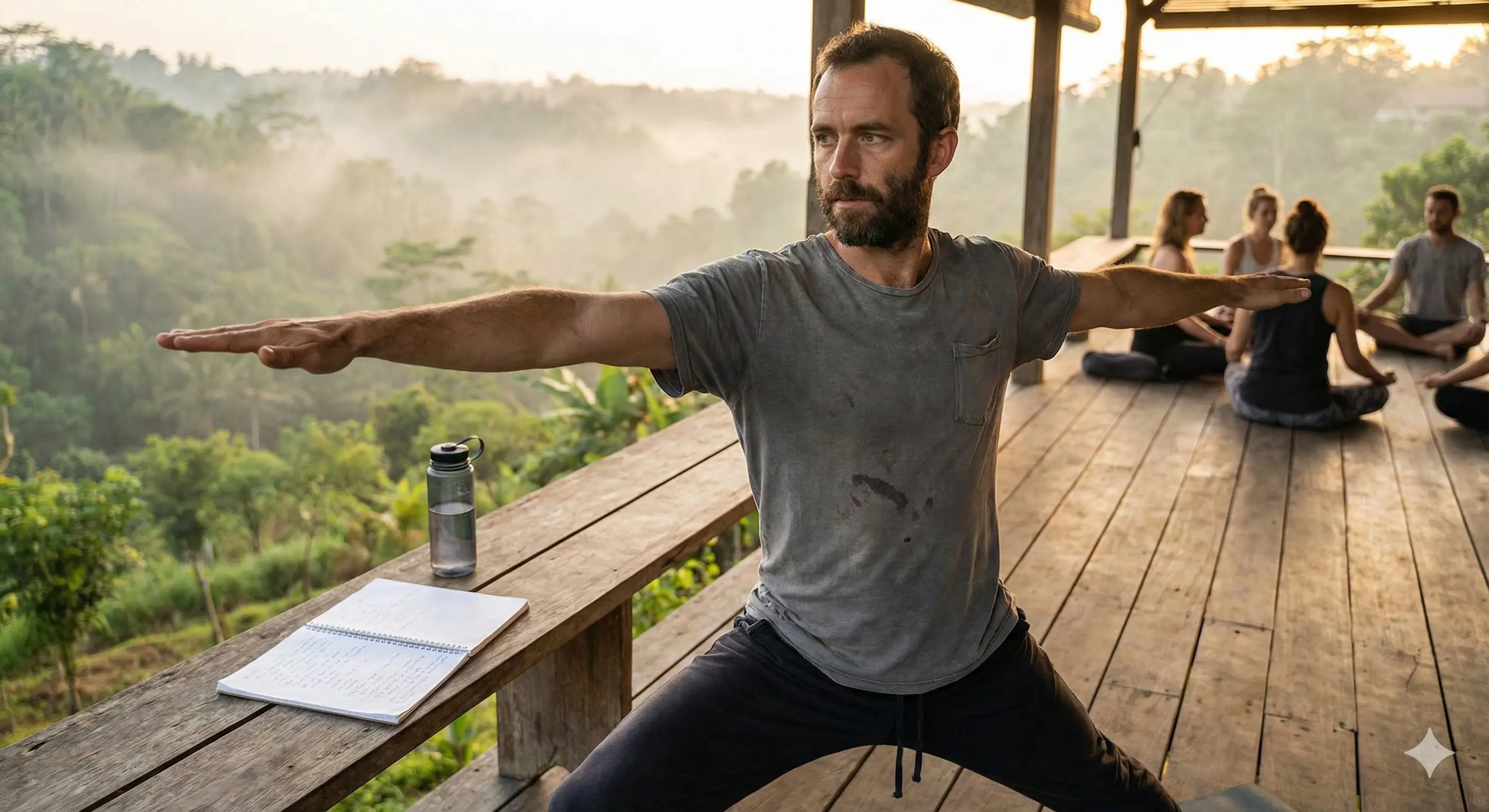
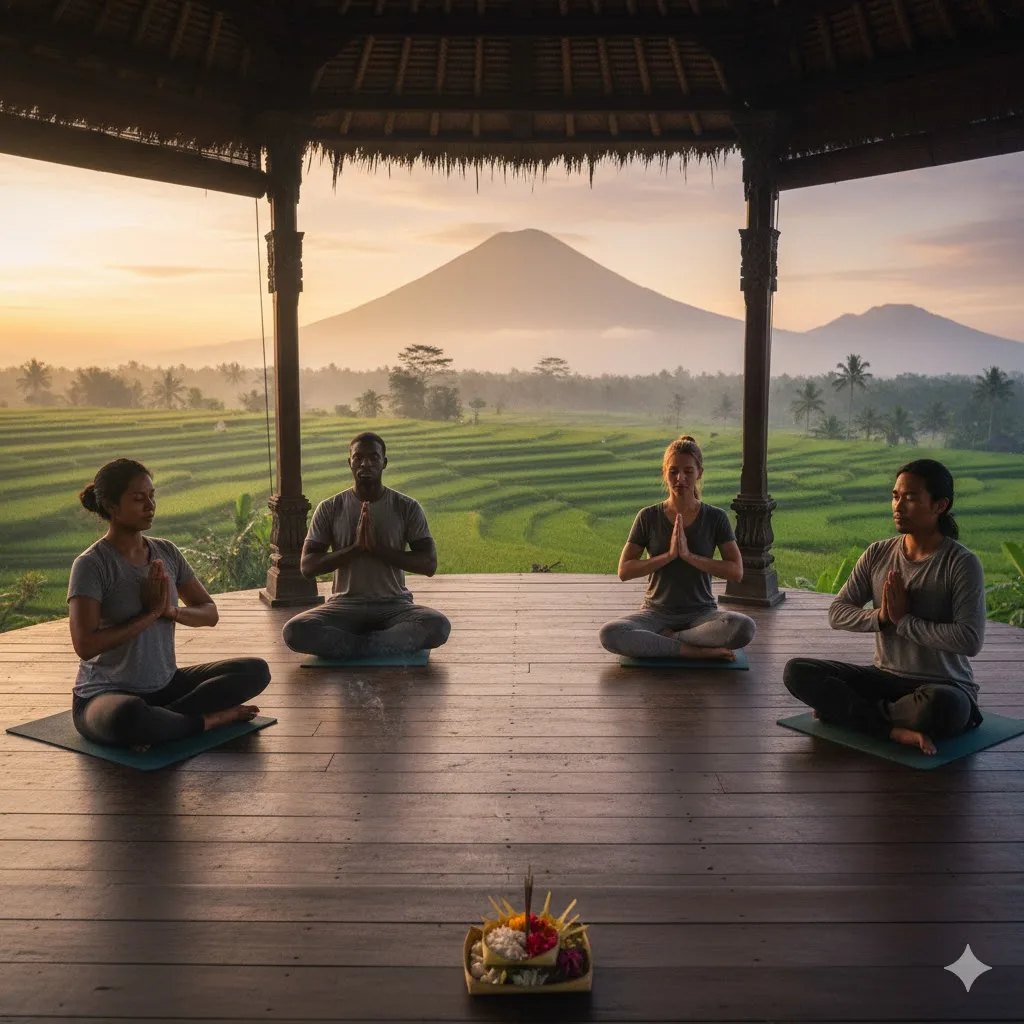
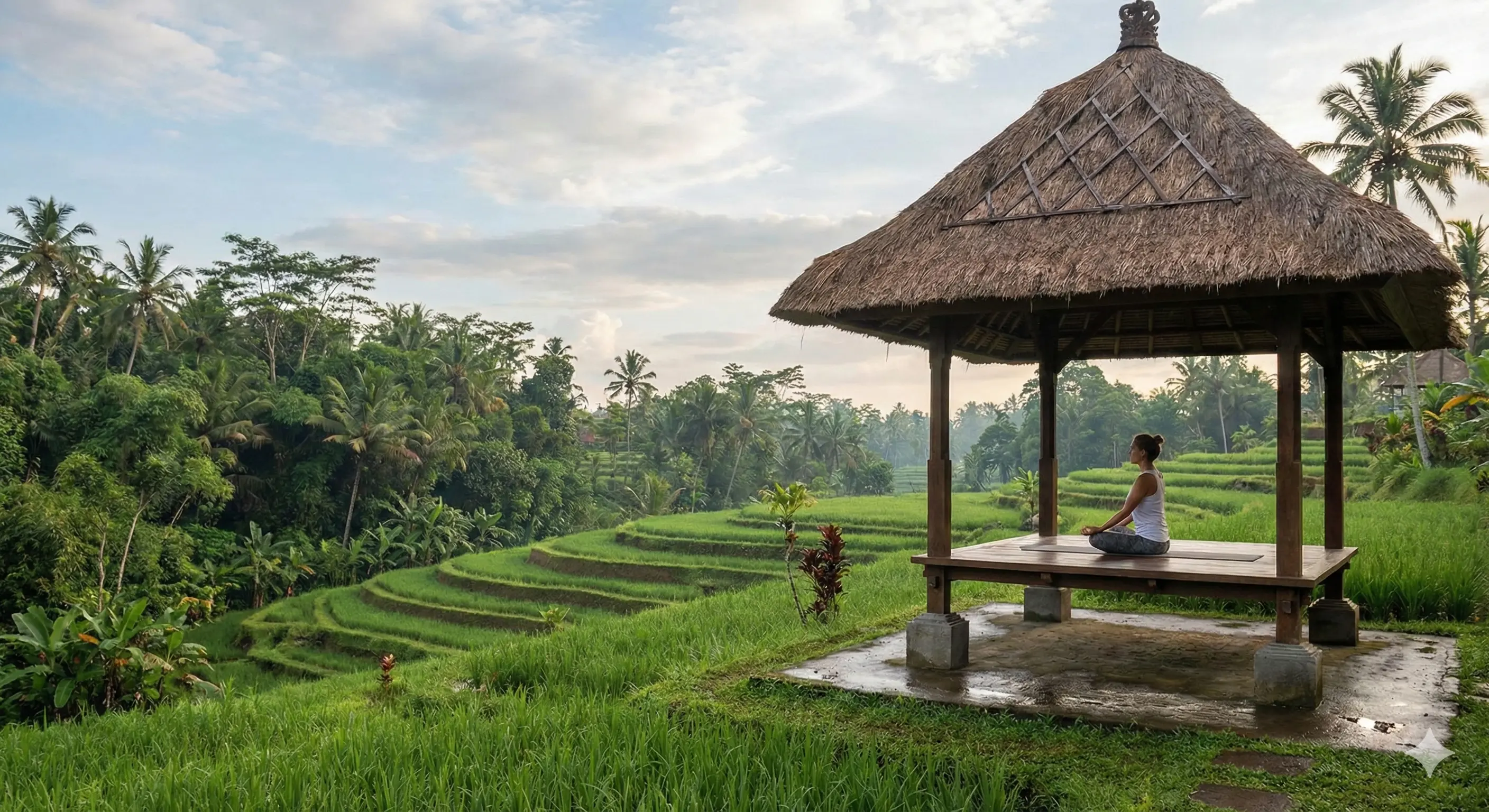
The open-air shalas we practice in are designed for this climate. During dry season, you flow with a view of rice terraces and whatever breeze decides to show up. Beautiful, but sometimes hot if you're in a noon class.
Rainy season changes the whole vibe. That roof you barely noticed? Now you're grateful for it. Rain drumming overhead becomes this incredible soundtrack for savasana. The air cools down after a storm, and somehow your hips open easier in that humidity-warmth combination.
I've taught in both seasons for years now, and students go deep in both. They just go deep differently.
One more thing nobody mentions: transition months can be weird. October might give you perfect dry season weather, or it might give you three rainy days in a row. April could feel like summer or could still have wet season lingering. The island's moody sometimes.
Most people book for dry season, and I get it. Predictable weather feels safer, especially if you're flying halfway around the world and spending serious money on yoga teacher training.
Between May and September, you can pretty much plan your week and trust the weather will cooperate. Want to visit a temple on your day off? Go for it. Beach trip after morning practice? Sure. Sunrise hike before class? The sky will probably be clear.
Your clothes dry between practices, which matters more than you'd think when you're doing two classes a day. Nothing worse than putting on damp leggings for your afternoon session.
July and August turn Ubud into a bit of a circus. I don't mean that harshly - the energy can be wonderful if you like that sort of thing. But if you came to Bali imagining quiet introspection in some peaceful jungle setting, you might be surprised by how many people are doing the exact same thing.
The Yoga Barn gets packed. Like, show up 15 minutes early or you're practicing in the hallway packed. Cafes fill up with people on laptops. Scooter traffic gets genuinely annoying.
And the prices. Oh, the prices. That guesthouse that costs $25 a night in February? Try $45-50 in July. Your 200-hour teacher training might cost the same, but everything around it gets expensive.
I had a student last summer who spent more on accommodation for her month here than she did on the entire training itself. She wasn't staying anywhere fancy either.
First-timers usually do better with dry season. If you've never been to the tropics, dealing with unfamiliar humidity on top of intense training can be a lot. Having weather as one less variable to manage helps.
People with tight schedules appreciate it too. If you have exactly four weeks for your training and can't extend if something goes sideways, you want weather you can count on.
And honestly, if your dream involves practicing yoga on the beach at sunset, dry season delivers that dream pretty reliably. The ocean is calmer, the beaches are cleaner, and you'll get those Instagram moments.
For more context on year-round practice options, check out our complete guide to yoga in Bali.
I'm going to say something that might sound strange: some of the most powerful trainings I've witnessed happened during rainy season.
There's something about January rain, February storms, the way the whole island goes quiet and green, that creates space for real transformation. Maybe it's because fewer people are here, or maybe it's because you can't distract yourself with constant beach trips and adventure. You're here, you're practicing, and that's it.
First morning of rain always throws people off. You wake up to this sound - tropical rain is LOUD - and think "great, whole day ruined." Then by 9 AM it's stopped, the sun's breaking through, and you realize you kind of loved practicing to that soundtrack.
Most rain comes in the afternoon. Our 6 AM classes almost never see it, even in the wettest months. Evening classes sometimes get rain halfway through, but we're under a roof, so we just keep flowing while water drums overhead.
The humidity is real though. Your mat gets slippery with sweat faster than dry season. You need to hydrate like it's your job - I'm talking three liters a day minimum. And things don't dry well. Towels stay damp, clothes take forever, you'll want to pack extra of everything.
But here's the trade-off: your body feels different in this heat. Muscles warm up faster. That hamstring that's always tight? Suddenly you're deeper in forward folds than you've ever been. It's like the universe installing temporary flexibility.
I've had students tell me their rainy season training was the best decision they made, specifically because the conditions forced them to go inward instead of constantly exploring outward.
Mold happens. Check your bag every few days. Air your yoga mat. Don't leave wet clothes in a pile overnight - they'll smell like death by morning.
Some beaches get genuinely gross in January and February when ocean currents wash debris onto shore. If you're staying coastal and expecting pristine beach time, you might be disappointed.
Scooter riding in rain is sketchy. You need proper rain gear, and even then, visibility is poor and roads get slippery. Grab transport becomes your friend.
Occasionally - maybe twice during a rainy season - you get a storm that actually disrupts things. We've postponed outdoor ceremonies, cancelled beach trips, had to move classes indoors. It's rare, but it happens.
July and August are intense here. Like, you'll understand why Bali's nickname is "Island of the Gods and a Million Digital Nomads" intense.
Everyone comes during summer holidays - Americans, Europeans, Australians during their winter. The yoga scene explodes. Every shala is running trainings, workshops, sound baths, cacao ceremonies. You could take six classes a day if you wanted.
Studios book out. If you're hoping to do that specific training with that specific teacher in July, you need to register three, maybe four months ahead. Popular teachers are full six months out sometimes.
Accommodation fills up fast. The nice guesthouses with actual views and decent air conditioning? Gone by June if you're looking at July-August dates. You'll find somewhere - Ubud has hundreds of places - but your choices get limited.
The energy is social and buzzy. You'll meet people constantly. Coffee shops are networking hubs. There's always a party, a ceremony, a gathering happening somewhere. If you're extroverted, you'll love this.
But if you came to Bali for that quiet, meditative experience you read about? Peak season might not deliver that. It's harder to find stillness when the place is buzzing.
June and September are peak-adjacent. Weather is still reliably good, but the crowd intensity drops noticeably. These months don't coincide with as many school holidays, so you get more working adults and fewer families.
I usually recommend June or September to students who want dry season benefits without the chaos. You still need to book ahead - maybe two months for good spots - but you won't fight crowds at every turn.
Prices are lower than July-August but higher than rainy season. Kind of a middle ground on everything, honestly.
April, May, October, November - these are the months that don't fit clean categories, and that's exactly why some students love them.
The Spring Shoulders: April and May
April is still shaking off wet season. You might get rain, you might not. The landscape is green and lush from previous months, but the weather is starting to stabilize into dry patterns. By May, you're basically in dry season, but tourists haven't arrived in force yet. The energy feels fresh and open.
The Fall Shoulders: October and November
October usually extends dry season conditions. Most years, it's completely reliable. Then November arrives and everything's a gamble. Sometimes November is gorgeous - dry season hanging on longer than expected. Sometimes the rains start mid-month and you're into wet season.
Who These Months Suit
Flexible people who can adjust daily plans based on conditions. If you need every day planned out perfectly, shoulder months might stress you out. Budget-conscious students who still want decent weather. You save money but don't commit to full rainy season challenges.
Yeah, actually, it does. The type of yoga you're coming to study changes which season makes sense.
Completing your certification here involves more than just weather considerations, though weather definitely plays a role.
Most trainings run 3-4 weeks intensive. You're doing 6-8 hours a day of practice, study, teaching practice, and assignments. Having stable weather means one less thing to think about. That's the dry season appeal for training specifically.
But I've also watched rainy season groups bond differently because they're problem-solving together. "Okay, it's pouring, let's move our teaching practice session indoors" becomes a shared experience that builds community.
You'll be reading, writing, memorizing Sanskrit. You need comfortable study conditions. Rainy season in a fan-only room can be rough for studying. The humidity makes paper feel damp, you're sweating while trying to focus. If you're doing rainy season training, budget for accommodation with AC.
This matters more than people admit. Your training fee might be the same year-round, but the total cost of your month in Bali varies wildly by season. That's a $1,000 difference for essentially the same training between July and February. If money is tight, rainy season makes complete sense.
Bali's not uniform. Different areas experience weather differently, and that affects your experience significantly.
Ubud (The Green Heart): Rains more than anywhere else. Trade-off is the misty, green, magical atmosphere. Most serious YTT programs are here.
Canggu (Beach and Buzz): Gets less rain than Ubud. Warmer, more humid. Yoga scene is more fitness-oriented. Rainy season hits beaches hard (debris).
Uluwatu (Quiet and Dry): Southern peninsula stays drier. Fewer established training programs. Good for post-training beach time in rainy season.
Sanur (The Calm Option): Quieter, more local. Weather similar to Canggu but calmer beaches. Good middle ground.
No. You'll get rained on sometimes, yes. You'll be sweaty and sticky, definitely. But miserable? Only if you fight it. Students who arrive expecting perfect conditions and cursing every raindrop do struggle. Students who show up thinking "okay, it might rain, I'll deal" usually end up loving it.
Yes, somewhat. Dry season: Light clothes, one rain jacket just in case, sandals mostly fine. Rainy season: Quick-dry everything, actual waterproof rain jacket, closed shoes for wet scooter rides, extra towels, extra clothes generally. Both seasons: Layers for air-conditioned spaces, sun protection, modest clothes for temple visits.
Most people acclimate within 3-5 days. First few days can be rough - you're sweating constantly, feeling sluggish, maybe a bit dizzy. Stay hydrated. Like, drink water even when you're not thirsty. Add electrolytes if you're sweating heavily. By your second week, your body adjusts and the humidity bothers you less.
Absolutely. Most rain is afternoon, most temples are open morning to early afternoon. You'll be fine. Carry a small umbrella, wear shoes that can get wet. Plan indoor activities (museums, cooking classes, spa) for afternoons when rain is likely.
It happens. Bali's tropical climate is unpredictable. The training continues regardless. Covered shalas mean practice happens rain or shine. You might need to adjust some plans, but you won't lose your training time.
No perfect month for everyone. But there might be a perfect month for you. Want reliability? July. Want empty shalas? February. Want good weather and fewer people? June or September. Want to save money? November-December. Want lush landscapes? January-March.
After teaching students across every season, here's what I've learned: the ones who have powerful experiences are the ones who choose timing that matches their actual needs and then fully commit to that choice.
The student who picks rainy season because it fits her budget, then shows up ready to embrace rain and humidity? She has an incredible time. The student who picks dry season because she needs predictability, then doesn't stress about occasional rain? She transforms.
Here's my honest advice: look at your budget, your schedule, your tolerance for weather variation, and your personality. Then pick the timing that makes most practical sense and show up ready to work with whatever that season brings.
Bali's magic doesn't depend on perfect conditions. It depends on you being present for whatever conditions exist. The island will meet you where you are. Rain or shine, crowded or quiet, humid or breezy - there's yoga happening, and it's powerful. Trust that, and you'll choose your timing just fine.