



Goa pulls in yoga students from over 30 countries every year, and it is not hard to see why. The warm beaches, low cost of living, and the kind of relaxed international community you find around Arambol and Mandrem make it one of the most sensible places in India to do your yoga teacher training. We have been running courses here at DivinePath since the school opened, and the combination of serious training and coastal calm is something students mention again and again when they write to us after going home.
We offer Yoga Alliance certified courses at four levels — 100, 200, 300, and 500 hours — all from our campus near Arambol Beach in North Goa. Classes are small. Never more than 10 to 15 students in a batch, depending on the month. The teachers live on campus, know each student by name, and adjust the pace to fit the group. Accommodation, three vegetarian meals a day, and all study materials come included in the fee. There is nothing extra to pay once you arrive.
Whether you are brand new to yoga and want a solid foundation, or you already hold an RYT 200 and want to go deeper, there is a course here that fits. The table below gives you the quick version — click through to any course for full details, dates, and room-by-room pricing.
| 100 Hour YTT | 11 days · Beginner intro · Self-practice & basics · From $500 |
| 200 Hour YTT | 21 days · Foundation course · Become RYT 200 certified · From $500 |
| 300 Hour YTT | 26 days · Advanced (requires RYT 200) · From $1,299 |
| 500 Hour YTT | 55 days · Complete mastery · 200 + 300 combined · From $2,500 |
All courses: Yoga Alliance certified · Accommodation & 3 meals included · Arambol, North Goa · Monthly batches on the 1st
| Feature | 100 Hour | 200 Hour | 300 Hour | 500 Hour |
|---|---|---|---|---|
| Duration | 11 Days | 21 Days | 26 Days | 55 Days |
| Price From | $500 | $500 | $1,299 | $2,500 |
| Level | Beginner | Beginner–Intermediate | Advanced (needs RYT 200) | Complete Mastery |
| Certification | Certificate of Completion | RYT 200 | RYT 300 | RYT 500 |
| Can Teach After? | Personal practice only | Yes — worldwide | Yes — advanced | Yes — senior level |
| Best For | Exploring yoga, short break | Career start, first cert. | Deepening existing skills | Full professional mastery |
Most students start with the 200-Hour YTT. Read our course selection guide for help.
"The Arambol campus is peaceful and the meals were excellent. I left with real confidence to teach. I now run weekly classes in Barcelona."
"As a solo female traveler from London, I was nervous. The team made me feel safe from day one. Small batch size meant personal corrections every class."
"Came to Goa with zero teaching experience. Three weeks later, I led my first full class. Now teaching in Brooklyn."
Students from 30+ countries · 428+ graduates · 4.9 average rating
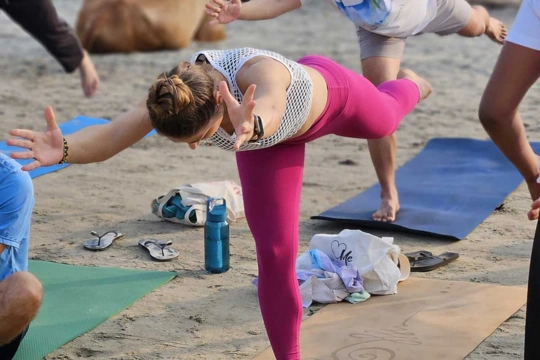
The campus sits about five minutes on foot from Arambol Beach. After morning practice, some students walk straight to the sand. Others head to the local cafés in the village. By evening, most of the group ends up watching the sunset together — it becomes a kind of unspoken ritual.
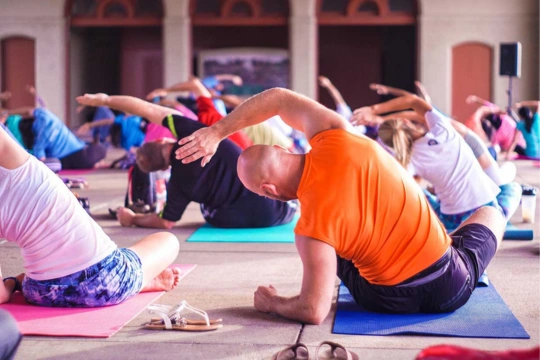
We keep every batch to a maximum of 10 students. That is the number where a teacher can genuinely know how you move, where your alignment drifts, and when you need a quieter day. Bigger groups lose that. You can choose between luxury AC cottages with pool and garden views, or budget-friendly standard rooms in the same compound — same food, same classes, same shala access.
The kitchen runs three meals a day. Everything is vegetarian, cooked fresh that morning, and designed to keep you energised without feeling heavy. Poha and parathas at breakfast, dal and chapati at lunch, something lighter at dinner. If you follow a vegan or gluten-free diet, let us know when you book and the kitchen will plan for you.
Cost is one of the main reasons foreigners choose Goa over Western countries for their training. A 200-hour YTT in the US or Australia typically runs $3,000 to $5,000 — and that is before accommodation and food. In Goa, you get the same Yoga Alliance certification, a residential campus, three meals a day, and a beach setting, for a fraction of that price.
Here is what training at DivinePath actually costs:
Every price includes tuition, accommodation, three sattvik meals daily, course materials, one group excursion, and the Yoga Alliance certificate. No hidden charges. A 25% deposit holds your seat; the rest is due on day one. For room-by-room breakdowns, see each course page: 200hr · 300hr · 500hr. Or read our complete YTT Cost Guide.
There are a lot of yoga schools in Goa. Genuinely a lot. So here is what we think separates a good training from a forgettable one, and why our students keep recommending us.
Small groups, always. Every batch is capped at 10 students. If more people apply, they go to the next month. This is how you get real feedback, real corrections, and teachers who actually remember your name after day three.
Teachers who live here. Our instructors are not flying in for the season. They live at the campus year-round, know the program inside out, and have taught it enough times to adapt when a group needs more time on anatomy or wants an extra philosophy discussion. You can read about each of them on our teachers page.
Everything is included. The price you see is the price you pay. Accommodation, meals, materials, excursion, certification — all in. Airport pickup is the only add-on ($40 from GOX). No surprise fees on day one.
International-friendly. We issue visa invitation letters, arrange airport transfers, teach entirely in English, and our staff has worked with students from the US, UK, Germany, France, Australia, Japan, and dozens of other countries. You will not feel out of place.
Courses at every level. From the 11-day 100-hour introduction to the 55-day 500-hour mastery program, there is a course that fits your experience and budget.
Full packing list, nearby attractions, and arrival details are on the 200-Hour page travel section. Also see our Goa Yoga Guide.
Goa works for training most of the year, but the experience changes with the seasons.
Warm days (28–33°C), cool evenings, no rain. Best for first-time visitors and outdoor beach yoga. December–January fills up fastest — book 6–8 weeks ahead.
★ Most PopularHot (32–36°C) but dry. Fewer crowds, quieter campus, easier cottage availability. All rooms and the shala are air-conditioned.
💰 Best ValueOccasional rain (25–30°C), everything lush green. Meditative atmosphere. Rain usually clears by mid-morning.
🧘 Most SereneWe run courses on the 1st of every month (except June–July monsoon). Contact us to check availability for your preferred month.
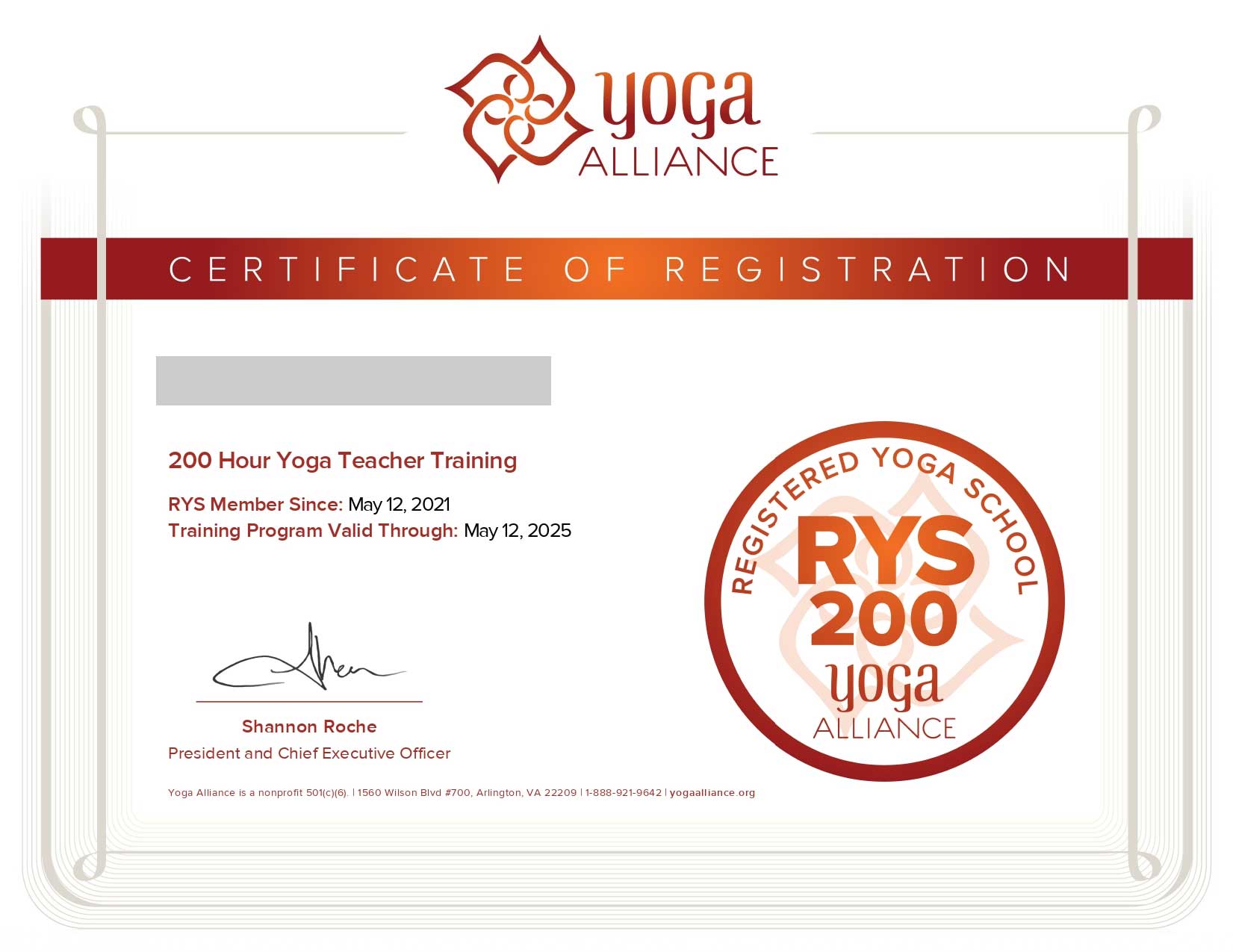
Every course we run is registered with Yoga Alliance USA. When you finish and pass the assessments — practical teaching, written evaluation, and attendance — you receive a certificate that qualifies you to register as RYT 200, 300, or 500. That registration is recognised globally. You can teach in studios, gyms, retreats, schools, corporate offices, or your own private practice in any country.
The certification process at DivinePath is not a rubber stamp. You practise teaching real classes in your final week, receive feedback from your peers and lead teacher, and demonstrate understanding of anatomy, philosophy, and methodology. When you walk away with that certificate, it carries weight because you earned it.
Many of our graduates have gone on to teach in studios across Europe, open retreat businesses in Southeast Asia, or simply return home with a daily practice and a completely different relationship with stress. The certificate opens doors — what you do with them is up to you.
Ashtanga Vinyasa is part of every program we run in Goa, from the 100-hour introduction up. It is a physically demanding style built on a fixed sequence of postures linked by breath — you practise the same series every morning, and the repetition is deliberate. It trains body memory, builds real cardiovascular strength, and sharpens focus in a way that slower styles do not always achieve.
Our teachers walk you through the Primary Series step by step. You learn correct Ujjayi breathing, where to place your gaze (drishti), and how to engage the bandhas that keep the practice controlled and safe. By the end of your course, you will be able to teach Ashtanga to beginners with modifications and to challenge advanced students with deeper variations.
Practising Ashtanga in Goa has a quality to it that a city studio cannot replicate — open-air shala, natural morning light, and the sound of the ocean in the background. It is intense work in a calm place, and that contrast is what makes it stick.
India has two major yoga training hubs: Rishikesh and Goa. They attract different people. Rishikesh is ashram-style — set in the Himalayan foothills, along the Ganges, deeply traditional. Goa is coastal, multicultural, and relaxed. One is not better than the other. It depends on what kind of experience you want alongside the training.
Students who pick Goa usually care about three things. First, the weather — it is warm year-round, which means outdoor practice is comfortable from September through May. Second, the lifestyle — training is intensive during the day, but evenings and weekends give you beaches, drum circles at sunset, local markets, and good coffee. Third, the international community — Arambol draws travelers and yoga practitioners from everywhere. You will train alongside people from a dozen different countries, and that diversity changes the conversation in philosophy class.
Goa is also practical to reach. Manohar International Airport has direct and connecting flights from most major cities. India's e-Visa is available to citizens of over 150 countries and takes 3–5 days online. And living costs in Goa are a fraction of what you would pay in Bali, Thailand, or Costa Rica for similar quality training.
Still deciding? Our Goa vs Rishikesh comparison guide breaks it down in detail. DivinePath operates in both locations, so we will give you an honest recommendation either way.
The alarm goes off at 6:15. By 6:45 you are in the shala for pranayama and meditation — the campus is quiet, the air is cool, and the only sound is birds. At 8:30, Ashtanga or Vinyasa practice starts. This is the physical peak of the day: 90 minutes of movement, alignment corrections, and sweat. Breakfast follows at 10 — usually fresh fruit, poha or parathas, and chai.
Late morning is anatomy or philosophy. These are classroom-style sessions — you sit, take notes, ask questions. The anatomy teacher uses the postures from the morning class to explain what is happening in the joints and muscles. Philosophy covers the Yoga Sutras, the eight limbs, and the ethical framework that shapes how you teach.
After a lunch break (dal, rice, chapati, seasonal vegetables, salad), the afternoon shifts to teaching methodology and alignment workshops. This is where you start practising your teacher voice — cueing a sequence, walking the room, adjusting a classmate's shoulder. Hatha class at 5 PM is slower and more reflective. Dinner at 7 is something light.
Saturdays are half-days. Sundays are completely free — explore Goa, sit at Sweet Water Lake, visit temples in Chopdem, or do absolutely nothing. By the end of 21 days (or 55, depending on your course), you will look back and wonder how the time went so fast. Most students say the friendships they make during training are the part they did not expect and the part they value most.
Batches start on the 1st of every month. Peak season (October–March) fills 6–8 weeks ahead. If a particular month matters to you, booking early is the simplest way to guarantee your spot. A 25% deposit holds your seat, and we send a confirmation letter the same day — you can use it for your visa application.
If you are still weighing things up, send us a WhatsApp message. We reply within a few hours and can help with course selection, room comparisons, visa paperwork, or anything else. No pressure. We have been doing this long enough to know that the right students find us when they are ready.
Our yoga school is located in Arambol, North Goa, just a short walk from the beach. The peaceful surroundings make it the perfect place to focus on your Yoga Teacher Training in Goa. We are about 40 minutes from Mopa Airport (GOX) and 2 hours from Dabolim Airport (GOI). Airport pickup can be arranged for all students.
Plot No 81/1, Moddlo Waddo, Arambol, Goa 403512
Get Directions
At DivinePath: the 100-hour starts from USD 500, the 200-hour from USD 500 (course + meals) to USD 1,250 (private cottage), the 300-hour from USD 1,299, and the 500-hour from USD 2,500. All fees include tuition, accommodation, three sattvik meals daily, course materials, and Yoga Alliance certification. No hidden charges.
The 100-hour runs 11 days, the 200-hour 21 days, the 300-hour 26 days, and the 500-hour about 55 days. All are full-time residential — you live on campus for the entire duration.
The 200-hour YTT is the standard starting point — it covers all fundamentals and qualifies you to teach worldwide as RYT 200. If you want a shorter introduction first, the 100-hour program gives 11 days of foundational practice. No prior certification is needed for either.
No upper age limit. We have had students from their 20s to their 60s. The minimum age is 18. What matters is not age but willingness to attend daily sessions and openness to learning.
Yes. North Goa — Arambol in particular — is one of the safest regions in India for international travelers including solo women. Our campus is gated with 24/7 staff on site. We offer airport pickup so you are accompanied from landing. A large portion of our students are solo female travelers from the US, UK, Germany, and Australia.
Goa is beachside, tropical, multicultural — great for students wanting training with a balanced coastal lifestyle. Rishikesh is ashram-style, Himalayan foothills, deeply spiritual. DivinePath runs the same Yoga Alliance curriculum at both. Our comparison guide can help you decide.
A Yoga Alliance USA accredited certificate — RYT 200, 300, or 500 depending on your program. This is the most recognised yoga teaching qualification globally and allows you to teach legally anywhere.
October to March is peak — warm, dry, perfect for outdoor yoga. April–May is hotter but cheaper and quieter. August–September (post-monsoon) is lush and meditative. We run on the 1st of every month except June–July.
The 500-hour (RYT 500) is the highest standard certification — it combines 200 hours foundational with 300 hours advanced. You can further specialise in Yoga Therapy, Prenatal Yoga, or Ashtanga through continuing education.
Most students use the India e-Visa (Tourist or Yoga category), available online at indianvisaonline.gov.in. It takes 3–5 business days. Once you book with us, we issue an official invitation letter to support your application. Citizens from the US, UK, Canada, Australia, and most EU countries are eligible.
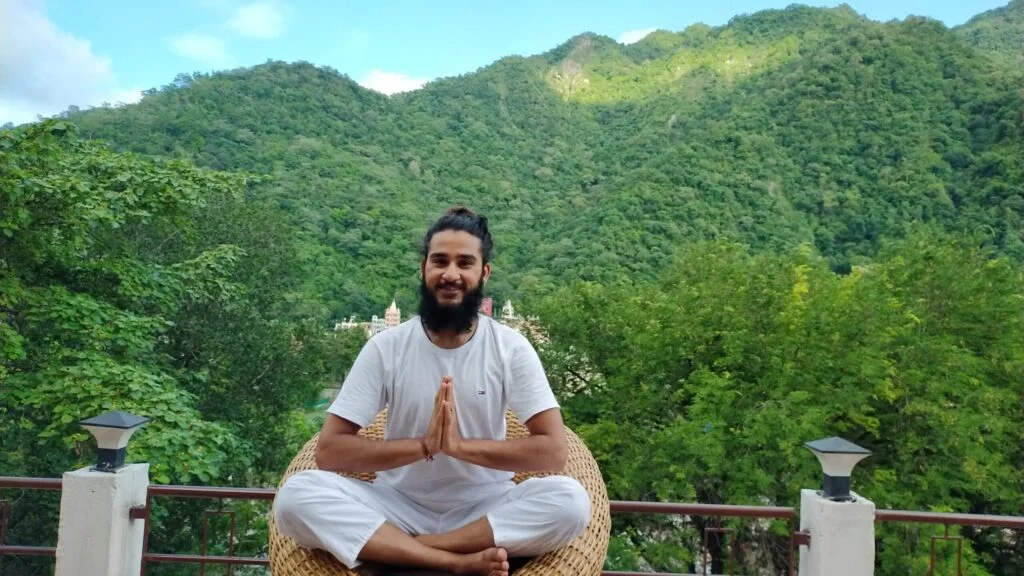
Lead Yoga Trainer & Retreat Coordinator, DivinePath — Goa Campus
Yoga Alliance E-RYT 500 · Yoga Psychology, Philosophy & Hatha Yoga