




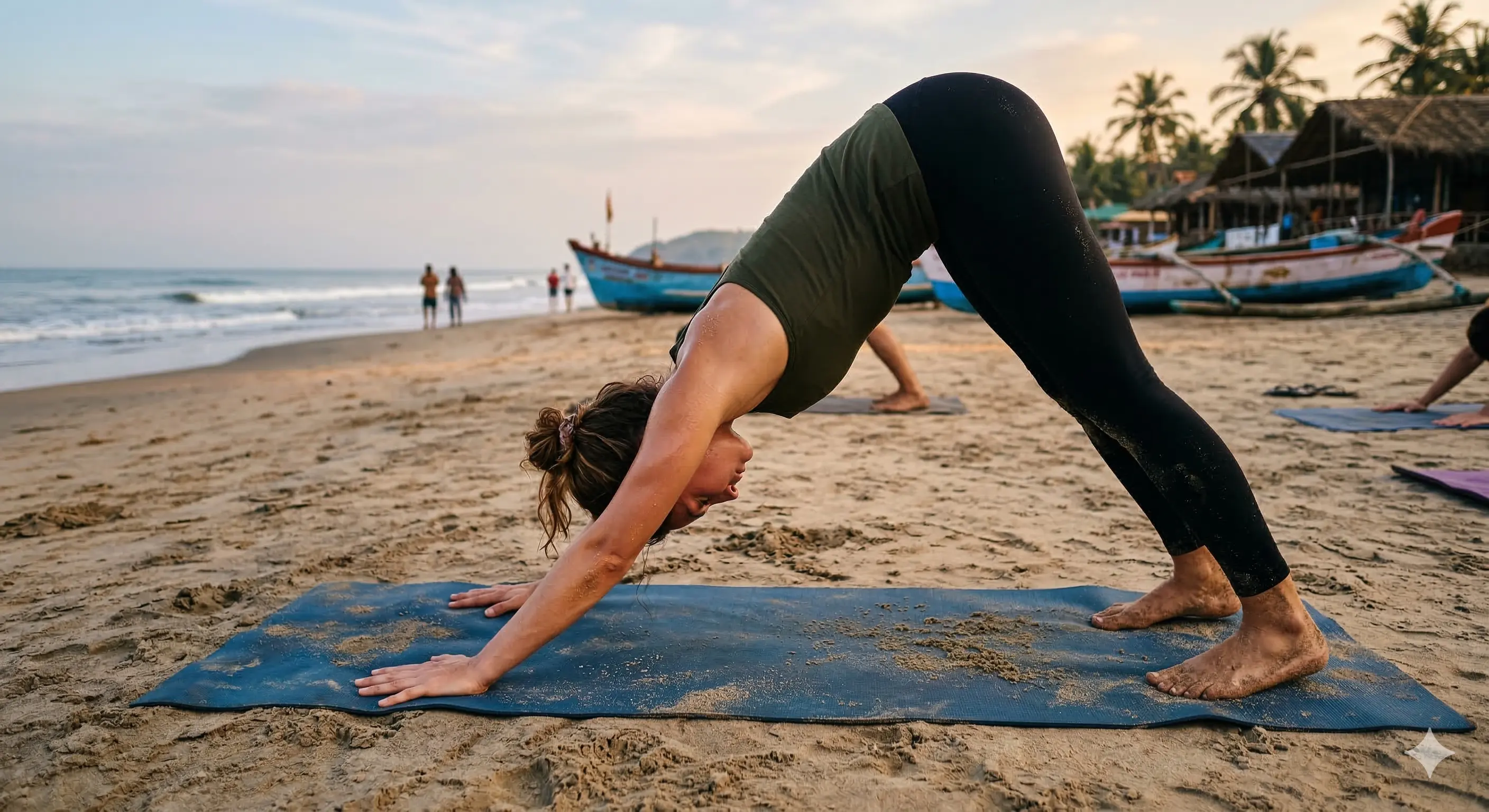
Goa and Bali are both beach destinations popular for yoga teacher training, but they differ sharply in cost, culture, and daily experience. At DivinePath, we run Yoga Alliance-certified schools at both locations. Our 200-hour YTT costs $899 in Goa (shared cottage, 21 days) and $1,550 in Bali (shared cottage, 21 days). The certification is identical — the $651 difference is accommodation and cost of living, not teaching quality.
This guide compares everything so you can choose the place where you’ll actually thrive. Most comparison articles online are written by schools that only operate in one location, so they’re biased. We have no reason to push you toward Goa or Bali — both campuses are ours. What we care about is putting you in the right place for your budget, personality, and schedule.
Before we go deep on each category, here’s the master comparison table. Bookmark this — it’s the fastest way to compare the two locations.
| Category | GOA (India) | BALI (Indonesia) |
|---|---|---|
| 200h Price (shared room) | $899 | $1,550 |
| 200h Price (private room) | $999–$1,250 | $2,200 |
| Course Duration | 21 days | 21 days |
| Certification | Yoga Alliance RYT 200 | Yoga Alliance RYT 200 |
| Location | Arambol, North Goa, India | Ubud, Central Bali, Indonesia |
| Setting | Beach + bohemian village | Rice terraces + jungle |
| Accommodation | Cottages, AC rooms, dorms | Villas with swimming pool |
| Meals Included | 3 Sattvic vegetarian/day | 3 Sattvic vegetarian/day |
| Visa | e-Visa $25–$80 | Visa on Arrival $35 or free |
| Flights (from Europe) | $400–$700 | $500–$900 |
| Best Season | October–March | April–October |
| Class Size | Max 15 students | Max 15 students |
| Yoga Styles | Hatha, Ashtanga, Vinyasa | Hatha, Ashtanga, Vinyasa |
| Local Food Cost (eating out) | $2–$5 per meal | $4–$8 per meal |
| Best For | Budget, tradition, raw experience | Comfort, island vibe, polish |
Now let’s break down each category in detail, starting with the one most people care about first.
Goa wins on price at every course level. Here’s the full DivinePath pricing comparison across all certifications:
| Course | Goa (Shared) | Bali (Shared) | You Save | Ratio |
|---|---|---|---|---|
| 100 Hour | $599* | $850 | $251 | Bali 1.4x more |
| 200 Hour | $899 | $1,550 | $651 | Bali 1.7x more |
| 300 Hour | $1,299 | $2,450 | $1,151 | Bali 1.9x more |
| 500 Hour | $2,500 | $3,800 | $1,300 | Bali 1.5x more |
*Goa’s 100-hour course also has a dorm option at $450. Bali’s minimum is $850 for a shared AC room.
The gap gets bigger as you move up in certification. For the 200-hour course, Bali costs $651 more. For the 300-hour, the gap is $1,151. If you’re planning to do both 200 and 300 hours over time, choosing Goa for both saves you roughly $1,800 compared to doing both in Bali.
But the course fee isn’t the full picture. You also need to budget for flights, visa, insurance, and daily expenses. Here’s the realistic all-in comparison for the 200-hour course:
| Expense | Goa | Bali |
|---|---|---|
| Course fee (200h shared) | $899 | $1,550 |
| Return flights (Europe) | $400–$700 | $500–$900 |
| Visa | $25–$80 | $35 (VoA) |
| Travel insurance (1 month) | $30–$80 | $30–$80 |
| Airport transfer | $25–$40 | Included free |
| Personal expenses (month) | $50–$150 | $100–$250 |
| REALISTIC TOTAL | $1,430–$1,950 | $2,215–$2,815 |
The bottom line: Goa saves you $800–$1,000 compared to Bali for the same Yoga Alliance certification. If your total budget is under $2,000, Goa is the only realistic choice at DivinePath. If you have $2,500+ and want the premium island experience, Bali delivers more comfort for the extra cost.
This is where the price difference becomes physical. You can see and feel where your money goes.
Goa (Arambol): Our campus sits among palm trees in Arambol, North Goa. Accommodation ranges from basic dorms ($450 for the 100-hour course) to private cottages with AC, ensuite bathrooms, and pool access ($1,250 for the 200-hour). The most popular option is the shared cottage at $899 — twin-share with ensuite bathroom and garden views. The vibe is rustic-comfortable. Clean and functional, surrounded by nature, but not luxury. Think boutique guesthouse, not resort.
Bali (Ubud): Our Bali campus is in Ubud, Bali’s spiritual centre. Accommodation is villa-style with a swimming pool, lush tropical garden, and a spacious yoga shala. Shared cottages ($1,550) have ensuite bathrooms, AC, and pool views. Private cottages ($2,200) add a sofa, working desk, and daily housekeeping. The vibe is resort-comfortable — a clear step up in finishings and aesthetics. The Bali campus includes a free airport pickup from Ngurah Rai International and a complimentary Balinese massage during your stay.
The honest take: Bali’s accommodation is objectively nicer. The villa with pool, the tropical garden, the extra touches like the massage — that’s where the $651 goes. If comfortable surroundings help you focus during training, Bali is worth the premium. If you care more about the curriculum and teachers, and you’re fine with clean, simple rooms, Goa delivers the same teaching at a fraction of the price.
Goa’s best season: October through March. Dry, sunny, 25–33°C. This is peak season for tourism and yoga training. The beaches are open, the cafes are buzzing, and the weather is ideal for daily practice. Avoid June through September — Goa’s monsoon brings heavy rain, closed beaches, and a very different atmosphere. We run courses year-round, but monsoon Goa is quiet and introspective, not the classic experience.
Bali’s best season: April through October. This is the dry season. Clear skies, 26–30°C, lower humidity. Ubud sits at a higher elevation than coastal Bali, so it’s slightly cooler and more comfortable for intensive training. November through March is Bali’s rainy season, but unlike Goa’s monsoon, the rain usually comes in short afternoon bursts. Training continues comfortably.
The key insight most people miss: Goa and Bali have opposite peak seasons. Goa is best when Bali is rainy; Bali is best when Goa is in monsoon. If you’re flexible on timing, this is actually perfect — you can always pick whichever DivinePath location is in its ideal weather window. Planning a European winter escape? Goa. Summer trip? Bali.
India (Goa): Most nationalities apply for an e-visa online. It costs $25–$80 depending on your passport and takes 3–5 business days. You fly into Manohar International Airport (GOX). Arambol is about 90 minutes by taxi. DivinePath arranges airport pickup for $25–$40.
Indonesia (Bali): Many nationalities get 30 days visa-free or can purchase a Visa on Arrival at the airport for $35 USD. Processing is instant. You fly into Ngurah Rai International Airport (DPS). DivinePath includes a free airport pickup to Ubud (about 90 minutes).
Which is easier? Bali, slightly. The visa-on-arrival process is faster than India’s e-visa application, and the free pickup saves you $25–$40. But neither destination has a difficult visa process.
Flight costs from Europe: Goa is generally $50–$200 cheaper because of more airline competition on India routes. Many students fly into Mumbai and take a short domestic connection. Bali requires a longer flight, often via Singapore, Kuala Lumpur, or Dubai.
At both locations, you get three Sattvic vegetarian meals daily included in your course fee. The food is freshly prepared, seasonal, and designed to support intensive yoga practice. No meat, no alcohol, no eggs on campus.
If you love Indian food, Goa’s meals will feel like a daily bonus. If you prefer lighter, tropical, more internationally varied food, Bali has the edge. Both are excellent quality — we’re genuinely proud of the food at both campuses.
One practical note: dietary restrictions are handled well at both locations. We serve Sattvic vegetarian food as standard (no meat, no eggs, no onion, no garlic). Vegan students are fully accommodated — most of our meals are naturally vegan or easily adapted. If you have allergies (gluten, nuts, dairy), let us know at booking and our kitchen teams at both Goa and Bali will adjust. We’ve never had a student go hungry due to dietary needs at either campus.
On the drinking water front: both campuses provide filtered drinking water throughout the day at no extra cost. In Goa, tap water is not safe to drink (standard for India); our filtered water is tested regularly. In Bali, the same applies — filtered water only, which is normal practice across Indonesia. Bring a reusable water bottle to both locations.
No. This is the most important point in this entire article.
At DivinePath, both locations follow the same Yoga Alliance-approved curriculum. The 200-hour course covers Hatha, Ashtanga, and Vinyasa asana practice; pranayama and breathwork; meditation and mantra chanting; yoga philosophy (Yoga Sutras, Bhagavad Gita); anatomy and physiology; teaching methodology; and Ayurveda basics. The structure, contact hours, exam format, and certification are identical.
Your RYT 200 certificate does not mention the location. A studio in London, Sydney, or New York won’t know or care whether you trained in Goa or Bali. What matters is that you trained at a Yoga Alliance Registered School — which DivinePath is at both locations.
The one real difference is the teachers. Our Goa campus is led by Yogi Saransh Ji, who specialises in traditional Hatha, Karma, and Bhakti Yoga. He brings five years of ashram living to his teaching. Our Bali campus has its own experienced team. Both teams are excellent, but their personalities and teaching emphasis differ. If you’ve read our teacher profiles, you may feel drawn to one team over the other.
Goa (Arambol): A bohemian beach village. Backpackers, long-term travelers, drummers on the beach at sunset, flea markets, chai stalls. It’s India — colourful, noisy sometimes, unpredictable, deeply real. The yoga culture in Arambol is rooted in Indian tradition. You’ll hear temple bells, smell incense, and share the road with cows. After training, you walk to the beach. Friday nights might bring a drum circle. The pace is slow and community-driven.
Bali (Ubud): Bali’s wellness capital. Surrounded by rice terraces, Hindu temples, and artists’ studios. The wellness infrastructure is world-class — smoothie bowls, co-working spaces, sound healing sessions, ecstatic dance events. It’s curated, beautiful, and very Instagram-friendly. After training, you explore Ubud’s Sacred Monkey Forest, visit a water temple, or sit in a cafe overlooking a gorge.
Neither is better. They’re different. Goa is rawer and more traditional. Bali is smoother and more curated. Some students need the rawness to grow; others need the comfort. We’ve seen both types flourish at both locations. The question is which environment suits your personality.
Both locations are safe for yoga students, including solo female travelers. At DivinePath, we’ve hosted students from 45+ countries at both campuses without safety incidents.
Goa: Arambol is a tourist village and generally safe. Standard precautions apply — don’t walk alone on empty beaches late at night, keep valuables secure, use reputable transport. Our Goa safety guide covers everything in detail.
Bali: Ubud is extremely safe. Petty theft is rare, locals are welcoming, and the wellness community is well-established. The biggest risk in Bali is motorbike accidents — if you rent a scooter, ride carefully. Our Bali safety guide has the full breakdown.
Neither location has a safety advantage. Both are well-suited for international students, including those traveling solo for the first time.
The daily schedule at both DivinePath campuses follows the same structure. You wake at 6:00 AM. Pranayama and meditation from 6:30 to 8:00. Morning asana practice (Hatha or Ashtanga) from 8:00 to 9:30. Breakfast at 9:30. Theory sessions (philosophy, anatomy, teaching methodology) from 10:30 to 1:00 PM. Lunch and rest until 2:30. Afternoon alignment workshop or Vinyasa practice from 2:30 to 4:00. Mantra chanting or self-study from 4:00 to 5:00. Dinner at 5:00–6:00. Lights out by 9:30. That’s 8–10 hours of structured learning per day, six days a week. One rest day per week with an optional group excursion.
Where the experience diverges is what happens outside training hours.
In Goa, your rest day might involve walking to Arambol beach (10 minutes from campus), exploring the Saturday flea market, eating a $3 thali at a beach shack, or taking a boat ride to Sweet Water Lake. The nightlife in Arambol is low-key — drum circles, acoustic music, chai under the stars. Everything is cheap and accessible on foot. You don’t need a scooter or taxi.
In Bali, your rest day might involve visiting the Sacred Monkey Forest, watching sunrise over Tegallalang rice terraces, getting a $15 Balinese massage, or spending two hours in one of Ubud’s famous health-food cafes. Ubud’s attractions are more spread out — you’ll likely rent a scooter ($5/day) or take a Grab taxi. The cultural experiences are richer and more varied, but they cost more than Goa’s casual beach life.
Both rest-day experiences are excellent. Goa’s is simpler and cheaper. Bali’s is more curated and photogenic. Neither is wrong.
We get this question every time someone is comparing Goa and Bali, so let’s address it. DivinePath also runs a campus in Rishikesh, India — the original yoga capital. Rishikesh is different from both Goa and Bali. It’s not a beach destination. It sits in the Himalayan foothills along the Ganges river. The experience is spiritual and intense — ashram-style living, mountain air, temple bells at dawn. No beaches, no cafes, no nightlife. If you want a strict, deeply traditional yoga experience, Rishikesh is the answer.
DivinePath’s 200-hour course in Rishikesh costs $999 for a shared room (21 days) — slightly more than Goa ($899) but less than Bali ($1,550). For the full three-way comparison, read our pillar page on all three DivinePath locations. For most students choosing between beach destinations, the decision is Goa vs Bali. But if you’re torn between beach and mountains, Rishikesh is the wildcard worth considering.
Honest filtering. This is the section most comparison articles skip, and it’s the one that matters most.
Don’t choose Goa if:
Don’t choose Bali if:
Choose Goa if: budget matters, you’re traveling October–March, you love Indian culture, you’re a backpacker type, you want to combine with Rishikesh, or you prefer a raw, authentic experience over a polished one.
Choose Bali if: comfort and accommodation quality are priorities, you’re traveling April–October, you love tropical island culture, you want Instagram-worthy surroundings, you plan to travel Southeast Asia afterwards, or you prefer a resort-style training environment.
If you genuinely can’t decide: choose Goa. The $651 you save can fund another trip — maybe to Bali for your 300-hour advanced training later. You get the same Yoga Alliance certification, the same DivinePath teaching standards, and a richer cultural experience for less money.
Yes, and this is one of DivinePath’s biggest advantages. Because we operate at both locations under the same Yoga Alliance registration, your training records transfer seamlessly.
The most popular split: 200 hours in Goa ($899), then 300 hours in Bali ($2,450). You get the affordable foundation in India and the premium advanced experience in Bali. Total for both: roughly $3,350 — which is less than some schools charge for just the 500-hour course at a single location.
You can also do it the other way around, or mix retreats and YTT across locations. We’ve had students do a 7-day retreat in Bali, then come to Goa for their 200-hour certification six months later. There’s no restriction on how you combine our programmes.
The booking process is the same for both DivinePath locations. You pay a 25% deposit to secure your seat, and the remaining 75% is due on or before arrival day. Both locations accept credit/debit cards (processed in USD) and bank transfers through the same payment gateway.
For the 200-hour course in Goa, the 25% deposit on a shared cottage is approximately $225. The remaining $674 is due when you arrive in Arambol. Batches start on the 1st of every month. We recommend booking 4–6 weeks ahead — Goa batches fill up during peak season (October–February). Contact us at +91-8868043473 or through our website to start.
For the 200-hour course in Bali, the 25% deposit on a shared cottage is approximately $388. The remaining $1,162 is due on arrival in Ubud. Batches also start on the 1st of every month. Bali’s popular months (June–September, dry season) can fill up earlier, so book 6–8 weeks ahead for those months.
Early bird pricing exists for Bali. If you book well in advance for certain batches (typically June 2026 through February 2027), DivinePath offers early bird rates that shave $50–$100 off the standard Bali pricing. The early bird shared cottage rate drops to approximately $1,500. Check the Bali 200-hour course page for current availability.
No hidden booking fees at either location. No processing charges from our side. Your bank may apply currency conversion fees depending on where you’re based, but that’s between you and your bank.
Pick your destination, pick your month, and secure your spot with a 25% deposit. Both Goa and Bali campuses start new batches on the 1st of every month. Class sizes are capped at 15, and popular months fill up 4–6 weeks in advance.
If you’re still unsure, send us a WhatsApp at +91-8868043473 and tell us your budget, travel dates, and what matters most to you. We’ll give you an honest recommendation — including telling you if neither location is the right fit and you should look at our Rishikesh campus instead.
At DivinePath, we run Yoga Alliance-certified schools in Goa, Bali, and Rishikesh. We’ve trained over 400 graduates from 45+ countries. This comparison is written from first-hand experience operating schools at both locations — not guesswork, not marketing, not a paid review.
Goa is significantly cheaper. At DivinePath, the 200-hour YTT costs $899 in Goa versus $1,550 in Bali for a shared room. When you add flights, visa, and living expenses, Goa saves you $800 to $1,000 overall. The certification and curriculum are identical at both locations.
Yes. DivinePath is a Yoga Alliance Registered School (RYS 200/300/500) at both locations. Your RYT 200 or RYT 300 certificate is identical regardless of where you train. It does not mention the training location and is recognized worldwide.
Both welcome complete beginners with the same curriculum and teaching support. Goa may be slightly better for budget-conscious first-timers because lower costs remove financial stress during training. Bali’s resort-style accommodation can feel more comforting for students who prefer a polished environment. The teaching quality is the same at both DivinePath campuses.
For India (Goa), most nationalities apply for an e-visa online for $25–$80. For Indonesia (Bali), many nationalities get 30 days visa-free or can purchase a Visa on Arrival at the airport for $35 USD. Both processes are straightforward for the 21-day course duration.
Goa’s best season is October through March (dry, sunny, 25–33°C). Bali’s best months are April through October (dry season, 26–30°C). They have opposite peak seasons, which means you can always choose whichever location is in its ideal weather window regardless of when you’re planning to travel.
Yes. DivinePath operates at both locations under the same Yoga Alliance registration. Your training records transfer seamlessly between our campuses. The most popular split is 200 hours in Goa ($899) followed by 300 hours in Bali ($2,450). Contact us at +91-8868043473 to plan your path.
Pick your destination, pick your month, and secure your spot with a 25% deposit. Both Goa and Bali campuses start new batches on the 1st of every month.
Explore Goa Courses Explore Bali Courses
Lead Teacher & Curriculum Director, DivinePath Yoga School (Goa & Bali)
View Profile