




Quick answer: Ubud is better for serious yoga teacher training, while Canggu is better for a beach-and-yoga lifestyle. At Divinepath, our Ubud campus is on Jl. Bisma, where the 200-hour yoga teacher training in Ubud starts at $1,299 (20 days, all-inclusive). We chose Ubud deliberately — it’s quieter, more spiritual, slightly cooler, and has the largest concentration of Yoga Alliance-certified schools in Bali. Canggu has great schools too, but its surf-bar-nightlife culture can conflict with a 6:00 AM yoga schedule.
This comparison is written from on-the-ground experience by Wayan Muliarta. We operate our Ubud campus on Jl. Bisma and we’ve evaluated Canggu multiple times. We’ll tell you exactly why we chose Ubud, and also when Canggu is genuinely the better choice.
Bookmark this table. It covers everything at a glance.
| Category | UBUD | CANGGU |
|---|---|---|
| Setting | Inland. Rice terraces, jungle, temples | Coastal. Beach, surf, digital nomad scene |
| Vibe | Spiritual, quiet, wellness-focused | Trendy, social, party-adjacent |
| Yoga Schools | 10–15+ active YTT schools | 5–8 active YTT schools |
| 200h Price Range | $1,299–$4,179 | $1,600–$3,500 |
| Divinepath Campus | Yes — from $1,299 shared | No |
| Accommodation Style | Villas with gardens and pools | Beach bungalows and guesthouses |
| Nightlife | Minimal. Quiet by 9 PM. | Bars, beach clubs, live music until late |
| Food Cost (eating out) | $4–$8 per meal | $5–$10 per meal |
| Beach Access | 60–90 min drive to coast | On the coast, 5–10 min walk |
| Scooter Needed? | Optional (walkable from Divinepath) | Recommended (town is spread out) |
| Best For | Focused training, spiritual depth | Beach lifestyle, surf + yoga combo |
| Temperature | 25–29°C (slightly cooler, elevation) | 27–32°C (humid coastal heat) |
| Airport Distance | 90 min from DPS | 45–60 min from DPS |
| Crowd | Wellness travelers, yogis, artists | Surfers, influencers, remote workers |
Our Ubud campus focuses on immersion — see dates and full curriculum.
Now let’s go deeper on the factors that actually matter during 21–30 days of intensive training.
Ubud is the spiritual and cultural heart of Bali. It sits inland, about 90 minutes from the airport, surrounded by rice terraces, Hindu temples, and tropical jungle. The town has been a wellness destination for over 20 years and attracts yoga practitioners, healers, artists, and meditation seekers from around the world.
The yoga infrastructure is mature. Ubud has 10–15+ yoga schools offering teacher training at any given time. This density means the local economy caters to yoga students: health-food cafes serving smoothie bowls and tempeh, co-working spaces with quiet zones for study, massage therapists who understand practitioner bodies, and pharmacies stocked with magnesium and arnica for sore muscles. You’re not an oddity in Ubud — you’re the target customer.
It’s quiet. This is Ubud’s biggest practical advantage for YTT. The town goes quiet by 9 PM. There are no beach clubs, no late-night bars, no bass thumping through your walls at midnight. When your alarm goes off at 5:45 AM for a 6:00 AM wake-up, the only sounds are roosters, birds, and maybe a distant gamelan rehearsal. For a training that demands 8–10 hours of daily focus, this silence is not boring — it’s essential.
It’s slightly cooler. Ubud sits at a higher elevation than coastal Bali. Temperatures are 25–29°C versus 27–32°C at the beach. The difference is small on paper but noticeable during a 90-minute morning Ashtanga practice. Less heat means less dehydration, less fatigue, and better concentration in afternoon theory sessions.
The downside of Ubud: no beach. The coast is 60–90 minutes away by scooter or taxi. If the idea of spending three weeks in Bali without daily beach access is a dealbreaker, Ubud will frustrate you. You can visit the coast on rest days (a Grab taxi costs $10–15 each way), but it’s not walkable. Divinepath’s Ubud campus has a swimming pool, which is the closest thing to water you’ll get on a daily basis.
Canggu is Bali’s trendiest coastal area. It’s where the surfers, digital nomads, influencers, and party crowd converge. The main strip is lined with cafes, beach clubs, boutique shops, and co-working spaces. It’s international, social, and buzzing with energy. Instagram was basically invented for Canggu sunset photos.
The beach is the draw. Canggu has multiple surf beaches within walking or short scooter distance. If daily surf, sunset walks on black volcanic sand, and a post-training dip in the ocean are non-negotiable for you, Canggu delivers this. No other area in Bali combines yoga school density with direct beach access the way Canggu does.
Several good schools operate here. Peaceful Warriors ($2,950, 27 days) is probably the most well-known YTT school in Canggu. They include a surf lesson and ice bath sessions — very on-brand for the Canggu vibe. Anandam Yoga ($1,600+, 21–24 days) offers a more affordable option. Loka Yoga in nearby Kedungu ($3,500, 27 days) has a stunning beachside glass shala.
The nightlife problem. This is Canggu’s biggest issue for serious YTT students. Beach clubs like Finns, La Brisa, and The Lawn play music until midnight or later. If your accommodation is near the main strip (and most Canggu accommodation is), you’ll hear bass through your walls. Getting to sleep by 9:30 PM for a 6:00 AM wake-up is harder when the neighbourhood is partying. Some students thrive in this energy. Most find it draining by Week 2.
The town is spread out. Unlike Arambol in Goa (walkable) or central Ubud (compact), Canggu stretches along the coast with no clear centre. A scooter ($5–7/day) is essentially mandatory. This adds daily cost, road safety risk, and mental overhead. After a 10-hour training day, riding a scooter through Canggu traffic in the dark is not relaxing.
Divinepath does not operate in Canggu. We evaluated Canggu as a campus location and decided against it. The nightlife environment, the need for daily transport, and the higher accommodation costs would either raise our prices or compromise the training atmosphere. Ubud allows us to offer $1,450 shared cottages with pool, walking-distance everything, and total quiet by sunset.
For a wider island-wide table — including Klungkung, Tabanan, and Uluwatu — see our verified best yoga teacher training schools in Bali 2026 comparison.
Here are the main Yoga Alliance-certified schools in each area with published 2026 pricing. You can verify Divinepath directly on our Yoga Alliance public profile:
| School | Area | Duration | Price (shared) | Class Size | Notes |
|---|---|---|---|---|---|
| Divinepath (Ubud) | Ubud | 20 days | $1,299 | 10–15 | Jl. Bisma campus, all-inclusive |
| House of Om | Ubud | 20 days | $2,125 | 25–30 | Jungle campus, waterfall setting |
| Samyama Yoga | Ubud | ~21 days | $2,500 | ~12 | Boutique, small groups |
| Blooming Lotus | Ubud | 23 days | $4,179 | ~15 | Luxury eco-retreat |
| Peaceful Warriors | Canggu | 27 days | $2,950 | ~20 | Beach, includes surf lesson |
| Anandam Yoga | Canggu | 21–24 days | $1,600+ | ~15 | Multi-style, beach area |
| Loka Yoga | Kedungu (nr Canggu) | 27 days | $3,500 | ~20 | Beachside glasshall shala |
| Bali Yoga Ashram | Ubud | 21 days | ~$1,800 | ~15 | Budget Ubud option |
Price pattern: Ubud schools range from $1,299 (Divinepath) to $4,179 (Blooming Lotus). Canggu schools range from $1,600 (Anandam) to $3,500 (Loka). Divinepath at $1,299 is the lowest all-inclusive price across both areas. The most expensive schools in each area cost roughly the same ($3,500–$4,179), but the budget end is more competitive in Ubud.
Class size pattern: Canggu schools tend to run larger groups (20–30 students). Ubud schools vary more widely, from Divinepath’s 10–15 to House of Om’s 25–30. If small class sizes matter to you, ask the specific school before booking — don’t assume the area determines group size. For more on what to budget overall, see our overall cost guide for Bali.
Your course fee covers accommodation and meals, but you’ll spend money outside training on rest days and evenings.
Ubud: $4–$8 per meal eating out. Ubud’s cafe scene is famously wellness-oriented: smoothie bowls, avocado toast, organic cold-pressed juice. These tourist-friendly cafes charge $6–$10. Walk two minutes off the main strip and local warungs serve nasi campur or mie goreng for $2–4. A Balinese massage in Ubud costs $10–20 for an hour.
Canggu: $5–$10 per meal eating out. Canggu’s food scene is more international and slightly pricier. Beach club brunch runs $8–15. Casual cafes are $5–8. Local warungs exist but are harder to find among the tourist restaurants. A massage in Canggu costs $12–25.
Monthly personal spending difference: Expect to spend $100–$250 per month in Ubud versus $150–$300 in Canggu. The gap comes from Canggu’s scooter rental ($5–7/day = $100–$150/month) and higher food prices. Over 21–30 days, Ubud saves you $50–$100 in daily expenses on top of any course fee difference.
Yes, noticeably. Ubud is inland at 200–300 metres elevation. It’s 2–3°C cooler than the coast and gets slightly more afternoon rain (especially in rainy season). Morning sessions are comfortable. Afternoons during rainy season (Nov–Mar) often bring a 1–2 hour downpour that cools everything down. Divinepath’s shala has a covered roof, so training continues regardless.
Canggu is coastal and humid. Temperatures hit 30–32°C with higher humidity than Ubud. Morning yoga at 8 AM near the beach means sweating more. The ocean breeze helps, but you’re fighting the heat more during physical practice. During dry season (Apr–Oct), Canggu is sunny and gorgeous. During rainy season, the beach can feel grey and muggy. For a deeper dive on exactly when to travel, see our guide on the best time to visit Bali for yoga.
For intensive training where you’re doing two asana sessions per day, Ubud’s cooler temperatures reduce fatigue and dehydration. It’s a small factor but it compounds over three weeks.
Both are safe for international students, including solo female travelers. The specific safety profiles differ slightly:
Ubud: extremely safe. Low crime. Quiet streets. Few motorbikes compared to coastal areas. Walking at night is fine in the town centre. The biggest “risk” is monkeys at the Sacred Monkey Forest stealing your water bottle.
Canggu: safe, but road risk is higher. Canggu’s roads are busy with scooters, delivery bikes, and tourist traffic. If you’re renting a scooter (which you probably need to), the accident risk is real. Indonesian traffic is chaotic by Western standards. Most safety incidents in Bali involve motorbike accidents, not crime. Also, Canggu’s nightlife attracts a crowd that drinks, which can create uncomfortable situations late at night (not dangerous, just annoying). Review our solo female travel safety guide for Bali for detailed precautions.
If you’re a first-time traveler or a solo woman prioritising safety, Ubud is the lower-risk choice. If you’re an experienced traveler comfortable on a scooter, Canggu is fine.
Choose Ubud if: you want maximum focus during training with minimal distractions. You prefer quiet evenings and early bedtimes. You value spiritual atmosphere over beach access. You want the widest choice of schools (10–15+ in Ubud). Budget matters and you want Divinepath’s $1,450 all-inclusive pricing. You’re training at Divinepath (our campus is here). You prefer walking to scootering. You care more about rice terraces than surf breaks.
Choose Canggu if: beach access is non-negotiable. You want to surf alongside yoga training. You’re a social person who thrives around energy and nightlife (even if you don’t participate). You’re comfortable riding a scooter daily in Asian traffic. You want the digital nomad / influencer community vibe. You’re doing a hybrid holiday-and-YTT trip where lifestyle matters as much as certification.
If you genuinely can’t decide: choose Ubud. For serious yoga teacher training, the environment that supports 6 AM wake-ups, deep study, and physical recovery is the one that will serve your learning best. You can always visit Canggu on your rest days (90 minutes by scooter). But living in a party zone and trying to maintain a yogic daily routine for 21 days creates a conflict that most students underestimate before they arrive. (Still unsure? Check our broader Rishikesh vs Goa vs Bali comparison).
We get asked this regularly, so here’s the full reasoning:
Price control. Villa rentals in Ubud are 20–40% cheaper than equivalent properties in Canggu. This is why we can offer shared rooms at $1,299 with meals and all-inclusive training. In Canggu, the same standard of accommodation would push our price to $1,800–$2,000.
Sleep quality. Our students train for 8–10 hours per day. Sleep is not optional — it’s a recovery tool. In Ubud, the campus is quiet by 7 PM. In Canggu, noise from bars and beach clubs would require soundproofing or earplugs. We’d rather invest the money in better teaching than thicker walls.
Spiritual alignment. Ubud’s temple culture, daily offerings (canang sari), and Balinese Hindu ceremonies create an atmosphere that supports yoga training at a deep level. Students walk past temple ceremonies on their way to the shala. Incense and gamelan music are part of the daily backdrop. In Canggu, the backdrop is surf wax, craft beer, and DJ sets. Both are valid experiences — but only one supports the practice we’re teaching.
Walkability. Divinepath’s Ubud campus has accommodation, shala, dining, and pool all on-site. Students don’t need transport for anything during training days. In Canggu, most schools require a scooter ride between accommodation and the shala. That adds cost, time, and risk every single day for 21–30 days.
After multiple seasons in Ubud, we see clear patterns in who thrives where.
Ubud attracts: Serious certification seekers who prioritise learning outcomes. Solo female travelers who want a quiet, safe environment. Students in their late 20s to 40s who have moved past the party phase. Wellness professionals adding yoga credentials to existing careers (therapists, physios, counsellors). Repeat visitors to Bali who have already done the Canggu beach thing and want something deeper.
Canggu attracts: Students in their early-to-mid 20s who want the full Bali lifestyle experience alongside training. Surfers who want waves before breakfast and yoga in the afternoon. Digital nomads who plan to work part-time during the course (note: YTT is 8 to 10 hours per day, so this is harder than it sounds). Social personalities who recharge around people and energy rather than in solitude.
The personality test: Picture yourself at 9 PM on Day 12 of training. You are exhausted from a 10-hour day. In Ubud, you are sitting by a pool under the stars, journaling, and the only sound is frogs. In Canggu, you hear bass from a beach club two streets away and your classmates are debating whether to go out for a drink. Which scenario helps you recover? That is your answer.
Not mid-course, no. You commit to a location when you book and your accommodation is at that campus for the full duration. However, if you are still deciding before booking, you could do a few days in each area as a tourist before your course starts to see which fits.
Some students fly into Bali a few days early, spend two days in Canggu (surf, beach, eat), then take a taxi to Ubud for their YTT start date. This gives you the beach fix without the training-environment conflict. Divinepath batches start on the 1st of every month, so arriving on the 28th or 29th of the previous month gives you 2 to 3 days of Canggu time before training begins in Ubud.
A common graduate move: Train in Ubud for 20 days, then head to Canggu for 3 to 5 days after graduation to decompress. Surf, beach clubs, late nights. You have earned it. Several Divinepath graduates do this and describe it as the perfect way to close out their Bali trip. You get the focused training environment when it matters, and the beach lifestyle when it is time to celebrate. (Considering extending your training? Read about the 300-hour YTT).
Seminyak: Upscale, expensive, nightlife-heavy. Very few YTT schools operate here. Not recommended for teacher training.
Uluwatu: Dramatic clifftop setting with world-class surf. One or two schools operate here (like ULU Yoga, hybrid format). Beautiful but isolated — limited services and restaurants. Good for experienced travelers who want solitude.
Nusa Lembongan: Small island 30 minutes by boat. All Yoga Training runs YTT here (~$2,950). Gorgeous beachfront shala. Trade-off: very limited infrastructure. If you get sick or need anything beyond basics, you’re taking a boat to mainland Bali.
For most students, the realistic choice is Ubud or Canggu. The other areas are niche options for specific preferences. If you're torn between a different coastal spot entirely, you might also consider our Goa vs Bali comparison.
To Ubud: approximately 90 minutes by car. Divinepath includes a free airport pickup in all Bali course fees. Our driver meets you at arrivals and brings you directly to our Ubud campus. No scooter negotiation, no Grab app setup while jet-lagged, no navigating Balinese roads in the dark. This is a genuine practical advantage, especially for first-time visitors to Bali.
To Canggu: approximately 45 to 60 minutes by car. Closer to the airport, which is convenient. Most Canggu schools do not include airport transfer in their course fee. A taxi from the airport to Canggu costs approximately ten to fifteen dollars via Grab or the airport taxi counter.
The airport distance is a minor factor in your decision. You make the journey twice (arrival and departure). Everything else in this comparison affects you daily for 21 to 30 days. Do not choose Canggu just because it is closer to the airport.
If this comparison has helped you decide on Ubud, Divinepath’s 200-hour yoga teacher training in Ubud starts at $1,299 (20 days, all meals, accommodation, and free airport pickup included). Batches start on the 1st of every month. 25% deposit (~$388) secures your seat.
If you prefer Canggu, we respect that — it’s a valid choice for the right person. Check out Peaceful Warriors ($2,950) or Anandam ($1,600+) for well-regarded Canggu options.
Either way, get the e-VOA ($35) before you fly. Read our full Bali visa guide for step-by-step instructions. Contact us at +91-8868043473 (WhatsApp) or through our website. If you’re unsure between Ubud and Canggu, tell us your priorities and we’ll give an honest recommendation — even if that means suggesting a school that isn’t ours.
At Divinepath, we’ve trained over 400 graduates from 45+ countries across Rishikesh, Goa, and Bali. Our Bali campus in Ubud is led by Wayan Muliarta, who teaches Ayurveda and yogic philosophy. We chose Ubud because it supports serious training. We’ll never apologise for prioritising your learning environment over Instagram aesthetics.
Ubud is better for focused, intensive yoga teacher training. It is quieter, slightly cooler, has more Yoga Alliance-certified schools (10 to 15+), and no nightlife to disrupt early mornings. Canggu is better if beach access and a social, surf-oriented lifestyle are priorities alongside your training. Divinepath operates in Ubud, where the 200-hour YTT costs $1,450 for a shared cottage.
Ubud prices range from $1,299 (Divinepath) to $4,179 (Blooming Lotus) for a 200-hour course. Canggu prices range from approximately $1,600 (Anandam) to $3,500 (Loka Yoga). Divinepath at $1,450 is the lowest all-inclusive price across both areas. Daily living costs are also 10 to 20 percent lower in Ubud than Canggu.
Not at Divinepath. Our campus has accommodation, yoga shala, dining, and pool all on-site. You walk between your room and training. For rest-day exploration (Sacred Monkey Forest, Tegallalang rice terraces), you can walk to central Ubud or take a Grab taxi for one to three dollars. In Canggu, a scooter is essentially required because the town is spread out along the coast.
It depends on your accommodation location and your sensitivity to noise. Canggu beach clubs and bars play music until midnight or later. If your room is near the main strip, sleep quality suffers. Some Canggu schools are in quieter pockets like Pererenan or Kedungu (15 minutes from central Canggu), which helps. If you are a light sleeper or need quiet for early bedtimes, Ubud is the safer choice.
Yes. Canggu is about 60 to 90 minutes from Ubud by scooter or Grab taxi (approximately ten to fifteen dollars each way). Many Divinepath students visit Canggu or nearby Seminyak on their weekly rest day for the beach, surf, and cafe scene. You get the best of both worlds: Ubud's quiet for training, Canggu's energy for rest days.
Four reasons: lower property costs (allowing us to price at $1,299 versus an estimated $1,800+ in Canggu), quiet environment supporting sleep and focus, spiritual atmosphere aligned with yoga practice, and a walkable campus that eliminates the need for daily scooter transport. We evaluated Canggu and decided the training environment did not match our standards for focused, immersive teacher training.
Join our foundational 200-hour YTT in Ubud. Pick your month, choose your cottage type, and secure your spot with a 25% deposit. The authentic heart of Bali YTT is waiting.
Explore Bali YTT Dates WhatsApp Us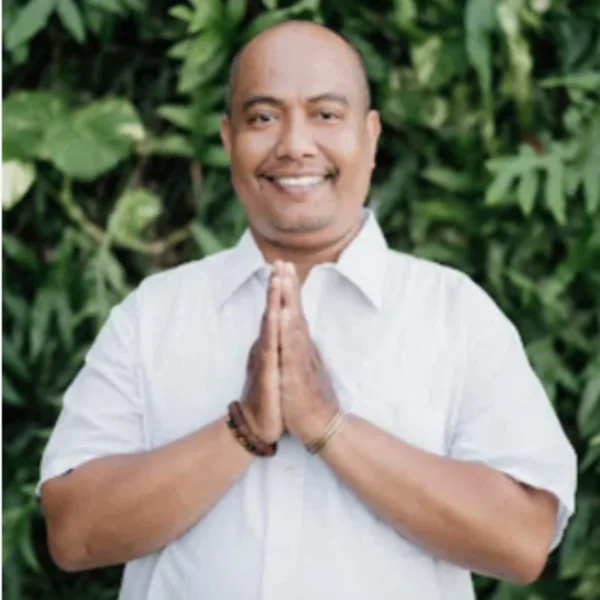
Lead Yoga Teacher (Anatomy & Vinyasa), Divinepath Bali
Written and reviewed by Wayan Muliarta (Ayurveda & Yogic Philosophy, Bali)
View Profile
Yoga Alliance Registered Yoga School — RYS 200, 300 & 500 · School ID 457520
 Yoga Alliance RYS 200, 300 & 500
School ID 457520
Verify registration →
Yoga Alliance RYS 200, 300 & 500
School ID 457520
Verify registration →
Divinepath Yoga School & Retreat © 2026. All Rights Reserved.