Most yoga teacher training schools in Goa are in North Goa — specifically Arambol and Mandrem. South Goa (Palolem, Agonda) has fewer schools and higher living costs. At DivinePath, our Goa campus is in Arambol, where our 200-hour Yoga Alliance-certified YTT starts at $899 for a shared cottage room. We chose Arambol deliberately — it’s the most affordable, most yoga-focused, and most community-driven area in all of Goa.
This guide compares the three main areas so you can understand why location within Goa matters more than most people realise. If you’re already set on Goa for your training but wondering which part of Goa to train in, this is the only article you need. We live and teach here year-round, so everything below comes from daily experience, not a two-week holiday.
How Do Arambol, Mandrem, and Palolem Compare for Yoga Training?
Before we get into the details, here’s the side-by-side comparison. These three areas represent the main options for yoga students in Goa.
| Category |
Arambol (North) |
Mandrem (North) |
Palolem (South) |
| Vibe |
Bohemian, backpacker, laid-back |
Quiet, hippie, wellness-focused |
Resort-style, touristy, relaxed |
| Beach |
Rocky cove + main beach |
Long, flat, clean sand |
Crescent bay, calm waters |
| Crowd |
Yogis, backpackers, Russians, Israelis |
Wellness crowd, families, quieter |
Package tourists, honeymooners, families |
| Yoga Schools |
5–10 active YTT schools |
2–4 schools |
2–3 schools |
| Food Cost |
$2–$5 per meal |
$3–$6 per meal |
$4–$8 per meal |
| Nightlife |
Drum circles, chill bars |
Almost none |
Bars and clubs (Silent Noise) |
| Distance from GOX Airport |
~90 min by taxi |
~80 min by taxi |
~60 min by taxi |
| DivinePath Campus |
Yes — our Goa HQ |
No |
No |
| 200h YTT Available |
Yes — from $899 |
Not at DivinePath |
Not at DivinePath |
| Best For |
Serious YTT students on a budget |
Quiet personal retreats |
Holiday + yoga combo |
Now let’s break down what each location actually feels like when you’re living there for three to four weeks of intensive training.
What Is Arambol Like for Yoga Teacher Training?
Arambol is a former fishing village at the northernmost tip of Goa’s beach belt. Over the past 15 years, it’s become the undisputed yoga capital of Goa. Walk down the main road and you’ll pass more yoga schools, crystal shops, and vegan cafes than you can count. The beach is a 5-minute walk from most schools, and the sunset drum circle on Arambol cliff is a Goa institution.
This is where DivinePath’s Goa campus is located. Our yoga shala, cottages, and dining area are all in Arambol, surrounded by palm trees and a short walk from the beach. We chose this location because it offers the best combination of affordability, yoga community, and infrastructure for international students.
- The vibe: Bohemian, international, and unpretentious. Arambol attracts backpackers, long-term travelers, yogis, musicians, and digital nomads. You’ll hear Russian, Hebrew, German, and English in equal measure at the beach shacks. It’s colourful, occasionally chaotic, and full of character. Friday nights might bring a drum circle on the beach. Saturday mornings, a flea market. The pace is slow and the community is tight-knit.
- The beach: Arambol’s main beach is long and sandy, good for sunset walks and morning meditation. The north end has a rocky cove that leads to Sweet Water Lake — a freshwater lagoon surrounded by cliffs. It’s one of Goa’s most unique natural spots and a 15-minute walk from DivinePath’s campus.
- Food and living costs: Arambol is the cheapest area in Goa for international students. A full meal at a beach shack costs $2–$5. A fresh juice is $1. Laundry is $0.50–$1 per kilogram. You can live comfortably on $50–$100 per month in personal expenses outside of your course fee. This is why budget-conscious students gravitate here — and why DivinePath can offer the 200-hour YTT at $899 including accommodation and meals.
- Yoga schools: Arambol has 5–10 active yoga teacher training schools at any given time during peak season. This density is actually good for students — it means the area’s infrastructure (cafes, pharmacies, ATMs, co-working spaces) caters to yoga students specifically. You won’t feel like an outsider. You’ll feel like you’re in a village that was built for what you’re doing.
The downside of Arambol: It’s not luxurious. Stray dogs roam freely. The beach can get crowded during peak season (December–January). If you need polished, resort-style surroundings, Arambol will test your patience. But if you want an authentic, affordable, community-driven yoga experience in India, there’s nowhere better in Goa.
What Is Mandrem Like for Yoga Training?
Mandrem is about 15 minutes south of Arambol by scooter. It’s quieter, cleaner, and more upscale than Arambol — but it’s still firmly North Goa.
- The vibe: Wellness-focused and peaceful. Mandrem attracts a slightly older, more affluent crowd than Arambol. You’ll find boutique guesthouses, organic cafes, and a more curated wellness scene. It’s where people go when they want Goa’s yoga culture without Arambol’s backpacker energy. There’s almost no nightlife — which is either a positive or a negative depending on your personality.
- The beach: Mandrem beach is arguably the most beautiful beach in North Goa. Long, flat, with clean white sand and calm water. It’s less crowded than Arambol because there are fewer hotels and restaurants along it. Perfect for morning walks and meditation.
- Yoga schools: Mandrem has 2–4 yoga schools, fewer than Arambol. Some well-known schools have operated here for years. However, because there are fewer schools, the yoga student infrastructure is thinner — fewer yoga-friendly cafes, fewer places where the staff speaks English, and fewer fellow YTT students to connect with outside of your school.
- Cost: Mandrem is 20–40% more expensive than Arambol for eating out and accommodation. A meal at a Mandrem restaurant costs $3–$6 versus $2–$5 in Arambol. Accommodation is pricier because the properties are nicer. If budget matters, this adds up over 21 days.
The downside of Mandrem: It can feel isolated. The village is spread out, and without a scooter you’re stuck. There’s no central hub like Arambol’s main road where everything is walkable. After training hours, there’s not much to do except go to the beach or sit in your room. Some students love that stillness. Others feel lonely, especially solo travelers.
DivinePath does not operate in Mandrem. If you’re drawn to Mandrem’s quiet energy but want DivinePath’s pricing and curriculum, our Arambol campus is just 15 minutes away. Several of our past students have told us they explored Mandrem on rest days and preferred Arambol for the actual training weeks because of the community and walkability.
What Is Palolem Like for Yoga Training? (South Goa)
Palolem is the most popular beach in South Goa, about 2–2.5 hours south of Arambol by taxi. It’s a completely different world from North Goa.
- The vibe: Tourist-friendly, scenic, and more commercial than North Goa. Palolem’s crescent-shaped beach is lined with colourful beach huts, restaurants, and cocktail bars. It attracts package tourists, honeymooners, and families — not primarily yoga students. You’ll see more people on guided tours and sunset cruises than on yoga mats.
- The beach: Stunning. Palolem’s bay is sheltered, with calm water and a dramatic curve of palm trees. It’s arguably the most photogenic beach in all of Goa. Nearby Agonda beach (20 minutes south) is even quieter and more beautiful. If beach aesthetics are your top priority, South Goa wins.
- Yoga schools: South Goa has 2–3 schools offering YTT, far fewer than Arambol. The schools that do operate here tend to charge more because property costs in South Goa are higher. A 200-hour course in Palolem typically costs $1,200–$2,000 at other schools — compared to $899 at DivinePath in Arambol.
- Cost: South Goa is the most expensive part of Goa for international visitors. Meals cost $4–$8 (double Arambol prices). Beach hut accommodation is $30–$80 per night in peak season. The tourism infrastructure is designed for holidaymakers, not budget yoga students. Your personal spending over 21 days will be significantly higher here.
The downside of Palolem for YTT: The tourist atmosphere can work against serious training. Palolem’s bars play music late. The beach is crowded during the day. There’s a party culture (Silent Noise disco on the beach is a Palolem institution) that doesn’t mix well with a 6:00 AM yoga schedule. Most importantly, there’s almost no yoga student community — you’ll be one of the few people in the area doing intensive training.
DivinePath does not operate in South Goa. We’ve looked at Palolem and Agonda multiple times and decided against it. The higher property costs would force us to raise prices beyond what we think is fair for a 200-hour course. And the tourist environment doesn’t support the focused, community-driven training we want to deliver. Arambol remains the right home for our Goa campus.
How Much Does Daily Life Cost in Arambol vs Mandrem vs Palolem?
Your course fee covers accommodation and meals, but you’ll spend money outside of training hours on personal expenses. Here’s how the three areas compare for common daily costs:
| Expense |
Arambol |
Mandrem |
Palolem |
| Budget meal (local) |
$2–$3 |
$3–$5 |
$4–$6 |
| Mid-range restaurant |
$4–$6 |
$5–$8 |
$6–$10 |
| Coffee (cafe) |
$1–$2 |
$2–$3 |
$2–$4 |
| Scooter rental (day) |
$5–$7 |
$5–$7 |
$5–$8 |
| Laundry (per kg) |
$0.50–$1 |
$1–$1.50 |
$1–$2 |
| SIM card (1 month) |
$3–$5 |
$3–$5 |
$3–$5 |
| Taxi to beach (from school) |
Free (walking) |
N/A |
N/A |
| Monthly personal budget |
$50–$100 |
$80–$150 |
$100–$200 |
The takeaway: Arambol is 30–50% cheaper than Palolem for daily living expenses. Over a 21-day training, that adds up to $50–$100 in savings just on food, coffee, and laundry. Combined with the lower course fees available in Arambol, choosing North Goa over South Goa can save you $300–$500 total.
How Do You Get to Each Area from the Airport?
Goa’s main airport is Manohar International (GOX), located in North Goa near Mopa. From there:
- To Arambol: About 90 minutes by taxi. DivinePath arranges airport pickup for $25–$40 depending on the vehicle. We can also coordinate shared rides with other students arriving on the same day to split costs.
- To Mandrem: About 80 minutes by taxi. Similar cost to Arambol.
- To Palolem: About 2–2.5 hours by taxi. Costs $50–$70 one way. Significantly farther and more expensive.
Some students fly into Dabolim (the old Goa airport) which is closer to South Goa, but fewer international flights use that airport now.
Once you’re in Arambol, you don’t need any transport. DivinePath’s campus, the beach, shops, cafes, ATMs, and pharmacies are all within walking distance. This is a real practical advantage — no scooter rental needed, no taxi costs, no navigating unfamiliar roads. In Mandrem and Palolem, a scooter ($5–$8/day) is basically essential.
What About Anjuna, Vagator, Morjim, and Agonda?
People sometimes ask about other Goa beaches. Here’s the quick rundown:
- Anjuna and Vagator (North Goa, south of Arambol): Party areas. Anjuna’s Wednesday flea market is legendary, and Vagator has Goa’s most famous trance clubs. A few yoga schools operate here, but the nightlife culture conflicts with intensive training. Not recommended for YTT.
- Morjim (North Goa, between Arambol and Mandrem): A quiet fishing village with a large Russian expat community. Beautiful beach, but very few services and no yoga schools. Some students stay in Morjim and commute to Arambol schools, but there’s no practical reason to do this.
- Agonda (South Goa, near Palolem): Arguably the most beautiful and peaceful beach in Goa. Almost no development, no nightlife, no crowd. One or two small yoga retreats operate here, but no Yoga Alliance-certified YTT schools that we know of. It’s a paradise for a personal retreat but not practical for structured teacher training.
For serious yoga teacher training, the realistic choices narrow to Arambol (our recommendation), Mandrem (if you want quieter North Goa), or Palolem (if South Goa’s scenery is non-negotiable).
Does the Best Season Differ Between North and South Goa?
The weather across Goa is broadly the same — tropical, with a clear dry season (October–March) and a monsoon season (June–September). But the practical impact of weather differs by area.
- Arambol in peak season (October–March): Perfect conditions. Temperatures are 25–33°C, rain is rare, beaches are open, and the full yoga community is active. This is when all 5–10 schools in Arambol are running courses. Cafes are buzzing, the flea market operates weekly, and the sunset drum circle happens most evenings. If this is your first time in Goa, come during these months.
- Arambol in monsoon (June–September): A completely different experience. Heavy rain most days, beaches closed for swimming due to rough seas, most cafes and restaurants shut. The village empties out. DivinePath runs courses year-round, but monsoon batches are smaller (5–8 students instead of 12–15). The upside: it’s more introspective, quieter, and the green landscape is stunning. The downside: if you imagined beach sunsets and bustling community, you won’t get that in monsoon.
- Mandrem follows the same pattern as Arambol but is even quieter during monsoon. Most yoga schools close. If you’re set on Mandrem, stick to November–February for the best experience.
- Palolem in peak season: Crowded. Very crowded. December and January bring huge tourist numbers, and the beach huts, restaurants, and bars are packed. If you’re trying to maintain a yogic daily routine with a 6:00 AM start, sharing a neighbourhood with partying tourists until 2:00 AM creates a real conflict. Palolem is at its best in October–November and February–March when the weather is good but the peak crowds haven’t arrived.
The practical advice: October or November in Arambol is the sweet spot. The weather is great, prices are at standard rates (not peak-season premiums), batches aren’t fully booked yet, and the yoga community is active. At DivinePath, our October and November batches often have the best student-to-teacher ratio because December fills first. Check out our detailed guide to the best time to visit Goa for more insights.
Do You Need a Scooter for Yoga Training in Goa?
In Arambol: no. Everything is walkable. DivinePath’s campus, the beach, shops, cafes, ATMs, pharmacies — all within a 10-minute walk. This is a real practical advantage. You save $5–$8 per day on scooter rental, you avoid the risk of riding in Indian traffic (which is chaotic even by local standards), and you don’t need to worry about parking, fuel, or flat tyres. Several of our students have specifically told us they chose Arambol because they didn’t want to depend on a vehicle.
In Mandrem: strongly recommended. The village is spread out along a single road with long gaps between shops, restaurants, and the beach. Without a scooter, you’re either walking 20–30 minutes to the beach or paying for rickshaw rides multiple times a day. A scooter costs $5–$7 per day and makes Mandrem much more liveable.
In Palolem: recommended but not essential. The beach and main strip are walkable, but if you want to explore nearby Agonda, Cola beach, or Butterfly Island, you’ll need a scooter or taxi. South Goa’s attractions are more spread out than North Goa’s.
At DivinePath in Arambol, we tell students to save the scooter money and walk. The walking itself becomes part of your daily practice — 10 minutes to the beach, 10 minutes back, done in flip-flops. Your body will thank you for the extra gentle movement between intensive training sessions.
Massively. This is an underrated factor that affects your training experience more than you’d expect.
- Arambol has the largest yoga student community in Goa. During peak season (October–March), there are 50–100+ students actively doing YTT in Arambol at any given time across different schools. This means you’ll meet fellow yoga students at cafes, on the beach, at kirtan events, and in workshops. You’ll make friends outside your own school cohort. You’ll have study partners, practice buddies, and people to compare experiences with. This community is genuinely valuable for your learning.
- Mandrem has a smaller community because there are fewer schools. You’ll know your classmates well, but outside your school, you’re more likely to encounter wellness retreat guests than fellow YTT students. The social circle is tighter and quieter.
- Palolem has almost no YTT community. The people around you will be tourists on holiday, not students in training. You won’t find study groups at the cafe or fellow students practicing on the beach. If community and peer learning matter to you, this is Palolem’s biggest weakness for YTT.
At DivinePath in Arambol, we cap our batches at 15 students. But you’re not limited to just those 15 people. Arambol’s broader yoga community means your social world extends well beyond your own school — and many of our graduates say that the friendships they made outside of class were just as meaningful as what happened inside the yoga shala.
What Mistakes Do Students Make When Choosing a Location in Goa?
After running training in Arambol for multiple seasons, we’ve seen patterns in how students make location decisions. Here are the most common mistakes:
- Mistake 1: Choosing based on a holiday rather than training. South Goa is a better holiday destination. Better beaches, better restaurants, more polished. But yoga teacher training is not a holiday. You wake at 6:00 AM, train for 8–10 hours, and collapse by 9:30 PM. The fancy restaurant two kilometres away doesn’t matter when you’re too exhausted to walk there. What matters is affordable food within walking distance, a supportive community, and an environment that takes yoga seriously. That’s Arambol.
- Mistake 2: Assuming more expensive means better training. A $1,800 course in Palolem has the same Yoga Alliance curriculum requirements as an $899 course in Arambol. The extra $900 goes to property costs and tourist-area overhead, not to more experienced teachers or a better syllabus. Always compare what’s included, not just the headline price.
- Mistake 3: Underestimating the value of a yoga student community. Training alongside only your own cohort of 10–15 students is fine. But training in a village where 50–100 other yoga students are also present, where the cafes are full of people having the same experience, where you can attend a kirtan or workshop outside your own school — that’s a different level of immersion. Arambol offers this. Palolem does not.
- Mistake 4: Not checking monsoon dates before booking. We get at least two emails a month from students who booked a July or August course expecting sunny beach Goa and didn’t realise it would be monsoon season. Goa monsoon is real. It’s not a light drizzle. It’s weeks of heavy rain. Check the calendar before you book, regardless of which area you choose.
Which Area Should YOU Choose? (Honest Filtering)
- Choose Arambol if: budget is a priority (it’s the cheapest area in Goa), you want a strong yoga student community around you, you prefer walking to everything rather than renting a scooter, you’re doing a Yoga Alliance-certified YTT and want maximum school choice, you like a bohemian and international atmosphere, or you’re training at DivinePath (our campus is here).
- Choose Mandrem if: you want North Goa’s yoga scene but with less noise and fewer people, you’re comfortable being somewhat isolated from the main yoga community, you prefer a more upscale and curated environment, or you’re pairing a personal retreat with yoga training and want stillness above all else.
- Choose Palolem if: beach beauty is your top priority and you’re willing to pay more for it, you’re combining a holiday with yoga training (not doing a full intensive), you’ve already been to North Goa and want to see the south, or you prefer a more commercial, tourist-friendly environment over a backpacker village.
Our honest recommendation: For yoga teacher training specifically, choose Arambol. Not because we’re based there (though we are), but because it genuinely offers the best combination of affordability, community, walkability, and yoga-focused infrastructure. We’ve scouted every part of Goa over the years, and Arambol remains the right answer for serious YTT students. If you want to take your 100-hour, 300-hour, or even beginner YTT, the convenience of Arambol makes the intensive learning much easier.
What Does DivinePath’s Arambol Campus Look Like?
Our Goa campus is in a palm-tree-lined compound in Arambol, a short walk from the main road and the beach. Here’s what’s on-site:
- Yoga shala: Open-air covered space where all classes are held. Natural ventilation, surrounded by greenery. We don’t teach in an air-conditioned box — you feel the weather, hear the birds, and connect with the environment.
- Accommodation: Options range from dorms to private cottages with AC and ensuite bathrooms. The most popular choice is the shared cottage at $899 — twin-share with ensuite bathroom, garden views, and access to the pool area.
- Dining: Three Sattvic vegetarian meals daily, included in all course fees. Breakfast, lunch, and dinner are prepared fresh on campus. Vegan options always available. No meat, alcohol, or eggs on premises.
- Proximity: Arambol beach is 10 minutes on foot. The main road (with shops, cafes, ATMs, pharmacies, a small hospital) is 5 minutes. Sweet Water Lake is 15 minutes walking along the beach cliff. You don’t need a scooter for anything.
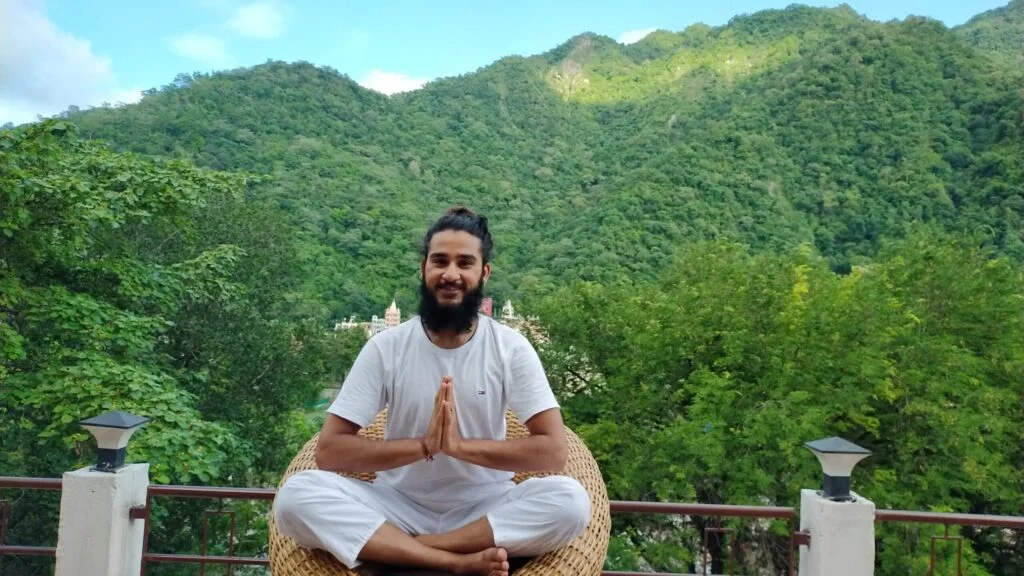
- Teaching team: Our Goa campus is led by Yogi Saransh Ji, who specialises in traditional Hatha, Karma, and Bhakti Yoga. He’s supported by a team of experienced instructors covering Ashtanga, Vinyasa, anatomy, philosophy, and meditation. Class sizes are capped at 15 students.
How Do You Book Yoga Teacher Training in Arambol?
At DivinePath, you pay a 25% deposit to secure your seat. For the 200-hour shared cottage option, that’s approximately $225. The remaining balance is due on or before arrival day.
Batches start on the 1st of every month. We run courses year-round, but peak season (October–March) fills up fastest. We recommend booking 4–6 weeks ahead during peak season and 2–4 weeks ahead during shoulder/monsoon months.
Contact us at +91-8868043473 (WhatsApp) or through our website. Tell us your preferred dates and room type, and we’ll confirm availability. If your preferred month is full, we’ll suggest the next available batch. (P.S. If you are comparing beach locations globally, check out our comparison between Goa vs Bali YTT options).
Frequently Asked Questions: North Goa vs South Goa
Is North Goa or South Goa better for yoga teacher training?
North Goa is better for yoga teacher training. Specifically, Arambol in North Goa has the highest concentration of Yoga Alliance-certified schools, the lowest living costs, the strongest yoga student community, and the best infrastructure for international students. DivinePath’s Goa campus is in Arambol, where the 200-hour YTT starts at $899 for a shared cottage.
How much does yoga teacher training cost in Arambol vs Palolem?
In Arambol, DivinePath’s 200-hour Yoga Alliance-certified YTT costs $899 for a shared cottage room (21 days, all meals included). In Palolem (South Goa), comparable courses at other schools typically cost $1,200–$2,000 because property and operating costs are higher. Daily living expenses in Palolem are also 30–50% higher than Arambol.
Does DivinePath have a campus in South Goa?
No. DivinePath operates exclusively in Arambol, North Goa. We chose Arambol because it offers the best combination of affordability, yoga community, and walkable infrastructure for international students. We’ve evaluated South Goa locations (Palolem, Agonda) and decided the higher costs would force us to raise prices beyond what we consider fair for a 200-hour course.
What is the closest airport to Arambol for yoga training?
Manohar International Airport (GOX) in North Goa is about 90 minutes from Arambol by taxi. DivinePath arranges airport pickup for $25–$40. We can also coordinate shared rides with other arriving students to split the cost. The old Dabolim airport (GOI) is farther from Arambol but closer to South Goa.
Is Arambol safe for solo female yoga students?
Yes. Arambol is a small, walkable tourist village with a large international community. At DivinePath, we’ve hosted solo female students from 45+ countries without safety incidents. Standard travel precautions apply — avoid empty beaches late at night and keep valuables secure. Our detailed solo female safety guide covers everything specific to Goa.
Can I visit South Goa while training in Arambol?
Yes, on rest days. Palolem and Agonda are about 2–2.5 hours south of Arambol by taxi. Some students make a day trip or overnight trip to South Goa on their weekly rest day. It’s a nice way to see both sides of Goa without committing to living in the more expensive south. DivinePath’s rest-day excursions sometimes include South Goa visits depending on group interest.
Ready to Train in Arambol?
Join our thriving yoga community in North Goa. Pick your month, choose your room type, and secure your spot with a 25% deposit.
Explore Arambol YTT Dates
WhatsApp Us