




The 200-hour course is worth it if you want to teach yoga professionally. The 100-hour is worth it if you want to test the waters before committing. At Divinepath Yoga School & Retreat in Arambol, Goa, the 100-hour course costs $450–$899 for 11 days and the 200-hour costs $899–$1,250 for 21 days. The critical difference: the 100-hour is NOT Yoga Alliance certified. Only the 200-hour gives you the RYT 200 credential that lets you teach anywhere in the world. You can verify our school listing on the Yoga Alliance public profile.
I’m Yogi Saransh Ji, and I lead both formats at Divinepath Yoga School & Retreat’s Goa campus. I see this decision every month in real conversations with students. Some are grateful they started with 100 hours first; others say they should have gone straight to 200. This guide is here to help you choose confidently based on your goals, budget, and available time.
Before we get into the detail, here’s everything side by side:
| Category | 100 HOUR | 200 HOUR |
|---|---|---|
| Duration | 11 days | 21 days |
| Price (from) | $450 (dorm) | $899 (shared cottage) |
| Price range | $450–$899 | $899–$1,250 |
| Yoga Alliance Certified? | No | Yes (RYT 200) |
| Can you teach after? | No (foundation only) | Yes (worldwide) |
| Curriculum | First half of 200h syllabus | Full Yoga Alliance syllabus |
| Styles covered | Hatha, Vinyasa, Ashtanga intro | Hatha, Vinyasa, Ashtanga (complete) |
| Teaching practice | Observation only | 4–5 practice teaches (15–60 min) |
| Exam | No formal exam | Written + practical assessment |
| Meals included | 3 Sattvic meals/day | 3 Sattvic meals/day |
| Excursions | Yes (rest day) | Yes (rest days) |
| Upgrade path | Stay 10 more days → full 200h | Done. Teach, or continue to 300h |
| Best for | Testing the waters, short trip, unsure | Career changers, serious practitioners |
| Certificate | Certificate of completion | Yoga Alliance RYT 200 |
Now let’s go deeper on the factors that actually drive the decision.
The 200-hour course at shared cottage is $899 for 21 days — often just $149 more than the 100-hour. See dates, rooms, and what is included.
Short answer: no, not professionally. This is the key point most students need to know before booking.
The 100-hour course at Divinepath Yoga School & Retreat gives you a certificate of completion. This confirms you attended 11 days of yoga training and covered the foundational material. It is NOT a Yoga Alliance certification. You cannot register as an RYT (Registered Yoga Teacher) with 100 hours. No studio, gym, or retreat centre will accept a 100-hour certificate as a teaching qualification.
The 200-hour course IS Yoga Alliance certified. Upon passing the written exam and practical assessment, you receive the RYT 200 credential. This is recognized worldwide. It’s the global standard for yoga teaching. Every professional opportunity in yoga — studio classes, private clients, retreat teaching, online classes — requires at minimum RYT 200.
A better question to ask yourself is: “Do I want to teach yoga to others, even part-time?” If the answer is yes, the 200-hour is the path that qualifies you. The 100-hour is a foundation, not a teaching credential.
Here’s the complete pricing for both courses, room by room. If you are comparing Divinepath with other Goa schools, also read our 2026 Goa YTT school comparison.
| Room Type | 100h Price | 200h Price | Difference | Days |
|---|---|---|---|---|
| Without Accommodation | — | $500 | — | — / 21 |
| Dorm | $450 | $699 | +$249 | 11 / 21 |
| Shared AC Room | $599 | — | — | 11 / — |
| Shared Cottage | $750 | $899 | +$149 | 11 / 21 |
| Private AC Room | $699 | — | — | 11 / — |
| Private Cottage | $899 | $1,250 | +$351 | 11 / 21 |
The price gap is smaller than most people expect. At the shared cottage level, the 200-hour course ($899) is just $149 more than the 100-hour ($750), but includes 10 extra training days, full teaching practice, a written exam, a practical assessment, and Yoga Alliance certification.
The dorm option ($450) only exists for the 100-hour course. If your absolute budget ceiling is $500, the 100-hour dorm is your only option at Divinepath Yoga School & Retreat. But if you can stretch to $899, the 200-hour shared cottage is dramatically more valuable. We’d rather you wait two months, save the extra $449, and do the 200-hour than rush into the 100-hour because it’s cheaper today. (See our full Goa YTT cost breakdown for budgeting tips.)
The 100-hour course is the first half of the 200-hour syllabus. You train alongside the 200-hour batch — same shala, same teachers, same schedule — but you leave after Day 11 while they continue to Day 21. Here’s exactly what each phase covers:
| Subject | Covered in 100h | Added in Days 12–21 (200h) |
|---|---|---|
| Hatha Yoga | Foundations: standing poses, sun salutations, basic sequences | Complete series, advanced variations, full practice leads |
| Ashtanga | Introduction to primary series (partial) | Primary series completion, independent practice |
| Vinyasa | Basic flow sequencing | Creative sequencing, peak pose builds, multi-level flows |
| Anatomy | Intro: major muscle groups, spine basics | Deep anatomy: joints, injury prevention, contraindications |
| Philosophy | Eight limbs of yoga, intro to Yoga Sutras | Yoga Sutras (detailed), Bhagavad Gita, yoga ethics |
| Teaching Methodology | Observation, intro to cueing | Full practice teaches (15–60 min), feedback, adjustments |
| Meditation | Guided meditation, intro pranayama | Extended pranayama, mantra, kirtan, meditation teaching |
| Exam | None | Written exam + practical teaching assessment |
The teaching gap is the biggest difference. In the 100-hour course, you observe teaching methodology. In the 200-hour, you DO it — standing in front of real people, leading sequences, receiving feedback, adjusting students’ bodies. This hands-on teaching practice is what transforms you from “someone who knows yoga” to “someone who can teach yoga.” You cannot shortcut this with 100 hours.
The anatomy coverage is also significantly deeper in the 200-hour. Days 12–21 cover joint mechanics, injury assessment, contraindications, and when to tell a student NOT to do a pose. This knowledge keeps your future students safe. It’s the difference between a teacher who says “go deeper” and a teacher who knows when going deeper will damage a knee.
Yes. This is exactly how Divinepath Yoga School & Retreat designs the programme. The 100-hour course is structured as the first half of the 200-hour. If you arrive for 100 hours and decide during the course that you want to continue, you stay for the remaining 10 days and complete the full certification.
How upgrading works in practice: Tell Yogi Saransh Ji or any staff member before Day 9 that you want to upgrade. We confirm room availability for the remaining 10 days. You pay the difference between your 100-hour fee and the equivalent 200-hour fee. For example, if you booked the 100-hour shared cottage at $750, upgrading to the 200-hour shared cottage costs an additional $149 ($899 minus $750). That’s it. No admin fees, no new application.
The catch: room availability. If the 200-hour batch is full (15 students), we may not have a room for the extra 10 days. Peak season (October–February) is when this happens. If you’re even slightly considering upgrading, tell us when you book the 100-hour so we can tentatively reserve your room for the full 21 days.
What if you decide NOT to continue? No problem. You leave on Day 11 with your certificate of completion, the yoga knowledge from the first half of the syllabus, and a clear understanding of whether the full course is right for you. Many 100-hour graduates return for the full 200-hour course 3–6 months later in a different batch. Your 100-hour attendance doesn’t count as credit toward 200 hours if you leave and return later — you’d need to do the full 21 days. The upgrade path only works if you stay continuously.
The 100-hour is the right choice in specific situations. Not as a default, not as a budget shortcut, but for these genuine reasons:
You can read more about why students choose the 100-hour YTT in our dedicated guide.
For most students we speak with, the 200-hour ends up being the better long-term choice.
Days 1–11 are identical. Whether you’re enrolled in the 100-hour or 200-hour, you follow the same schedule for the first 11 days. Same 6:00 AM wake-up. Same pranayama and meditation (6:30–8:00). Same morning asana class (8:00–9:30). Same breakfast, same theory sessions, same afternoon workshops. You share the shala, the meals, and the cohort with the 200-hour students. There is no separate 100-hour group.
Day 11 is where paths diverge. 100-hour students receive their certificate of completion and check out. 200-hour students continue into the second half of the course. This is the emotional moment. I’ve watched 100-hour students hug their 200-hour cohort goodbye, walk to the exit, and come back 20 minutes later to ask about upgrading. It happens at least once every two months.
Days 12–21 (200-hour only) are the peak. Teaching practice begins. You stand in front of your cohort and lead your first 15-minute sequence. Your voice shakes. You cue the wrong side. Then you do it again on Day 13, and it’s better. By Day 17, you’re teaching 60-minute classes that would work in a real studio. The exam on Day 20 tests everything. Graduation on Day 21 is the payoff. These 10 days are what the 100-hour students miss. (Read a full day-by-day account in our Goa beginners week-by-week guide.)
This is the number that makes the decision obvious for most students.
The extra 10 days of the 200-hour work out to about $14.90 per day. For that, you get advanced anatomy, full teaching methodology, practice teaching, final assessment, and a globally recognized certification. If your time and budget allow it, this is usually the better value path.
The 100-hour dorm at $450 for 11 days = $41 per day. This is the only scenario where the 100-hour has a lower daily rate than the 200-hour. If $450 is your absolute maximum spend, the dorm is the entry point. But understand what you are getting: a basic bed, shared bathroom, 11 days of training, and no certification. It is a genuine yoga experience at an entry-level price. It is not a shortcut to teaching.
Yes. We run the 100-hour course at all three campuses:
If you’re specifically choosing between 100 and 200 hours in Goa, our recommendation is clear: the 200-hour shared cottage at $899 is the best value. For $99 more than the 100-hour shared cottage ($800), you get 10 extra days, full teaching practice, and the Yoga Alliance certification. Unsure which region to pick? Read our Rishikesh vs Goa vs Bali guide.
We have had dozens of students who started with 100 hours (at Divinepath Yoga School & Retreat or elsewhere) and later returned for the 200-hour. The feedback is consistent:
One common response is: “I wish I had done 200 hours from the start.” Students who paused after 100 hours and returned later often say the break affected their momentum. They had to readjust to the schedule, reconnect with a new cohort, and revisit concepts they had forgotten. Students who upgraded immediately (Day 11 to Day 21) usually describe the transition as smooth.
Another common response is: “The 100-hour was the right starting point for me.” This is often from students who were completely new to yoga and wanted to test intensive training first. After that first experience, many returned for 200 hours with more clarity and commitment.
Both responses are valid. The question is which student are you. If you already practise yoga and have any interest in teaching, skip the 100-hour and go straight to 200. If you have literally never done yoga and want a low-risk test, the 100-hour is a responsible entry point.
200-Hour YTT (our recommendation for most students): $899 shared cottage, $999 private AC, $1,250 private cottage. 21 days. Yoga Alliance RYT 200 certified. Batches start 1st of every month at Divinepath Yoga School & Retreat in Arambol, Goa. 25% deposit (~$225) secures your seat.
100-Hour YTT (for testing the waters or tight schedules): $450 dorm, $599 shared AC, $750 shared cottage, $699 private AC, $899 private cottage. 11 days. Certificate of completion (not YA certified). Same batch start dates. Tell us if you want the upgrade option held.
Both courses include accommodation, three Sattvic vegetarian meals daily, all classes, course materials, and rest-day excursions. Both are led by me (Yogi Saransh Ji) and our Goa teaching team. The only differences are duration, certification level, and whether you complete the teaching practice and exam.
Contact: +91-8868043473 (WhatsApp) or visit our website. If you are unsure which course is right for you, message us and I will give you an honest answer based on your goals, budget, and timeline.
At Divinepath Yoga School & Retreat, we run Yoga Alliance-certified schools in Rishikesh, Goa, and Bali. We have trained over 400 graduates from 45+ countries. Our Goa campus in Arambol is where I teach year-round. Whether you start with 100 hours or 200, you will be learning from the same team in the same shala. The difference is how far you go.
No. The 100-hour course is a foundation programme and is not Yoga Alliance certified. You cannot register as an RYT or teach professionally with 100 hours alone. At Divinepath Yoga School & Retreat, the 100-hour is designed as the first half of the 200-hour course. Only the 200-hour certification (RYT 200) qualifies you to teach yoga worldwide.
At Divinepath Yoga School & Retreat in Goa, the 200-hour shared cottage costs $899 versus $750 for the 100-hour shared cottage. The difference is $149 for 10 additional training days plus Yoga Alliance certification. At the dorm level, the 100-hour costs $450. The 200-hour course does not offer a dorm option. Minimum 200-hour price is $899 shared cottage.
Yes, if you upgrade before Day 9 and a room is available for the remaining 10 days. You pay the difference between your 100-hour fee and the equivalent 200-hour fee (as low as $149 at shared cottage level). The upgrade only works if you stay continuously. If you leave after 100 hours and return later, you must enroll in the full 21-day 200-hour course from scratch.
A certificate of completion confirming you attended 11 days of yoga training at a Yoga Alliance Registered School. It shows you covered foundational Hatha, Vinyasa, and Ashtanga yoga, plus intro anatomy, philosophy, and meditation. It is NOT a Yoga Alliance certification and does not qualify you to teach. It is a personal development credential, not a professional one.
Both welcome complete beginners. The 200-hour course is better if you have 21 days available and any interest in potentially teaching. The 100-hour is better if you have never done yoga at all and want to test whether intensive training suits you before committing three weeks. At Divinepath Yoga School & Retreat, beginners make up roughly 40 percent of our 200-hour cohorts and do well.
The 100-hour course runs for 11 days and the 200-hour runs for 21 days. Both start on the 1st of every month at our Arambol campus. The 100-hour students train alongside the 200-hour batch for the first 11 days, then depart. 200-hour students continue through Day 21 with teaching practice, advanced material, and the final exam.
Join our foundational courses in Arambol, Goa. Pick your month, choose your room type, and secure your spot with a 25% deposit.
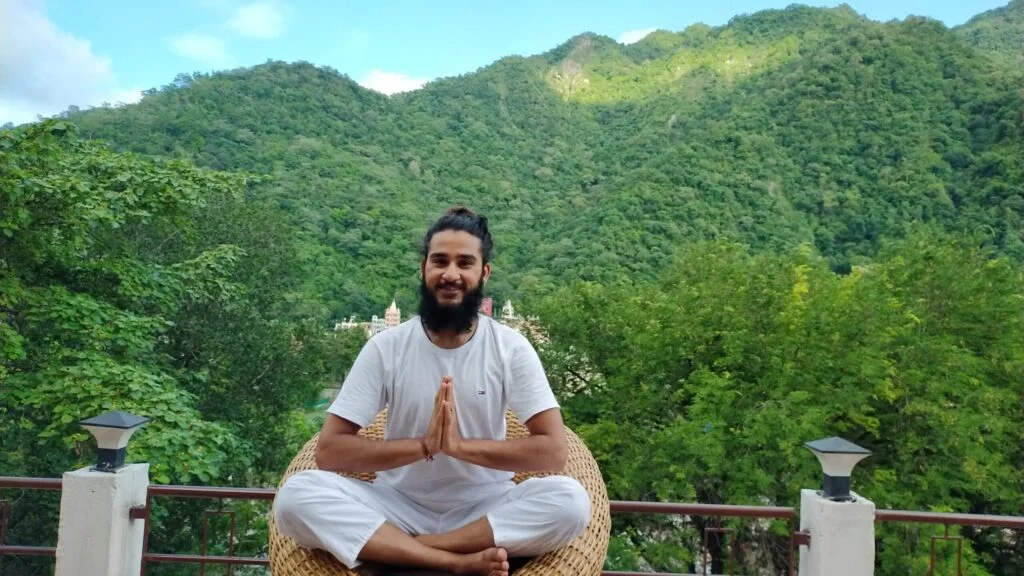
Lead Facilitator, Divinepath Goa
Reviewed by Amit Rana (Founder & Director)
View Profile
One of the Best Yoga Teacher Training Courses & Retreats in India & Indonesia.
 Yoga Alliance RYS 200
School ID 457520
Verify registration →
Yoga Alliance RYS 200
School ID 457520
Verify registration →
Divinepath Yoga School & Retreat © 2026. All Rights Reserved.