



Divinepath Yoga School & Retreat runs Yoga Alliance certified 200-hour yoga teacher training at three locations across India and Indonesia: the beaches of Arambol, Goa, the Himalayan foothills of Rishikesh, and the rice terraces of Bali. Each campus follows the same rigorous RYT 200 curriculum — Hatha, Ashtanga Vinyasa, pranayama, meditation, anatomy, philosophy, and teaching methodology — but the setting, the climate, and the overall feel are quite different.
All three programs include accommodation, three fresh vegetarian meals a day, study materials, excursions, and a Yoga Alliance certificate when you finish. This page compares setting and duration. Live fees, dates, and rooms sit on each campus course page: Goa, Rishikesh, and Bali. Comparing levels? See the 300-hour hub and the 500-hour hub. For how a training day actually feels across all three, read what a YTT day looks like.
Small batches
Typically 10–15 students
Teaching practice
Methodology, sequencing & practicum
Mentor feedback
Alignment, anatomy & safe cueing
RYT pathway
Career guide after graduation
| Feature | 🏖️ Goa (Arambol) | 🏔️ Rishikesh (Tapovan) | 🌴 Bali (Klungkung) |
|---|---|---|---|
| Duration | 22 Days | 25 Days | 23 Days |
| Fees & dates | Goa course page | Rishikesh course page | Bali course page |
| Setting | Beachside, tropical coast | Himalayan foothills, Ganges river | Rice terraces, tropical village |
| Climate | Warm year-round (25–35°C) | Cool winters, warm summers | Tropical (24–30°C year-round) |
| Vibe | Relaxed, multicultural, bohemian | Traditional ashram, spiritual | Serene, artistic, nature-focused |
| Best For | Training + beach lifestyle balance | Deep spiritual immersion | Nature lovers + cultural depth |
| Batch Size | Typically 10–15 | Typically 10–15 | Typically 10–15 |
| Nearest Airport | Manohar Intl (GOX) — 40 min | Dehradun (DED) — 45 min | Ngurah Rai (DPS) — ~90 min |
| Accommodation | AC rooms, cottages, dorms | Private / shared rooms | Private / shared rooms |
| Extras | Beach yoga, pool, sound healing | Ganga aarti, temple visits, treks | Rice field walks, temple visits |
Choose your location to see dates, detailed syllabus, and full pricing:
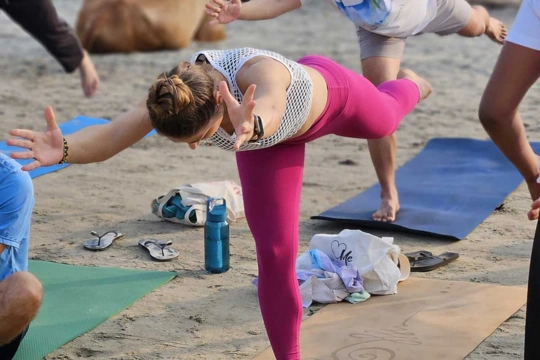
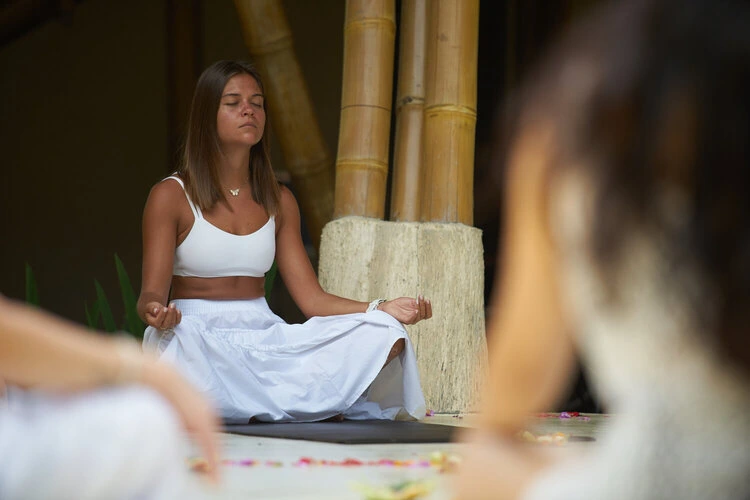
21 days · Arambol Beach
25 days · Himalayan foothills
25 days · Bali campus
Not sure which location suits you? Read our Goa vs Rishikesh guide or complete Goa Yoga Guide.
The 200-hour program is designed around the same core at all three campuses. You study both the practice and the theory — asana technique, alignment, breathing, meditation, and the philosophical foundations that have shaped yoga over thousands of years. The curriculum follows Yoga Alliance international standards, which means your certificate is recognised in every country.
Each location puts its own twist on the experience. In Goa, you start the day with Ashtanga practice while hearing waves in the distance. In Rishikesh, morning meditation happens with a view of the Ganges. In Bali, you walk through rice fields before your first class. But the knowledge and skills you come away with are the same — you will understand how the body moves, how to sequence a class, how to cue safely, and how to hold space for students of all levels.
Accommodation and three vegetarian meals are included everywhere. You pick between private and shared rooms depending on your budget. If you follow a vegan, gluten-free, or raw diet, let us know ahead of time and the kitchen will take care of it.
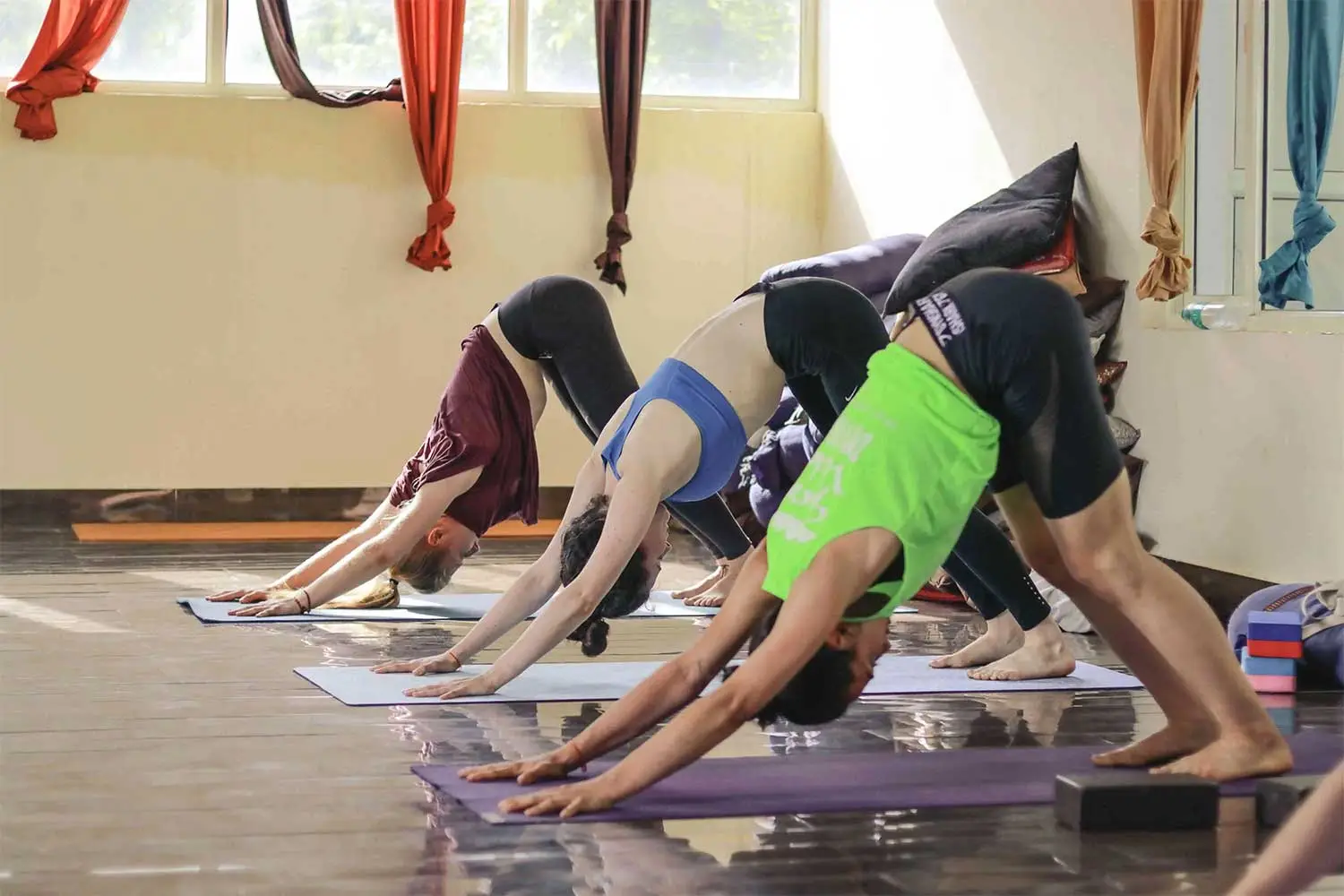
Every 200-hour program at Divinepath starts with Hatha Yoga — the foundation that all other styles are built on. The word "Hatha" translates roughly to "force" or "effort," but in practice it is the gentlest starting point for anyone new to yoga. You hold each posture long enough to understand it — how the weight distributes, where the muscles engage, and where the breath should go.
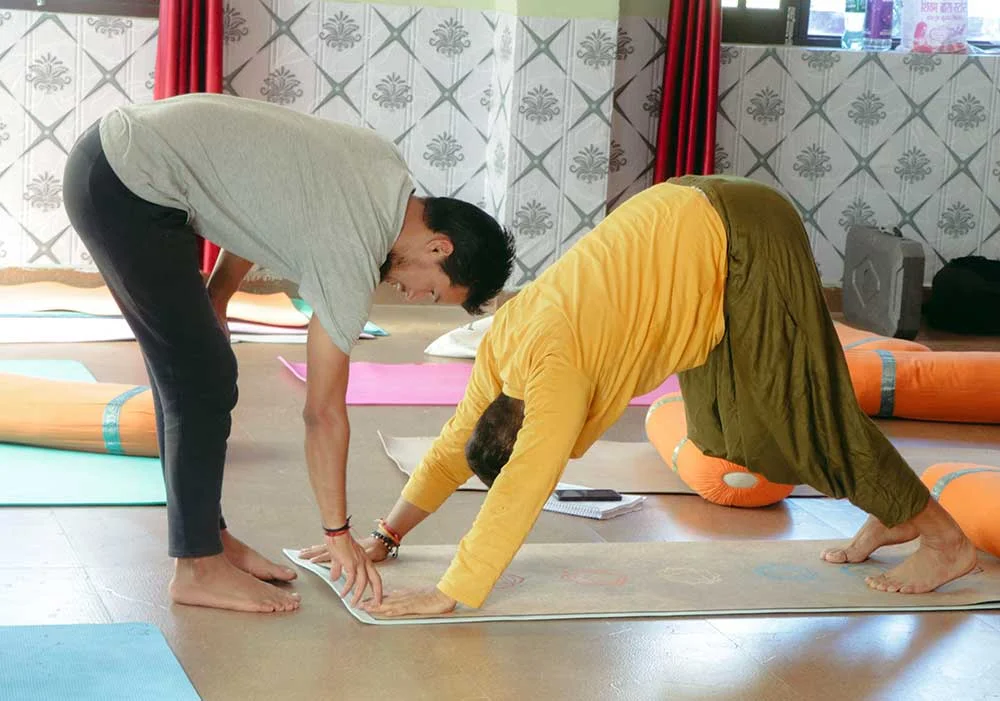
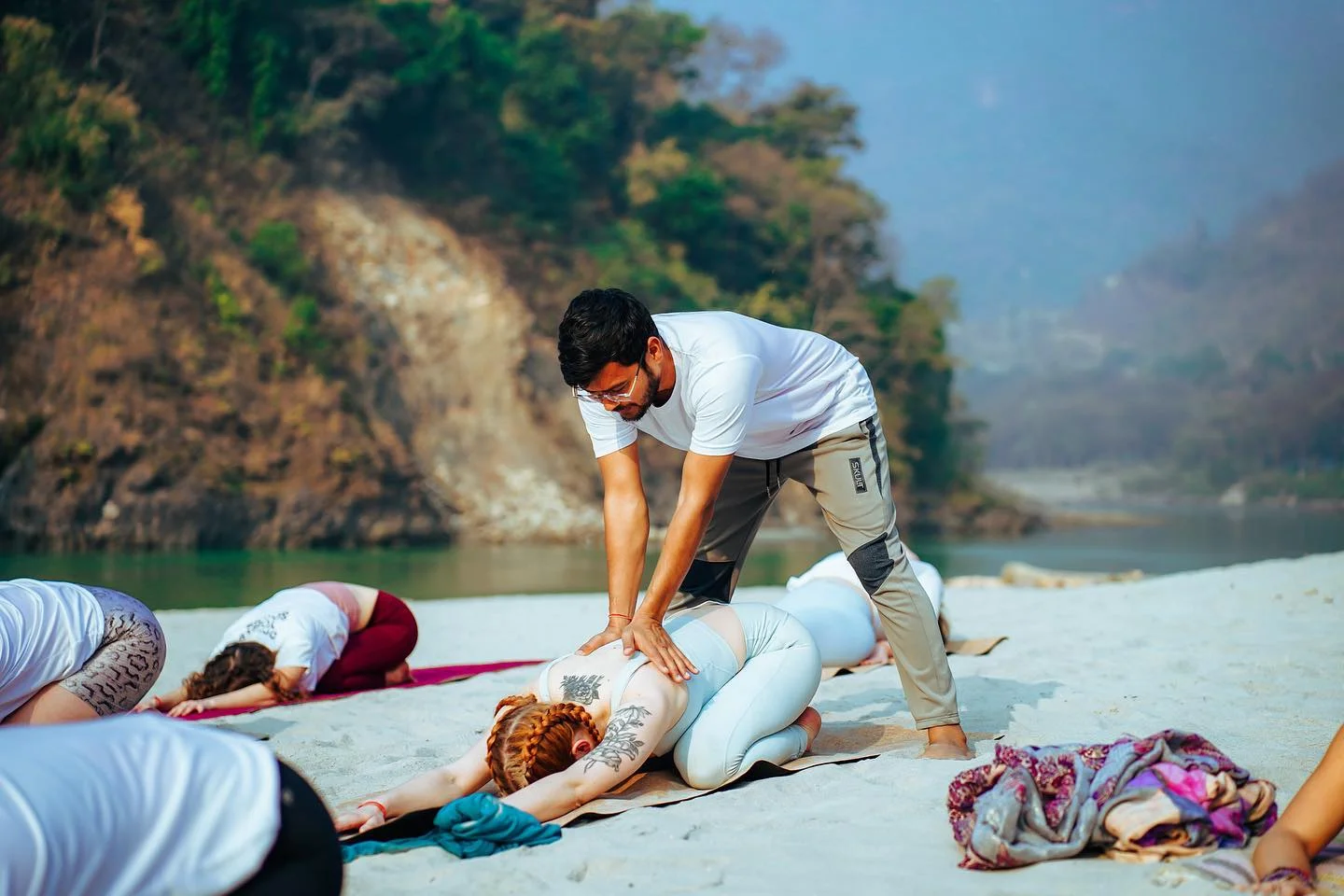
Hatha is where you build the basics: standing postures, seated forward bends, backbends, twists, and inversions. Your teacher will walk you through each one, correct your alignment in real time, and explain why a particular adjustment matters. Over three weeks, you go from repeating shapes to genuinely understanding how each pose works from the inside.
This style also introduces you to pranayama (breathing techniques) and meditation. By the end of the program, you will be able to teach a complete 60-minute Hatha class with proper warm-up, peak sequence, cool-down, and savasana — confidently, safely, and in your own voice.
Where Hatha teaches you to be still, Ashtanga teaches you to flow. This is the part of the training where your mornings get intense — a set sequence of postures linked by breath, performed in the same order every day. The repetition is deliberate. It trains your body memory, builds cardiovascular strength, and sharpens your focus in ways that other styles simply cannot match.
You will learn the Primary Series of Ashtanga Yoga step by step: the correct breathing pattern (Ujjayi), where to direct your gaze (drishti), and how to engage the energy locks (bandhas) that keep the practice safe and controlled. By the end of your training, you will know how to teach Ashtanga to complete beginners — breaking down the series into manageable chunks and offering modifications where needed.
The eight limbs of yoga — Yama, Niyama, Asana, Pranayama, Pratyahara, Dharana, Dhyana, and Samadhi — form the philosophical backbone of Ashtanga. You will study these not as abstract concepts but as practical tools for living and teaching with integrity.
Beyond the physical postures, the 200-hour program introduces you to the subtler dimensions of yoga. Kundalini practice works with the energy that sits dormant at the base of the spine. Through specific breathing patterns, mantra chanting, and meditation, this energy is encouraged to rise through the chakra system — clearing emotional blockages and creating a sense of lightness and mental clarity that many students describe as the most unexpected part of their training.
Sound healing sessions are woven into the schedule at all three campuses. Singing bowls, gongs, and chanting create vibrational frequencies that calm the nervous system in ways that silent meditation alone does not always achieve. These are not add-ons or extras — they are integrated into the curriculum because they make better teachers. A teacher who understands stillness, breath, and subtle energy can guide students far more effectively than one who only knows the physical forms.
The RYT 200 certificate from Divinepath is registered with Yoga Alliance USA, which means you can teach in any country without additional local certification. Graduates have gone on to teach in studios, wellness resorts, corporate offices, schools, and rehabilitation centres. Some have launched their own retreat businesses. Others have simply returned home with a deeper personal practice and a completely different relationship with their body and mind.
The demand for qualified yoga teachers has grown steadily over the past decade. Studios in the US, UK, Australia, and across Europe actively recruit RYT 200 holders. If you want to go further, our 300-hour advanced training builds on this foundation and qualifies you as an RYT 500 — the highest standard in the profession.
Whether you plan to teach full-time, part-time, or not at all — the 200-hour training changes the way you move, think, and relate to stress. That shift follows you into every part of your life.
There are hundreds of yoga schools running 200-hour programs in India and Bali. Most follow the same Yoga Alliance syllabus. So what actually separates one school from another? In our experience, it comes down to three things: the teachers, the group size, and whether the school genuinely cares about your progress after you leave.
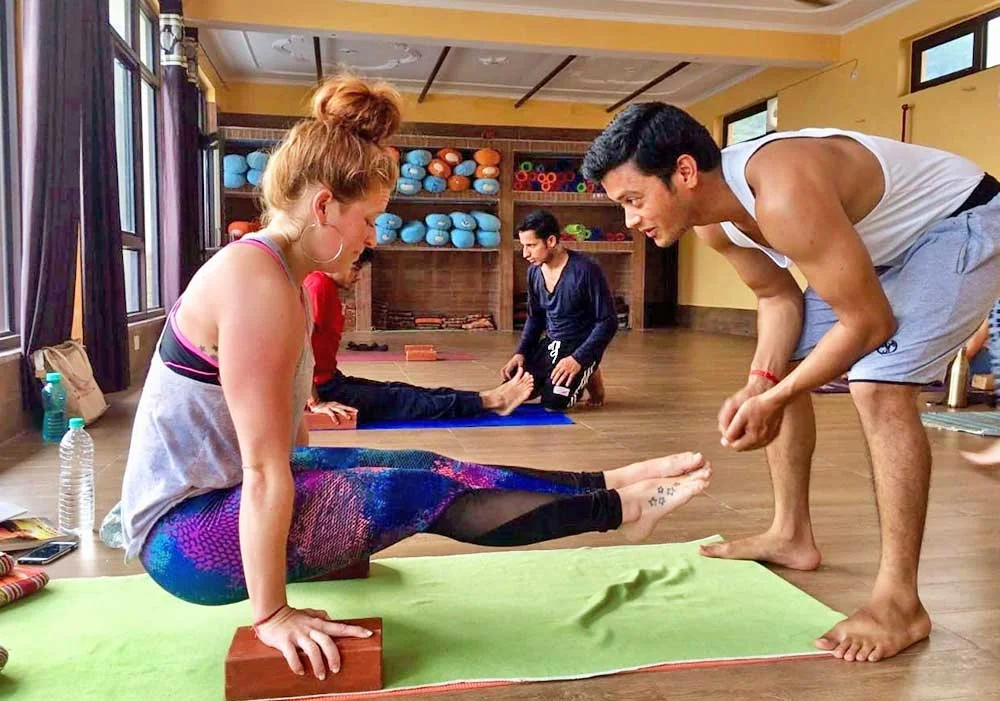
Our teachers are not visiting instructors — they live and teach at the campus year-round. They know the program inside out because they helped build it. Classes are kept small deliberately: a maximum of 10–15 students per batch, depending on location. That means your teacher notices when your alignment drifts, when you are struggling with a concept in philosophy class, or when you need a quieter day.
Every course includes accommodation and three meals a day, so your only worry is showing up to the shala. We cook fresh Satvik food — simple, clean, vegetarian meals designed to support daily practice without making you heavy or sluggish. Vegan, keto, and raw options are available with advance notice.
We also believe in transparency. Our pricing is published on the website with no hidden charges. The certificate you receive is Yoga Alliance registered. And if for any reason you cannot attend your chosen dates, you can transfer your booking to a future batch at no extra cost (provided you give reasonable notice).
If you have been searching online for a 200-hour YTT, you already know there are more options than anyone can reasonably compare. Here are the things that actually matter when you are narrowing down your shortlist:
Yoga Alliance registration. Check whether the school is a Registered Yoga School (RYS) — not just claiming to be one. You can verify directly on the Yoga Alliance website. Our registration ID is publicly listed and we are happy to share it.
Teacher credentials. Ask about the lead teachers. How long have they been teaching? Do they have E-RYT 500 or higher? At Divinepath, our faculty pages list each teacher's qualifications, training background, and specialisations — you can review them before you apply.
What is included in the fee. Some schools advertise low prices but charge separately for meals, materials, or certification. At Divinepath, the published price on each campus course page includes tuition, accommodation, meals, materials, excursion, and certification. Airport pickup is quoted on the campus page and is the only extra cost.
Group size. A class of 30+ students makes personal attention almost impossible. Our batches are capped at 10–15 students. Ask any school you are considering what their maximum batch size is.
Location access. Check how far the school is from the nearest airport and whether pickup is offered. Our Goa campus is 40 minutes from Manohar International Airport (GOX). Rishikesh is 45 minutes from Dehradun Airport (DED). Bali is 90 minutes from Ngurah Rai Airport (DPS).
Room tiers and seasonal dates differ by campus, so this comparison hub does not list USD amounts. Open the course page for the campus you want — that is the live price list.
At every location, you can choose between shared and private rooms. In Goa, wooden cottages are also offered when available. December and January tend to fill up earliest, so if you are planning for peak season, booking 6–8 weeks ahead is a good idea.
We accept international bank transfers in USD, EUR, GBP, and INR. A 25% deposit secures your seat, with the remaining balance due on the first day of the course.
200 Hour YTT in Goa — Full pricing & dates
200 Hour YTT in Rishikesh — Full pricing & dates
200 Hour YTT in Bali — Full pricing & dates
For a deeper breakdown, read our Yoga Teacher Training Cost Guide.
We get this question a lot. The honest answer is: you can start online, but the real transformation happens in person. We offer an online yoga teacher training option for students who cannot travel immediately — it covers the theoretical modules (philosophy, anatomy, teaching methodology) through live classes with our teachers.
However, for the full 200-hour Yoga Alliance certification, the practical component — hands-on adjustments, teaching practicum, group practice — needs to happen on campus. Many students complete the theory online first and then join a shorter residential intensive to finish their certification. If this hybrid path interests you, get in touch and we will help you plan it.
If you can make the trip, we always recommend the full residential program. Three weeks of living, eating, breathing, and practising yoga together — away from your normal routine — creates a shift that online learning alone simply cannot replicate.
Foundational Yoga Alliance certification.
Need help choosing? Read our YTT Cost Guide or How to Choose the Best YTT.
Upper Canal Road, Laxman Jhula, Rishikesh, Sakalana, Uttarakhand 249192
Plot No 81/1, Moddlo Waddo, Arambol, Pernem, North Goa, 403512
jalan pura dalem, Satra, Kabupaten, Kec. Klungkung, Bali 80761, Indonesia

Yes. The 200-hour RYT certificate is the global standard for yoga teachers. Once you complete the program and register with Yoga Alliance, you are qualified to teach in studios, gyms, retreats, and private settings in any country.
At Divinepath, it is 21 days in Goa and 25 days in Rishikesh and Bali. The "200 hours" refers to the total contact hours of instruction, not calendar days. Daily schedules run from early morning to evening with rest periods built in.
Maintain a regular personal practice (3–5 times per week) for at least 2–3 months before your start date. You do not need to be advanced — just consistent. Reading the Yoga Sutras of Patanjali beforehand is helpful but not required. Physically, focus on building stamina rather than flexibility.
No. The 200-hour program is designed as a standalone foundation course. You can enrol directly without any prior certification. The 100-hour course exists as a shorter introduction for people who want to explore before committing to the full training.
It depends on what you are looking for. Goa offers a beachside, relaxed setting and suits first-time visitors to India who want training combined with coastal living. Rishikesh is the traditional yoga capital, set in the Himalayan foothills along the Ganges, and is ideal for deeper spiritual immersion.
Bali provides a serene tropical environment among rice terraces. All three locations follow the same Yoga Alliance curriculum. See the comparison table at the top of this page for a side-by-side breakdown, then open the campus course page for live fees and dates.
Fees vary by campus and room type. This hub does not list USD amounts. Published pricing is on the Goa 200-hour page, the Rishikesh 200-hour page, and the Bali 200-hour page. Typical inclusions are tuition, accommodation, meals, course materials, and Yoga Alliance certification — confirm on the campus page you book.
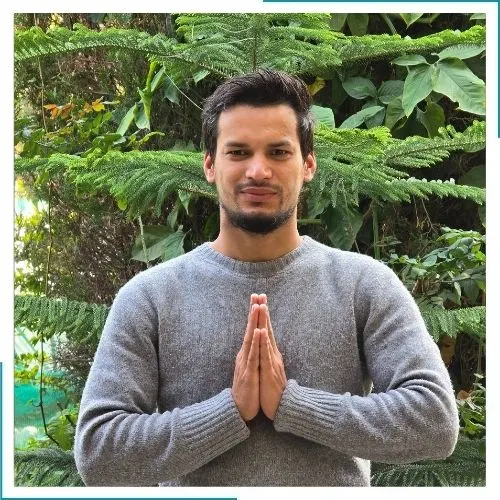
Certified Yoga Teacher & Alignment Expert, Divinepath Yoga School & Retreat
E-RYT 500 · Master's in Yoga Science · Teaches across Rishikesh & Goa campuses

One of the Best Yoga Teacher Training Courses & Retreats in India & Indonesia.
 Yoga Alliance RYS 200
School ID 457520
Verify registration →
Yoga Alliance RYS 200
School ID 457520
Verify registration →
Divinepath Yoga School & Retreat © 2026. All Rights Reserved.