



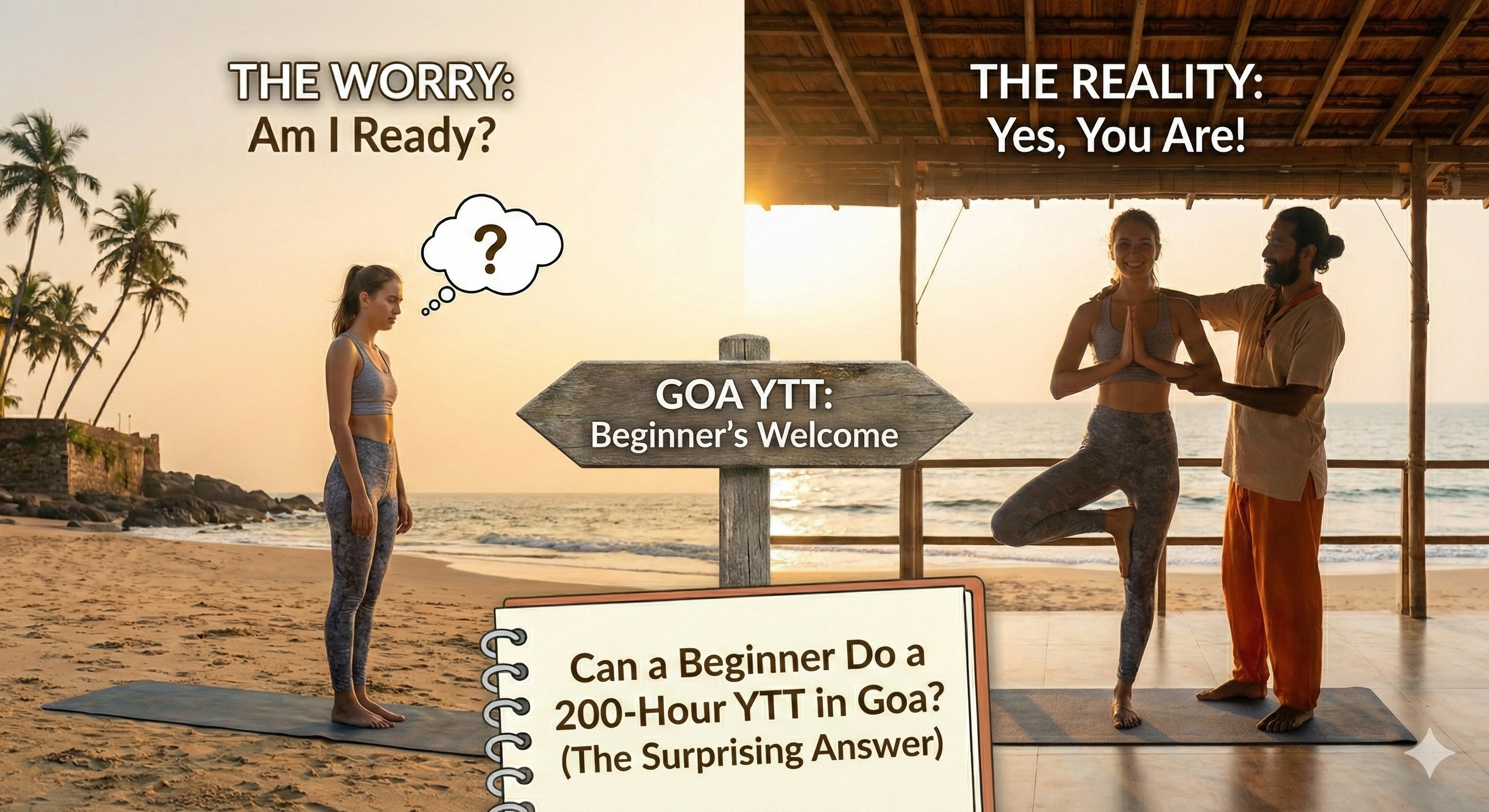
A beginner can absolutely join a 200-hour Yoga Teacher Training (YTT) in Goa with 3–6 months of consistent practice. Most Yoga Alliance registered schools accept beginners who are committed, open to learning, and physically able to practice daily.
Yes, absolutely. Most students with 3–6 months of consistent practice can succeed. You do not need to be advanced or super flexible. Goa's environment is particularly supportive for beginners due to the gentler pace and diverse community.
"I've only been practicing for six months. Is that enough?"
This is the question we hear most often from people considering our 200-hour yoga teacher training in Goa. They're worried they're not "ready." Not flexible enough, not experienced enough, not advanced enough.
Here's what might surprise you: Yes, you can absolutely do a 200-hour YTT as a beginner. Not only can you do it—in some ways, you're actually the ideal student.
Yes. Most yoga teacher training for beginners in Goa accepts students with 3–6 months of consistent practice. You do not need advanced flexibility or pose mastery. Yoga Alliance beginner requirements focus on commitment and learning capacity, not physical performance. The key requirements are genuine interest in yoga, openness to learning, and the ability to practice daily for one month.
Do you need experience for yoga teacher training? Yes, but less than you think—3-6 months of regular practice (2-4 times weekly) provides sufficient foundation. You don't need to master advanced poses or know Sanskrit. What matters is familiarity with basic yoga concepts and genuine commitment to daily practice.
At Divine Path Retreat, roughly 40% of our students arrive as beginners with six months to a year of practice. And they don't just survive the training—they thrive.
Our training takes place in Goa, India—a globally recognized yoga and wellness destination known for its relaxed coastal environment, international yoga community, and the perfect balance between traditional Indian yoga culture and modern amenities. Unlike the intensity of ashram settings in Rishikesh, Goa offers a gentler, more accessible entry point for beginner yoga teacher training India programs while maintaining authentic teaching quality and full Yoga Alliance certification.
This guide comes from watching hundreds of beginner students move through our Goa program over eight years. We'll show you exactly why beginners succeed, what you actually need before arriving, and how to prepare so you walk in confident instead of terrified.
Yes, beginners can successfully complete a 200-hour YTT in Goa. Most reputable programs, including Yoga Alliance registered schools, welcome students with 3-6 months of consistent practice. Beginners often excel because they approach training with openness rather than rigid habits. The key requirement isn't advanced poses—it's genuine interest in learning and willingness to practice daily.
We've been running our Goa training for eight years. Early on, we assumed experienced practitioners would be our strongest students. That's not what we found.
Students with years of advanced practice sometimes struggle in unexpected ways. They have strong habits, specific ideas about "correct" alignment, attachment to certain styles. Beginners arrive like blank pages—open, curious, willing to try things without preconceptions.
When we teach anatomy, beginners absorb it fresh. When we introduce pranayama techniques, they don't compare it to previous teachers. When we break down sun salutations step by step, they're grateful for the detail instead of impatient.
Here's what doesn't matter as much as people think:
Here's what actually matters:
Last year, we tracked outcomes based on experience level:
The differences are minimal. Advanced students sometimes found the pace too slow or back-to-basics approach frustrating. Beginners soaked it up.
Let's get specific about what qualifies as "beginner" for yoga teacher training for beginners programs.
| Experience Level | Ready for 200-Hour YTT? | Why |
|---|---|---|
| No experience | ❌ Not yet | Build 2–3 months foundation first |
| 3–6 months consistent practice | ✅ Yes | Ideal learning stage—enough foundation, minimal habits |
| 1–3 years regular practice | ✅ Yes | Strong foundation, ready for deeper learning |
| 5+ years established practice | ✅ Yes | May need patience with basics, but valuable perspective |
You've never taken a yoga class, watched videos but never practiced with instruction, or tried yoga once or twice without establishing regular practice. Get 2-3 months of regular classes first—not to master poses, but to know if you actually enjoy yoga practice enough to commit to 200 hours.
You've been practicing 2-4 times weekly for at least 3-6 months. You know basic poses like downward dog, warrior, child's pose. You understand the general flow of a class. You might not do everything perfectly, but you can follow along. This is our sweet spot—enough foundation to build on without rigid habits to unlearn.
When beginners email us worried they're not ready, here's what we ask:
If you answer yes to these, you're ready. Your flexibility level doesn't matter.
Location matters when you're learning as a beginner. Goa offers specific advantages for beginner yoga teacher training India programs.
Our Goa training runs at a sustainable pace. We start days at 7 AM (not 5 AM like some ashrams), build in rest breaks, and teach outdoors by the beach when weather allows. The tropical environment encourages you to move at a different speed—you can't rush in Goa's heat. This benefits beginners who need time to absorb new information.
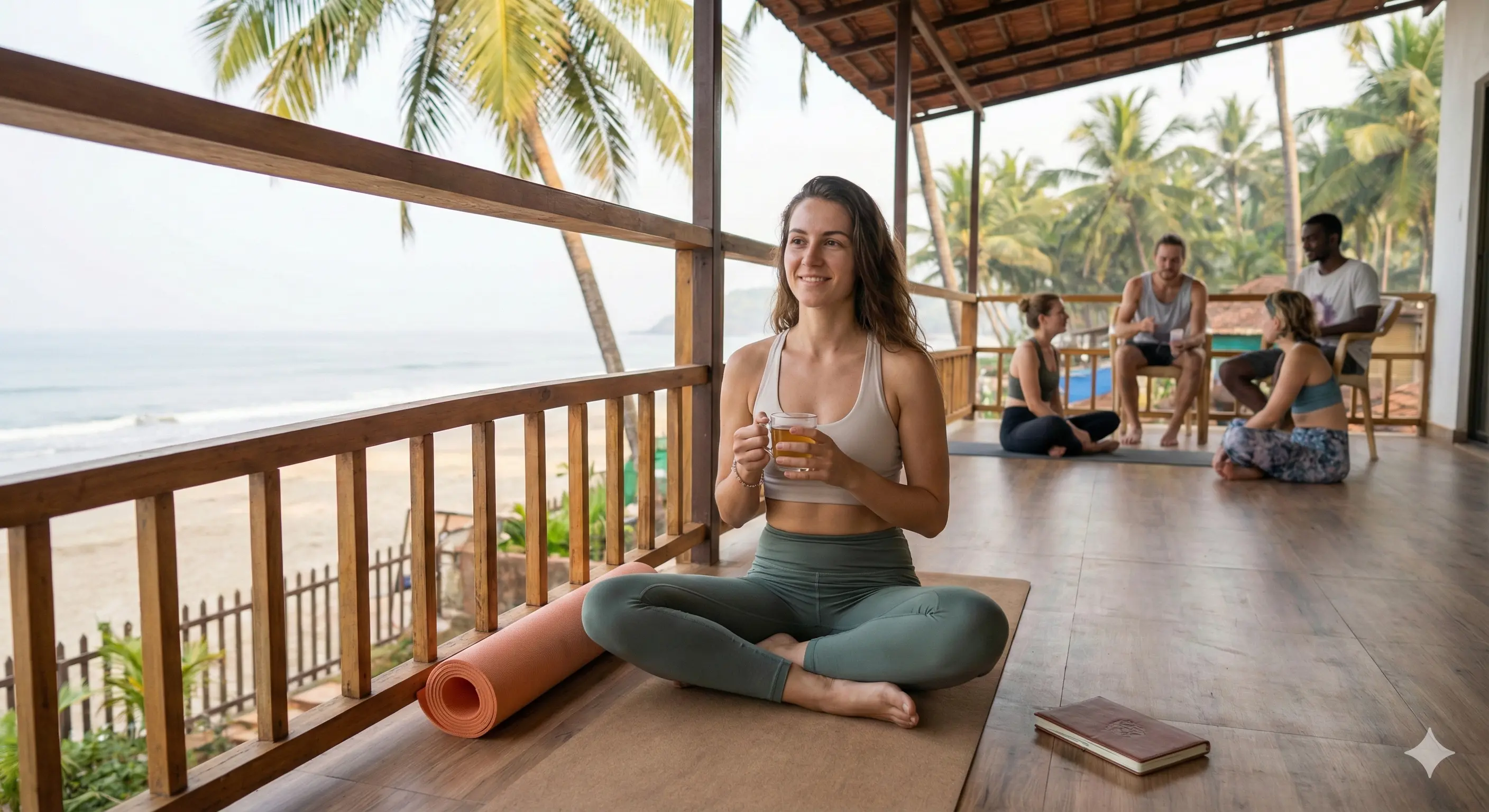
Walking to class along the beach, practicing with ocean sounds in the background, seeing palm trees from the shala—it creates peaceful energy that helps when you're learning something new. Students tell us they feel less performance anxiety here.
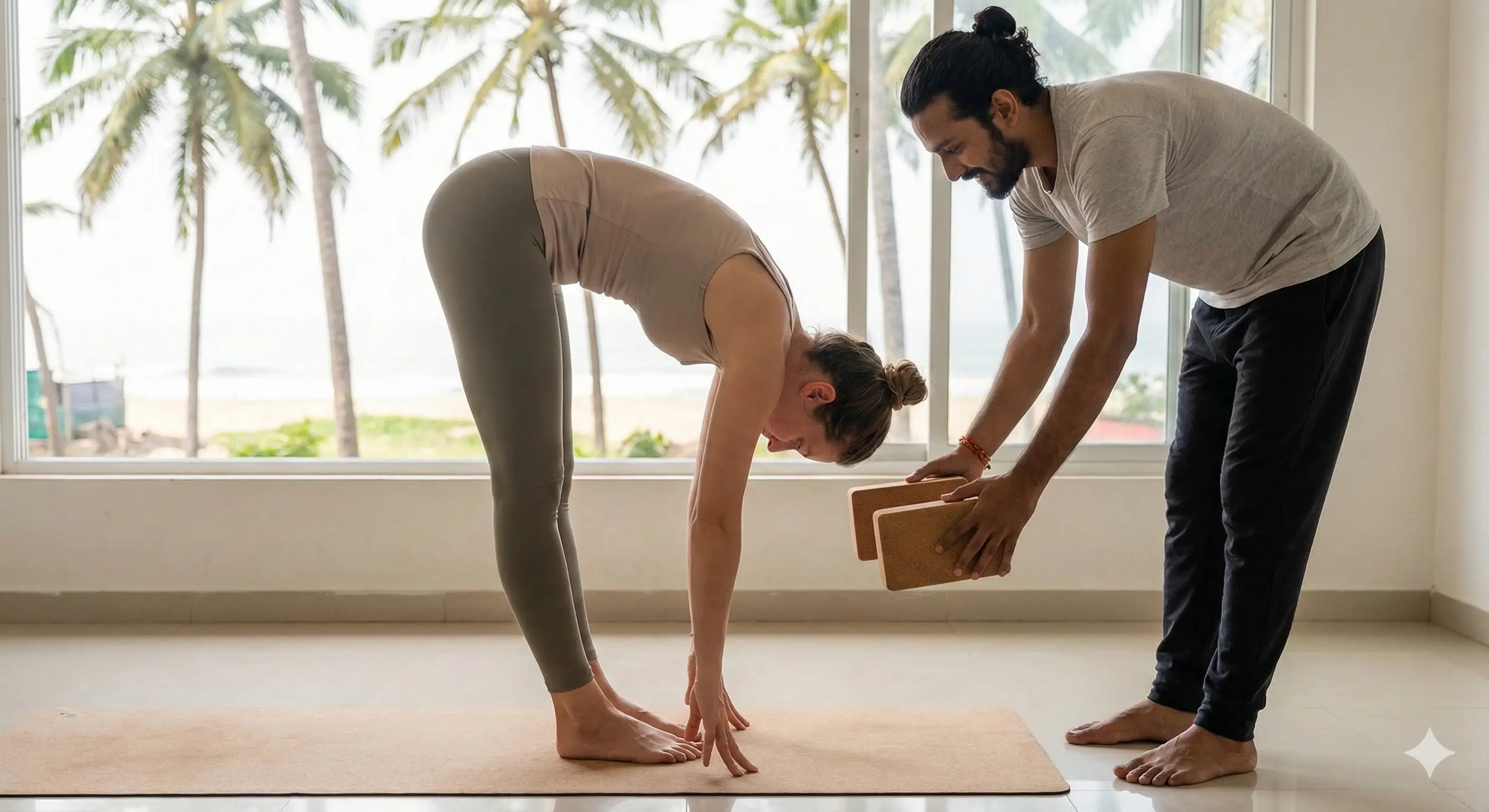
At Divine Path, we keep groups small (maximum 18 students) so our lead facilitator, Yogi Saransh Ji, can work individually with students who need extra support. We assign buddy systems in week one, pairing advanced students with beginners naturally. Assistant teachers are available during practice sessions specifically to help with modifications and questions.
Let's be specific about prerequisites and address: do you need experience for yoga teacher training?
Yoga Alliance doesn't mandate specific experience levels for students entering 200-hour programs. However, they expect registered schools to ensure students can participate safely in daily physical practice, understand basic yoga concepts, commit to the full schedule, and demonstrate readiness to learn teaching methodology.
At Divine Path, we interpret these Yoga Alliance beginner requirements practically: 3-6 months of consistent practice provides adequate preparation.
You need to be able to:
You don't need to:
Helpful to know: Basic pose names (downward dog, warrior, triangle), general flow of a yoga class, conscious breathing techniques.
Not necessary to know: Sanskrit terminology, chakra system, yoga history, anatomy terms, different yoga styles in detail. We teach all of this from the ground up.
Essential qualities that matter infinitely more than physical abilities:
This is probably the question beginners ask most: is 200-hour YTT hard?
Yes, it's challenging. But "hard" doesn't mean impossible or that you're not ready.
Physical demand: Practicing 2-4 hours daily is a significant increase from 2-3 weekly classes. Your body will be sore, especially in week one. But we modify everything—tight hamstrings don't prevent learning.
Mental load: You're absorbing anatomy, philosophy, teaching methodology, Sanskrit terms, sequencing principles constantly. It's a lot at once. We give comprehensive handouts and repeat key concepts across multiple classes so you don't have to memorize everything immediately.
Emotional intensity: You're away from home, in close community with strangers, facing your limitations, and often processing deep personal stuff that arises during intensive practice. We normalize this through midweek check-ins where students share struggles.
Teaching pressure: Around week two, you start teaching practice classes. This feels vulnerable, especially when you're still learning. We start small—just five minutes guiding a breathing exercise or single pose—and build gradually.
Being a beginner actually helps. Experienced students often find certain aspects harder because they have to unlearn habits. You get to build correct foundations from the start.
Progressive difficulty: Week one is gentler. We build intensity gradually as your capacity grows.
Built-in rest: Scheduled rest days and restorative practices prevent burnout.
Support systems: Small groups, buddy pairs, accessible teachers, clear resources.
Week one structure: Day one is orientation—Saransh explicitly tells everyone: "Some of you are beginners. This is intentional. You're going to teach beginners someday, so learning alongside them is valuable for everyone." This announcement visibly relaxes newer students every time. Days 2-3 break down sun salutations step by step. By days 4-7, students teach small segments to each other, building confidence.
Most students feel overwhelmed by day three regardless of experience level. By day seven, the rhythm settles and students stop panicking about whether they're "good enough."
What our beginner students say:
"Hard, but doable. I never felt like I couldn't handle it." — Sarah, Melbourne
"The hardest part was my own self-doubt, not the actual program." — Miguel, Barcelona
"They structure it so well that you can just focus on one day at a time." — Priya, Mumbai
Sarah (Melbourne): Practiced exclusively with YouTube videos for six months, never took a live class. First week she struggled with alignment and couldn't hold downward dog for 20 seconds. By week two, she stopped comparing herself. By graduation, she was teaching clear beginner-friendly classes because she remembered exactly what confused her initially. Now teaches two community classes weekly in Melbourne.
Miguel (Barcelona): Practiced on and off for a year—maybe once weekly, sometimes skipping months. Came to deepen personal practice, not teach professionally. The daily practice requirement transformed him. By week three, his movement had completely changed. He loved teaching so much he extended two more months. Now teaches in Barcelona and leads retreats.
Priya (Mumbai): Marathon runner who'd taken exactly five yoga classes. Fit but stiff. Could hold plank forever but couldn't sit cross-legged comfortably. Saransh worked with her one-on-one, teaching her to soften her effort: "You already know how to push. I'm teaching you how to receive." Now teaches yoga specifically for runners and athletes.
None of these students were "ready" by conventional standards. All three almost didn't come. All three graduated successfully and are now teaching in ways that serve their communities specifically because they learned as beginners.
Practice yoga 4-5 times weekly if possible, even 30-45 minute sessions. You're building stamina and habit more than specific skills. Take beginner-level classes and try different teachers to expose yourself to varied teaching styles.
Learn major bones and muscles: femur, tibia, humerus, quadriceps, hamstrings, deltoids. Understand basic joint movements: flexion, extension, abduction, adduction. Even 20 minutes of study helps—when Saransh references the psoas muscle, you won't be completely lost.
Recommended (but not required to master):
Start waking earlier if needed—our days start at 7 AM. Begin a simple morning routine. Hydrate well (Goa is hot and humid). If you have injuries or health concerns, get doctor clearance.
Set your intention—why are you doing this? Write it down. You'll return to this when things get hard. Arrange your life at home so you can fully disconnect for a month.
Don't stress about "getting good enough" before arriving. Don't cram-study yoga knowledge. Don't compare yourself to others' training stories. Don't arrive exhausted from trying to prepare perfectly—being well-rested matters more than being "ready."
Wait if:
You probably don't need to wait if:
If you are still unsure whether to commit to a full month, here is a quick comparison between our 100-hour and 200-hour programs in Goa to help you decide which path aligns best with your goals and schedule.
| Feature | 100-Hour YTT in Goa | 200-Hour YTT in Goa |
|---|---|---|
| Duration | 11 Days | 20 - 23 Days |
| Certification | Foundation Certificate (Can upgrade later) | RYT-200 (Yoga Alliance Certified) |
| Best For | Deepening personal practice, testing the waters, budget/time constraints | Becoming a globally certified teacher, full intensive immersion |
| Intensity Level | Moderate | High (Intensive daily schedule) |
| Next Step | Explore 100-Hour Course | Explore 200-Hour Course |
You modify them. We teach modifications for everything from day one as legitimate options, not backup plans. Understanding modifications from personal experience makes you better at helping future students.
No. Everyone works at their own level. Advanced students go deeper into poses, beginners use modifications. During practice teaching, mixed levels are beneficial—advanced students learn to teach beginners, beginners learn from observing.
Minimum 3-6 months of consistent practice (2-3 times weekly). Ideal is 6 months to 1 year (3-4 times weekly). Consistency matters more than duration.
Absolutely. Roughly half our students come to deepen personal practice rather than teach professionally. The teaching skills improve your own practice tremendously—understanding anatomy helps you practice safer, learning philosophy enriches your relationship with yoga.
Goa's heat (28-33°C) is moderate with ocean breeze. We practice early morning and late afternoon when cooler. The heat teaches you to work intelligently rather than force, benefiting beginners who might otherwise push too hard.
We build rest days into the schedule. Missing a day or two doesn't prevent graduation as long as you complete required hours. Saransh has extensive experience adapting practices for various limitations.
Unlikely. We typically have 5-8 beginner-level students in each 18-person cohort. Everyone is a beginner at something during training.
Yes. Graduation is based on completing required hours, demonstrating teaching methodology understanding, showing up consistently, and meeting Yoga Alliance knowledge standards—not pose mastery. There's no physical test.
If you have 3-6 months consistent practice, genuine interest beyond fitness, and can commit fully for a month—you're probably ready and overthinking. If you've never practiced or have active injuries—you're probably not ready yet. The gap between these is usually fear, not actual unreadiness.
So, can a beginner do a 200-hour YTT in Goa? Not only can you—in many ways, you should.
You bring openness, curiosity, and lack of preconceptions. You'll learn modifications from personal necessity, making you better at teaching diverse students later. You'll remember what it felt like to be confused, which creates empathy for future students.
The question isn't whether you're ready. It's whether you're willing—willing to be uncomfortable sometimes, to look silly while learning, to practice daily even when tired, to absorb new information rapidly, to teach before you feel qualified.
If you're willing, your current skill level matters far less than you think.
At our Goa location, we've intentionally built a program that welcomes beginners: small groups (maximum 18), modified versions of every pose from day one, buddy systems, assistant teacher support, comprehensive handouts, explicit welcoming in orientation, and integration of yoga psychology to help process mental and emotional aspects of learning.
We're a Yoga Alliance registered school (RYS 200)—our certification is internationally recognized regardless of your starting level.
We've seen it hundreds of times: the student who arrives nervous, convinced they're not ready, often becomes the teacher who makes the most difference in their community—precisely because they remember what it's like to be a beginner.
That could be you.
Take the next step toward becoming a certified yoga teacher:
📅 View Upcoming 200-Hour Yoga Teacher Training Dates in Goa
✅ Check Availability for Next Batch
💬 Speak with Yogi Saransh Ji Directly Before Applying
Have specific questions about your readiness? Saransh offers free 15-minute consultation calls to help you determine if our program is right for you.
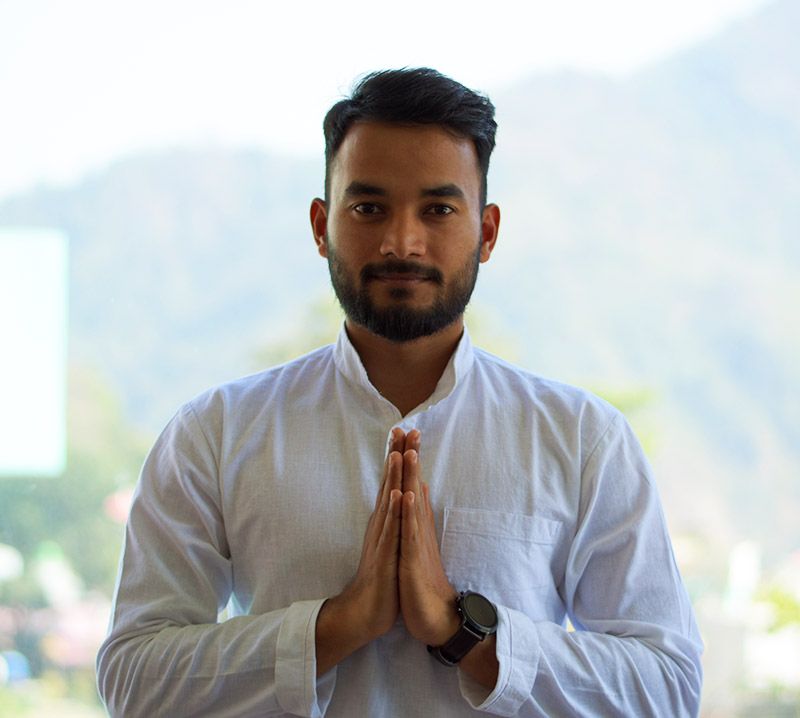
Yogi Saransh Ji
Lead Facilitator & Retreat Coordinator (Goa)
Saransh spent 5 years living in ashrams across India, immersing himself in spiritual scriptures, Indian philosophy, ancient traditional Hatha Yoga, Karma Yoga, and Bhakti Yoga. This deep foundation in traditional practice informs every aspect of his teaching at Divine Path Retreat.
What makes Saransh's guidance particularly valuable for beginners: his deep study of yoga psychology. He understands that learning yoga isn't just physical—it's deeply psychological and emotional. "Yoga and psychology are very interconnected," he explains. "Each person can become his own guru if there is strong determination."
Through his own Sadhana (spiritual practice), Saransh learned how to channel energy to stay happy, healthy, and continuously self-exploring. He's keenly interested in the fusion of yoga and spirituality with psychological understanding, bringing this integrated perspective to every class and one-on-one guidance moment.
Students consistently report that his approachability and depth of knowledge create a learning environment where questions are welcomed and growth happens naturally.