



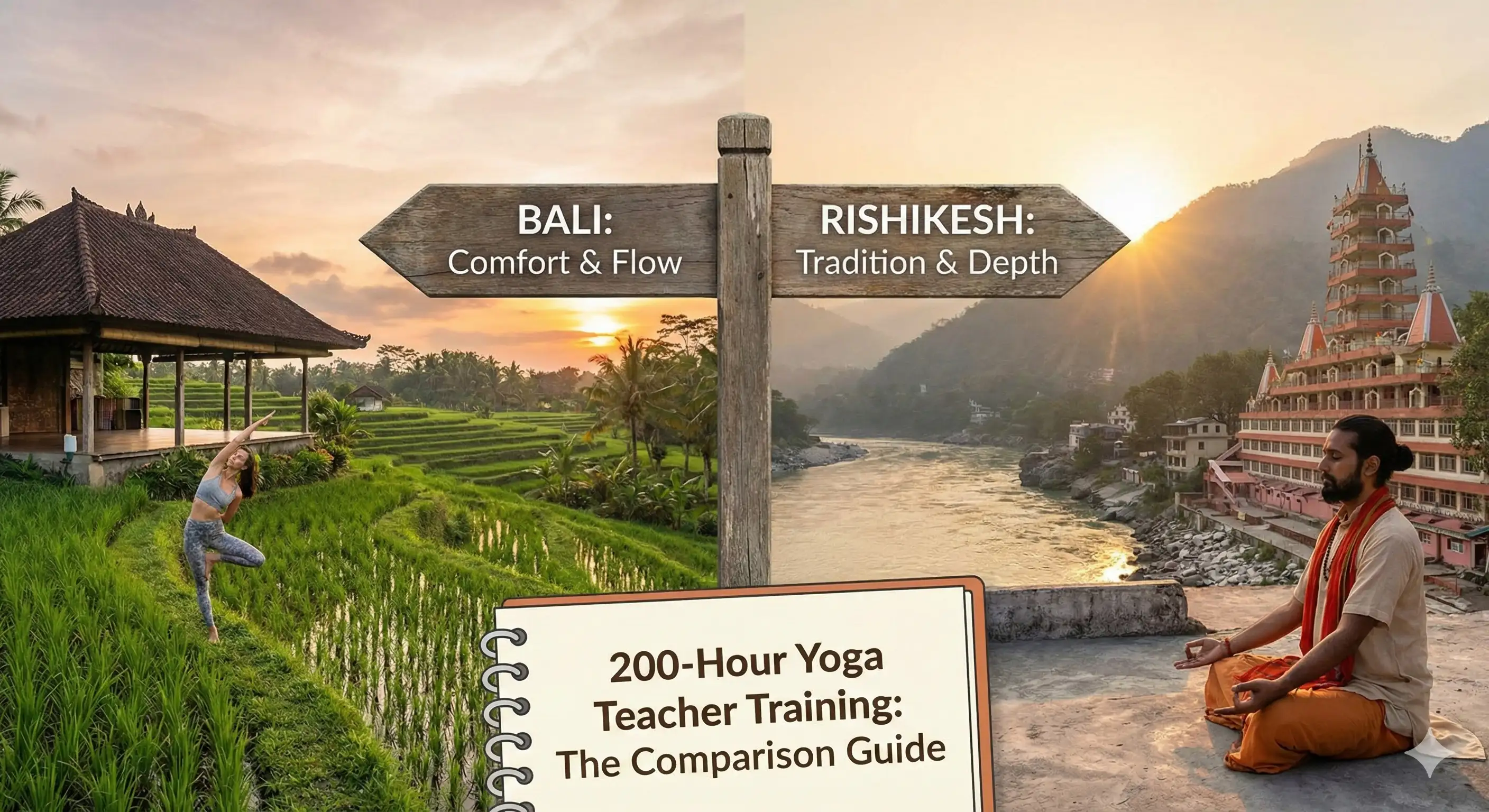
Rishikesh ($1200-$1600): Intense, authentic, budget-friendly, basic conditions. Best for deep immersion and resilience.
Bali ($2000-$2500): Comfortable, modern teaching, easier logistics. Best for focused learning without survival stress.
This might be the hardest decision you make about your training.
I've taught students who chose Rishikesh and came back transformed by the intensity. I've taught others who picked Bali and said the comfortable environment let them actually absorb the teachings instead of just surviving them.
The question isn't which place is "better." It's which place matches what you actually need right now in your yoga journey.
Most articles comparing 200-hour yoga teacher training in Bali vs Rishikesh will give you surface-level differences—cost, weather, food. That's helpful, but it misses what actually matters when you're living somewhere for a month, practicing twice daily, and trying to absorb 200 hours of new information.
After teaching in both locations and watching hundreds of students make this choice, I've learned that the "right" destination depends entirely on your personality, your comfort with discomfort, and what you're hoping to get beyond the certificate.
This guide comes from real observations, not travel brochures. We'll cover the practical differences that affect your daily experience, the trade-offs nobody warns you about, and how to know which environment will serve your learning best.
By the end, you'll have clarity on where your yoga teacher training should happen—not based on where looks better on Instagram, but on where you'll actually thrive.
Okay, so here's the thing about choosing between these two places.
Rishikesh sits in the Himalayan foothills where the Ganges flows cold and clear. The whole city breathes yoga. Like, everywhere you turn—ashrams, temples, teachers, students. You're not visiting yoga culture here. You're stepping into it completely.
Training in Rishikesh means ashram life. Early wake-ups, simple food, structured days. You follow the rhythm the place has held for centuries.
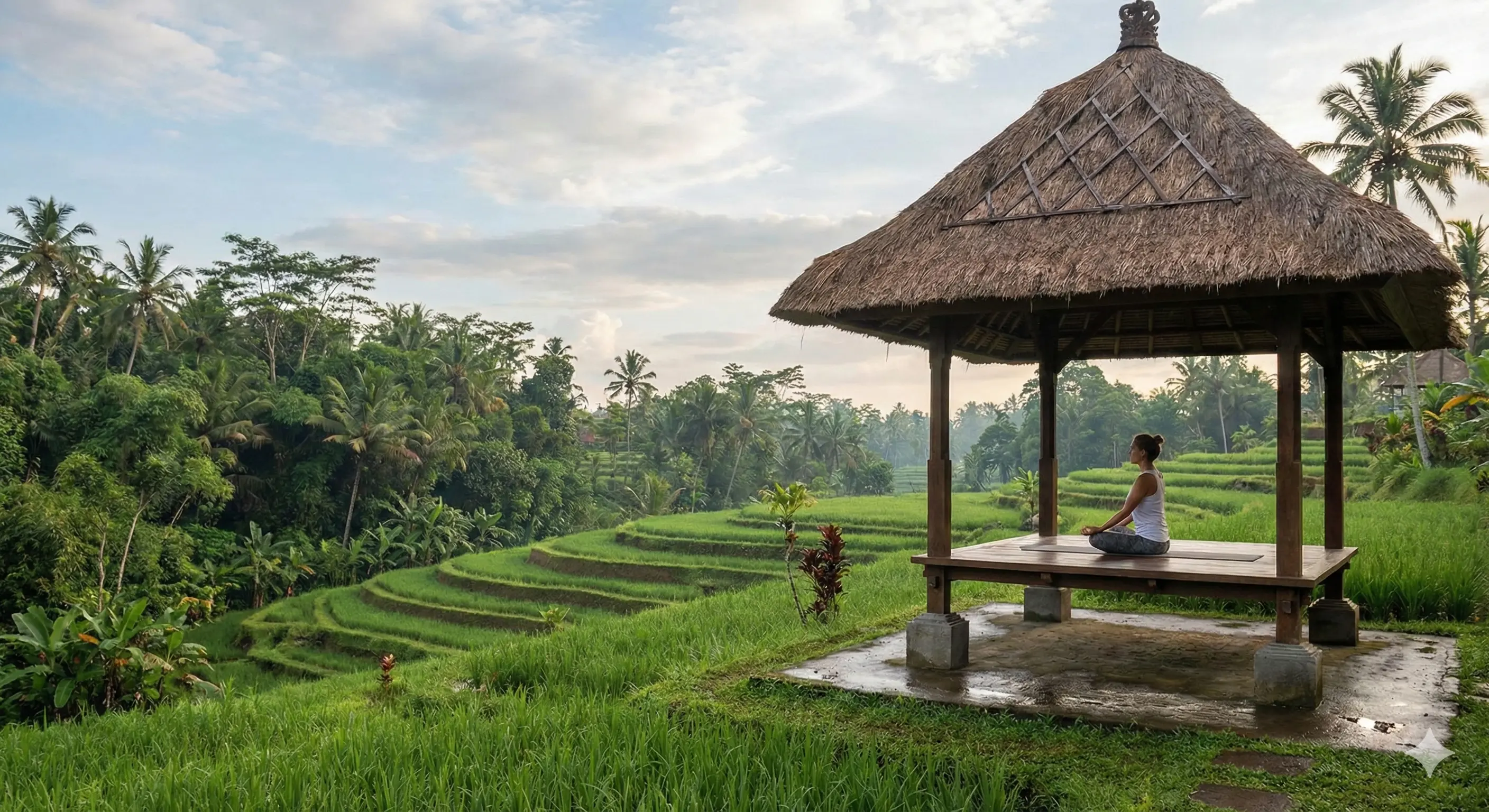
Bali took a different path. It's a Hindu island that somehow became the place where Western wellness culture and Eastern practice decided to meet. Training here happens in schools built specifically for international students—designed shalas, comfortable rooms, rice terrace views.
Which is better for 200-hour yoga teacher training: Bali or Rishikesh?
Neither location is objectively "better." Rishikesh offers deeper cultural authenticity at a lower cost ($1200-1600), while Bali provides comfortable living conditions and easier logistics at a higher cost ($2000-2500). Your choice should match your priorities.
Both give you legitimate Yoga Alliance certification. Both have teachers who know their stuff. Both change people. But how they do it? Completely different.
Rishikesh doesn't accommodate you. You accommodate Rishikesh.
Power cuts? They happen. Bucket showers? Sometimes. Food that tastes identical three days running? Yep. Weather that swings from freezing to scorching? Depending on when you go.
You're learning from Indian teachers whose grandfathers taught yoga, in a place where yoga isn't a wellness trend—it's just how people live.
Bali built its yoga scene differently. The electricity stays on. Beds are actually comfortable. You can get Italian food if you need a break from rice. WiFi works well enough to video call home.
Some students feel this creates distance from "real" yoga. Others say the comfort actually helped them learn because they weren't spending half their energy just coping.
I've heard this so many times from Rishikesh students: "I didn't expect it to be that hard. But I'm glad it was."
And from Bali students: "Being comfortable didn't make it easy. It just meant I could focus on the actual practice."
Both are true. Your personality decides which truth serves you better.
Money matters. Let's be specific.
A typical 200-hour program in Rishikesh costs $1200-1600 USD.
This usually includes:
What it doesn't include:
Total realistic budget: $2200-3000 USD for the full month.
A comparable program in Bali costs $2000-2500 USD.
This typically includes:
What it doesn't include:
Total realistic budget: $3000-4500 USD for the full month.
Rishikesh feels cheaper day-to-day. Meals out cost $2-3. Chai is 20 cents. Local transport is minimal. But you might spend more on health issues. Bali belly happens in both places, but India's adjustment period can be harder. Budget for potential medical needs.
Bali costs more daily. Cafes charge $5-8 for meals. Coffee is $3-4. But the infrastructure is easier, which saves money on problem-solving.
In Rishikesh, your money supports the traditional yoga economy. You're paying Indian teachers directly. Your accommodation fee goes to the ashram. Your meal costs support local vegetarian restaurants run by families who've fed yoga students for decades.
Bali's costs reflect a different model. Many programs there employ international staff, maintain higher-end facilities, and cater to Western expectations about comfort and service. This isn't inflated pricing—it's just genuinely more expensive to run that kind of operation.
This is where the rubber meets the yoga mat.
You'll likely share a room with 1-2 other students. The room will be clean but basic. Bed, maybe a desk, shared bathroom.
Air conditioning is rare and often costs extra. Fans are standard. In summer (May-June), rooms get genuinely hot. In winter (December-February), they get cold at night.
Power outages happen. Sometimes daily. They last 10 minutes to a few hours. You adapt or you struggle—there's no middle ground.
Hot water exists but can be temperamental. Many students shower with bucket heaters. It's functional, not luxurious.
WiFi exists but unreliable. Don't expect to video call home daily or stream anything.
Most programs offer private rooms, though shared options cost less. Rooms are comfortable—proper beds, decent furniture, ensuite bathrooms usually.
Air conditioning is common in bedrooms. Shalas might be open-air, but you can cool down in your room.
Power is reliable. I've experienced maybe two outages in six years, both brief.
Hot water is standard. Showers work normally.
WiFi is solid enough for video calls and work, though it's worth disconnecting sometimes.
Rishikesh's basic conditions mean you're less tempted to hide in your room. You're out in community spaces, at the Ganges, in the ashram common areas.
This builds community naturally. You can't really escape your training group, so you bond whether you planned to or not.
Bali's comfort means you can retreat when needed. After an intense morning session, you can actually rest well. This helps some students, especially those who need alone time to process.
But it also means less forced community. You have to make more effort to connect with your training group.
Rishikesh serves you yogic food in its purest form. Dal, rice, sabzi, roti. Sometimes the same dal three nights in a row. It's clean, it's sattvic, it's nourishing. It's also... repetitive.
The entire city is vegetarian and alcohol-free. Not just yoga schools—everywhere. If you're someone who needs a beer after a hard week or craves chicken occasionally, this matters.
Bali gives you options. Your training program will probably serve plant-based meals, but they'll have variety—Indonesian dishes, Western comfort food, Thai curries. And outside training? You can eat whatever you want. Meat's available, alcohol's available, though most students find they naturally stick to lighter eating during intensive practice.
People get worked up about this.
Look, Rishikesh is where yoga began. That's not up for debate. The philosophy texts your teachers reference in class? They were written walking distance from where you're sitting. The practices they're teaching? Their teachers learned them from their teachers, going back generations.
When you practice on a rooftop shala at sunrise with the Ganges flowing below and the Himalayas behind you, you feel the connection to source. It's real.
You'll attend evening aarti (fire ceremony) on the Ganges. Visit ashrams where famous yogis meditated. Practice in spaces that have held yoga for centuries.
Students often tell me they understand yoga differently after experiencing it in its birthplace. Something shifts when you're learning in the actual place where these practices emerged.
But here's what authenticity doesn't guarantee: Rishikesh teachers aren't automatically better teachers. I've learned from extraordinary Indian teachers and mediocre ones. Same as anywhere.
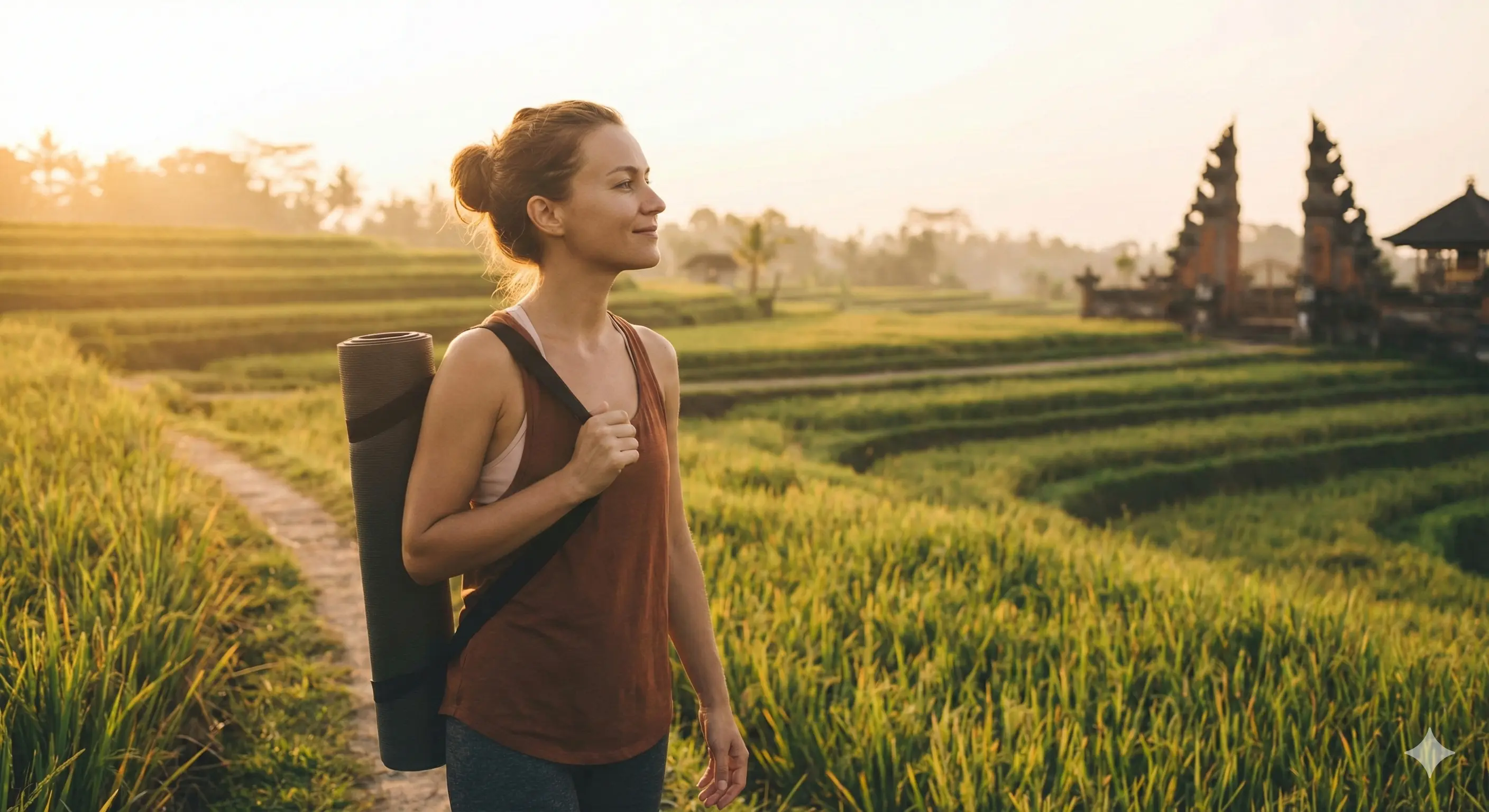
And calling Bali "inauthentic" misses something important. The island has its own Hindu tradition that shares deep roots with Indian philosophy. Those daily offerings you see everywhere? That's genuine spiritual practice, not performance. Temple ceremonies, traditional dance, the sacred geography of the place—it's all real, just different.
Plenty of Bali programs bring Indian teachers for philosophy and pranayama. Others train Western teachers who've spent years studying in India. The synthesis of traditional knowledge with modern anatomy and teaching methodology serves some students really well.
Rishikesh schools that cater to Westerners have adapted somewhat. You'll have toilet paper. Teachers explain concepts in English. Schedules account for Western bodies needing more rest than traditional training allowed.
So even Rishikesh isn't purely "traditional" if you're in a program designed for international students.
Bali programs often explicitly blend traditional wisdom with modern teaching methodology, anatomy knowledge, and Western approaches to alignment.
Some students prefer this synthesis. Others want as close to source as possible.
Students who want philosophy classes that go deep into Sanskrit texts and traditional commentaries? Rishikesh tends to deliver that more directly.
Students who want transformation through yoga? Both places offer that. Just different routes to it.
It's less about which is more "real" and more about what kind of real you're looking for.
For context on how this plays out in practice, explore our yoga in Bali guide.
Climate affects your training more than you'd think.
October to March (Best time): Comfortable temperatures 10-25°C (50-77°F). Clear mountain views. Calm Ganges. This is when most students go, so programs fill up fast.
Winter mornings (December-February) get genuinely cold. You'll want layers for early practice.
April to June (Hot season): Temperatures climb to 35-42°C (95-108°F). It's intense. Afternoon practices are sweaty, sometimes brutal.
Some students love this—forces you to slow down, teaches you to practice in discomfort. Others find it overwhelming.
July to September (Monsoon): Heavy rain, high humidity, potential flooding. Many schools offer discounts during these months.
The rain creates problems—power outages increase, roads wash out, illnesses spike. But it's also beautiful and forces introspection.
April to October (Dry season): Warm and pleasant 27-32°C (80-90°F). Lower humidity. Consistent weather. This is peak time.
November to March (Rainy season): Still warm but with afternoon rain. Higher humidity. The island is greener and less crowded.
Bali's "rainy season" is gentler than India's monsoon. You'll still practice comfortably most days.
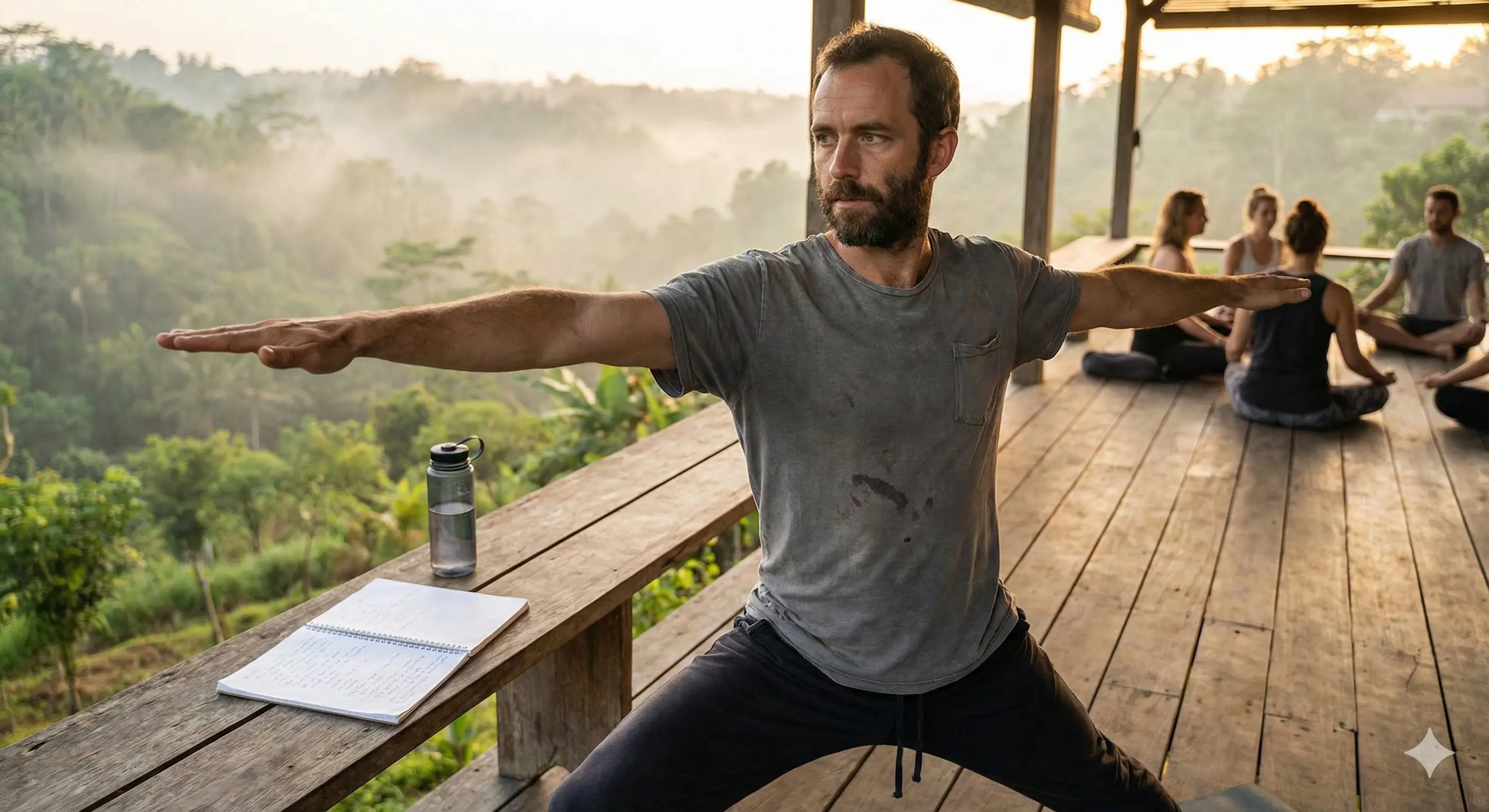
Training in Rishikesh during hot season teaches you something specific. When it's 110°F and you're in warrior two, you can't muscle through. You have to find a different relationship with effort. Some students say this was the most valuable lesson of their training.
Cold season is its own teacher. Morning pranayama on a rooftop when the Himalayan air is sharp and thin? That's visceral learning. Your breath becomes completely real in a way air-conditioned rooms never deliver.
Bali's gentler climate does something else—it removes weather as a variable. You can just focus on the practice itself. For beginners or anyone with health stuff going on, this matters a lot.
Both destinations have excellent teachers. The difference is approach and style.
Most teachers are Indian, raised in yogic families, with decades of personal practice.
The teaching style tends toward traditional. Less Western anatomy focus, more energetic and philosophical understanding. Adjustments might be firmer and more direct.
Philosophy classes go deep—actual Sanskrit texts, detailed Vedanta, serious pranayama theory. This is where Rishikesh shines.
Some teachers have heavy accents that take adjustment. Not everyone is trained in Western teaching methodology. The wisdom is profound, but communication style might differ from what you're used to.
Teachers are mixed—Indian, Western, Indonesian. This creates diverse perspectives.
The approach blends traditional knowledge with modern anatomy, trauma-informed teaching, and contemporary alignment principles.
Communication tends to be clearer for Western students. Teachers understand Western bodies, injuries, and learning styles.
Philosophy classes cover core texts but often with more accessible explanations and practical applications.
Both locations have good schools and mediocre ones. Research your specific program, not just the location.
Look for:
The location matters less than the school's actual quality.
Training is intense anywhere. But the environments create different types of challenge.
The physical environment itself is a practice.
You're adapting to India—new food, water, air quality, altitude (not much, but it's there), extreme temperatures.
This creates additional stress on your system while you're also doing 6-8 hours of yoga daily.
Many students get sick at some point—usually digestive issues. It's so common programs build in rest days.
The ashram lifestyle is disciplined. Wake up at 5 or 6 AM. Limited free time. Structured schedule. Some programs have curfews.
This intensity breaks people open. It's transformative precisely because it's difficult.
The practice itself is still demanding—same hours, similar curriculum.
But external conditions are easier. You sleep better in comfortable beds. Stable electricity means you can actually study at night. Better food variety means better nutrition.
This lets you direct all your energy toward the actual learning rather than splitting focus between yoga and survival.
Some students need this. Especially beginners, older students, or anyone with health considerations.
Others miss the intensity. They feel the comfort dilutes the transformation somehow.
Rishikesh forces confrontation. You can't escape into Netflix or familiar food or shopping therapy. You sit with whatever comes up.
Bali offers more escape valves. You can go to a nice cafe, get a massage, buy new clothes. This can be healthy self-care or avoidance, depending on the student.
Both offer cultural immersion, but totally different flavors.
You're in India. Everything is unfamiliar—sounds, smells, social norms, pace of life.
You'll see sadhus (holy men) walking the streets. Attend aarti ceremonies. Possibly visit other ashrams. Experience Indian festival celebrations if your timing's right.
The city revolves around yoga and spirituality. Everywhere you go, people are engaged in practice of some kind.
This is total immersion. No separation between "yoga life" and "regular life" because yoga IS regular life there.
You're in Bali's yoga community—largely international but with Balinese elements.
You'll see daily offerings, temple ceremonies, traditional dance. The spirituality is real but different from Indian yogic tradition.
The scene is more expatriate than local in yoga areas like Ubud. You'll meet international students, digital nomads, retreat-goers.
This creates easy community but less cultural challenge. You can find Western food, English speakers, familiar conveniences.
Rishikesh throws you in completely. The sounds are different, the smells are unfamiliar, social norms you took for granted don't apply. You're adjusting constantly, and that friction becomes part of your growth whether you planned for it or not.
Bali lets you ease in. You're in the yoga community—mostly international but with Balinese threads woven through. Finding your people is easier. Finding familiar food when you need it is possible. This comfort can support deep learning, or it can become a buffer against the discomfort that catalyzes change. Depends on how you use it.
What happens after your month of training?
Some students extend to study more—300-hour programs, specific workshops, private study with teachers.
Teaching opportunities exist but are competitive. Many Indian teachers, fewer positions for foreigners.
Visa limitations make long-term stays complicated. Tourist visas max out at 6 months and require leaving the country.
Most students complete training and then travel India before heading home.
Many students extend—either to teach, take more training, or simply enjoy the island.
Teaching opportunities are more accessible. Drop-in studios need substitute teachers. Retreats hire recent graduates. Private clients exist.
Visa situation is easier for longer stays. Social visa allows 6 months with extensions.
The international community means networking happens naturally. You'll meet retreat owners, studio directors, other teachers.
Neither location guarantees teaching work post-training. The market is saturated everywhere.
But Bali's international scene provides more accessible entry points for new teachers.
Rishikesh is better if you want to deepen study rather than immediately teach.
Let's get practical about decision-making.
Bali tends to work better for absolute beginners. The comfortable environment lets you focus on learning basics without additional stress.
Rishikesh works for beginners who specifically want immersion and aren't intimidated by India.
Check if your chosen program actually welcomes beginners. Some assume basic knowledge.
Either location works if you're already established in practice.
Rishikesh might offer more advanced philosophy and traditional techniques.
Bali might offer more contemporary approaches and teaching methodology.
Your learning goals matter more than your current level.
Yes, absolutely. If the school is registered with Yoga Alliance (check their directory), the certification is identical whether you train in Bali, Rishikesh, or anywhere else. The certificate itself doesn't say where you trained. It shows the registered school name and that you completed 200 hours. International teaching opportunities depend on your certificate being from a registered school, not on the location.
Generally, yes—Rishikesh philosophy classes tend to go deeper into traditional texts and Indian philosophical context. But Bali programs vary. Some bring Indian philosophy teachers specifically. Others focus more on practical application. Read your specific program's curriculum. Look at teacher qualifications. Some Bali schools match or exceed Rishikesh depth.
Bali is significantly easier for first-time Asia travelers. Infrastructure is tourist-friendly. English is widely spoken. Logistics are straightforward. Culture shock is minimal. India is challenging even for experienced travelers. If Rishikesh is your first Asia experience, expect adjustment period. That said, some students love being thrown in the deep end. Know yourself.
Rishikesh monsoon (July-September) is genuinely challenging. Heavy rain, potential flooding, infrastructure issues, higher illness rates. It's doable if you're flexible and comfortable with disruption. The intensity might enhance your experience if you frame it right. Bali rainy season (November-March) is much gentler. Afternoon rain but mostly manageable. Reasonable discount option.
Both locations handle vegetarian and vegan easily—that's standard for yoga training. Rishikesh is exclusively vegetarian city-wide, so that's your only option anyway. Bali offers more flexibility. Programs are typically plant-based, but you can eat out for other options if needed. Gluten-free is manageable in both places but communicate clearly with your school beforehand.
Both destinations are generally safe for solo travelers, including women. Rishikesh is a spiritual city with strong community oversight. Solo female travelers report feeling safe, though general India travel safety awareness applies. Bali is very solo-traveler friendly with established tourism infrastructure. See our detailed guide for specifics on solo female travel safety. Training programs create instant community, so you won't be truly solo even if you arrive alone.
Yes, both locations offer excellent post-training travel. Rishikesh: Himalayan trekking, other Indian cities (Varanasi, Dharamsala, Goa), Nepal is close. Bali: Explore other islands (Nusa Penida, Gili Islands, Java), Thailand and Southeast Asia are accessible. Budget extra time and money if you want to explore. Don't pack your schedule too tightly—you'll need rest after intensive training.
Most 200-hour programs cover multiple styles. Check your specific curriculum. Rishikesh tends toward Hatha and Ashtanga foundations—traditional, alignment-focused, breath-centered. Bali programs vary more—some traditional, some flow-based, some contemporary vinyasa. Match the program's specialty to your interests. If you want strong Ashtanga foundation, research which schools emphasize this in either location.
No. 200-hour training is designed for practitioners of all levels, including beginners. You should have a basic familiarity with yoga—know what downward dog is, have taken some classes. But you don't need to do advanced poses. Both locations have programs specifically designed for newer practitioners.
This matters more than choosing between locations, honestly. Research thoroughly: Read recent reviews from multiple sources. Check teacher credentials and lineage. Look at actual curriculum, not marketing language. Ask about class sizes (smaller is better). Confirm Yoga Alliance registration status. Email with questions and see how they respond. The school matters more than the city.
After all this information, here's what actually matters.
Neither Rishikesh nor Bali is objectively better for 200-hour yoga teacher training. They offer different experiences that serve different students.
Rishikesh gives you yoga in its birthplace. The authenticity, the intensity, the immersion—these are real. You'll be challenged, possibly uncomfortable, and likely transformed by that discomfort.
Bali gives you yoga in a supportive, comfortable environment. The learning is solid, the community strong, and the conditions allow you to focus energy on the practice itself rather than survival.
Where should I do my 200-hour yoga teacher training?
Choose Rishikesh if you want traditional immersion, can handle basic conditions, and have a tighter budget ($1200-1600). Choose Bali if you need comfortable logistics, want modern teaching methodology, and can budget $2000-2500. Both offer legitimate Yoga Alliance certification and quality training—the difference is the environment supporting your learning, not the certification value.
The certification is identical from accredited schools in either location. Future teaching opportunities depend on your skill development, not your training location.
Most students end up loving whichever place they choose, because the training itself is transformative regardless of setting.
Some regret their choice—usually because they picked based on external factors (what friends did, Instagram, lower cost) rather than honest self-assessment.
Here's what I wish more students asked themselves before booking:
Your honest answers matter more than anything I can tell you about either place.
Both paths lead to the same goal—deepening your yoga practice and learning to teach others. The journey looks different, but the destination is the same.
Trust yourself to know which environment will serve your growth best right now. That's the one that's "better" for you.
Ready to begin your training journey? Whether you're drawn to traditional Rishikesh or comfortable Bali, explore our yoga teacher training programs to find the right fit for your path.